



You can build a backyard fence on a slope in one of two ways: stepped, where each panel stays level and drops down the hill like a stair, or racked, where the panels tilt to follow the ground. The right choice depends on how steep your yard is, which material you want, and how much gap you can accept under the fence.
Below, you’ll learn how to measure your grade, pick a method, set posts and hang panels. You’ll also see where a sloped yard gets tricky enough to call a pro.
Why a Slope Changes How You Build a Fence
On flat ground, every post sits at the same height and every panel lines up. On a hill, the ground drops between posts, so you have to decide what the fence does with that drop. If you ignore it, panels float high above the grass on the low side or dig into the dirt on the high side.
Water is the other issue. Rain runs downhill fast, and it can wash soil away from the base of your posts. After a few seasons, that exposes the footings and lets posts lean. So a backyard fence on a slope needs more attention to post depth and drainage than the same fence on flat ground.
Stepped or Racked: Pick the Right Method for Your Yard
Both methods work. The best one for you depends on the grade, the fence style and how the fence will look from your patio.
Stepped Fence on a Slope
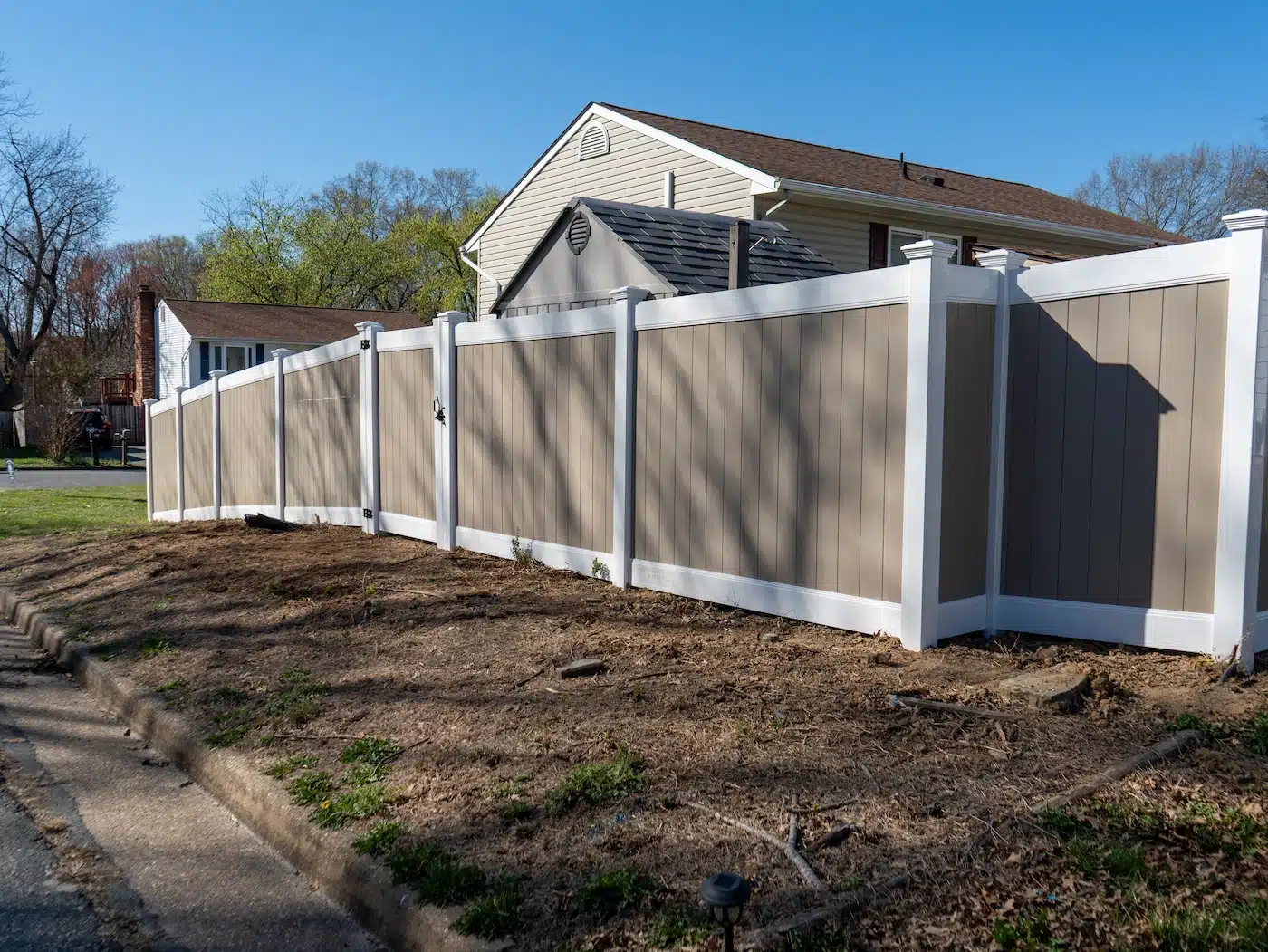
A stepped fence keeps every panel level. Each section sits a little lower than the one before it, so the top line looks like a staircase. Stepping is the usual answer for a backyard fence on a steep slope, and it works with rigid panels that can’t tilt, such as many solid vinyl privacy styles.
The trade-off is the triangle-shaped gap under the low end of each panel. On a gentle slope, it’s only a few inches. On a steep one, it can be big enough for a dog to squeeze through, so you may need to fill it with a bottom board, landscape timbers or soil.
You can see the look on this two-tone vinyl fence in Fredericksburg, where the privacy panels step down a sloped front yard so each section stays level.
Racked Fence on a Slope
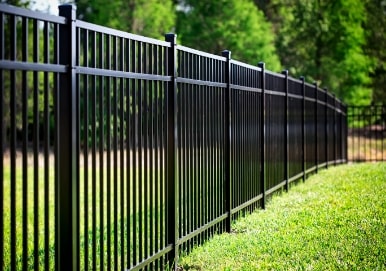
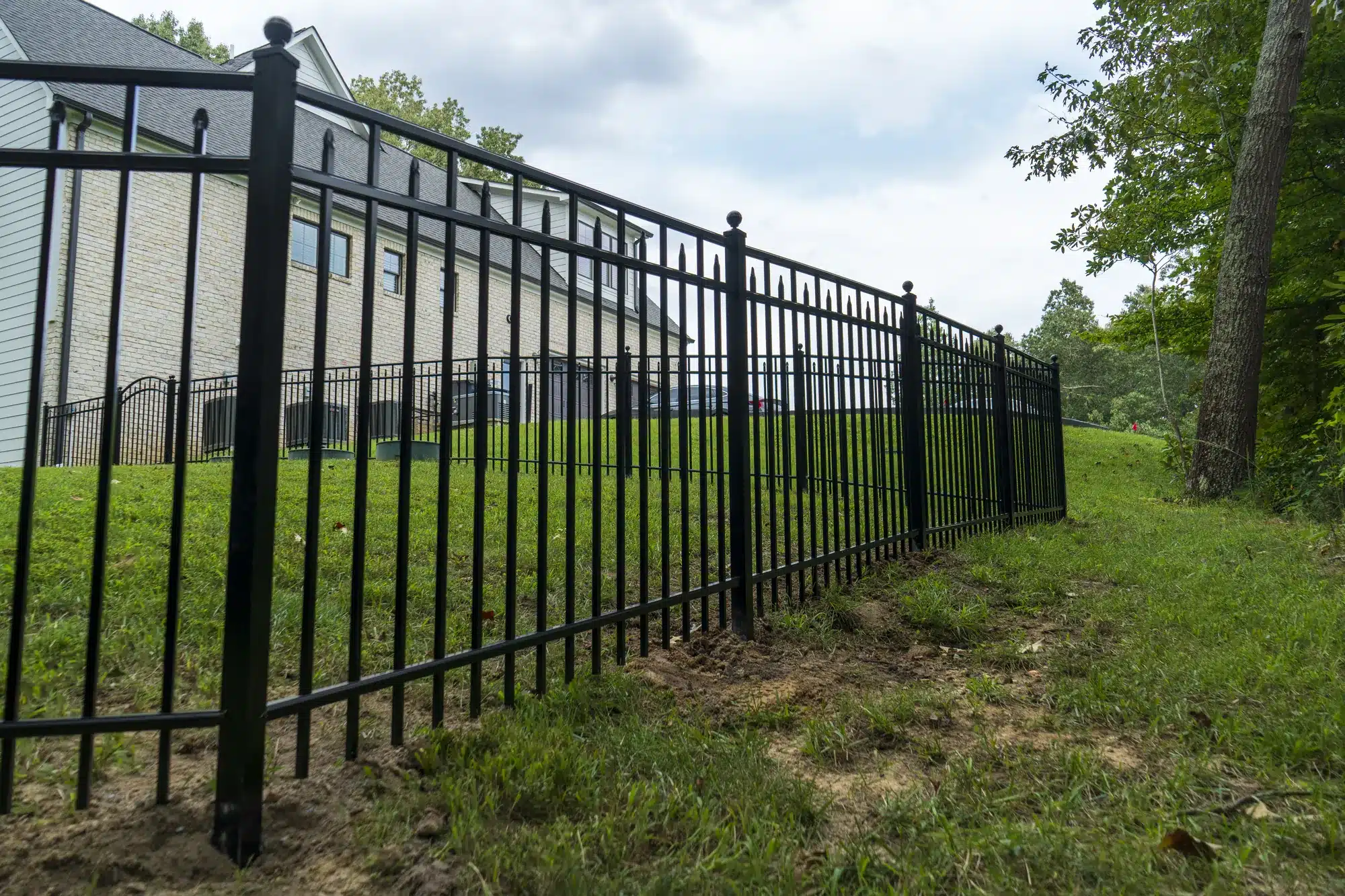
A racked fence tilts each panel so the rails run parallel to the ground while the pickets stay straight up and down. You get an even gap at the bottom and a smooth top line that follows the hill. Many aluminum panels are made to rack, and a wood fence built on site can follow almost any grade because the crew cuts the rails to fit.
Our Siskin aluminum fence in Chester, shown at the top of this page, is racked this way along a lawn that falls away in a gentle grade toward the treeline.
Racking has limits, though. Every panel style can only tilt so far, so ask for the racking limit before you order. If your grade goes beyond it, you’ll step the fence instead or mix both methods on one run. Not sure which material handles your grade best? See our guide to the best fence for a sloped yard.
Chain Link on Rolling Ground
Chain link mesh stretches along the fence line instead of coming in fixed panels, so it follows rolling ground well. That makes chain link fencing a practical choice for a long, uneven back property line.
How Steep Is Your Slope? Measure Before You Build a Fence
Before you choose a method for a backyard fence on a slope, measure the drop. First, drive a stake at the top of the run and another at the bottom. Then tie a string between them, level it with a line level, and measure from the string down to the ground at the low stake. That number is your total drop.
Next, divide the drop by the number of sections. For example, a 3 foot drop across six 8 foot sections means each section drops 6 inches. Compare that number with the panel’s racking limit, or plan a 6 inch step at every post.
Also look for spots where the grade changes. Many yards stay flat for a stretch, then fall off sharply near a ditch or the back line. Mark those spots on your plan, since they often need a shorter section or a switch from racked to stepped.
Tools and Supplies You’ll Need
Gather everything before you dig, because a half-dug fence line is no fun to leave overnight. You’ll need:
- Tape measure and a 4 foot level
- Stakes, mason’s string and a line level
- Post hole digger or a rented power auger
- Shovel and a digging bar for roots and rock
- Gravel and concrete mix
- Posts, panels or rails and pickets, plus fasteners
- Circular or reciprocating saw for trimming wood posts
Plan the Fence Line, Permits and Utility Marks
Start by confirming your property line, since a fence built even a few inches onto a neighbor’s land can cause trouble later. Check your plat or survey first. Our guide to Virginia property line fence rules covers the basics. If you have an HOA, read how to get a fence approved by your HOA before you order materials.
Next, call Virginia 811. The Virginia 811 homeowner page says you need to contact it at least 3 working days before you dig, and it lists installing a new fence as a reason to call. The service is free, and it marks buried public utility lines so your auger stays clear of them.
Your county may also set rules on fence height and placement. So check with your local zoning office before you set the first post.
Step-by-Step: Installing a Fence on a Slope
1. Mark the Posts
Run your string along the fence line and mark each post location with paint or a flag. Space the posts to match the panel width your supplier lists. Then check every measurement again before you dig, because one short gap throws off every panel after it.
2. Dig the Post Holes
Dig each hole to the depth your fence needs. That depth depends on fence height and the product. For example, Jerith’s aluminum fence installation instructions list a minimum post depth of 18 inches for a 48 inch fence and 24 inches for a 72 inch fence.
When you build a backyard fence on a slope, measure depth from the ground at each hole, not from your string. That way the downhill posts get the same anchoring as the uphill ones. Add a few inches of gravel to the bottom of each hole so water drains away from the post.
3. Set the Posts in Concrete
Set the end and corner posts first, plumb them with a level, and pour the concrete. Jerith’s guide also says footings must extend below the frost line where freezing can heave posts. After the end posts set, run a string between them to line up the rest.
Crown the top of each footing so it sheds water away from the post. On a hill, that small slope matters because runoff hits the uphill side of every post.
4. Get the Post Heights Right
For a stepped fence, each post must be tall enough for the higher panel on one side and the lower panel on the other. Plan the step height ahead so you don’t come up short on the uphill side. For a racked fence, the post tops should follow the slope in an even line. You can trim wood posts after the concrete cures, but vinyl and aluminum posts come in set lengths, so order the right sizes up front.
5. Hang the Panels
Attach stepped panels level, and drop each one by the step height you planned. For racked panels, tilt each section to match the grade, then fasten it to the brackets. If you’re building wood on site, cut the rails to the slope and hang the pickets plumb.
Keep the bottom gap even. Jerith recommends setting sections about 2 to 3 inches above the ground so you can trim underneath. If the fence surrounds a pool, the CPSC pool barrier guidelines say the gap at the bottom should not exceed 4 inches, or 2 inches over grass or gravel. That’s why stepped pool fences often need the low triangles filled.
6. Check Your Work
Walk the line when you finish. Push on each post, sight down the top rail, and look for any gap a pet could slip through. Then backfill low spots and spread gravel or mulch at the post bases to slow runoff.
Keep a Sloped Yard Fence Standing for Years
Erosion is the biggest long-term threat to a backyard fence on a slope. After a heavy rain, look for soil washing away from the downhill side of your posts, and fill it before the footing shows. Ground cover, mulch or a shallow gravel swale can slow the water down.
Wood needs a sealer or stain to handle sun and moisture, and our guide to sealing a wood fence walks you through it. Vinyl and aluminum need less care, but you should still check for loose fasteners and leaning posts once or twice a year. Our post on why fence maintenance matters has a simple routine.
When Should You Hire a Pro for a Fence on a Slope?
Plenty of homeowners build a fence on flat ground themselves. A backyard fence on a slope raises the stakes, though, because mistakes in step height or post depth show up as crooked lines and leaning posts. Consider hiring help if your grade changes more than once along the run, if you hit rock or roots in most holes, or if the fence has to meet pool barrier rules.
Material choice matters too, and our fence material comparison can help you weigh the options. You can also browse the styles we build on our wood fence, vinyl fence and aluminum fence pages.
Get a Quote for Your Sloped Backyard Fence
Good Neighbor Fence is a family owned company building fences across Central Virginia since 2006, with 400+ five-star Google reviews. We’ll look at your property in person, talk through stepped and racked options for your backyard fence on a slope, and give you a clear price. Learn more about our fence design and installation process, then request a fast, free quote or call (804) 737-4664.