


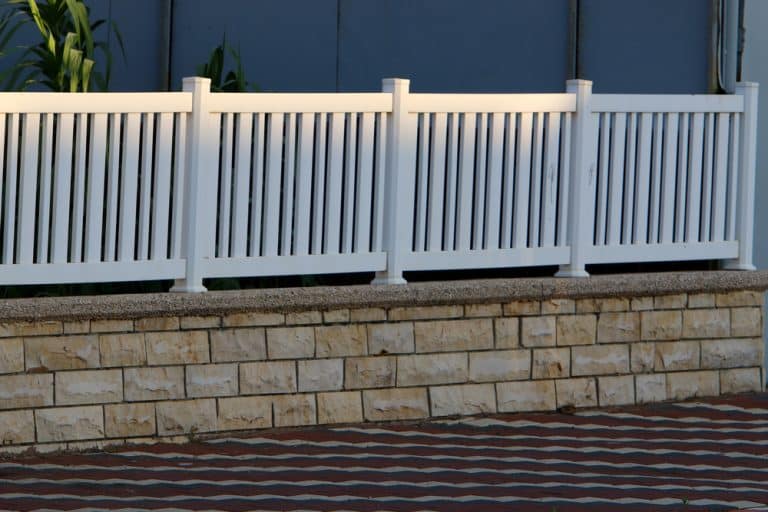
Yes, you can install a vinyl fence on a retaining wall, but only if the wall can carry the fence and the wind that pushes on it. On a poured concrete wall, installers usually bolt reinforced posts to the top with base plates, so the wall does the job a post hole normally does.
Block, stone and timber walls often need a different plan. Here’s how to check your wall, pick a mounting method and handle permits before you build.

Is Your Wall Ready for a Retaining Wall Fence?
Start with the wall, not the fence. A fence adds weight at the top edge, and it also acts like a lever when wind hits it. So a wall that already leans, bulges or has cracked blocks won’t get stronger once you bolt a fence to it.
Walk the full length of the wall and look for these warning signs:
- Leaning or bowing sections, even slight ones
- Cracks that run through several blocks or across the concrete
- Loose, shifted or missing cap stones
- Soil washing out at the base or through the joints
- Standing water behind the wall after a heavy rain
If you spot any of these, have the wall checked before you plan a fence. A structural engineer can tell you whether it can take the added load. It’s far easier to fix a failing wall before a fence sits on top of it.
What Your Wall Is Made Of Matters
The wall material decides how you can attach a vinyl fence on a retaining wall. Poured concrete gives anchors something solid to grip, so it’s the best candidate for surface mounting. A solid, reinforced concrete cap on a block wall can also work.
Hollow concrete block, dry-stacked stone and segmental landscape block are harder. Anchors can crack the units or work loose over time, since there’s little solid material to hold them. Timber walls rot and shift as they age, so they make a poor base for any fence.
How to Mount a Vinyl Fence on a Retaining Wall
There are three common ways to handle a vinyl fence on a retaining wall. The right one depends on the wall, the yard behind it and the fence style you want.
Surface Mount Posts on the Wall Cap
With surface mounting, each post sits on a metal base plate, and anchors bolt that plate into the top of the wall. A metal insert runs up inside the vinyl post to stiffen it. That matters because a hollow vinyl post can’t resist much sideways force by itself.
Some walls have a lip or coping that won’t take a flat plate. In that case, angle brackets or custom plates can fasten the posts to the face of the wall instead.
Set Posts in the Ground Behind the Wall
Another option skips the wall entirely. Installers set posts in concrete a short distance behind the wall, so the fence rides on soil instead of the wall cap. This works well on block walls that can’t hold anchors.
There’s a catch, though. Many segmental block walls have reinforcement fabric, called geogrid, in the soil behind them. Digging through it can weaken the wall. Before anyone digs, check the wall plans or ask the builder what’s behind it. Then contact Virginia 811 at least three working days ahead so utility companies can mark buried lines.
Move the Fence Line Back
If the wall is weak or the geogrid runs deep, you can move the fence back several feet. You give up a strip of yard, but the wall carries no fence load at all. Then you can fill that strip with plantings, mulch or gravel.
How to Install a Vinyl Fence on Top of a Block Wall
It depends on the kind of block. Mortared concrete block and dry-stacked landscape block call for different methods, so figure out which one you have before you buy hardware.
Mortared Concrete Block Walls
Hollow block cores give an anchor almost nothing to bite into. So at each post location, the cores are usually filled solid with grout or concrete, and then the base plate bolts into that solid section. If you can’t tell whether the cores in an existing wall are filled, ask a mason or engineer before anyone drills.
Segmental Landscape Block Walls
Dry-stacked landscape block holds itself up with weight and the geogrid behind it, not mortar, so the caps make a poor anchor point. Allan Block, a major segmental wall maker, recommends setting fence post footings at least 3 feet behind the back of the wall. For posts closer than that, it calls for sleeves placed while the wall is being built, because augering holes later damages the grid.
So if you’re planning a new wall with a PVC fence on top, design the two together. That way the post locations are built in from day one instead of drilled in later.
Choosing a Retaining Wall Fence Style
Almost any vinyl style can go on a wall once the posts have the right hardware. Privacy panels, picket fences and open rail designs all work. Still, the style changes how much force reaches the wall.
Solid privacy panels catch the most wind, because air can’t pass through them. Picket and rail styles let wind through, so they put less strain on posts and anchors. When your wall sits on an exposed hill or open lot, an open style or a shorter privacy fence is often the safer pick. For more detail, see how much wind a vinyl fence can withstand.
Height matters for the same reason. A taller fence on a retaining wall acts as a longer lever, so each post has to resist more force at its base. Compare heights and styles on our vinyl fence installation page, or read about privacy fence options if screening is your goal.
Why Drainage Matters for a Fence on a Retaining Wall
Trapped water puts a retaining wall under extra strain. When water builds up behind a wall, it pushes much harder than dry soil does. Over time, that pressure can tip or crack the wall, and the fence goes with it.
So look for weep holes near the base or a drain pipe outlet at the ends. If the wall has neither and the soil behind it stays soggy, fix the drainage first. Also point downspouts and sump lines away from the top of the wall. A wall that moves will twist posts, crack base plates and pull panels out of line.
Do You Need a Permit for a Vinyl Fence on a Retaining Wall?
Often not for the fence, but the wall can change the answer. Virginia’s building code exempts retaining walls supporting less than three feet of unbalanced fill from permits, as long as they don’t support a surcharge beyond ordinary fill. The same section exempts most fences unless they serve as a pool barrier or a required safety barrier.
Local offices follow the same rule. For example, the Henrico County permit center lists retaining walls under three feet of unbalanced fill among projects that don’t need a building permit, along with fences up to 7 feet tall that aren’t pool barriers. A taller wall, or one that carries extra load, may need a permit and an engineered design. So call your county building office before you build.
Zoning rules still control fence height and placement, and an HOA may add its own limits. Read our tips on installing a fence in an HOA. Since retaining walls often sit near a lot line, also review Virginia property line fence rules.
Get a Quote for Your Retaining Wall Fence
A vinyl fence on a retaining wall takes more planning than a fence on flat ground. But when the wall is sound, it turns a drop-off into a clean, finished edge. Good Neighbor Fence has been family owned since 2006. We handle fence design and installation across Central Virginia, from Richmond and Chesterfield to Henrico County and Hanover. Request a fast, free quote or call (804) 737-4664 to talk through your wall and fence plans.