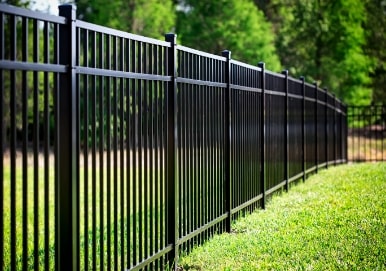




An aluminum pool fence gives North Chesterfield homeowners a barrier that won’t rust, won’t rot and won’t block the view of the water. When it is built to the right height and spacing, it also meets Chesterfield County’s pool barrier rules.
Below, we cover why aluminum works so well around a pool, what the county requires, and how to plan the gate and layout before you build.
Why Choose an Aluminum Pool Fence?
A pool fence lives in a tough spot. It takes splash water, sprinklers, humid summers and freezing winters, often all in the same year. Aluminum handles that setting well because it does not rust like steel or rot like wood.
Here is what homeowners tend to like most:
- Low upkeep. A hose rinse now and then keeps most powder-coated finishes looking clean. There is no sanding, staining or painting.
- Clear sight lines. Slim pickets let you watch the pool from the patio or a kitchen window, so you can keep an eye on swimmers.
- Pool-ready styles. Many manufacturers offer pool versions of their panels with tighter picket spacing.
- Color and style choices. Black is a popular pick, but bronze and white also suit many homes.
You can see the styles we install on our aluminum fence installation page.
What Does Chesterfield County Require for a Pool Barrier?
North Chesterfield sits inside Chesterfield County, so county building rules apply to your pool barrier. The county handout, Requirements for Outdoor Residential Swimming Pools, lists the key numbers:
- A barrier at least 48 inches tall, measured from the outside face.
- No more than 2 inches between the ground and the bottom of the fence.
- No other opening large enough to pass a 4-inch sphere.
- Gates that are self-closing, self-latching and open outward, away from the pool.
- Latches lower than 54 inches placed on the pool side, at least 3 inches below the top of the gate.
The handout also lists a barrier permit, which may be combined with the pool permit, and a barrier inspection. Rules can change, so confirm the current requirements with the county before you build. For the statewide picture, see our guide to Virginia pool fence regulations.
The Rail Spacing Rule to Check
Aluminum fences have horizontal rails, and rails can work like a ladder for a small child. So the county handout says rails less than 45 inches apart must sit on the inside face of the barrier, with 1.75 inches or less between pickets. It also bars openings of half an inch or more within 18 inches of a gate latch.
These details depend on the exact panel and gate you buy. Before you order, check the spec sheet against the county rules, or let your installer do it.
How Aluminum Pool Fencing Holds Up Here
Summers around Richmond are hot and humid, and winters bring freeze and thaw cycles. Wood swells and shrinks through those swings, while steel can rust where the coating chips. Aluminum does not rust, so a scratch in the finish won’t leave a rust streak.
Still, give the fence a quick check each spring. Open the gate a few inches, let go, and make sure it closes and latches on its own. Hinges and latches wear first, so tighten or adjust them as soon as the gate starts to drag.
For more on how long the material lasts, read how long an aluminum fence lasts.
Aluminum vs. Other Pool Fence Materials
Vinyl and wood can also meet pool rules, and they give you more privacy. But a solid fence hides the pool from the house, so you can’t see the water from inside. Wood also needs sealing or staining, and it can warp in a wet spot next to the pool.
Chain link is often the lowest cost option, but many homeowners don’t love the look next to a patio. For a side by side view, see the pros and cons of each fence type.
Planning Your Aluminum Pool Fence Layout
A good layout makes the fence safer and easier to live with. Walk the pool area first, then think through these points:
- Pool only or whole yard. Fencing just the pool area keeps the rest of the yard open for kids and pets.
- The house wall. If your house forms one side of the barrier, the county handout calls for door and window alarms that sound for 30 seconds.
- Climbable items. Keep grills, planters and pool equipment away from the outside of the fence, since a child could use them to climb.
- Slopes. Many aluminum panels can rack to follow a gentle slope, but the 2-inch bottom gap still applies.
- Gate location. Put the gate where you walk most, and hang it to swing outward, away from the pool.
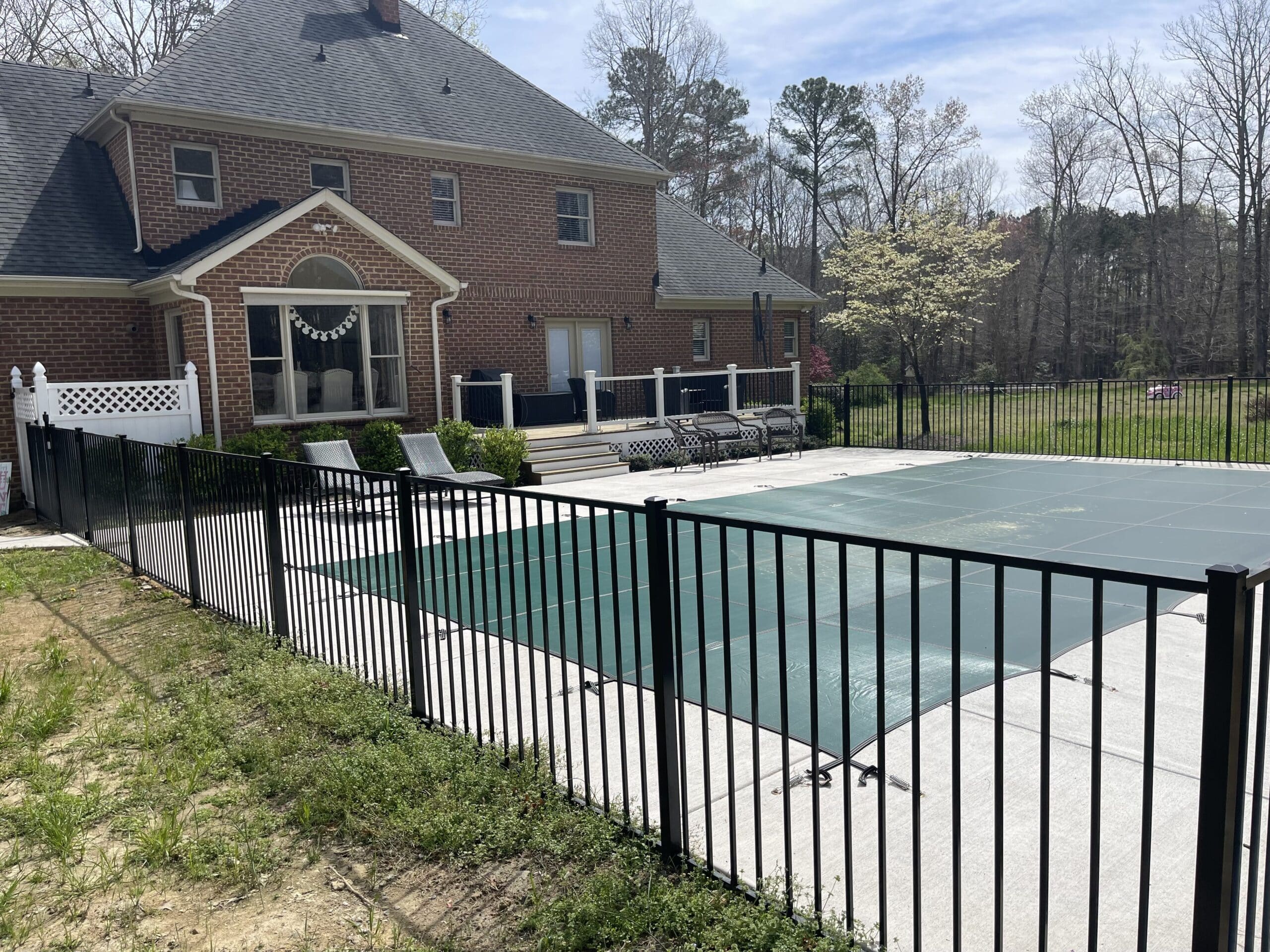
Good Neighbor Fence builds pool gates as part of the full fence, so the gate, posts and panels are planned together. For a pool example, see this Richmond pool enclosure, where black flat-top aluminum panels sit in the lawn just past the concrete deck. For a clean 4-foot black line, see this Siskin style aluminum fence in Chester. You can find more ideas in our pool fencing ideas and these residential pool fence dos and don’ts.
Aluminum Pool Fence Cost and Timing
Price depends on the length of the fence, the panel style and height, the number of gates and how much the ground slopes. For the main price factors, see our guide to aluminum fence costs. If you would rather spread out payments, you can also finance your fence build.
Timing matters, too. Most homeowners want the fence done before pool season, and the county inspection list includes the barrier. So build the fence into your pool schedule early. Once the job starts, we typically complete aluminum fence installations within 1 to 2 days.
Get a Quote for Your North Chesterfield Pool Fence
Ready to fence your pool? Request a free quote and we will help you choose an aluminum pool fence that fits your yard and the county rules. Good Neighbor Fence has served the greater Richmond area since 2006, and you can learn more about our aluminum fencing in North Chesterfield. You can also call us at (804) 737-4664.