



A residential pool fence has one job: keep young children away from the water when no adult is watching. To do that, it should stand at least 48 inches tall, leave no gaps a child can squeeze through, and close with a self-latching gate every time.
Those numbers come from the U.S. Consumer Product Safety Commission pool barrier guidelines, and they make a good baseline before you check your local code. Here are the dos and don’ts we’d share with any Central Virginia homeowner planning a backyard pool fence.

Why a Residential Pool Fence Matters
According to the CDC, more children ages 1 to 4 die from drowning than from any other cause. Its advice is direct: use a four-sided fence at least four feet tall that fully encloses the pool, separates it from the house and has self-closing, self-latching gates.
A fence also keeps out pets and uninvited guests, and it gives the pool area a finished look. But safety comes first, so every tip below starts there.
The Dos of Installing a Residential Pool Fence
Get these right and you’ll cover the basics that matter most. Then you can focus on style.
Do Check Your Local Code and Permit Rules First
Pool barrier rules can vary by county, so call your local building office before you pick a design. In Virginia, the statewide building code exempts most fences from permits, but not a fence used as the barrier for a swimming pool. So plan on a permit, and read our guide to Virginia pool fence regulations for the details.
Do Build a Pool Safety Fence at Least 48 Inches Tall
The CPSC guidelines call for a barrier at least 48 inches high, measured on the side that faces away from the pool. The gap under the fence should be 4 inches or less. Over grass, pebbles or other soft ground, that gap drops to 2 inches, since kids can dig or push under.
Taller is fine. If you have older kids who climb, a taller fence gives you more margin.
Do Use Self-Closing, Self-Latching Gates
The gate is the weak point in most residential pool fence designs, because people prop it open or forget to shut it. So pedestrian gates should open outward, away from the pool, and close and latch on their own.
Latch height matters too. If the latch release sits less than 54 inches from the bottom of the gate, put it on the pool side at least 3 inches below the top. Also keep any opening within 18 inches of the latch to 1/2 inch or less, so small hands can’t reach through. Finally, choose hinges and latches made for pool gates, and adjust them as soon as the gate stops closing on its own.
Do Choose a Residential Pool Fence Material That Fits Your Yard
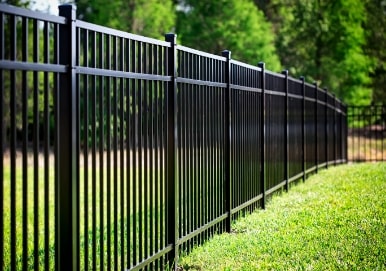
Aluminum, vinyl and wood can all work around a pool when the design meets the spacing rules. Aluminum fence installation keeps the view of the water open and won’t rust. Vinyl fencing adds privacy with little upkeep, while wood fences suit a traditional look if you keep up with sealing and repairs. For example, our aluminum pool fence for a Richmond home uses black flat-top panels set in the lawn just past the concrete deck, so the whole deck sits inside the barrier.
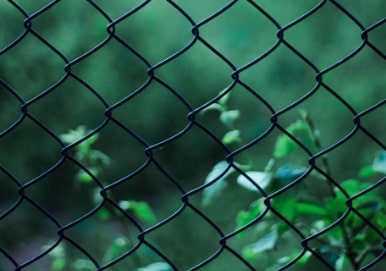
Whatever you pick, check the spacing. Openings shouldn’t let a 4-inch sphere pass through. Chain link mesh shouldn’t exceed 1 1/4 inches square, unless slats reduce the openings to 1 3/4 inches or less. For design inspiration, see our pool fencing ideas.
Do Maintain the Fence and Keep Other Layers in Place
Check your pool fence at the start of every swim season and after big storms. Open the gate fully, let go, and make sure it closes and latches from any position. Then look for loose posts, bent pickets, sagging panels and soil washing out under the bottom rail. Our post on fence maintenance covers more.
Still, a fence is only one layer. The CPSC notes that barriers aren’t childproof and can’t replace adult supervision. So pair your fence with a designated adult watcher and a firm rule that kids never enter the pool area alone.
The Don’ts of Installing a Backyard Pool Fence
Most residential pool fence problems come from small oversights. Watch for these.
Don’t Leave Gaps a Child Can Squeeze Through
A small child can slip through a surprisingly narrow space in a backyard pool fence. Watch the gap under the bottom rail, the space beside gate posts and any decorative cutouts. Wood can also shrink and warp as it ages, so recheck the spacing on an older wood fence every season.
Don’t Put Climbable Rails on the Outside
Horizontal rails on a pool safety fence make handy footholds. If the top and bottom rails sit less than 45 inches apart, the CPSC says the rails belong on the pool side, and vertical pickets should be no more than 1 3/4 inches apart. When the rails are 45 inches or more apart, they can face out, but picket gaps still can’t exceed 4 inches.
Don’t Leave Furniture or Toys Against the Fence
A patio chair, cooler or planter next to the fence turns a 48-inch barrier into a step stool. So keep a clear zone on the outside of the fence. Also, don’t let grills, storage boxes or AC units sit close enough to climb.
Don’t Use the House Wall Without Alarms
Sometimes the house forms one side of the pool enclosure. In that case, any door that opens to the pool area needs extra protection. The CPSC recommends a door alarm that sounds when the door or its screen opens, or a power safety cover on the pool. Better still, the CDC recommends a fence that separates the pool from the house entirely.
Don’t Rely on a Pool Cover Alone
A cover helps, but it can’t replace a residential pool fence. Someone has to put it back on after every swim, and a loose or partly open cover can hide the water. Use a cover along with your fence, not in place of it.
Get a Quote for Your Residential Pool Fence
A residential pool fence protects your family only when every detail is right, from the latch height to the gap under the bottom rail. Good Neighbor Fence builds aluminum, vinyl and wood fences across Central Virginia, including Richmond, Chesterfield, Henrico and Hanover. Request a fast, free quote or call (804) 737-4664 to plan a pool fence that fits your yard and your county’s rules.