

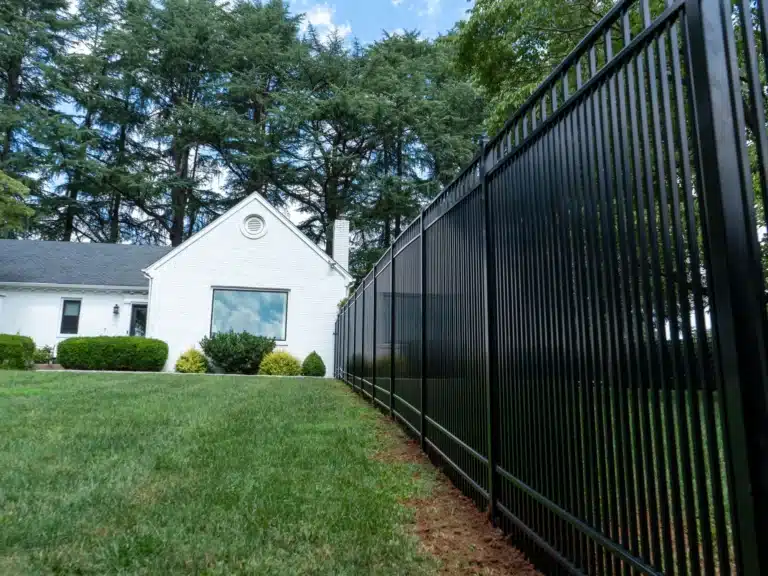
Aluminum fence cost comes down to grade, height, picket style, footage, gates and the ground along your fence line. So two yards with the same footage can get very different quotes. The way to a real number is a fast, free quote for your property. Below, you’ll see what moves the price and how aluminum compares with other materials. Then you’ll get a checklist for comparing quotes line by line.
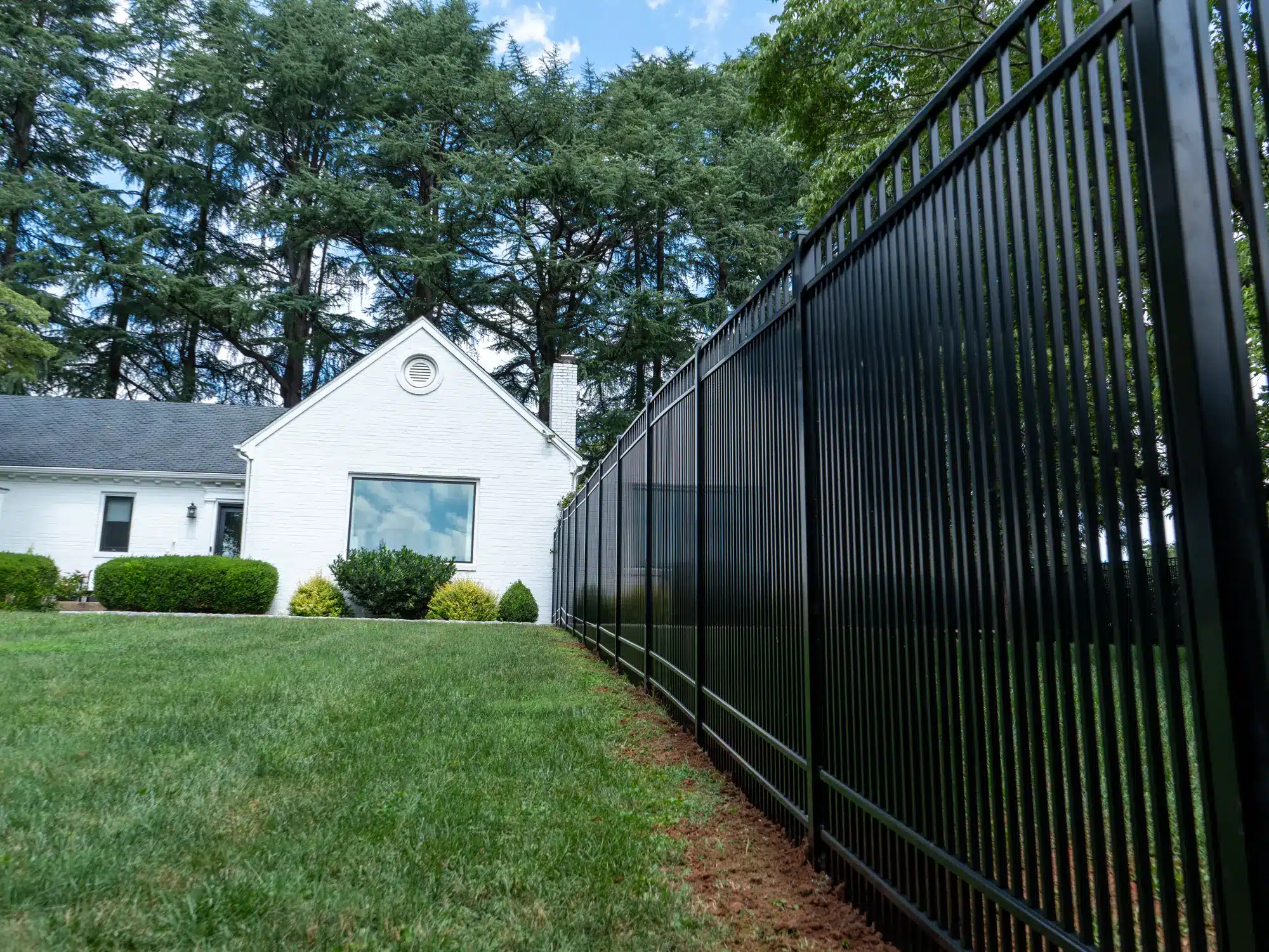
What Drives Aluminum Fence Cost?
Most of the price comes from two places. One is the metal in each foot of fence, and the other is the work of setting posts.
Grade: The Biggest Swing in Aluminum Fence Cost
Aluminum fence comes in residential, commercial and industrial grades. The difference is the amount of metal in each section. For example, Jerith’s aluminum fence comparison guide lists thicker rail walls on its commercial lines than on its residential lines. Its industrial lines use larger pickets. Since two sections can look alike from the street, grade often explains why one quote runs higher than another.
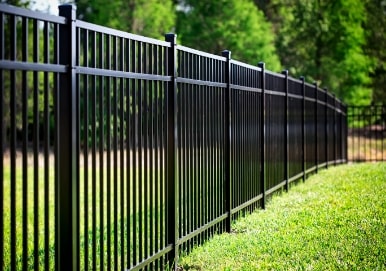
Residential grade suits most backyards, pool enclosures and front yard borders. Some product lines sit between the two, sold as heavy residential, for taller fences and wider sections. Commercial grade belongs on business sites, like this 6-foot commercial aluminum fence in Colonial Heights with a braced double drive gate. On a typical house, commercial grade adds cost without a benefit you’d notice, so ask which grade each quote includes.
Height and Picket Style
Height adds metal to every section, so a 6-foot fence costs more per foot than a 4-foot one. Four feet is common for pool enclosures and front yards, while 5 and 6 feet suit larger dogs and security. Taller fences also tend to need heavier rails, bigger posts or shorter sections to stay rigid.
Style matters too. A flat top with three rails is usually the simplest option. Spear tops, finials, rings, scrolls and double picket designs add parts and labor. Puppy pickets add tighter spacing along the bottom to keep small dogs in, so they add material too.
Color and Finish
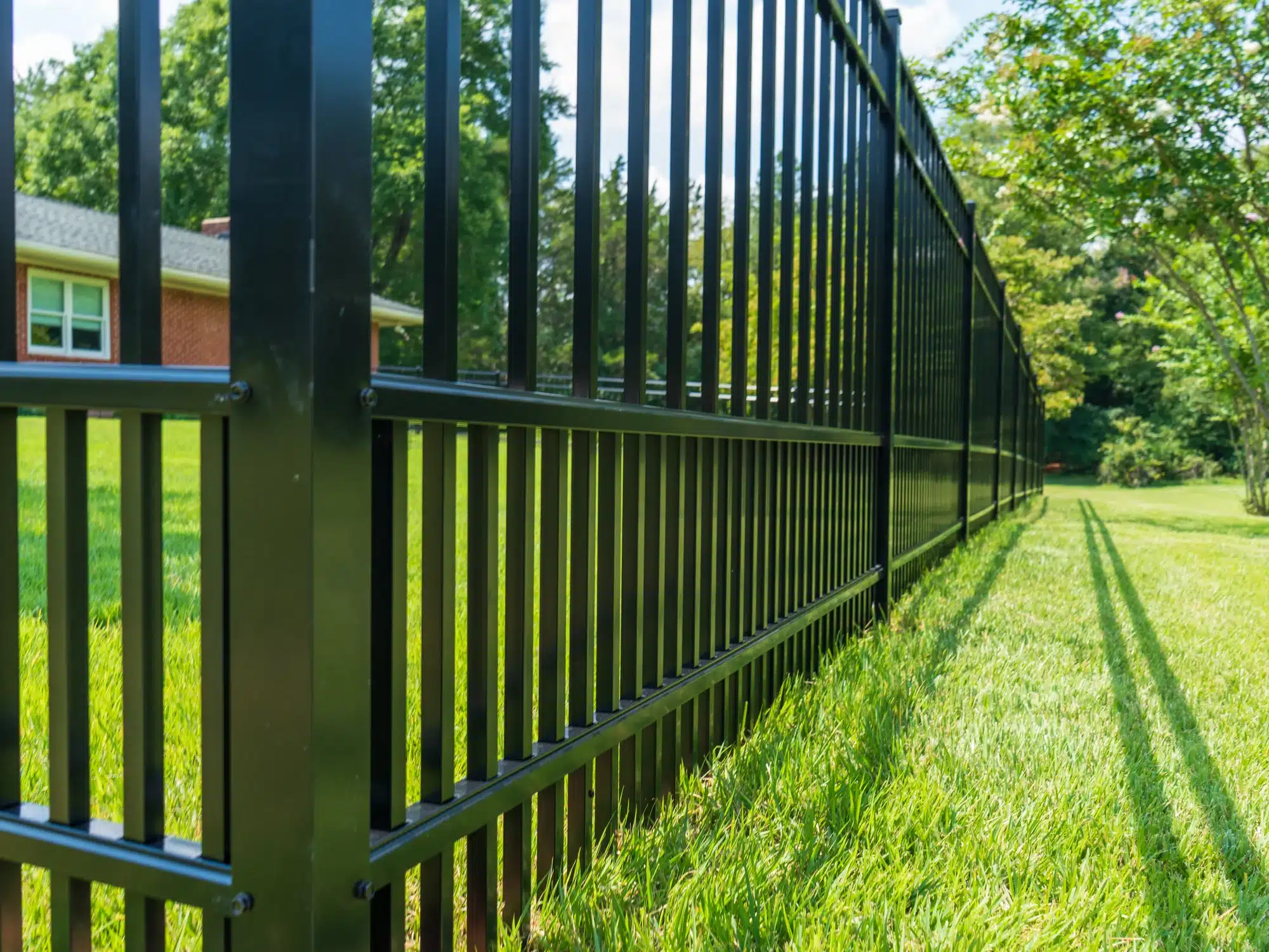
Aluminum fence gets a powder-coated finish, a dry coating that bonds to the metal under heat instead of being brushed on like paint. Black is the most common color. Bronze, white and other colors are available from many manufacturers, but they can cost more or take longer to get. For a look at the options, see our guide to aluminum fence styles and colors.
Footage, Layout and Corners
Total footage is the multiplier on everything else. But layout counts too. Every corner, end and gate needs a post. So a line with many turns uses more posts than a straight run.
On bigger lots, footage adds up fast. A square acre is about 835 feet around, so measure only the area you need to fence.
Gates as Part of Your Fence
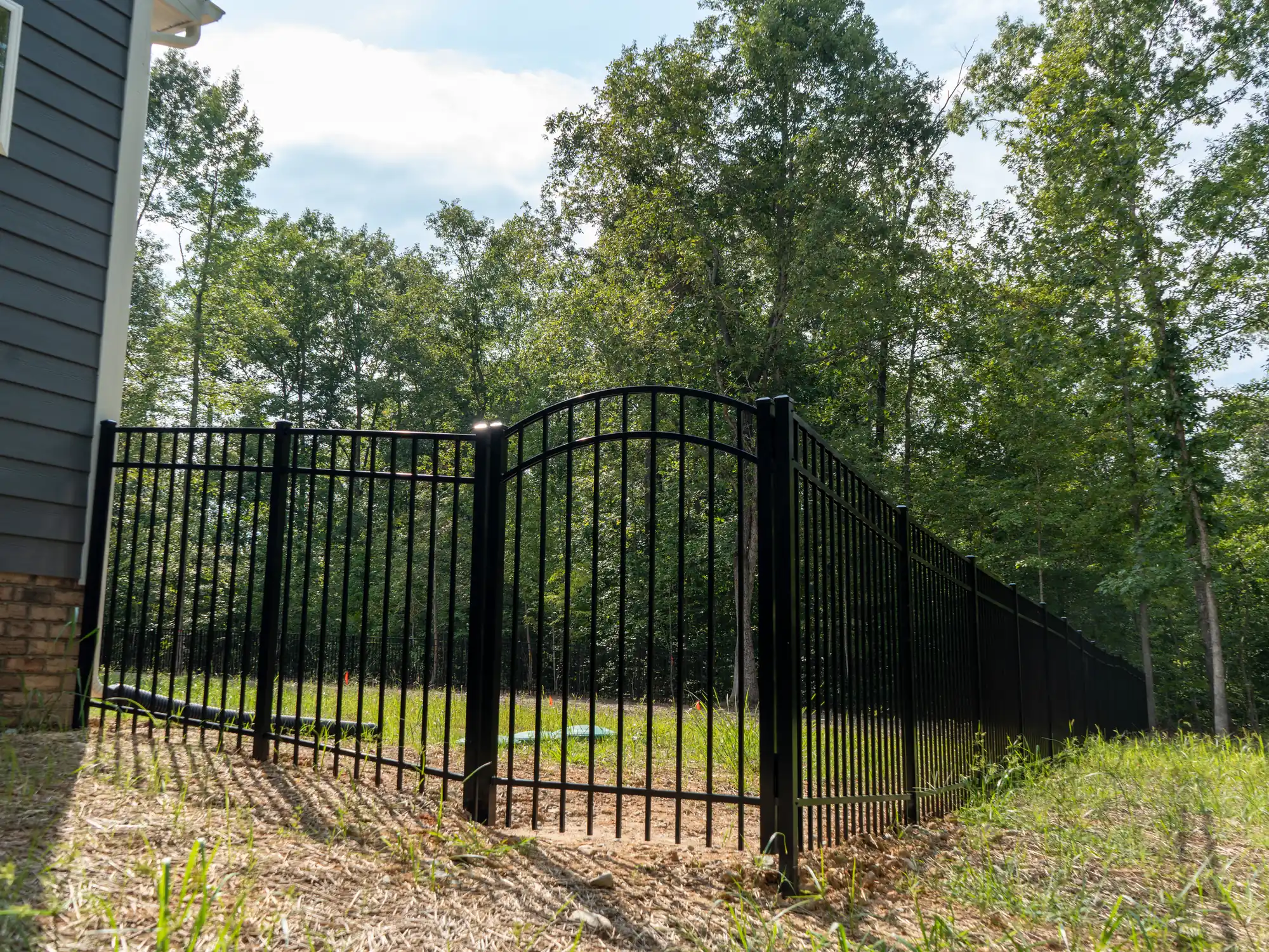
Gates cost more per foot than any other part of a fence. That’s because each one needs a frame, hinges, a latch and stronger posts. A 4-foot walk gate is simple. A wide double drive gate needs heavier gate posts and bracing to stay square, and arched tops add fabrication. If the fence surrounds a pool, gates should be self-closing and self-latching, as the CPSC pool barrier guidelines recommend. Our guide to Virginia pool fence regulations covers the rest. We build gates as part of a new fence, so plan them with the fence line.
Slope, Soil and Site Prep
Flat, open ground is the easiest and least expensive to fence. Aluminum handles a gentle slope well, because many residential sections rack, meaning the rails tilt to follow the grade. Steeper grades may need stepped sections, extra posts or special brackets, and each one adds labor. Our guide to installing aluminum fence on a slope explains the options.
Soil and site matter as well. Clay, roots and buried rock slow down post holes. Brush, overgrowth and any old fence have to come out first. So removal and haul-away belong in the quote. Tight access, like a narrow side yard, also adds time.
Permits, Zoning and HOA Approval
In Virginia, most fences don’t need a building permit. The Virginia Uniform Statewide Building Code, Section 108.2 exempts fences of any height, except pool barriers and fences required for pedestrian safety. For example, Henrico’s permit center lists fences up to 7 feet that aren’t pool barriers as work that needs no permit. Zoning is separate, though. Counties set height limits and setbacks, and front yard limits are often lower than back yard limits.
If you live in an HOA, get approval for height, style and color before you sign. Also confirm where your property line runs, since a fence built over it can turn into a costly problem. Our tips on installing a fence in an HOA walk through approval. Before anyone digs, Virginia 811 marks public utility lines for free. You need to contact them at least 3 working days ahead.
How Aluminum Fence Cost Compares With Other Materials
Aluminum sits at the higher end of residential fencing, alongside vinyl and cedar. Chain link usually costs the least to install, and pressure-treated wood lands in the middle. Our guide to what drives fence installation cost covers every material, and the table below sums up where aluminum fits.
| Material | Relative install cost | Upkeep | Privacy | Best for |
|---|---|---|---|---|
| Chain link | Lowest | Very low | None | Pets, large areas, tight budgets |
| Pressure-treated wood | Moderate | Periodic staining or sealing | Full with privacy styles | Privacy on a budget |
| Vinyl | Higher end | Occasional washing | Full with privacy panels | Low-upkeep privacy |
| Cedar | Higher end | Periodic sealing | Full with privacy styles | Natural wood look |
| Ornamental aluminum | Higher end | Occasional washing | None, open pickets | Pools, front yards, views, slopes |
So what does the extra cost buy? First, aluminum won’t rot or rust the way steel does. The Aluminum Association lists corrosion resistance among its core traits. Second, it can follow a slope without the gaps a stepped panel leaves. On one sloping, wooded Richmond lot, we racked the sections so the fence followed the ground. Finally, open pickets keep the view of a pool, a garden or a front porch.
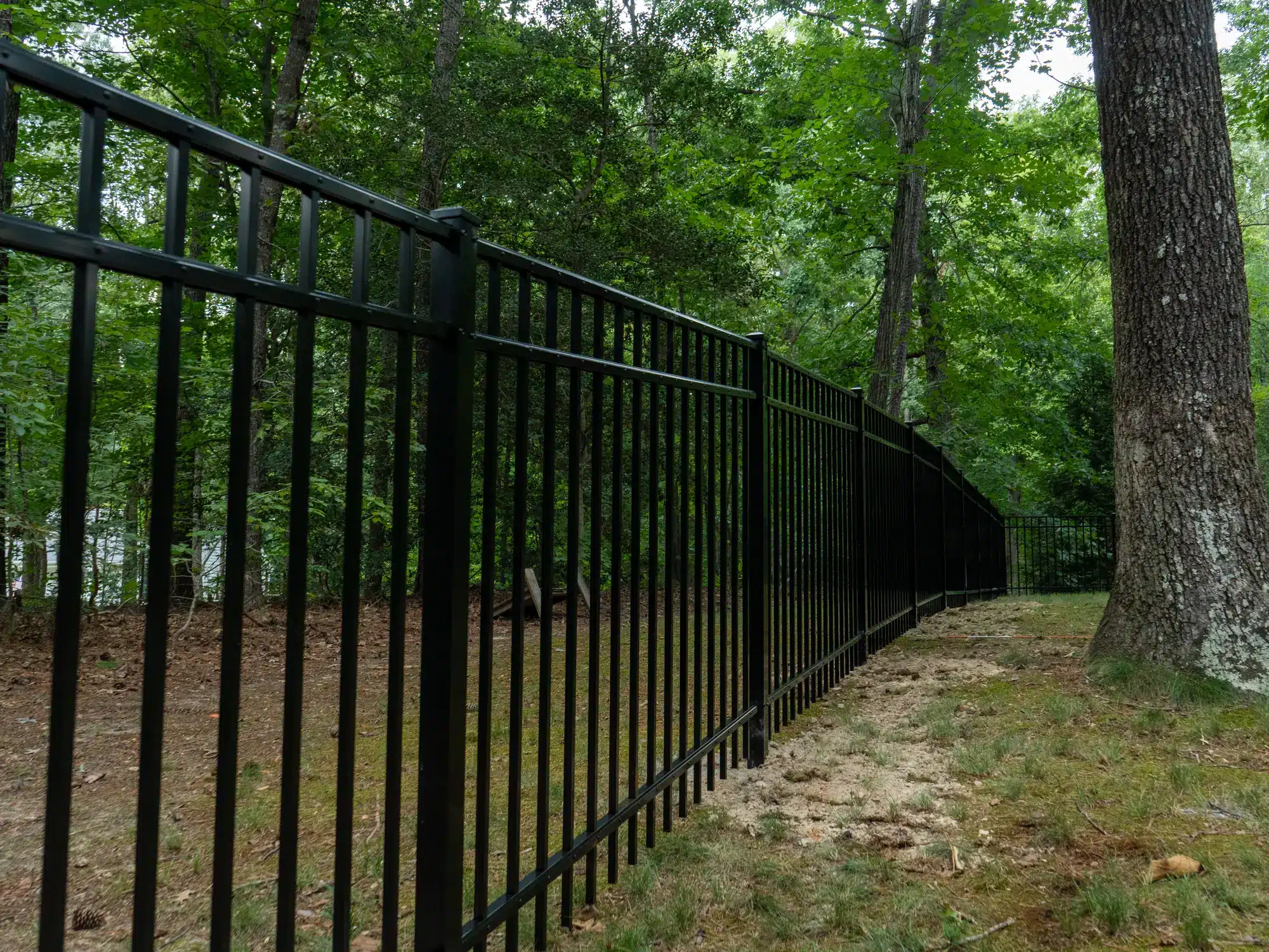
Aluminum isn’t the right fit for every yard, though. It gives you no privacy. If screening the patio is the goal, a wood or vinyl privacy fence makes more sense. A hard hit from a mower or a falling limb can also bend a picket. For a side-by-side look, see the pros and cons of each fence type. Also read how long an aluminum fence lasts.
Plan Your Fence Before You Ask for Quotes
A little planning makes every quote easier to compare. Work through these steps first.
- Measure the line. Walk it with a measuring wheel or tape, and note corners, gates and slopes. Your plat or survey shows where the property line runs.
- Name the job. A pool barrier, a dog run, a front yard border and a security line each point to a different height and grade.
- Pick gate spots and widths. Think about mowers, trailers and trash cans, since a gate that’s too narrow is hard to fix later.
- Check the rules. Confirm zoning height limits and HOA style and color rules before you settle on a design.
- Note the site. Flag trees, steep spots, soft ground and any old fence that has to come out.
How to Compare Aluminum Fence Cost Across Quotes
The lowest number isn’t always the lowest price. A quote that leaves out gate hardware or removal will grow later, so line up each quote against this list.
- Manufacturer, product line and grade, named in writing
- Height, picket style and color
- Post size, spacing and depth, plus how posts are set
- Section width and how the fence handles slopes (racked or stepped)
- Gate count, widths, gate posts and hardware, including self-closing latches for a pool
- Removal and haul-away of any old fence
- Who calls Virginia 811 before digging
- What finish warranty the manufacturer offers
If two quotes name the same product line, height and gates, you can compare them fairly. If they don’t, ask each contractor to fill in the gaps.
Ways to Manage Aluminum Fence Cost
- Match the grade to the job. Residential grade covers most homes, so skip commercial grade unless the site needs it.
- Keep the style simple. A flat top or plain spear top costs less than finials, scrolls or double pickets.
- Stick with black. It’s the most common color and usually the easiest to get.
- Limit gates. Each gate adds cost, so use only the gates your yard needs. Then size drive gates to what you’ll really drive through.
- Mix materials. Some homeowners use aluminum where the view matters and a privacy fence where screening matters.
- Phase the project. Fence the part that matters most now, like the pool or backyard, then extend it later in the same style.
- Finance it. Financing through Wisetack starts at 0% APR for qualified buyers.
Common Questions About Aluminum Fence Cost
How is aluminum fence cost per foot figured?
Most quotes start from a per-foot number for the fence line, and gates show up as separate items. That per-foot figure rolls up the sections, posts and labor for a standard run. So it climbs with grade, height and picket style. Corners, ends and slopes add posts and time, which is why a short line with many turns can cost more per foot than a long, straight one. Before you compare two per-foot numbers, check whether each one includes posts, gates and removal.
What does 200 feet of aluminum fence cost?
That depends on what those 200 feet include. A straight run of 4-foot residential fence with one walk gate is a very different job from 200 feet of 6-foot fence that wraps a pool, climbs a slope and adds a double drive gate. Grade, height, corners, gates, ground and removal of an old fence all change the number. To get a real figure, measure the line, mark your gate spots and ask for a free quote on that exact layout.
Why does an aluminum fence cost more than chain link?
You’re paying for more material per foot, a powder-coated finish and a decorative look. Chain link uses woven wire mesh on steel posts, which is quicker to make and install.
Is aluminum or vinyl fence cheaper?
Compare like for like. Both sit at the higher end of residential fencing, so the style you choose usually matters more than the material. An open aluminum fence lines up best against vinyl picket, since a solid vinyl privacy fence uses much more material. If privacy is the goal, vinyl is the one to price, and our guide to vinyl fence cost explains what moves that number.
Is an aluminum fence worth the cost?
It is if you want a fence that won’t rot or rust and needs little more than an occasional rinse. It isn’t if you need privacy, since open pickets won’t screen a yard. For pools, front yards and sloped lots, aluminum is a strong choice.
Does an aluminum fence need a permit in Virginia?
Usually not, unless it’s a pool barrier. The state building code exempts most fences, but pool barriers need a permit. Zoning height limits and HOA rules still apply, so check with your county and HOA first.
Can an aluminum fence go on a slope without gaps?
Yes, on most gentle to moderate slopes. Rackable sections tilt to follow the ground, so there’s no stair-step gap under each section. Very steep grades may still need stepping or custom work.
Does aluminum fencing work for dogs?
Yes, for most dogs. Choose a height your dog can’t clear, and add puppy pickets if a small dog could slip between standard pickets. Our guide to choosing a vinyl or aluminum fence for dogs compares the two.
Get a Free Aluminum Fence Quote
The fastest way to a real aluminum fence cost is a quote for your yard. Good Neighbor Fence has been family owned since 2006 and has earned 400+ five-star Google reviews. Most installs take 1 to 2 days. See what we build on our aluminum fence installation page. Then request a fast, free quote or call (804) 737-4664 in Central Virginia or (540) 506-4835 in Northern Virginia.