


Vinyl fence cost depends mostly on the style you choose, the height, the grade of the panels and how many feet your yard needs. A low ranch rail fence usually costs the least per foot, while 6-foot privacy panels and decorative lattice tops sit at the higher end of the vinyl range.
Vinyl usually costs more to install than pressure-treated wood, but it never needs stain or paint. So the quickest way to a real number is a fast, free quote from Good Neighbor Fence. We build vinyl fences around Richmond and in Northern Virginia towns like Fredericksburg, Stafford and Spotsylvania.
What Drives Vinyl Fence Cost
Every vinyl quote comes from the same short list of variables. Here’s how each one moves the number.
Style and Height
Style sets the bracket. A two- or three-rail ranch fence uses little material and gives no privacy, so it’s usually the lowest-cost vinyl option for long boundaries. Picket fences sit a step higher. Solid 6-foot privacy panels use the most material, and semi-privacy panels with a lattice or picket top land in the same upper range.
Height works the same way it does with any fence. Taller panels need longer posts, deeper holes and more concrete. Local zoning also caps height, often lower in front yards than in back.
Panel Grade and Wall Thickness
Vinyl fence parts are extruded, so the wall thickness of each post, rail and picket is a big part of what you’re buying. ASTM F964 is the industry standard that sets requirements for rigid PVC fence profiles, including dimensional tolerances and weatherability. Still, wall thickness varies by manufacturer and product line, and heavier profiles cost more.
Two fences can look the same in a photo and differ in grade. So ask each contractor for the manufacturer, the product line and the spec sheet, then compare those instead of the pictures.
Reinforcement and Gates
Tall, solid panels catch wind, so better systems reinforce the rails. Bufftech’s installation guide, for example, says its molded panels include steel channel in the top and bottom rail. It also calls for aluminum post inserts, or concrete and rebar, in hinge and latch posts.
Gates are part of the fence project, and each one adds reinforced posts, hardware and labor. A double drive gate costs more than a single walk gate.
Footage, Layout and Slope
Total footage is the biggest multiplier. Corners, end posts and short sections add work, so a yard with many turns costs more per foot than one straight run.
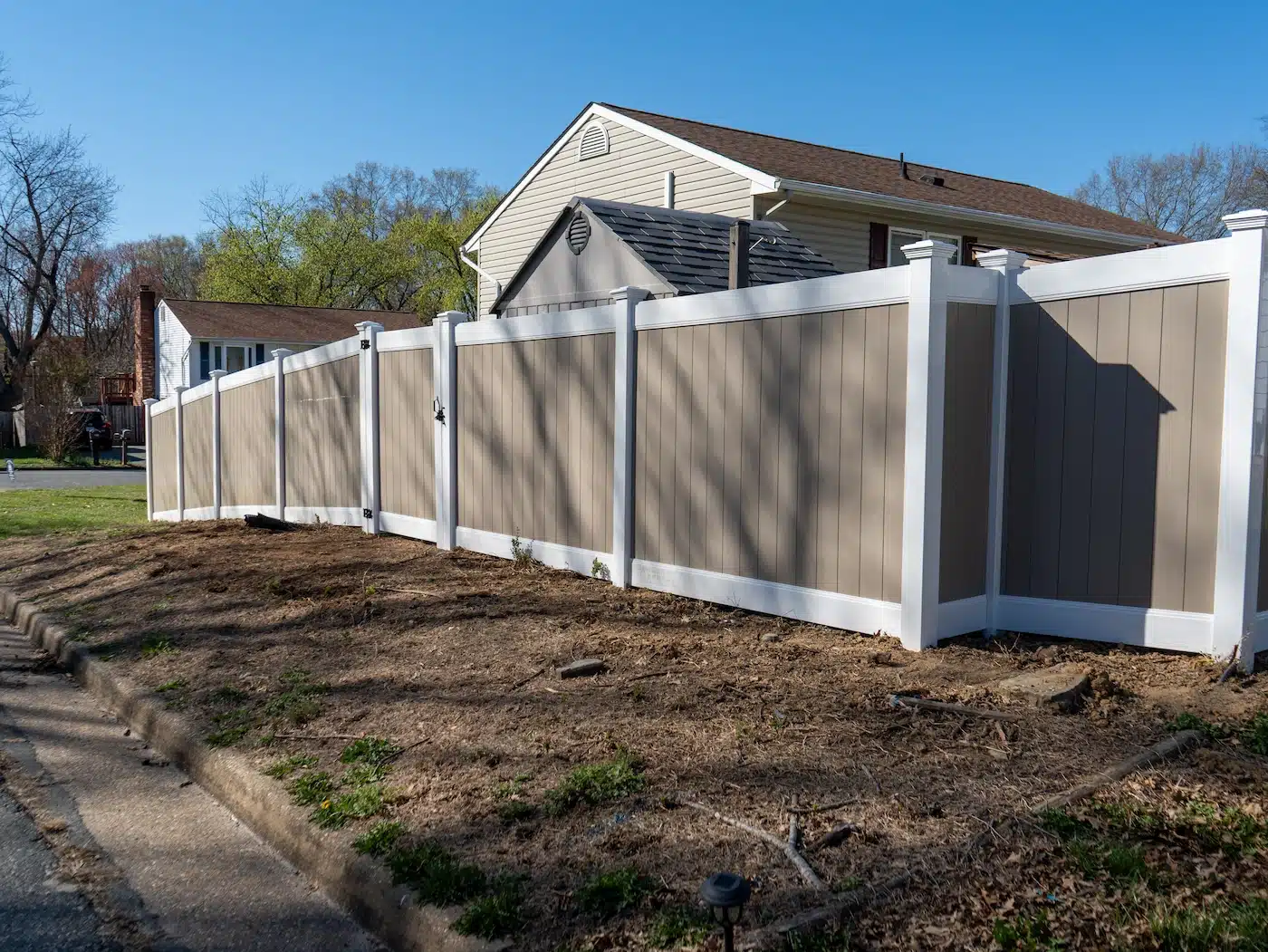
Slopes matter more with vinyl than with wood because vinyl panels are rigid. The same Bufftech guide describes two methods. With stepping, the rails stay level and the posts get taller. With racking, the rails follow the slope, but only up to a limited angle. Solid privacy panels are commonly stepped, which leaves a small gap under the low end of each section.
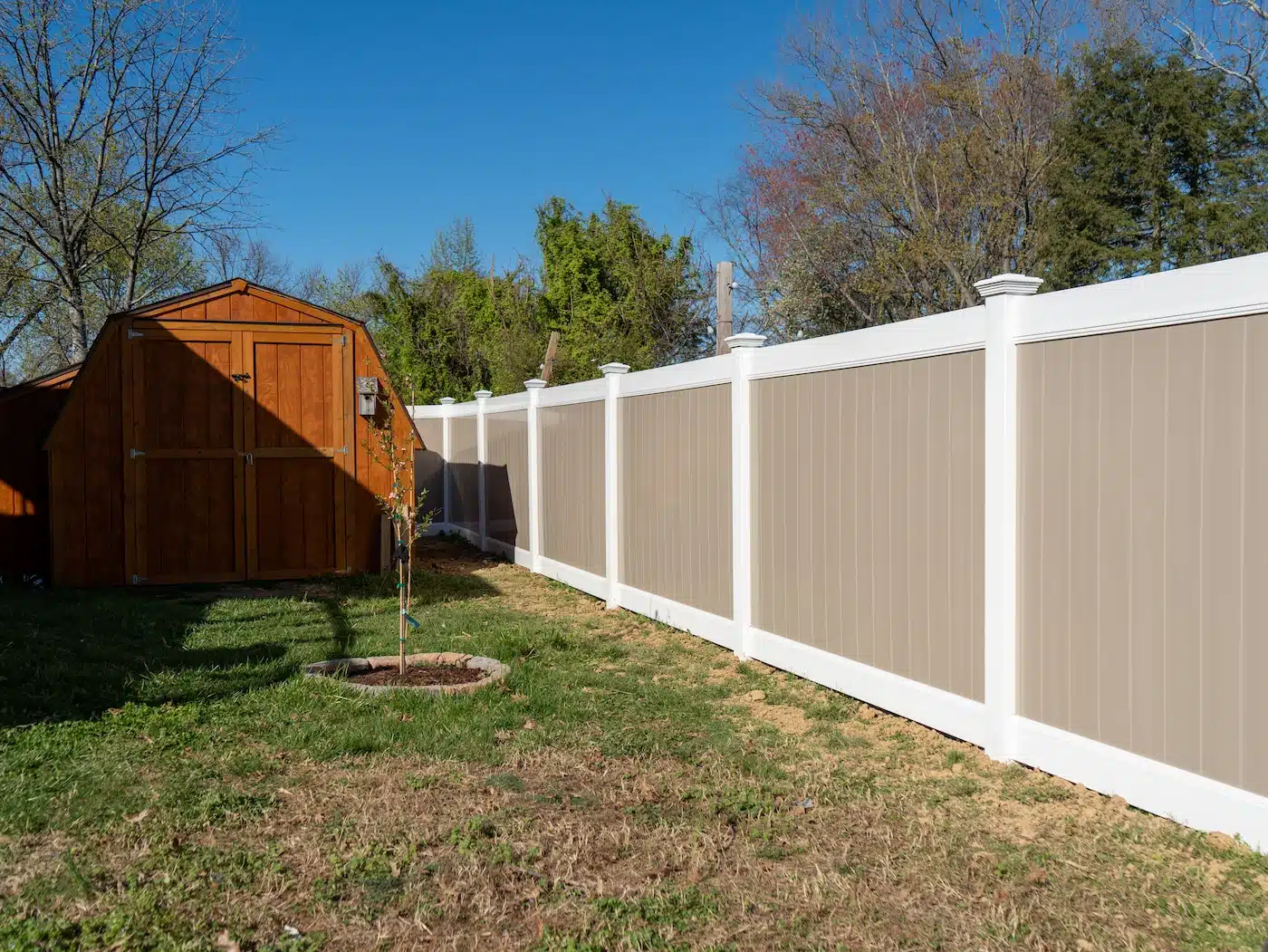
This two-tone vinyl fence in Fredericksburg shows stepping done well. Its tan panels step down the grade in a clean stair pattern inside a white frame.
Removal, Access and Permits
Taking out an old fence adds labor and haul-away. Tight side yards, landscaping and long carries from the truck also slow the work.
Virginia’s building code exempts most fences from a building permit, but not fences that serve as a pool barrier. Zoning and HOA rules can still limit style and height. Before anyone digs, Virginia 811 marks public utility lines for free. For the variables that apply to every material, see our guide to fence installation cost.
How Vinyl Fence Styles Compare on Cost
The table ranks common vinyl styles by relative installed cost. Your own quote depends on footage, gates and ground, but the order holds for most yards.
| Vinyl style | Typical height | Relative install cost | Best for |
|---|---|---|---|
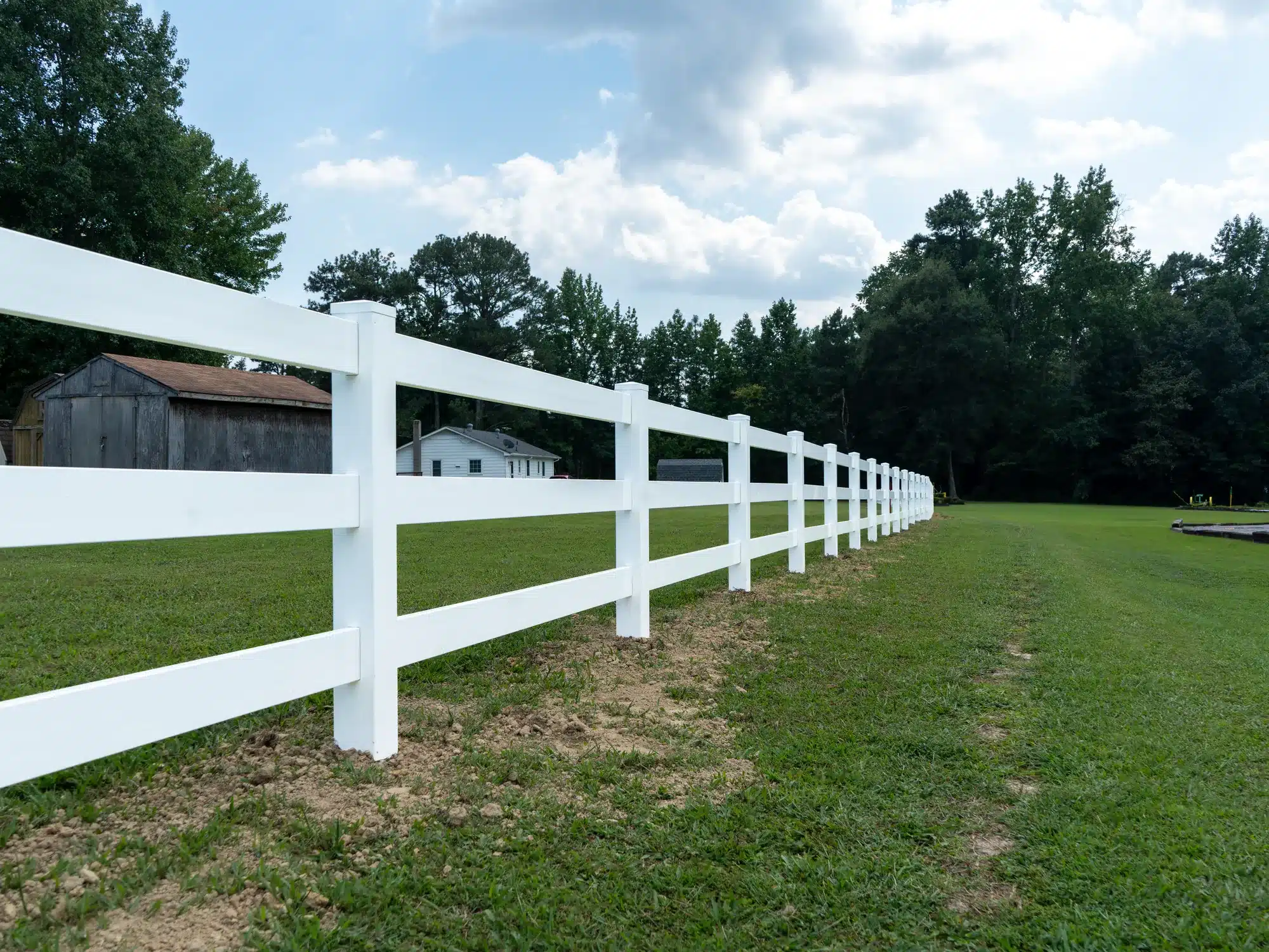
| Ranch rail, 2 or 3 rail | About 4 to 5 feet | Lowest | Long boundaries and pastures |
| Picket | About 3 to 4 feet | Low to moderate | Front yards and gardens |
| Pool barrier panel | At least 48 inches | Moderate | Enclosing a pool, with self-closing gates |
| Privacy panel | 6 feet | High | Full backyard privacy |
| Semi-privacy, lattice or picket top | 6 feet | High | Privacy below, light and air above |
A pool fence has to work as a barrier. The CPSC’s pool barrier guidelines call for a barrier at least 48 inches high and gates that are self-closing and self-latching. Our guide to Virginia pool fence rules covers the local side.
Vinyl Fence Cost Compared With Wood
Up front, vinyl usually costs more than pressure-treated pine. Against cedar, the gap is often smaller, depending on the style.
The picture changes after installation. A wood fence needs stain or sealer every few years, while vinyl upkeep is mostly washing. VEKA’s care guide recommends washing from the top down with a garden hose and a soft brush, and it warns against chlorine bleach and harsh solvents. If you plan to stay in your home for years, those skipped staining weekends add up. Our vinyl fence maintenance tips cover the routine.
If you’re weighing vinyl against chain link instead, our chain link and vinyl cost comparison walks through that choice.
Trade-Offs to Know Before You Buy
- Cold weather. Vinyl stiffens as temperatures drop, so a hard knock from a mower or snow shovel in winter is more likely to crack a panel than the same bump in summer.
- Heat and movement. Vinyl expands and contracts with temperature. For its post and rail fences, Bufftech’s guide calls for a 1-inch gap at rail ends inside each post, so ask how your installer allows for movement.
- Section replacement. Damage usually means replacing a whole panel or rail rather than one board, and matching color on an older fence can be harder.
- Permanent color. Vinyl color is built into the material, so it never needs paint. But you can’t easily change it later, so pick a color you’ll like for years.
Wind is another common question, and our post on how much wind a vinyl fence can withstand covers it in detail.
How to Plan and Compare Vinyl Fence Installation Cost Quotes
First, measure the fence line, mark where gates go and find your property line on a survey or plat. If you live in a subdivision, get HOA approval in writing before work starts. Our HOA fence tips explain the process.
Then ask every contractor to spell out the same details:
- Manufacturer, product line and panel style by name
- Post size, post spacing and hole depth
- Rail reinforcement and gate post inserts
- Gate count, widths and hardware, including self-closing latches on a pool fence
- How slopes will be handled, stepped or racked
- Old fence removal and haul-away
- Who contacts Virginia 811 before digging
- What the manufacturer warranty covers, such as discoloration, and whether it transfers if you sell
Ways to Manage the Cost of Vinyl Fencing
- Mix styles. Use privacy panels where you need screening, then a lower picket or ranch rail along the front or side.
- Limit gates. A walk gate costs less than a double drive gate, so add wide openings only where you need them.
- Phase the work. Fence the backyard now and extend later, as long as the same product line is still available.
- Finance it. Good Neighbor Fence offers financing through Wisetack starting at 0% APR for qualified buyers. See our fence financing options.
Vinyl Fence Cost FAQ
Is a vinyl fence worth the cost in Virginia?
It depends on how long you’ll stay. Vinyl costs more up front than pressure-treated wood, but it skips the staining and sealing wood needs. The longer you own the fence, the more that difference matters.
What should I ask about vinyl fence thickness?
Ask for the manufacturer’s spec sheet for the posts, rails and pickets in your quote. Thickness varies by product line, and a heavier profile generally feels stiffer and costs more.
Can a vinyl fence go on a slope?
Yes. Solid panels are usually stepped down the grade, while some open styles can be racked to follow it. Stepping leaves a small gap under the low end of each section, so plan for that if you have a dog.
How long does vinyl fence installation take?
Most installs take 1 to 2 days once work starts. Long runs, slopes or an old fence to remove can add time.
Get a Free Vinyl Fence Quote
Good Neighbor Fence has been family owned since 2006 and has earned 400+ five-star Google reviews. See the styles on our vinyl fence installation page, or read about vinyl fences in Fredericksburg. Then request a fast, free quote, or call (540) 506-4835 in Northern Virginia or (804) 737-4664 in Central Virginia.