



Vinyl fence maintenance is mostly washing. Rinse the fence, scrub it with a mild cleaner at least once a year, and rinse again. Beyond that, check posts, caps and gates after storms, and keep heat, harsh chemicals and string trimmers away from the vinyl.
Vinyl won’t rot and never needs paint or stain, which is a big reason homeowners pick it. But humid Central Virginia summers, shady lots and heavy spring pollen still leave their mark. So a simple routine is what keeps a white fence looking white.

How Often Should You Clean a Vinyl Fence?
The core of vinyl fence maintenance is a regular wash. VEKA, a vinyl fence manufacturer, says cleaning at least once a year keeps dirt from building up. Around Richmond, late spring works well, after the pollen settles. Then spot clean shaded sections whenever you see green or black film.
If your fence sits near a gravel drive, a busy road or trees that drop sap, plan on a second wash in the fall. That extra rinse doesn’t take long, and it keeps grime from settling in.
Vinyl Fence Care: How to Wash It the Right Way
You don’t need special gear for basic vinyl fence care. A garden hose, a bucket, a soft brush or sponge and a mild cleaner will handle most dirt. Here’s the routine VEKA recommends:
- Rinse the fence from the top down with a garden hose to knock off loose dirt, pollen and cobwebs.
- Mix a mild cleaner with water. VEKA lists options such as Simple Green All-Purpose Cleaner or a vinegar and water mix.
- Apply it with a wet sponge and let it sit for a few minutes.
- Wipe the surface firmly with the sponge, one section at a time, then rinse well from the top down.
For scuffs, VEKA also lists a melamine sponge such as Mr. Clean Magic Eraser. Our guide on washing a vinyl fence covers specific stains. And if someone tags your fence, here’s how to remove graffiti safely.
Cleaners and Tools That Can Damage Vinyl
The wrong cleaner can do more harm than dirt, so choose products carefully when you maintain a vinyl fence. VEKA warns against cleaners with aggressive organic solvents, because they could affect the surface appearance of the vinyl. Its list of products to avoid includes chlorine bleach, liquid grease remover, strong soaps, nail polish remover and furniture polish.
Skip steel wool, scouring pads and wire brushes too, since scratches give dirt a place to settle. A pressure washer is fine if you’re careful. VEKA says too much pressure in the wrong spot can permanently damage the fence, so start on low pressure at a safe distance. Before you start, secure or remove post caps, because the spray can pop them loose.
Keep Mildew Off Shady Sections
On shady lots, mildew control is a big part of vinyl fence maintenance. Green or black film shows up first where the fence stays damp: the shaded side, low spots, and anywhere shrubs press against the panels. When you see it, scrub it off with a vinegar and water mix and rinse. Don’t wait, since a light film comes off much faster than a heavy buildup.
Then fix the cause. Trim shrubs and vines back so air and sun can reach the fence. Also aim sprinkler heads away from the panels, because constant spray keeps the vinyl wet and can leave mineral spots.
Vinyl Fence Maintenance After Storms
Walk the fence line after high winds or a heavy storm. Look for leaning posts, cracked pickets, panels that slipped out of their rails, and limbs resting on the fence. Clear branches first so their weight doesn’t bend a rail. If you’re curious about limits, here’s how much wind a vinyl fence can handle.
A leaning post is a bigger job. Vinyl posts are often set in concrete. So a lean usually means the footing shifted or the post cracked near the ground. Before you dig, contact Virginia 811. The service is free, and it asks for at least 3 working days of notice, even for a single fence post.
How to Maintain a Vinyl Fence Gate and Caps
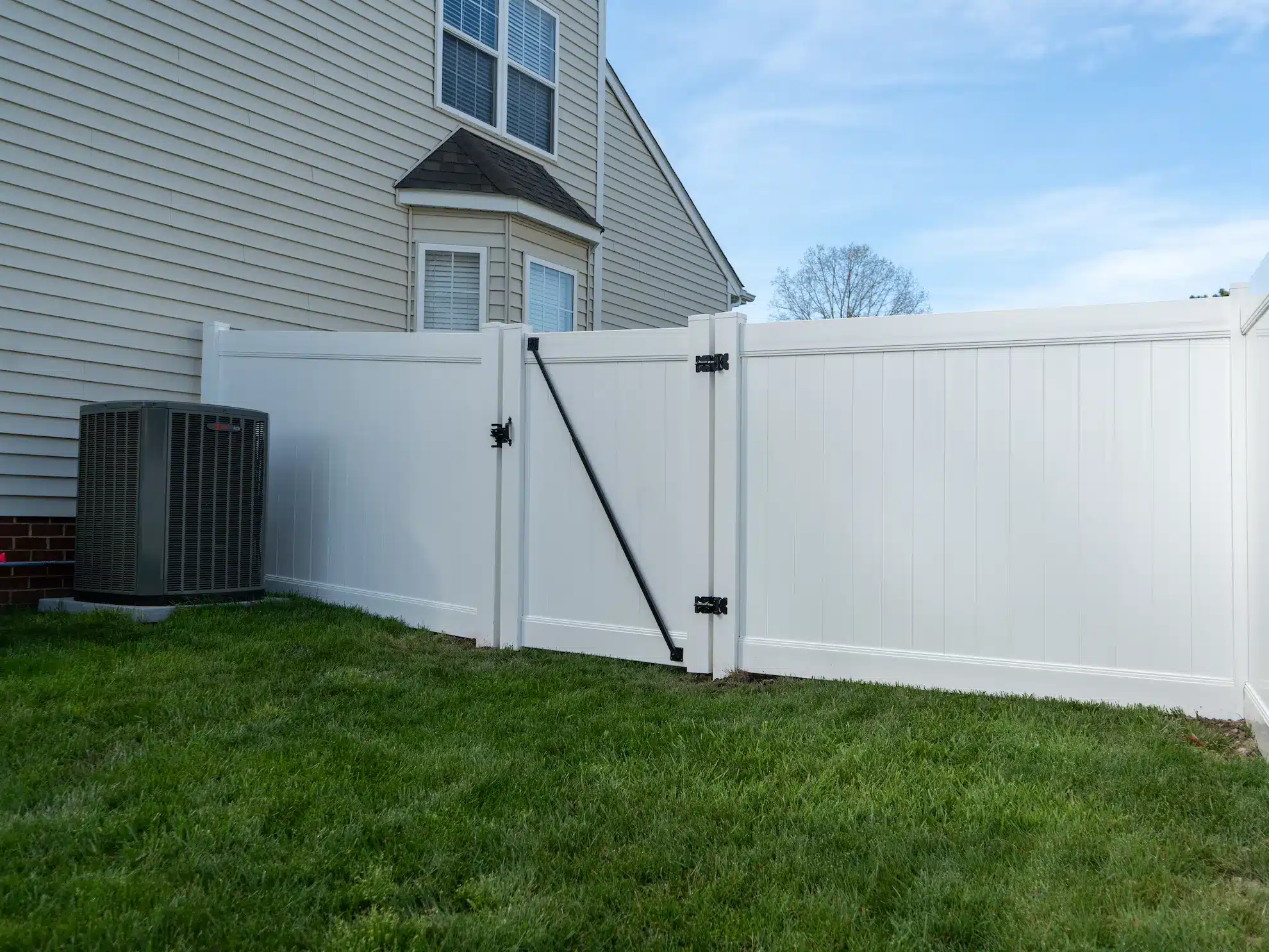
Gates take more wear than any other part of the fence. Once or twice a year, check that the latch catches cleanly and the gate swings without dragging. If hinge screws have worked loose, snug them up by hand so you don’t strip the vinyl. Our post on the screws that hold a vinyl fence together explains why the right fasteners matter.
Post caps can also loosen as the vinyl heats and cools. Reset a loose cap and secure it with an adhesive made for vinyl fencing. Otherwise, rain, leaves and insects can get inside the post.
Protect the Vinyl From Heat and Trimmers
Good vinyl fence maintenance also means preventing damage. Keep grills, fire pits and patio heaters well away from the fence, because strong heat can warp vinyl. Also be careful with string trimmers and mowers. Trimmer line nicks the base of posts and panels, and those marks catch dirt. A narrow gravel strip along the fence line cuts down on trimming.
Finally, don’t hang heavy planters or lean ladders against the panels. Vinyl flexes, but it isn’t built to carry extra weight.
When Vinyl Fence Care Turns Into a Repair
Some problems go past routine vinyl fence care: cracked or broken panels, posts that wobble, gates that sag, and sections that keep popping loose. Replacement parts need to match your fence’s profile and color, so they aren’t always a quick swap. Our guide to vinyl fence panel replacement walks through that job, and this list of common vinyl fence problems can help you tell a quick fix from a bigger one. But if problems keep adding up, several posts are failing, or damage runs along a long stretch, a new fence usually makes more sense than chasing parts.
Thinking About a Replacement Vinyl Fence? Get a Quote
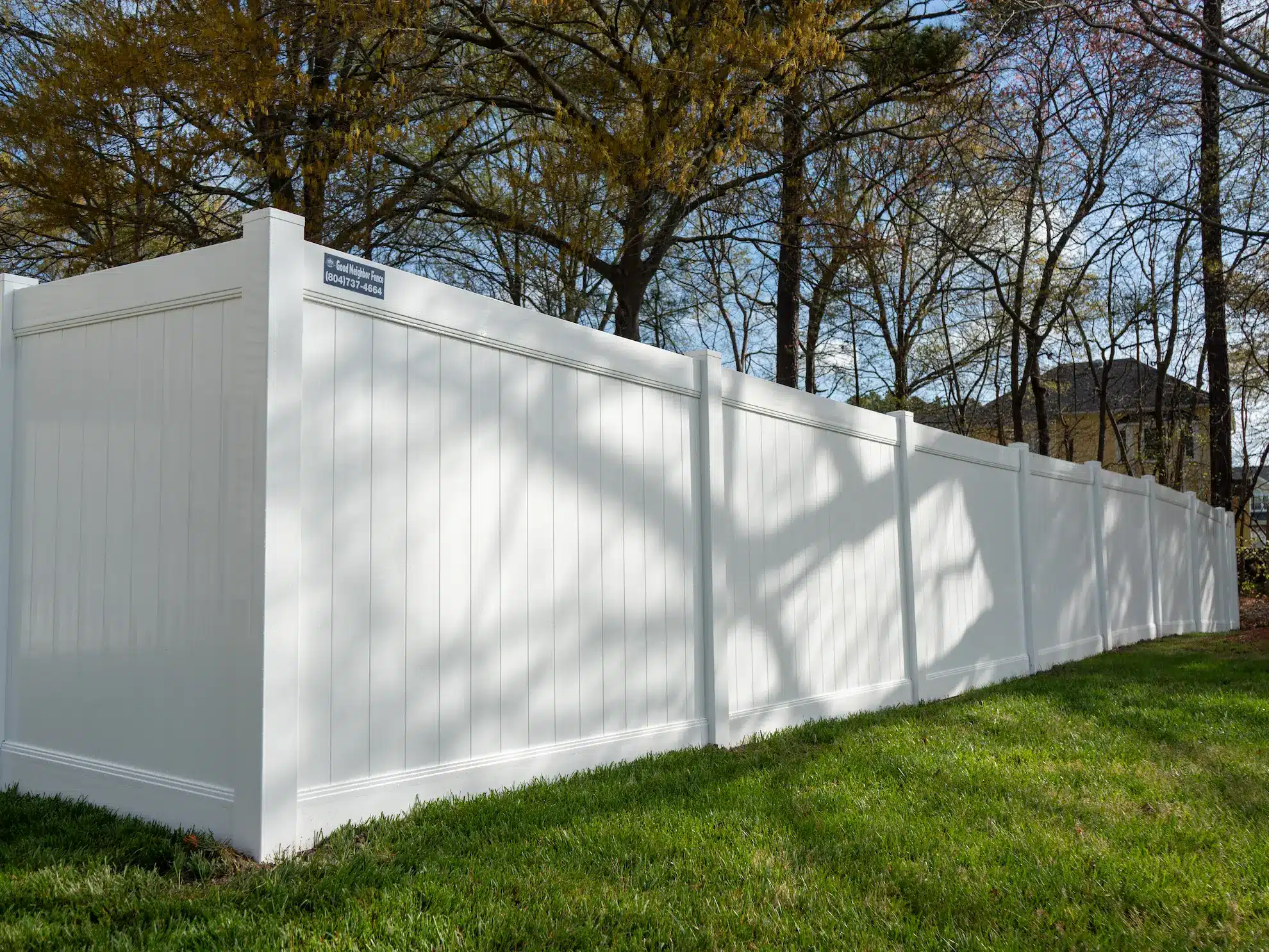
Good Neighbor Fence doesn’t do repairs. But if your fence is past saving, we’ll walk the line and quote a replacement. We’re a family-owned company that has built fences in the Greater Richmond area since 2006. See our vinyl fence installation options, or look at this vinyl privacy fence we built in Chesterfield.
Request a fast, free quote or call us at (804) 737-4664. We serve homeowners across Central Virginia, including Richmond, Chesterfield, Henrico and Hanover.