


Most vinyl fence problems come from four things: impact damage in cold weather, heat, posts that move, and shortcuts during installation. The good news is that you can fix most of them one post, rail or panel at a time, as long as you catch them early.
Vinyl doesn’t rot, splinter or need paint the way wood does. But it isn’t trouble free forever. Below are the seven issues that come up most often, what causes each one, and when a repair makes sense.

1. Cracked Panels and Posts in Cold Weather
Vinyl gets stiffer as the temperature drops. So a hit that would only flex a panel in July, like a ball, a falling limb or a snow shovel, can crack it in January.
A small crack rarely stays small, because water gets in and wind keeps working the panel. You usually have to replace a cracked picket or panel, not patch it. Our guide to vinyl fence panel replacement walks through that repair. Also, our winter fence care tips help you avoid the damage in the first place.
2. Warping, Bowing and Heat Damage
Heat causes a different set of vinyl fence problems. Vinyl expands in heat and shrinks in the cold. That’s why Bufftech’s installation guide tells installers to leave a 1 inch gap between rail ends inside each post, so the rails have room to move.
When an installer builds a fence too tight, panels can bow or pop out of the rails on hot days. Reflected sunlight is another cause. The same guide warns that, in rare cases, intense sunlight reflected from glass can make vinyl distort or melt. It also says its limited warranty doesn’t cover that damage.
So if one section keeps warping near a window or glass door, the fix may be an awning, screen or shrub that blocks the glare, not just a new panel.
3. Leaning Posts and How to Fix Them
A leaning post is one of the more serious vinyl fence problems, because it pulls the whole section out of line. It usually means the installer didn’t set the post deep enough, the footing was too small, or the soil around it has washed out or heaved.
For reference, Bufftech’s guide calls for post holes 30 inches deep or down to the frost line, and it tells installers to check local codes for frost depth. If your posts sit shallower than that, they’re more likely to move.
Fixing a leaning post usually means digging it out and resetting it in new concrete. Before anyone digs, Virginia 811 says you need to contact it at least three working days ahead, even to remove old fence posts. The marking service is free.
If you want to fix a leaning vinyl fence post yourself, work through it in this order:
- Contact Virginia 811 and wait for the utility marks before you dig.
- Take off the post cap, unfasten the rails or panels on both sides, and prop them up so they stay put.
- Dig around the old footing, then pull the post and its concrete out of the hole.
- Set the post back in the hole, level and square it, and brace it so it can’t drift.
- Fill the hole with concrete, check the post for plumb again, and let the concrete set before you reattach the panels.
4. Loose or Broken Rails
Rails are the horizontal pieces that hold the panels between posts. They can crack from an impact, pull loose in high wind, or drop when a bracket or screw fails.
When a rail slips, the panel above it sags and can fall out. Like most vinyl fence problems, it gets worse if you leave it. Because the rails sit inside the posts, fixing one often means taking the section apart. Our guides to vinyl fence parts and vinyl fence screws explain how the pieces fit. Then, if storms are the cause, see how much wind a vinyl fence can withstand.
5. Mold and Mildew, the Easiest Vinyl Fence Problem to Fix
Vinyl doesn’t rot, but dirt, pollen and moisture can feed mildew and algae on the surface. You’ll usually see it first on the shaded, damp side of the fence and near sprinklers.
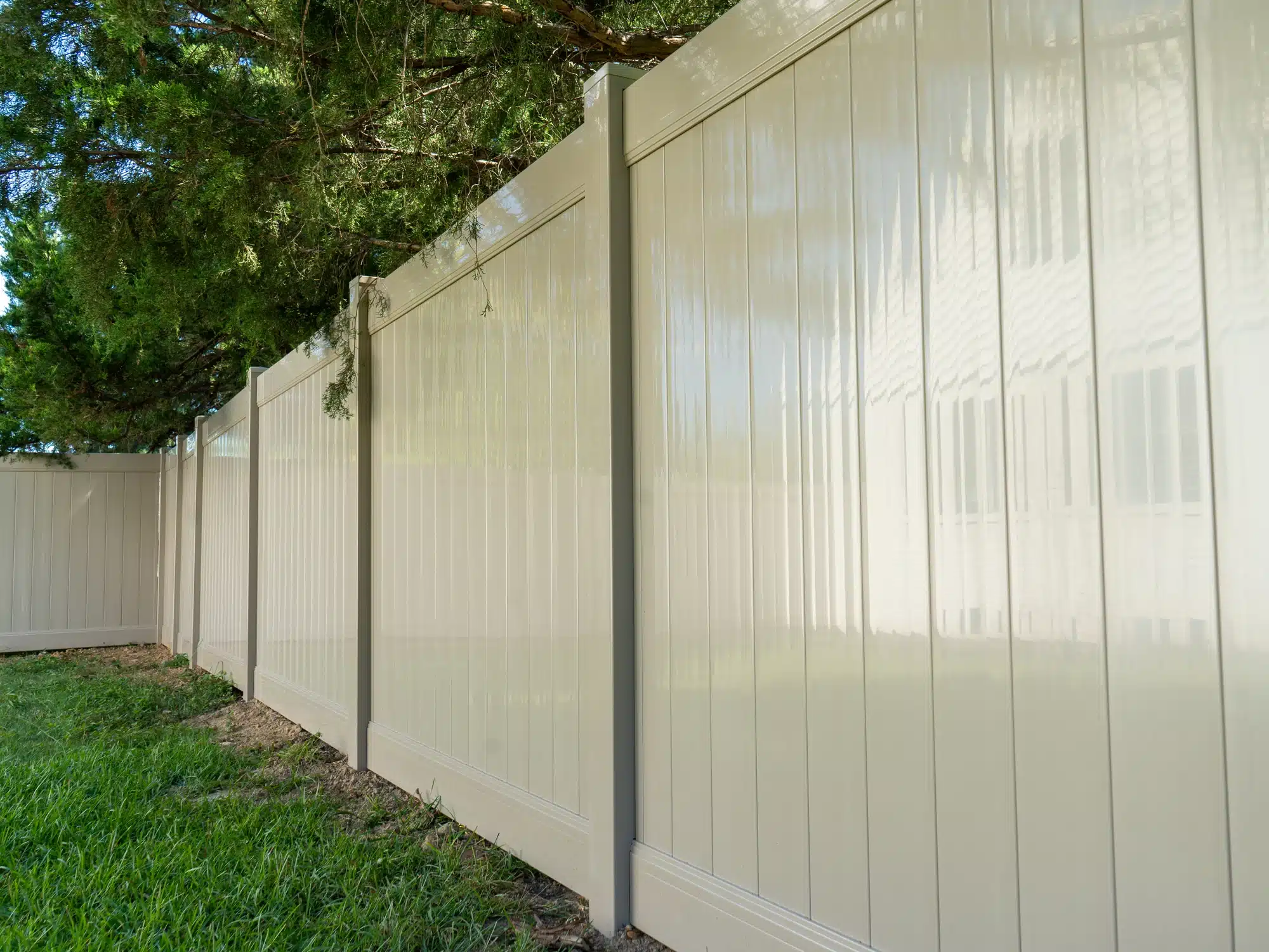
Bufftech recommends cleaning with a mild detergent and a plastic scouring pad. So start there, rinse well, and skip harsh abrasives that can scratch the finish. Our guide on how to clean a vinyl fence has step-by-step tips.
6. Sagging or Dragging Gates
Gates take more stress than any other part of a fence, because they swing every day. So gate trouble is often the first of these vinyl fence problems you’ll notice. A vinyl gate that sags, drags or won’t latch usually has a loose hinge, worn hardware or a gate post that has started to lean.
Post strength matters most. Bufftech’s guide says all hinge and latch posts need reinforcement with aluminum post inserts, or with concrete and rebar. But it also warns that the concrete and rebar method can crack posts over time in climates with freeze and thaw cycles, and Central Virginia winters have plenty of those.
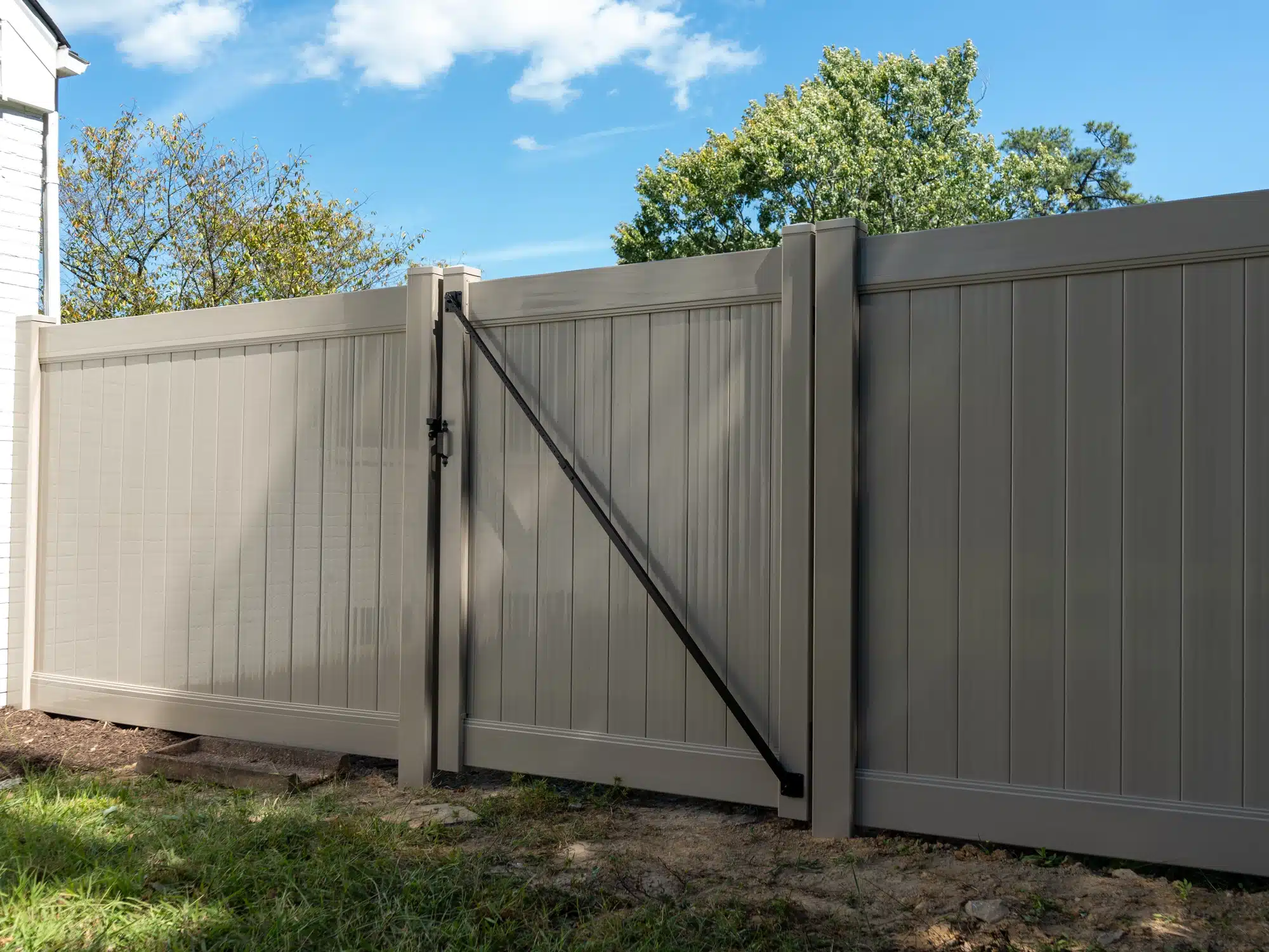
If the gate post itself leans, the fix is the same as for any other post. Our post on gate hardware and security explains what keeps a gate square.
7. Gaps Under the Fence on Sloped Ground
Slope gaps are one of the vinyl fence problems that start on install day. On a slope, the installer has to step or rack the fence. With stepping, the rails stay level and each panel sits a bit lower than the one before it. That leaves a triangle-shaped gap under each panel.
Racking tilts the rails to follow the grade instead, but how far a panel can rack depends on the style. If the installer didn’t plan for the slope, you may end up with gaps big enough for a small dog to slip through. Our guide to building a backyard fence on a slope explains both methods.
Can You Fix Vinyl Fence Problems Yourself?
Some fixes are simple. You can clean off mildew, tighten a loose hinge screw or reseat a post cap on your own.
Other jobs are harder than they look. Vinyl parts fit together in a set way, and parts from one brand may not fit another. One wrong cut can ruin a panel. Resetting a post also means digging, concrete and a call to Virginia 811 first.
Also, check your warranty before you start. Bufftech’s guide notes that improper installation may void its limited warranty, and other brands set their own terms.
When Should You Replace a Vinyl Fence Instead of Repairing It?
Repair makes sense when the damage is limited to a few panels, a rail or one or two posts. But replacement is usually the better spend when:
- Several posts lean or have cracked.
- Panels are cracked or warped in many sections.
- The maker has discontinued your style and you can’t find matching parts.
- You keep fixing the same problem every year.
If you’re replacing, our vinyl fence installation page shows the styles we build. Our breakdown of vinyl fence pros and cons helps you compare it with other materials, and you can see a finished vinyl privacy fence for a Chesterfield family home.
Finally, regular care keeps small problems small. Our vinyl fence maintenance checklist covers what to look for each season.
Vinyl Fence Problems Adding Up? Get a Replacement Quote
Good Neighbor Fence doesn’t do repairs, but if your vinyl fence is past saving, we’ll walk the line and quote a replacement. We’re family owned and have built fences across Central Virginia since 2006, with more than 400 five-star Google reviews. Request a fast, free quote for a new fence, or call us at (804) 737-4664.