

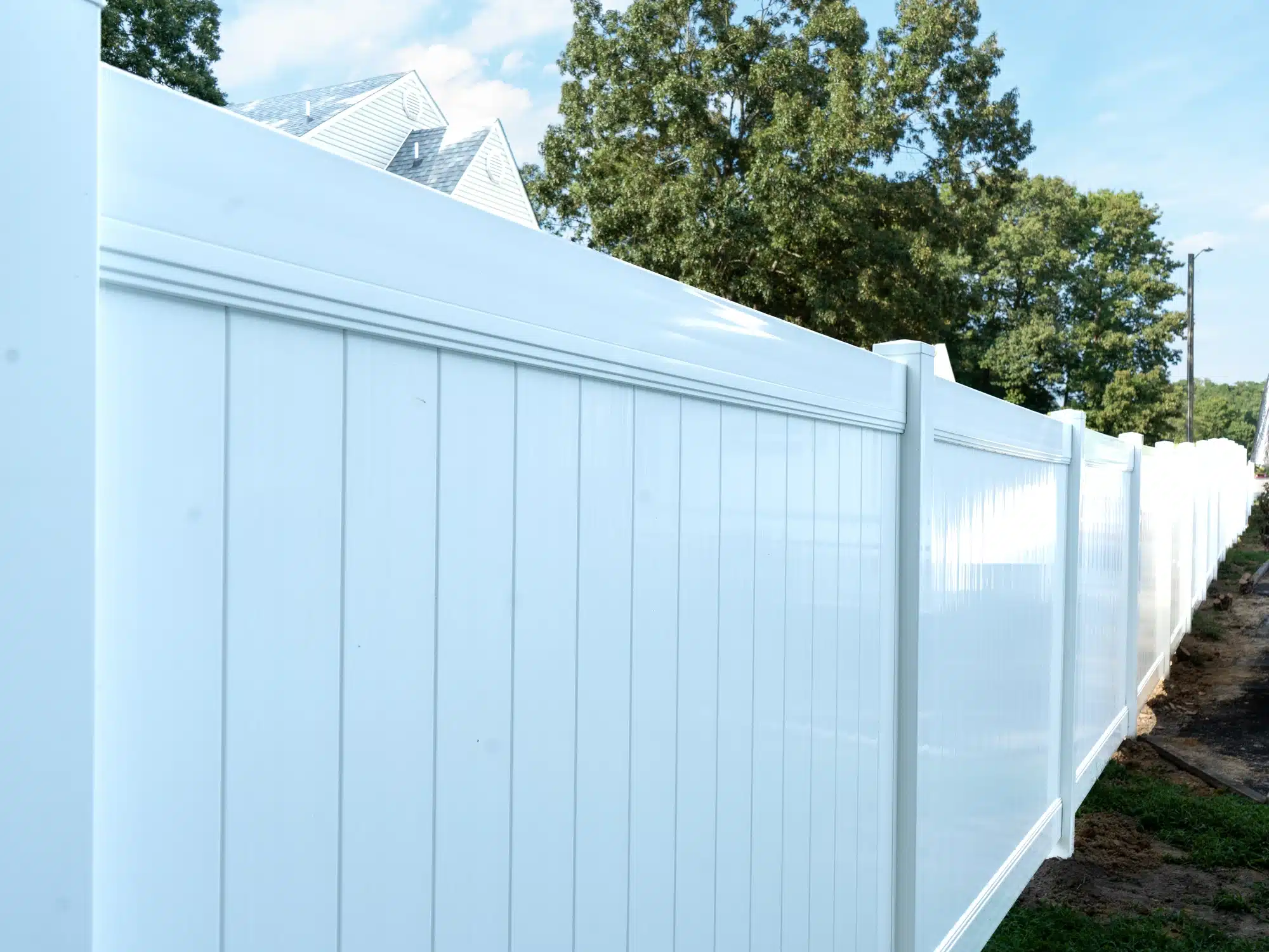
The five vinyl fence parts to know are posts, rails, panels or pickets, post caps and gate hardware. Posts and rails lock together to form the frame, panels fill the space, and caps and hardware finish the job.
Unlike wood, a vinyl fence goes together like a kit, often with metal reinforcement hidden inside. Knowing how the parts fit helps you compare quotes and spot a well-built fence.
Vinyl Fence Parts at a Glance
Here’s how the five main vinyl fence parts work together on a typical privacy or picket fence:
- Posts: hollow vertical posts with routed holes where the rails slide in.
- Rails: horizontal members that tie the posts together and hold the panels.
- Panels or pickets: the boards that give you privacy or an open picket look.
- Post caps: covers that close off the open top of each post.
- Gate hardware: hinges and latches that let a gate swing and lock.
The Structural Parts of a Vinyl Fence
Posts
Vinyl posts are hollow, and each one has routed holes where the rails slot in. Line posts sit in the middle of a run. Corner posts have holes on two sides. End posts stop a run, and gate posts carry the weight of a swinging gate.
Post depth depends on fence height, soil and the frost line, and manufacturer specs spell it out. For example, the Bufftech fence instructions call for post holes 30 inches deep or down to the frost line. The same guide notes that some sites need extra parts to meet wind code requirements.
If a post isn’t set deep enough, the fence can lean after a few storms and the rails can work loose. So ask how deep your installer digs. Our post on how much wind a vinyl fence can withstand covers storm performance in more detail.
Rails
Rails run horizontally between posts and slide into the routed holes. Some systems, including Bufftech, use rail locks with tabs that spring out inside the post to hold the rail in place. Most privacy styles have a top and bottom rail, while some designs add a mid rail.
Rails also need room to move. Vinyl expands and contracts with temperature, so installers leave space at the rail ends. On post-and-rail fences, for example, the Bufftech guide calls for a 1-inch gap between rail ends inside the post. That gap matters in Virginia, where summer heat and winter cold push the material in both directions.
Panels and Pickets
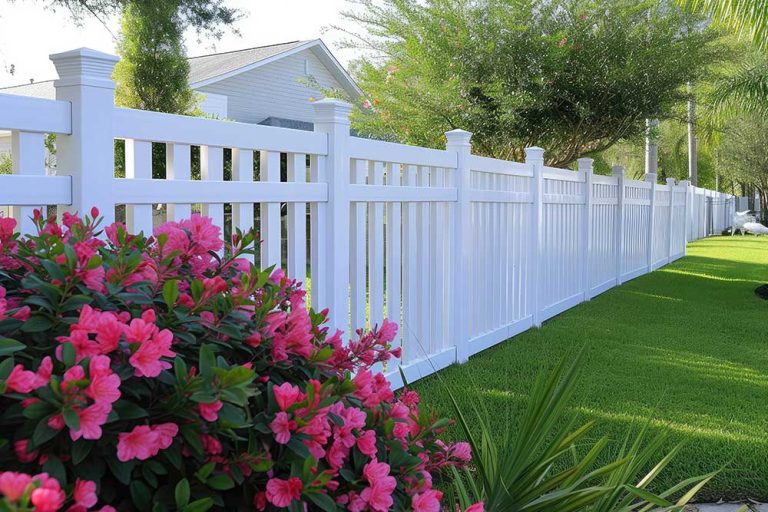
Panels or pickets fill the space between rails and set the look of the fence. Privacy styles use tongue-and-groove boards that lock edge to edge with no gaps. Picket and semi-privacy styles leave space between boards for a more open, classic look.
Two-tone designs pair two colors on the same fence, like this two-tone vinyl fence in Fredericksburg. For a single-color look, see this white vinyl privacy fence for a Chesterfield home. You can find more styles on our privacy fence page.
Finishing Vinyl Fence Components
Post Caps
Post caps cover the open top of each hollow post. They keep out rain, leaves and debris, and they give the fence a finished look. Styles range from flat caps to pyramid, gothic and solar caps that light up at night.
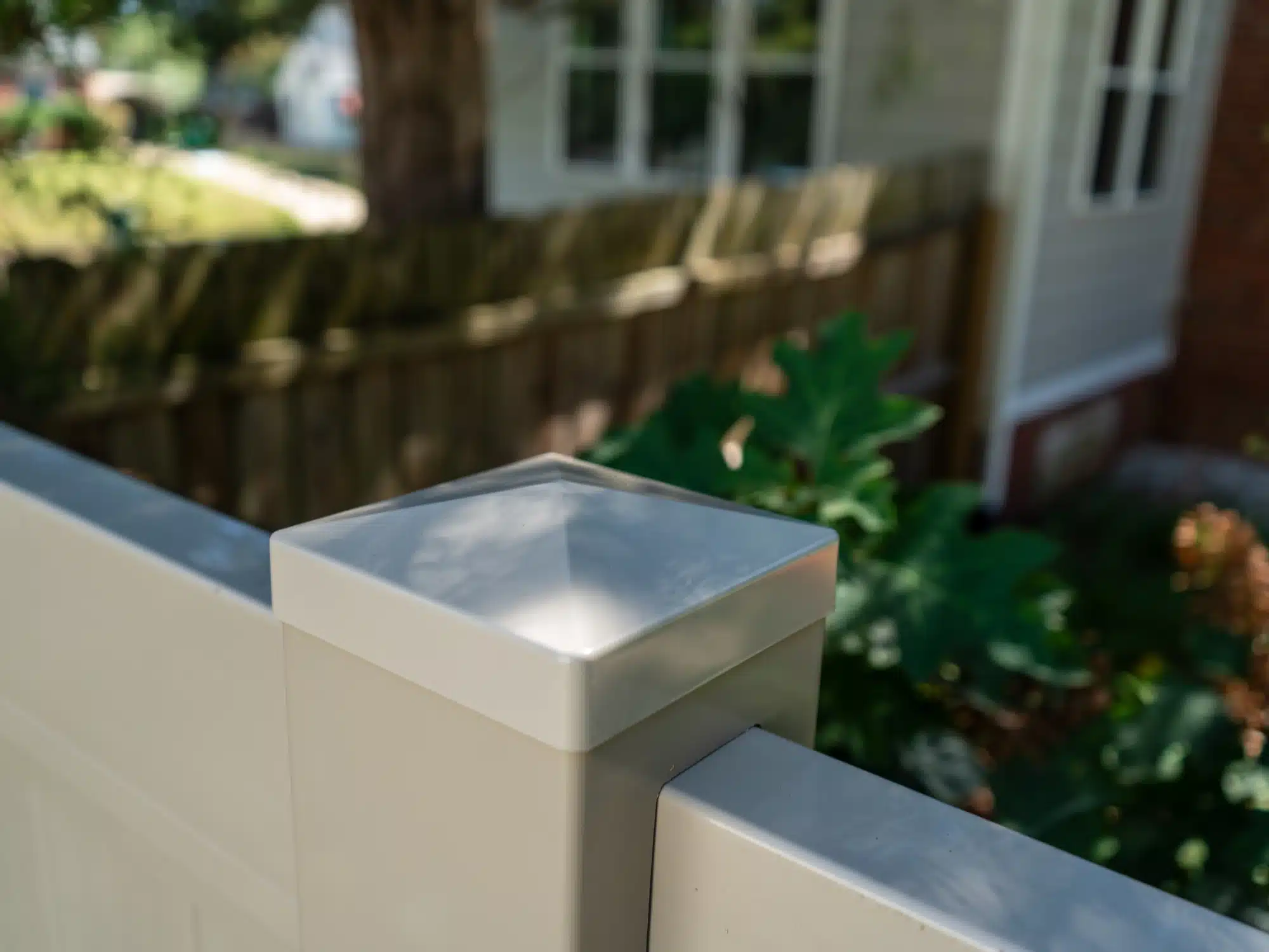
Caps should stay put through wind and storms. The Bufftech instructions say caps may be secured with glue, silicone adhesive or screws, so ask how your installer attaches them.
Gate Hardware
A vinyl gate needs hinges and a latch made for outdoor use, because the hardware sits in the weather all year. Adjustable hinges help you keep the gate aligned as the seasons change.
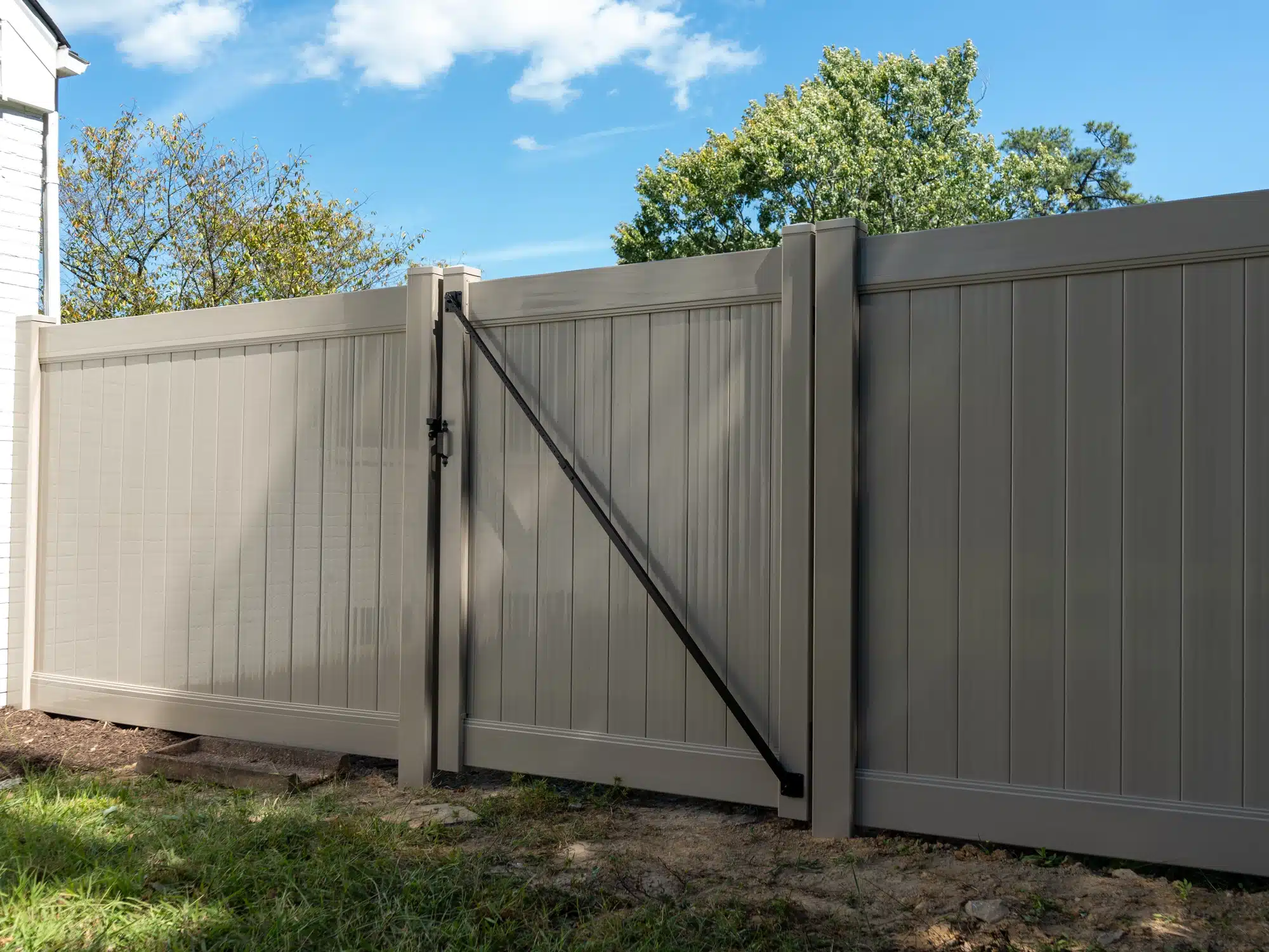
If the fence surrounds a pool, the latch matters even more. The U.S. Consumer Product Safety Commission’s pool barrier guidelines call for gates that are self-closing and self-latching. Check our overview of Virginia pool fence rules before you pick hardware.
What Hidden Vinyl Fence Parts Add Strength?
Some of the most important vinyl fence parts are ones you never see. Many systems add metal inside the vinyl where loads are highest. Some privacy styles, for example, use a metal insert in the bottom rail to help it resist sagging.
Gate posts get special treatment too. The Bufftech guide gives two ways to solidify hinge, latch and end posts: an aluminum stiffener inside the post, or concrete and rebar. Without that support, a hollow gate post can flex, and the gate may start to sag or drag.
So ask whether your quote includes rail reinforcement and gate post stiffeners. These parts are hard to add once the fence is up.
How Do You Spot Quality Vinyl Fence Parts?
Start with the material. ASTM F964 is the industry specification for PVC fence and railing profiles. It covers impact resistance, warp, dimensional stability and weatherability, so ask whether the product meets it.
Still, that standard doesn’t cover wind load on a finished fence. Instead, the installation carries that job. Post depth, rail gaps, reinforcement and solid gate posts all come from the crew, not the box.
Also treat the fence as one system. Posts, rails and panels should come from the same product line, because parts from different makers may not fit the routed holes cleanly.
How Vinyl Compares With Wood and Aluminum Fence Parts
Wood fences use more pieces, including cap, kick and trim boards, and crews build them board by board. Aluminum fences usually go up as prebuilt panels that attach to posts with brackets or routed holes. Compare our guides to wood fence parts and aluminum fence parts to see the difference.
If you’re still weighing materials, read the pros and cons of each fence type or compare chain link and vinyl fence costs.
Plan Your Vinyl Fence With Good Neighbor Fence
Good Neighbor Fence has been a family-owned business since 2006, with 400+ five-star Google reviews. We install vinyl privacy, picket and two-tone fences across Richmond and Central Virginia. Tell us about your yard, and we’ll help you choose the right style, height and gate.
Learn more about our vinyl fence installation, explore fence financing, or request a fast, free quote online. You can also call us at (804) 737-4664.