

The six wood fence parts to know are posts, rails, pickets, the cap board, the kick board and trim boards. Posts and rails form the frame, pickets give you privacy, and the other three boards protect and finish the fence.
Once you know what each piece does, it gets easier to compare quotes, choose a style and spot trouble early. Here’s how each part works, plus the hardware that holds it all together.
Wood Fence Parts at a Glance
Most wood privacy and picket fences use the same six wood fence parts, though sizes and styles vary:
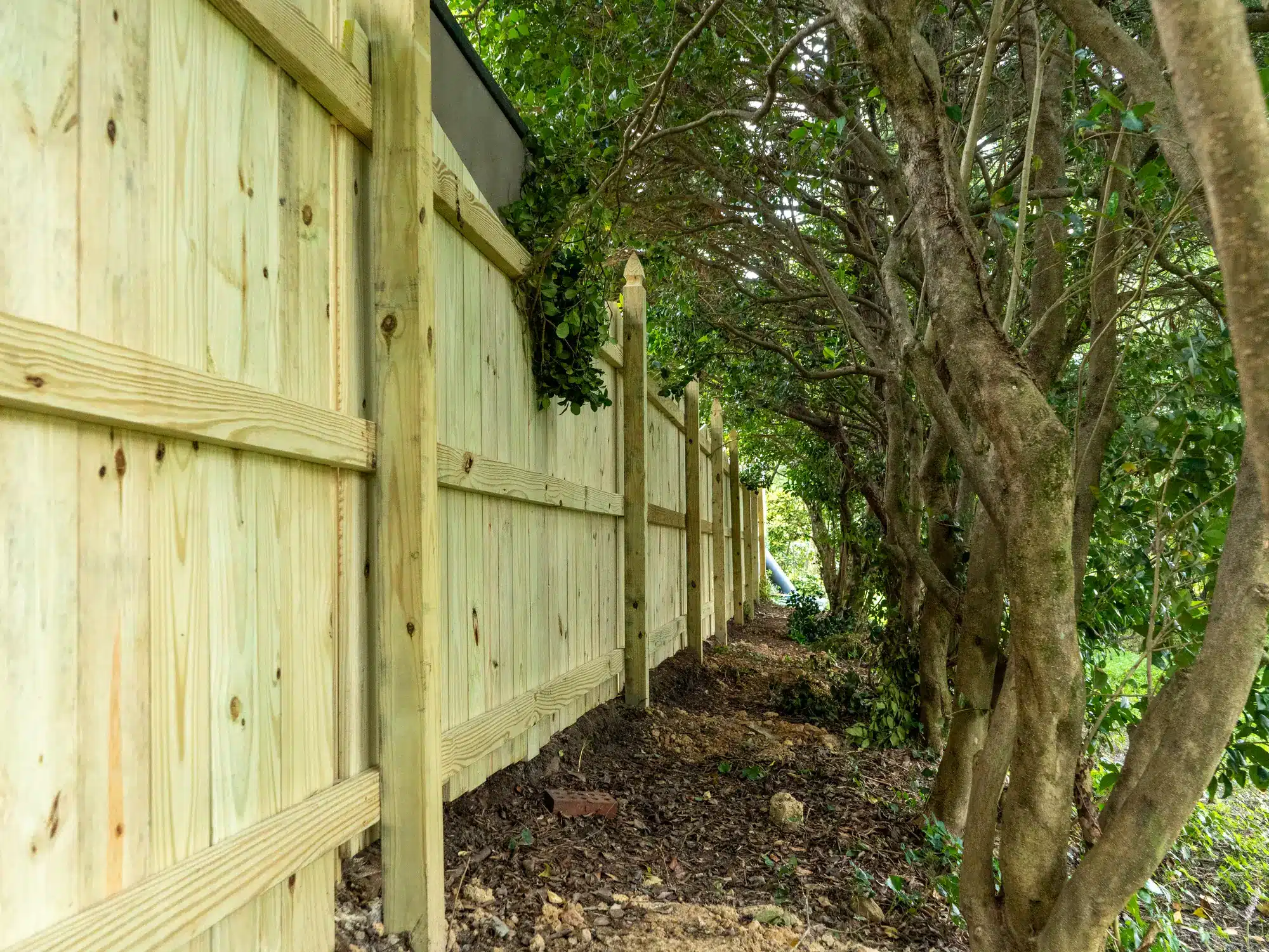
- Posts: vertical supports set in the ground that carry the whole fence.
- Rails: horizontal boards that run between posts and hold the pickets.
- Pickets: the vertical boards you see, which set the style and privacy level.
- Cap board: a flat board across the top that covers the picket ends.
- Kick board: a board along the bottom that keeps pickets off the soil.
- Trim board: a narrow strip under the cap that frames the top edge.
The Structural Parts of a Wood Fence
Posts, rails and pickets do the heavy lifting. If one of them fails, the fence leans, sags or opens gaps. So give these three most of your attention when you compare bids.
Fence Posts
Posts are the foundation of the fence. Each one sits deep in the ground and carries the rails and pickets. So a weak post can pull a whole section out of line. Corner, end and gate posts carry extra load, which is why installers often use heavier lumber there.
Posts also face the harshest conditions because they sit in wet soil. The USDA Forest Products Laboratory’s Wood Handbook treats direct soil contact as a severe decay hazard. It also says preservatives for that use must resist leaching. So ask whether your posts use pressure-treated lumber rated for ground contact, not just above-ground use.
How deep and how far apart posts go depends on fence height, your soil and local frost depth. Ask your installer how they set posts in your yard, because the answer says a lot about quality.
Rails
Rails, sometimes called stringers or backer rails, run horizontally from post to post. The pickets attach to them, so the rails keep the boards straight and spread the load back to the posts.
Shorter fences often use two rails. Taller privacy fences usually get a third rail in the middle, which helps keep pickets from bowing as they dry. When a rail sags, you’ll usually notice it first as a wavy line along the top of the fence.
Pickets
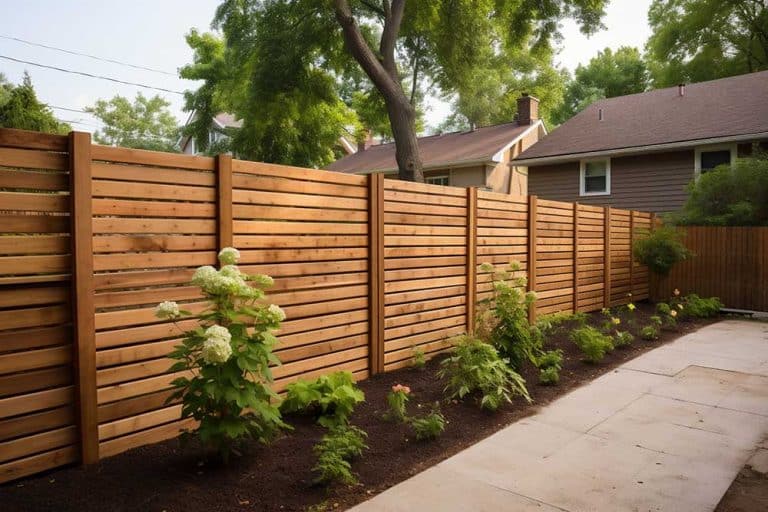
Pickets are the vertical boards you see from the street, so they set the look of the fence. Popular styles include dog-ear, flat-top, board-on-board and shadowbox. Board-on-board overlaps the pickets for full privacy, while shadowbox alternates boards on each side of the rails.
Picket spacing changes how much you can see through the fence. Our guide to wood fence spacing for privacy covers the tradeoffs, and our privacy fence page shows more options. For a finished example, see this wood fence for a Powhatan home.
Protective and Finishing Wood Fence Components
The next three boards are often optional, but they protect the pickets and give the fence a more polished look. Here’s what each one does.
Cap Board
A cap board is a wide, flat board that runs across the tops of the posts and pickets. It gives the fence a clean top line, and it covers the exposed end grain at the top of each picket.

That end grain matters. The Forest Products Laboratory’s guide to finishing wood recommends sealing end grain, because priming it slows water absorption. A cap board adds a cover on top, so rain runs off instead of soaking down into the picket ends.
Kick Board
A kick board, also called a rot board, runs along the bottom of the fence between the posts. It lets the pickets stop a little above the ground. That way, the board touching soil, mulch and wet grass is one you can replace without touching the pickets.
This gap matters because decay needs water. The Wood Handbook explains that serious decay only happens when wood stays above the fiber saturation point, about 30% moisture. It also warns against letting untreated wood touch soil. So use ground-contact treated lumber for the kick board, and keep mulch pulled back from it.
A kick board also closes the gap under the fence, which helps if you have a small dog. Our guide to the best fence for dogs covers other pet-friendly features.
Trim Board
A trim board is a narrow strip that runs along the face of the pickets just below the cap. Together, the cap and trim frame the top of the fence like crown molding on a wall. They also hide small differences in picket height.
Trim also ties the picket tops together, which helps hold them in line. It’s optional, but on a fence your neighbors see every day, it’s a simple way to make the fence look custom.
What Holds Wood Fence Parts Together?
Fasteners and hardware look small, but they decide how long the boards stay put. Nails, screws, hinges and latches all live outdoors against treated or tannin-rich wood, so the metal you choose matters.
The Forest Products Laboratory notes that some metals can corrode when they touch preservative-treated wood in the presence of moisture. It reports that 300 series stainless steel nails have performed well in wood treated with copper azole or ACQ. Its guidance on fasteners also says stainless steel, aluminum or hot-dipped galvanized nails can reduce staining.
Cedar needs the same care. Iron reacts with tannins in woods like western redcedar and redwood, leaving dark blue-black stains. So uncoated steel fasteners can streak a new cedar fence.
Post caps cover the end grain on top of each post and add a finished look. If your project includes a gate, it adds hinges, a latch and usually a brace that keeps the frame square. For ideas, browse these wood fence gate designs, which we build as part of a full fence project.
Which Wood Fence Parts Need the Most Care?
The wood fence parts closest to the ground usually wear out first, because that’s where moisture lingers. Focus on the spots where water sits. That means post bases, the kick board, picket tops and fastener heads. First, walk the fence after a heavy rain. Look for standing water, soft wood near the ground and dark streaks around nails.
Then keep the finish in good shape. According to the Wood Handbook, two coats of semitransparent penetrating stain may last 10 years on saw-textured wood. For practical steps, read how to seal a wood fence and our overview of fence maintenance.
How Wood Fence Parts Compare With Vinyl and Aluminum
Vinyl and aluminum fences use a different kit. Vinyl posts are hollow, and the rails slide into routed holes. Aluminum fences usually go up as prebuilt panels that attach to posts.
If you’re still choosing a material, compare our guides to vinyl fence parts and aluminum fence parts. You can also weigh the pros and cons of each fence type or check what a wood fence costs.
Wood stays the most adaptable of the three. Because crews build each wood fence board by board, you can adjust the height, spacing and trim to suit your yard.
Plan Your Wood Fence With Good Neighbor Fence
Good Neighbor Fence has been a family-owned business since 2006, with 400+ five-star Google reviews. We custom stick-build wood fences on site across Richmond, Chesterfield, Henrico, Hanover and nearby counties. Tell us about your yard, and we’ll help you pick the right wood fence parts and style.
See our wood fence installation page, explore fence financing, or request a fast, free quote online. You can also call us at (804) 737-4664.