


The ideal wood fence spacing for a privacy fence is about 1/8 to 1/4 inch between boards once the wood is dry. Freshly treated boards that are still wet usually go up tight instead. They shrink as they dry and open that gap on their own.
Picket fences work differently, since a picket fence is about looks more than full privacy. So pickets sit farther apart, and around a pool the gaps have to meet barrier rules. Below you’ll find a direct answer to each common spacing question, plus how stockade, shadowbox and board on board fences handle gaps.
- Dry boards: leave 1/8 to 1/4 inch between them.
- Wet treated boards: butt them tight, because the gap forms as they dry.
- Pool barriers: no opening should let a 4 inch sphere pass through.
- Board on board overlaps the gaps, so shrinkage never opens a line of sight.
- Our wood fences are stick-built on site, with no gaps under the fence.
What Is the Standard Gap Between Fence Boards?
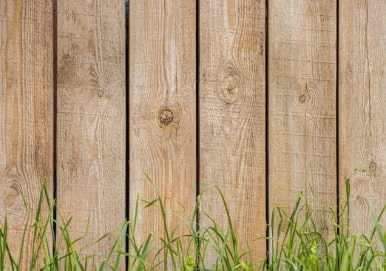
For a solid privacy fence built from dry boards, the standard gap between fence boards is 1/8 to 1/4 inch. That leaves room for the wood to swell in humid weather without boards pressing into each other. It’s also narrow enough that you won’t see much through it from a normal angle.
Fence board spacing, fence slat spacing and spacing between fence boards all describe the same thing: the space between the edges of two neighboring boards. The right number still shifts with the style. Picket and decorative fences use wider gaps on purpose. Shadowbox and board on board fences offset or overlap their boards, so a small gap never turns into a window into your yard.
Do You Need to Leave a Gap Between Fence Boards?
Yes, if the boards are dry. No, if they are still wet from treatment. It all comes down to moisture. According to the USDA Forest Products Laboratory Wood Handbook, wood starts to shrink once its moisture content drops below about 30 percent, the fiber saturation point. It also moves far more across the grain than along it, so a fence board mostly gets narrower as it dries.
Outdoors, wood slowly settles toward the moisture level of the air around it. The handbook’s outdoor moisture table puts Richmond at about 11 to 14 percent through the year, lowest in April and highest in September. So a wet pressure-treated board will narrow as it dries toward that level. A board that is already dry moves much less, shrinking or swelling only a little as the seasons change.
That’s why the gap depends on the board, not just the fence. YellaWood, a treated lumber maker, notes that freshly treated lumber tends to shrink, cup or warp. Kiln dried after treatment (KDAT) lumber has that excess moisture removed in a kiln instead. So butt wet boards tight and let the gap form as they dry. If a treated board feels damp and heavy, treat it as wet. Leave 1/8 to 1/4 inch between dry boards so they have room to move.
Tell us about your yard and get a fast, free quote for the fence you want.
- Family owned since 2006
- Most installs take 1 to 2 days
- Financing from 0% APR for qualified buyers
or call (804) 737-4664
Why Wood Fence Spacing Matters
Gaps between boards influence more than just privacy. A fully closed fence blocks sightlines but also traps moisture, which accelerates wood decay. Small gaps allow air circulation, reduce the risk of mold buildup, and extend the fence’s lifespan.
Spacing also affects how straight the fence stays. Boards swell and shrink as their moisture content changes with the seasons. Without enough room, they press against each other, which can lead to warping or cracking. Too much spacing causes the opposite problem, leaving see-through gaps that cut into your privacy.
Fencing material and style play a role in determining proper spacing. A privacy fence built from solid wood requires different spacing considerations than a picket fence or a decorative enclosure. Every design must account for the balance between function and appearance.
Common Wood Fence Spacing Options
The right wood fence spacing depends on privacy needs, wood type, and climate. Choosing the best spacing keeps the fence visually appealing while maintaining stability. Below are three common approaches:
Tight Spacing (1/8 to 1/4 Inch)
This spacing option maximizes privacy by minimizing gaps. It works well for solid board fences where blocking visibility is the primary goal. The small space allows for minimal airflow while reducing the likelihood of complete wood expansion causing pressure between boards.
It also offers good security. The tighter the spacing, the harder it is for animals or trespassers to see through or push apart the boards. This type of spacing works best for homeowners who prioritize seclusion but need to account for moisture control through slight ventilation.
Moderate Spacing (1/4 to 1/2 Inch)
This option provides a balance between privacy and airflow. The spacing remains tight enough to prevent significant visibility gaps while allowing for wood movement and proper ventilation. In areas with high humidity, this spacing reduces the chances of mold and rot by making sure trapped moisture does not accumulate.
Don’t count on small gaps to save a fence in a storm, though. A 1/4 or 1/2 inch gap lets some air through, but the fence still behaves mostly like a solid wall, so the posts and footings carry the wind load. If you want a fence that breathes, a shadowbox layout or a lattice top lets far more air pass.
Wide Spacing (1/2 Inch or More)
This setup works well for decorative fences and picket designs. It supports significant airflow while maintaining an aesthetic barrier. Wide spacing is ideal for yards where privacy is not a top concern but structural resilience is necessary.
Wider spacing also reduces material costs. Fewer boards cover the same length. This makes the fence more affordable without sacrificing durability. However, larger gaps reduce security. Therefore, this option is unsuitable for properties needing a protective enclosure.
Fence Picket Spacing: How Much Space Between Pickets?
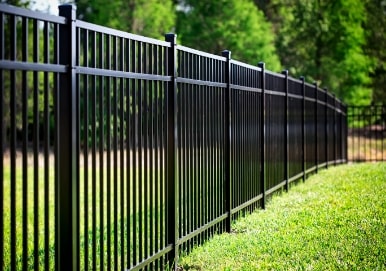
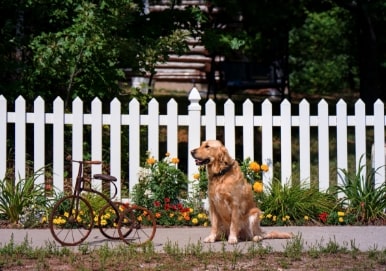
On a picket fence, the gap between fence pickets is a design choice more than a moisture question. Pickets are commonly set anywhere from a couple of inches to about one picket width apart, so the yard stays open while the line still reads as a fence. Narrower gaps look fuller and keep small pets in better. Wider gaps use fewer pickets, so they cost less.

Check two things before you settle on a gap. First, is the fence part of a pool barrier? If so, the U.S. Consumer Product Safety Commission pool barrier guidelines say no opening should let a 4 inch sphere pass through. When the rails sit less than 45 inches apart, the space between pickets should not exceed 1 3/4 inches. Our post on Virginia pool fence regulations covers the rest of the barrier rules.
Second, think about your pets. A small dog can slip through a gap that a larger dog can’t, so homes with small breeds often go with tighter pickets or a solid privacy style. The best fence for dogs post walks through those choices.
Privacy Fence Picket Spacing: Stockade, Shadowbox or Board on Board
For privacy fence picket spacing, the board layout matters as much as the gap itself. These three styles handle shrinkage very differently, and that affects how private the fence feels years from now. For more styles and materials, see our guide to privacy fence ideas.
Stockade Fence Board Spacing
A stockade or solid board fence runs a single row of boards side by side on one face of the rails. It uses the fewest boards of the three, so it’s usually the least expensive privacy layout. The catch is shrinkage. Every gap is a straight line of sight, so boards that dry and narrow can leave thin gaps you can see through. That’s why the 1/8 to 1/4 inch rule matters most on this style.

Shadowbox Fence (Good Neighbor Style)
A shadowbox fence alternates boards on both sides of the rails, keeping the gap on each side narrower than a board. Looking straight at it, the boards overlap and block the view. At an angle you can catch glimpses through, but air moves freely through the offset gaps. It also looks the same from both sides, which is why many people call it a good neighbor fence. It takes more boards than stockade, so it usually costs more. Read more about whether a good neighbor fence fits your property.
Board on Board Fence Spacing
Board on board uses two layers. The back row has gaps between its boards, and each front board covers one gap with its edges lapping over the boards behind it. Because of that overlap, shrinkage never opens a line of sight, so it gives the most privacy of the three. It also uses the most lumber, which puts it at the higher end for cost.
| Style | How the boards sit | Privacy | Relative cost |
|---|---|---|---|
| Stockade | Side by side on one face, 1/8 to 1/4 inch apart when dry | High, but gaps can open as boards shrink | Lowest of the three |
| Shadowbox | Alternating on both faces, gaps narrower than one board | Full straight on, partial at an angle | Middle |
| Board on board | Two layers, front boards overlap the gaps behind | Highest | Highest of the three |
Relative cost depends on height, footage and the site. A fast, free quote gives you a real number.
Whichever layout you choose, privacy also depends on the bottom of the fence. Good Neighbor Fence wood fences are custom stick-built on site and fitted to the landscape with no gaps under the fence, so tight boards aren’t undone by open space at ground level. Building a fence on a slope? Our guide shows which materials follow the grade best. You can compare styles on our privacy fence installation page.

A shadowbox fence that gives a Richmond home more privacy, and a warm look the neighbors appreciate too.
The board and lattice fence we built for a Richmond home shows another option. It pairs solid boards at eye level with a diagonal lattice band on top that lets light and air through.
What About Horizontal Fence Slat Spacing?
On a horizontal fence, slat spacing is mostly about the look you want. Tight slats read as a solid wall, while wider gaps give a modern, open feel with less privacy. For examples, browse these horizontal wood fence ideas.
Factors That Influence Wood Fence Spacing
Wood Type
Some woods move more than others. In the Wood Handbook’s shrinkage table, western redcedar shrinks 5.0 percent across the grain (tangentially) from green to oven dry. Loblolly pine, a southern pine, shrinks 7.4 percent. So cedar tends to hold its gaps more steadily, while pressure-treated pine calls for more attention to whether the boards are wet or dry when they go up.
Climate
Humid weather makes wood swell and dry weather makes it shrink, so spacing has to allow for seasonal changes. In Central Virginia, outdoor wood moisture stays in a fairly narrow band, so a dry board moves only a little from season to season. The bigger change here comes from wet treated lumber drying out after installation.
Fence Purpose
Privacy fences require minimal gaps to block sight lines. Meanwhile, decorative fences can have wider spacing for aesthetic appeal. Security fences, such as those designed to keep animals in or intruders out, benefit from tighter spacing that limits movement between boards.
Installing Fence Boards with Proper Gaps
Prepping the Wood
Wood should acclimate to its environment before installation. Storing boards in the project area for a few days allows them to adjust to humidity levels. This will help reduce movement after installation. Installing wood too soon can lead to unexpected shrinkage or expansion.
Using Spacers
Consistent gaps create a professional appearance. Spacers help maintain uniformity and prevent uneven spacing that can weaken the fence’s overall look. Thin strips of wood or plastic spacers work well to keep gaps precise during installation.
Checking Alignment
Stepping back periodically to check alignment makes sure the fence remains straight. Securing a few boards at a time allows for adjustments before finalizing the installation. Misaligned boards result in an uneven structure. This will reduce both function and aesthetic value.
Preventing Common Spacing Mistakes
Skipping Acclimation
Wood that hasn’t adjusted to local conditions will shift unpredictably. Allowing it time to adjust prevents boards from warping or pulling apart after installation.
Ignoring Climate Factors
Using the same spacing regardless of location leads to problems. Humid environments require slightly more spacing to prevent expansion damage. Dry regions need closer spacing to avoid excessive gaps from shrinkage.
Inconsistent Gaps
Uneven spacing makes the fence look poorly built. It also weakens the structure. Using spacers and measuring frequently gives consistent gaps that maintain both function and appearance.
Leaving a Gap Between Wet Fence Boards
Gapping wet pressure-treated boards is an easy mistake to make. The boards look fine on day one. Then they dry and shrink, and a 1/4 inch gap can grow wide enough to see clearly through. If your boards are wet, butt them tight and let drying create the gap.
Maintaining a Wood Fence with Proper Spacing
Sealing the Wood
A water-repellent sealer slows how fast boards take on and lose moisture, which evens out swelling and shrinking. A fresh coat every few years helps the wood last longer. Our post on how to seal a wood fence covers timing and prep.
Inspecting the Fence
Regular checks help identify loose or misaligned boards. Securing shifting boards prevents gaps from widening. Tightening screws or nails ensures the fence remains secure over time.
Cleaning Regularly
Dirt and mildew weaken wood over time. Washing the fence with mild soap and water removes debris. This prevents buildup that leads to damage. Clearing leaves and other materials from the fence base reduces moisture retention.
Closing Gaps Between Fence Boards
If boards have already shrunk and left gaps you can see through, a thin batten strip screwed over each gap restores privacy. This post on filling gaps in a wood fence walks through it. But if the gaps come with rotting posts or leaning sections along long runs, patching won’t last. At that point, check the signs you need to replace your wood fence.
Improve Privacy and Longevity with Expert Wood Fence Installation in Richmond
The right wood fence spacing gives you privacy now and a fence that stays straight for years. Good Neighbor Fence has been family owned since 2006, with 400+ five-star Google reviews from homeowners across Central Virginia. Most installs take 1 to 2 days, and financing through Wisetack starts at 0% APR for qualified buyers.
Ready to plan a new privacy fence? Call (804) 737-4664 or request a fast, free quote online. You can also see how we approach every wood fence design and build.
Outdoor wood here settles at about 11 to 14 percent moisture through the year.
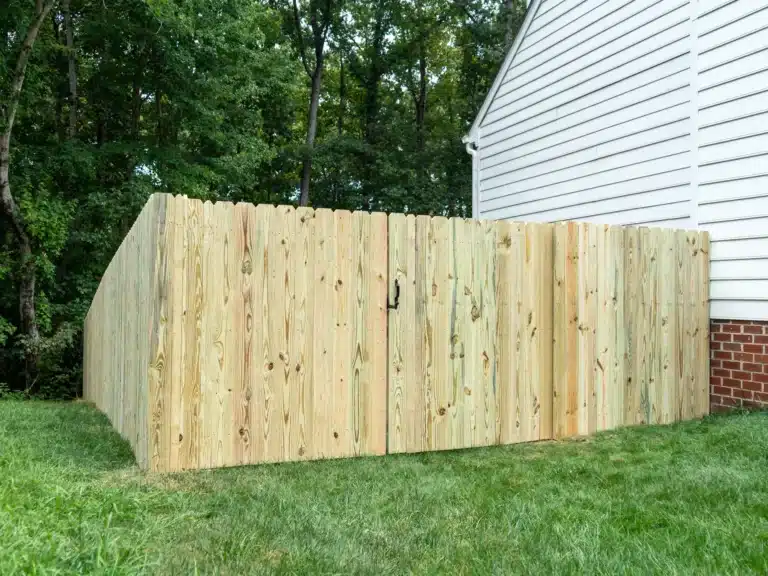
Wooded lots, where a stick-built fence follows the ground with no gaps.