


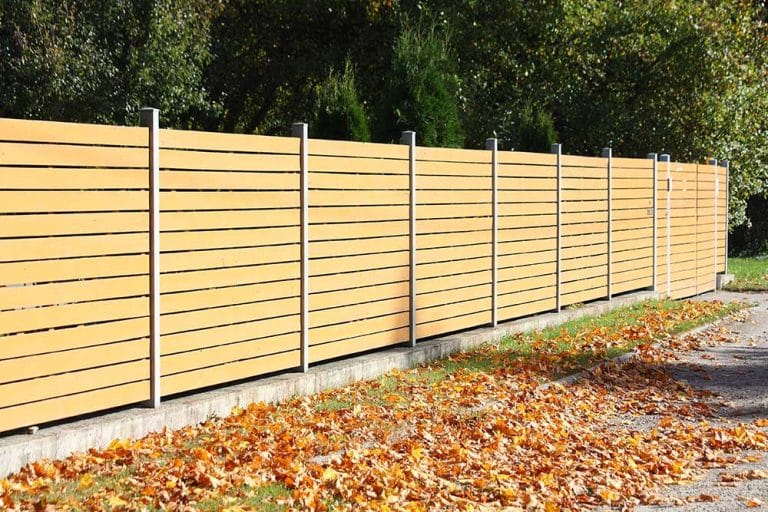
The best way to fill gaps in wood fence boards is to cover them instead of stuffing them. Screw a thin batten strip over each gap. For a whole section, add a second row of boards on the rail side that overlaps the openings. Skip caulk and wood filler, since the boards keep swelling and shrinking and rigid fillers can’t follow.
Here’s why the gaps show up, five fixes that last, and when a section is worth replacing instead.

Why Wood Fence Gaps Open Up
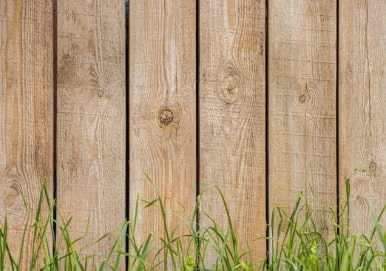
Wood moves with moisture. The USDA Forest Products Laboratory’s Wood Handbook explains that below the fiber saturation point, wood swells as it gains moisture and shrinks as it loses it. It also moves most along the growth rings, about twice as much as across them. That’s why flat-sawn pickets lose more width than thickness as they dry.
Pressure-treated lumber adds another twist. The Preserved Wood FAQ notes that waterborne preservatives put moisture back into the wood, even if it was kiln-dried first. As those boards dry, they shrink in width. So a fence that looked tight on install day can show daylight once the wood dries out.
Other causes are mechanical. Loose nails let boards shift, warped boards pull away from their neighbors, and a leaning post can open a gap at the end of a panel.
Check the Gap Before You Fix It
Before you fill gaps in a wood fence, figure out whether each gap is seasonal or permanent. A gap that shows up in a dry spell and narrows after rain is normal wood movement. But a gap that keeps growing, or a board that wobbles when you push it, points to loose fasteners, rot or a post problem.
Also check the posts. If a post leans, filling board gaps only hides the symptom. Our fence maintenance guide covers what to look for on a yearly walk around the fence line.
5 Ways to Fill Gaps in Wood Fence Boards
1. Tighten or Refasten Loose Boards
Start with the simplest fix. If a board has shifted or pulled loose, push it back into line and drive new exterior screws into the rails. Use two per rail so the board can’t pivot, and pick hot-dip galvanized or stainless steel for treated lumber. Our guide to fence screw sizes covers lengths for pickets and rails.
2. Add Batten or Filler Strips Over the Gaps
Batten strips, also sold as filler strips, are the classic way to fill gaps in a wood fence without fighting wood movement. Rip or buy thin strips of the same wood, wide enough to overlap both boards. Then screw each strip to just one of the two boards it covers. That way both boards can still swell and shrink under the strip without splitting it.
Filler strips work best on top of the gap, not jammed into it. A strip wedged between two boards gets squeezed when they swell after rain, and it can pop out or split a board. So if you want a flush look, fasten the strip to the rail only and leave it a little narrower than the gap. For treated pine, use strips rated for outdoor use and pre-drill near the ends. It’s a good fit when the fence is solid but the gaps bother you.
3. Add a Second Layer on the Rail Side
For a whole section with wide gaps, add a second row of pickets on the rail side. Center each new board over a gap so it overlaps the boards on the front. The result works like a shadowbox fence, with boards on both faces of the rails. For an example, see this Richmond privacy fence with alternating boards.
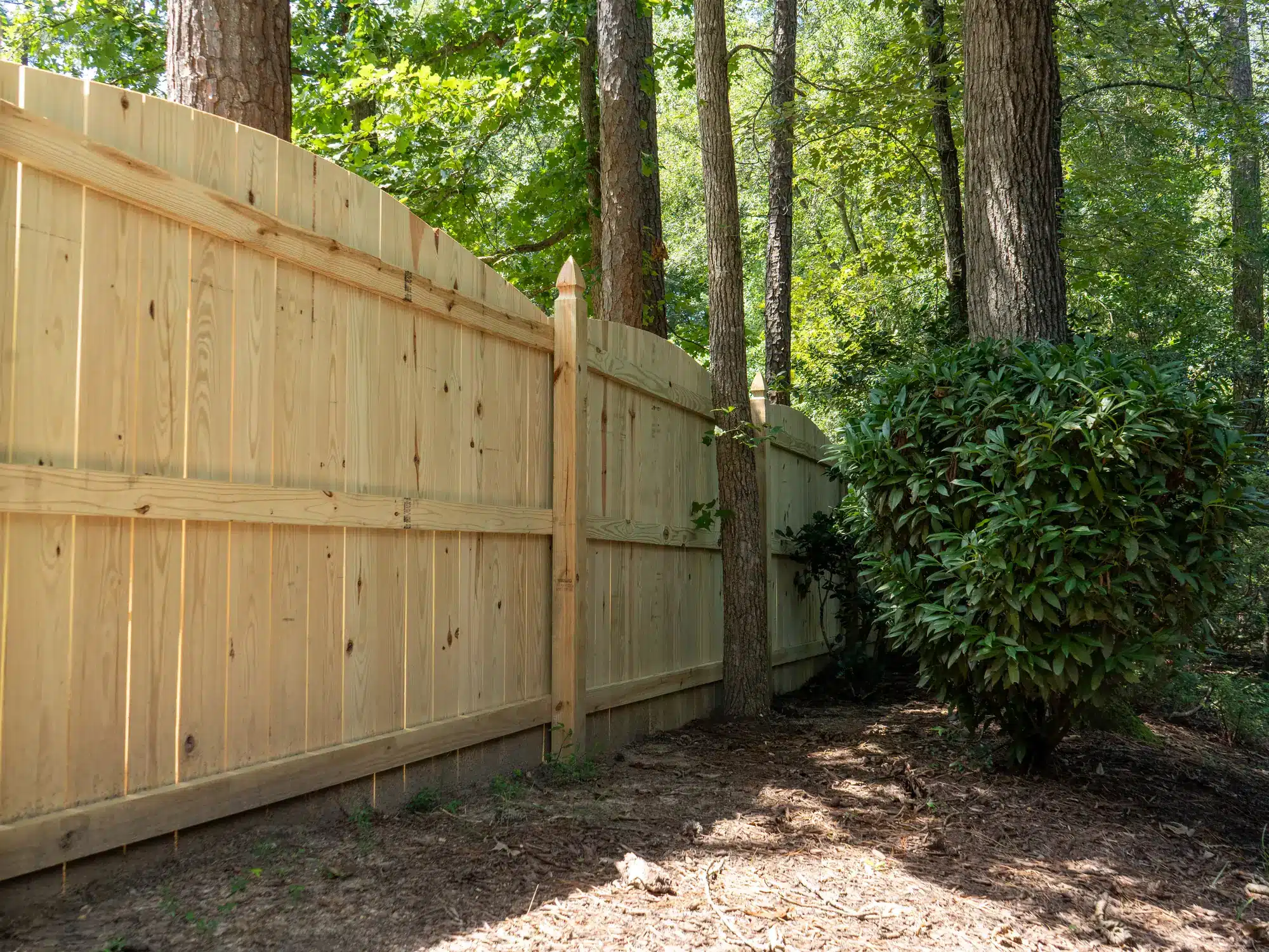
Extra boards add weight and catch more wind, so make sure the posts are solid first. Our guide to wood fence spacing for privacy explains how overlap and spacing change what your neighbors see.
4. Replace Warped or Split Boards
A cupped, twisted or split board won’t close up no matter how many screws you add. Pull it and fit a new board of the same species and size. For treated pine, check the end tag. The American Wood Protection Association lists fence pickets at Use Category 3B or higher and posts at 4A or higher for ground contact.
If the new board is freshly treated and still wet, install it tight against its neighbors. It will shrink as it dries, so any space you leave now only grows.
5. Fix the Post Before the Boards
When a gap opens at the end of a panel, a leaning or loose post is often the cause. Straightening or resetting a post is heavy work, but it’s the only real way to fill gaps in wood fence panels caused by a lean. If several posts lean or have rotted at the ground line, replacing that run of fence usually makes more sense than patching boards.
How to Reinforce a Wooden Fence
Gaps often show up on a fence that’s getting loose overall. So while you’re fixing them, firm up the structure too:
- Refasten every board. Drive two exterior screws at each rail, since one fastener lets a board pivot.
- Brace cracked rail ends. A metal fence rail bracket screwed to the post and rail can hold a rail that has split near the post.
- Add a middle rail. If tall boards bow between two rails, a third rail across the middle keeps them flat.
- Reset leaning posts. A post that moves at the base needs new concrete, and any digging means contacting Virginia 811 first.
- Lift the boards off the ground. A rot board keeps pickets out of wet soil, so the bottoms stay sound.
If most posts are soft at the ground line, though, reinforcing won’t last. That’s when a new fence is the better spend.
What Not to Use on Wood Fence Gaps
- Caulk or wood filler between boards: rigid fillers can’t stretch as boards shrink, so they crack and fall out.
- Spraying boards with water to swell them: the gap comes right back as the wood dries.
- Wood strips glued between boards: they lock boards together, so the next dry spell can split a board or pop the strip.
- Interior or bright steel fasteners: they corrode in treated lumber and can stain cedar.
How to Keep Gaps Between Fence Boards Small
Finish the wood. The Forest Products Laboratory’s chapter on finishing wood explains that water repellents slow how fast liquid water gets into wood while still letting it dry. Finishes can’t stop movement, though. They only slow it, which softens the swings between wet and dry weather.
Our guide on sealing your wood fence walks through prep and application. Also keep soil, mulch and vines off the bottom of the boards, and walk the fence after big storms to catch loose boards early.
Planning a new fence instead? Styles with overlapping boards hide seasonal movement from the start. Browse these tall wood fence ideas or our privacy fence options.
Get a Quote for a New Richmond Wood Fence
If your fence has more gaps than good boards, it may be time for a new one. Good Neighbor Fence is a family-owned Richmond fence company that has built fences across Central Virginia since 2006 and earned more than 400 five-star Google reviews. Our wood fence installation team builds custom wood fences on site, so you can choose a privacy style that fits your yard.
Before you decide, see what drives wood fence cost or explore fence financing starting at 0% APR. Then call (804) 737-4664 or request a quote to get started.