

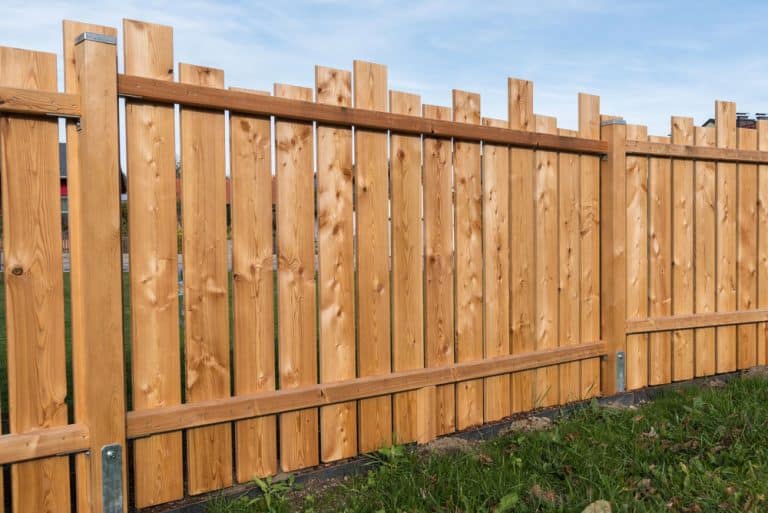
A fence rot board is a treated board that runs along the bottom of a wood fence so the pickets stop above the soil instead of sitting in it. It takes the moisture, mulch and string trimmer hits that would otherwise rot your pickets. When it finally wears out, you swap one board per section instead of replacing a whole row of picket bottoms.
You will also hear it called a kickboard or baseboard. Below, we cover which lumber and fasteners to buy, how to install one on a new or existing wood fence, and the mistakes that cut its life short.

What Is a Fence Rot Board?
Picture the bottom edge of a privacy fence. Without a rot board, every picket ends just above the dirt, or right in it. Rain splashes soil onto the boards, grass grows against them, and the wood stays damp long after a storm.
A rot board fills that zone with one horizontal piece of lumber fastened to the posts, so the pickets sit safely above it. It also closes the gap under the fence, which helps keep small pets from squeezing out and gives the fence a straight, finished bottom line. If a digging dog is your bigger worry, our guide to the best fence for dogs covers more options.
Why a Rot Board Protects Your Fence
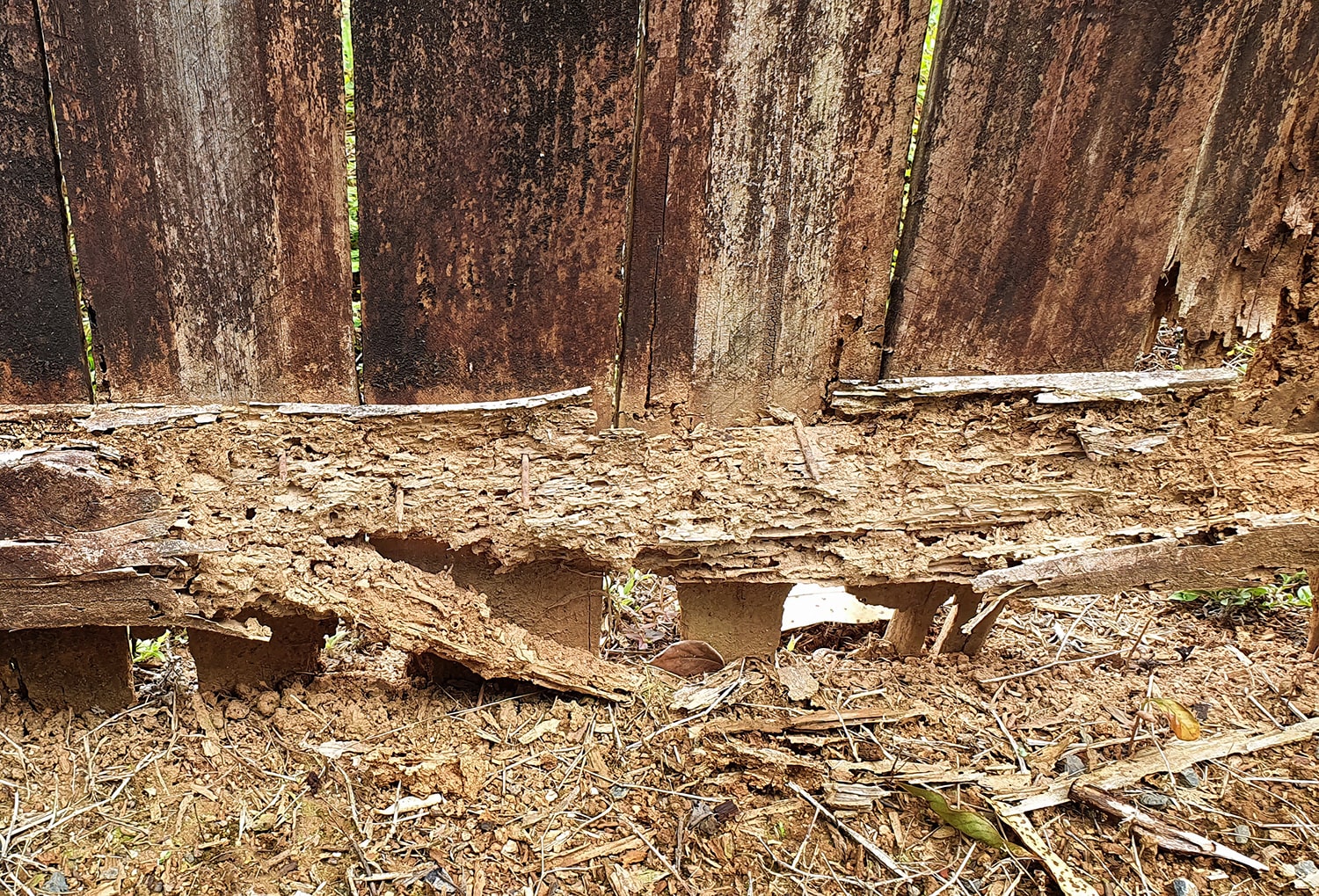
Wood rots when it stays wet. The USDA Forest Products Laboratory’s Wood Handbook says serious decay occurs only when wood moisture sits above the fiber saturation point, about 30 percent. It also notes that decay resistance drops for wood in contact with the ground or used in warm, humid climates. That describes the bottom of most Central Virginia fences every summer.
So the bottom of a fence nearly always fails first. A rot board concentrates that damage in one part you can replace. Instead of cutting out rotted picket ends across a whole run, you unscrew one board and put in a new one.
Pick the Right Lumber and Fasteners
A rot board sits at the soil line, so buy lumber rated for it. The American Wood Protection Association says ground contact applications require Use Category 4A (UC4A) or higher. It also warns that some treated lumber 2 inches thick or less is treated only for above-ground use and may not last long in ground contact. Check the end tag before you buy, and pick a board tall enough to cover the gap between the soil and your pickets.
Fasteners matter just as much. The Western Wood Preservers Institute points out that building codes call for hot-dipped galvanized, stainless steel, silicon bronze or copper fasteners in treated wood. Skip bright or plain steel screws. For more detail, see our posts on pressure-treated wood for fences and choosing wood fence screws.
How to Install a Fence Rot Board
These steps assume a standard wood privacy or picket fence with posts set in the ground. The same order works on a new build or a retrofit.
1. Check the Grade and Clear the Fence Line
Run a string line along the bottom of the posts to see how the ground rises and falls. Then rake back mulch, rocks and roots so the board can sit flat. On a slope, you can step each board with the grade or trim its bottom edge to follow the ground.
2. Measure Each Bay
Measure at the bottom of the posts, not the top, since posts are rarely perfectly plumb. For a board that mounts on the face of the posts, measure center to center so each joint lands on a post. For a board that fits between posts, measure the inside gap. Write each number on the post so the right board goes in each opening.
3. Cut and Seal the Boards
Cut each board to length. Then brush preservative on every fresh cut. Viance, a wood preservative maker, recommends that you treat all field-cut ends and drilled holes with a brush-on preservative such as copper naphthenate.
4. Mount the Kickboard
You have two common options. A face-mounted board screws flat across the fronts of the posts on the picket side. A center-mounted board fits between the posts and screws into treated cleats fastened to each post, so it looks the same from both sides.
Either way, keep the top edge level (or parallel with the rails on a slope). Drive at least two screws into each post or cleat at both ends, and pre-drill near the board ends to avoid splits.
5. Hang or Trim the Pickets
On a new fence, hang the pickets so their bottoms rest just above the top edge of the rot board, never touching the ground. A small gap lets water drain off the board instead of soaking into the picket ends.
Adding a Rot Board to an Existing Fence
If your pickets already touch the soil, snap a level line along the bottom and trim the picket ends so they stop above the height of the new board. Seal those fresh picket ends, then install the board as described above.
Check the posts and bottom rail while you work. If the posts are soft at the ground line, a new board will not save the fence. Our post on fence post rot protection explains what to look for. When rot has reached the posts along long stretches, a replacement usually makes more sense than another round of fixes.
Mistakes That Shorten Its Life
- Above-ground lumber: it looks the same at the store, so read the tag for UC4A or Ground Contact.
- Burying most of the board: some soil contact is expected, but a board sunk deep stays wet.
- Mulch piled against it: mulch holds moisture right where you want the wood to dry out.
- Plain steel screws: use hot-dipped galvanized or stainless fasteners instead.
- Unsealed cut ends: end grain soaks up water faster than the face of the board.
Do You Need a Rot Board on Every Fence?
No. A rot board is a wood fence detail. Vinyl, aluminum and chain link fences have no wood pickets near the ground, so they don’t need one. On a wood fence, it earns its keep when pickets run close to the soil, when pets test the gap, or when mulch beds and sprinklers keep the fence line wet.
It works best alongside regular care. Our fence maintenance guide and our tips on sealing a wood fence help every board on the fence last longer.
Thinking About a New Wood Fence? Get a Quote
Good Neighbor Fence doesn’t do repairs, but if your fence is past saving, we’ll walk the line and quote a replacement. We’ve been family owned since 2006, have earned 400+ five-star Google reviews, and build wood privacy fences and picket fences across Central Virginia. Our wood fence installation crews build each fence on site and fit it to your yard, so we can talk through the bottom detail, including a rot board, while we plan your fence.
Call (804) 737-4664 or request a fast, free quote online.