

Yes, for almost every wood fence you need pressure treated wood for fence posts, and it’s the practical choice for rails as well. The boards are the one part where you have a real choice, because decay-resistant species like cedar can hold up above the ground.
The reason is simple. Posts sit in damp soil, and untreated wood in the ground breaks down fast. So below, you’ll see where treated lumber matters most, how to read the tag at the lumber yard, and how to get more years out of a wood fence in Central Virginia.
What Makes a Pressure Treated Fence Different?
Pressure treated lumber starts as ordinary wood. The treating plant seals it in a large cylinder, then uses pressure to push a liquid preservative deep into the fibers. That preservative helps the wood fight off the fungi and insects that cause rot.
The chemistry has changed over the years. According to the EPA, manufacturers stopped making arsenic-based CCA treated wood for homeowner uses in December 2003. So the treated boards you buy today use other preservatives, and the tag on each piece tells you how much protection it carries.
Where You Need Pressure Treated Wood for Fence Building
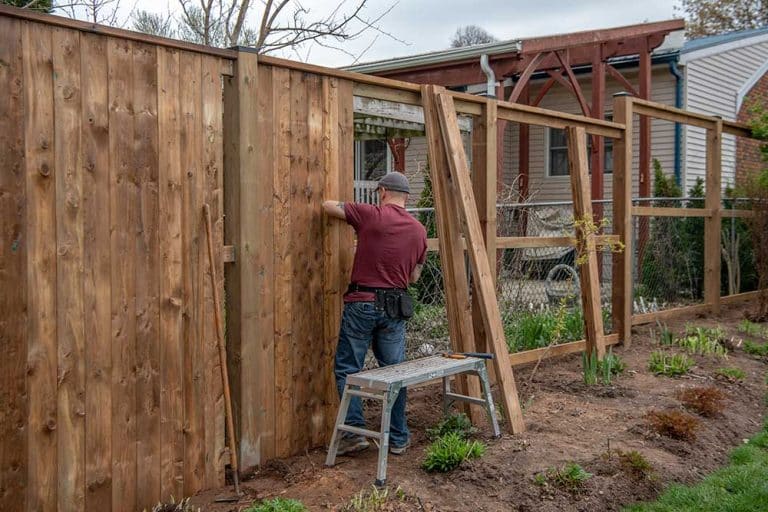
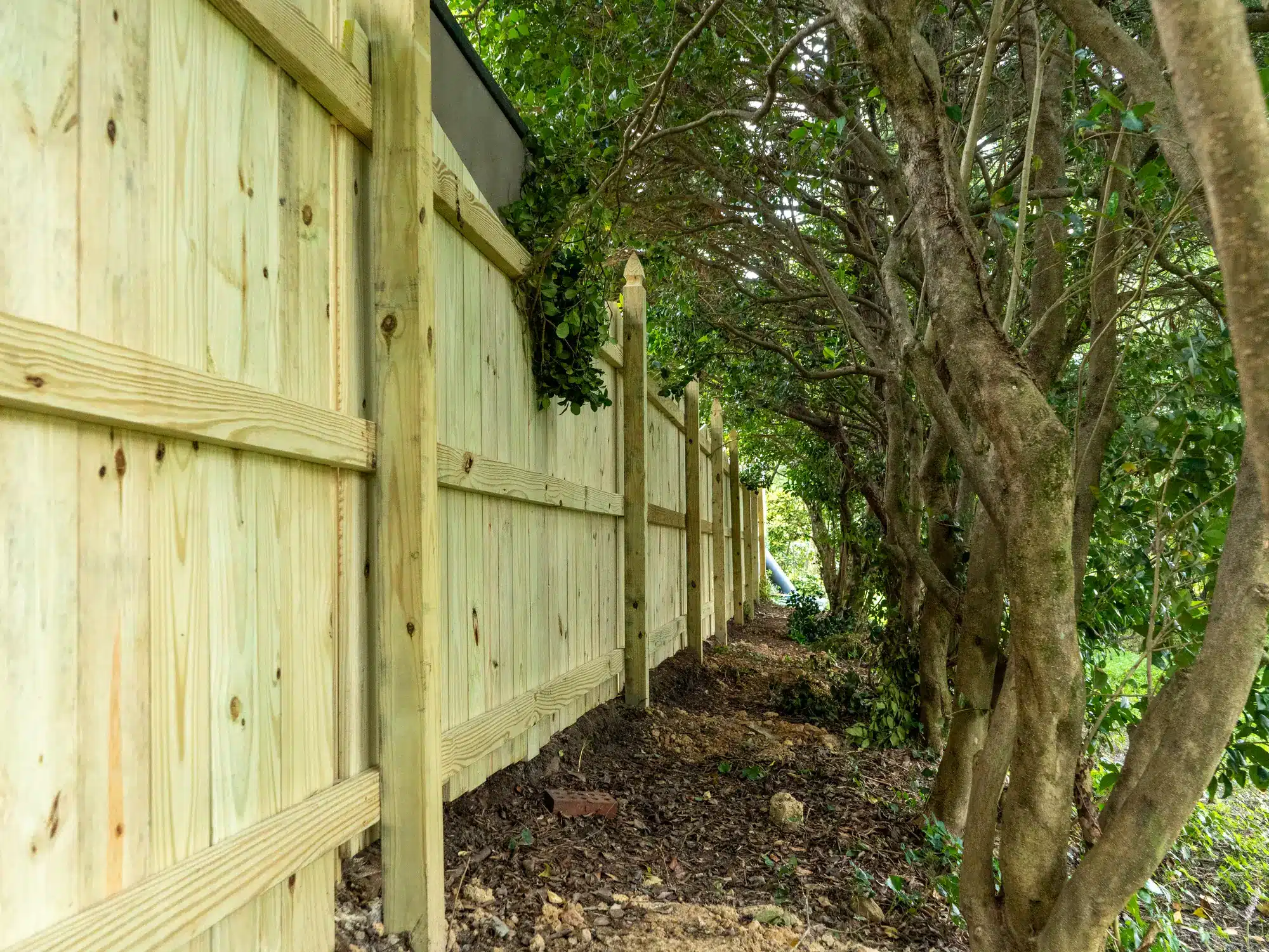
A wood fence has three main parts: posts, rails and boards. Each one faces different conditions, so each one needs a different level of protection. Our guide to wood fence parts covers the full layout if you want more detail.
Fence Posts Need Ground Contact Lumber
Posts are the one place you can’t cut corners. The American Wood Protection Association lists posts under Use Category 4A or higher, its ground contact rating. The USDA Forest Products Laboratory also warns against letting untreated wood touch the soil, because ground contact speeds up decay.
At the store, check the end tag or stamp on each post for “Ground Contact” or UC4A. When a post rots, the whole section starts to lean, so this is the wrong spot to save a few dollars.
Rails Should Be Treated Too
Rails ride above the ground, but water sits on their top edges and in the joints where they meet the posts. So treated rails make sense even on a fence with cedar boards. Also, if a bottom rail or rot board sits close to the soil, buy ground contact lumber for it. AWPA notes that some above-ground parts face ground contact type hazards, and a board just above wet dirt fits that description.
Boards and Pickets Are Your Real Choice
AWPA rates fence pickets at Use Category 3B or higher, its above-ground level. Treated pine pickets are the budget-friendly option, and they take stain well once they dry out. Cedar costs more, but plenty of homeowners love its color and grain. Our wood fence cost breakdown covers what drives the final price.
Pressure Treated Wood or Cedar for Your Fence?
Cedar has a real advantage above the ground. The Forest Products Laboratory rates the heartwood of cedars and redwood as very resistant to decay. But it also notes that untreated sapwood of essentially all species has low decay resistance. Cedar boards often include some sapwood, so a cedar post in wet soil is a gamble.
That’s why a common setup pairs treated posts and rails with cedar boards. You get a tough frame where rot starts and the look you want on top. Some homeowners also consider hidden steel fence posts behind wood boards.
If you’d rather skip wood upkeep entirely, compare every option in our guide to wood, vinyl, aluminum and chain link fences, or read how composite compares to wood. For a fence you never stain, vinyl fence installation is worth a look.
How Do You Make a Treated Lumber Fence Last?
A pressure treated fence still needs care. The treatment fights rot and insects, but it doesn’t stop sun and rain from graying, cracking or warping the boards. These habits make the biggest difference:
- Let it dry before you seal it. New treated boards often feel damp. Sprinkle a little water on the wood, and if it beads up, wait a few weeks and test again.
- Treat fresh cuts. A cut can expose wood the preservative didn’t fully reach, so brush an end-cut preservative on every cut, especially near the ground.
- Use the right fasteners. Simpson Strong-Tie says the treated wood industry recommends hot-dip galvanized or stainless steel fasteners and hardware for treated lumber. Our guide to wood fence screws covers sizes.
- Keep dirt and mulch off the boards. Soil, leaves and mulch piled against a fence hold moisture right where rot begins.
- Clean and reseal on a schedule. A clear or tinted sealer slows water and sun damage. Our tips on sealing a wood fence walk you through it.

For more on protecting the frame, read our tips on preventing fence post rot and our overview of routine fence maintenance.
Is a Pressure Treated Fence Safe for Your Family?
Treated lumber sold for home use today doesn’t use the arsenic-based CCA formula. Still, handle it with basic care. Wear gloves, goggles and a dust mask when you cut it, then sweep up the sawdust and wash your hands. Also, never burn the scraps: the EPA says not to burn preservative-treated wood in a residential setting.
If your current fence went up before 2004, it may contain CCA. The EPA doesn’t require you to tear out older structures. Instead, it says a penetrating stain applied on a regular basis may reduce chemical leaching. And if an older fence is failing anyway, that’s one more reason to plan a replacement.
Get a Quote for Your Wood Fence in Central Virginia
Good Neighbor Fence is a family-owned company that has built fences across Central Virginia since 2006, with 400+ five-star Google reviews. Tell us how you use your yard, and we’ll help you choose posts, rails and boards that fit your budget. You can learn more about our wood fence installation or see a wood fence we built in Powhatan.
Ready to plan your fence? Request a fast, free quote online or call (804) 737-4664. We serve Richmond, Chesterfield, Henrico, Hanover and nearby towns.