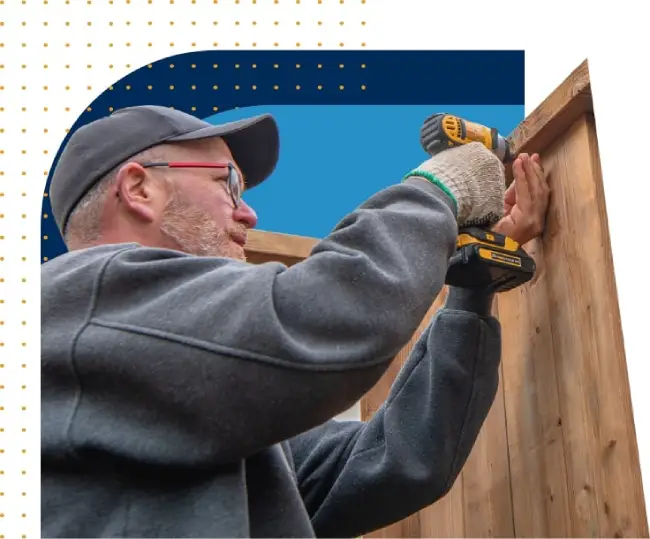


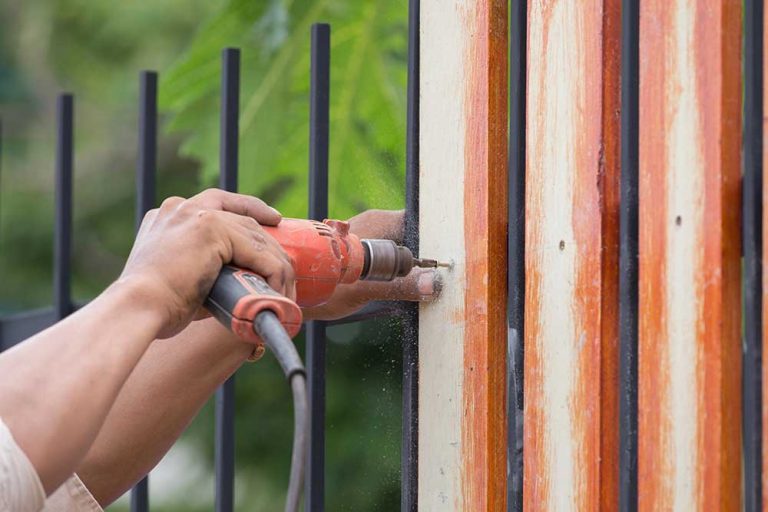
The right screws for wood fence pickets are usually 1-5/8 to 2 inches long. Rails need 3-inch or longer screws driven into the posts, and premade panels take the same rail screws. Choose hot-dip galvanized or stainless steel, because modern treated lumber corrodes cheap steel and plain steel stains cedar. Below you’ll find the sizing rule behind those numbers, a quick chart and the mistakes that lead to popped pickets.

How to Size Screws for a Wood Fence
Screw length follows one rule: pass through the board, then bite deep into the wood behind it. The Western Red Cedar Lumber Association calls for at least 1 inch of penetration into support members. For structural parts, it asks for 1-1/4 inches. So measure the board you’re fastening, then add that bite.
Also remember that lumber is smaller than its name. The USDA Forest Products Laboratory’s Wood Handbook lists a nominal 1-inch board at 3/4 inch thick when dry. A 2×4 rail is really 1-1/2 inches thick, and a 4×4 post is 3-1/2 inches square. Those real sizes drive every number below.
Pickets and Fence Boards
For a 5/8-inch picket, 1-5/8 inches is the shortest screw that still gets a full inch into the rail. For 3/4-inch boards, step up to 1-3/4 or 2 inches. Don’t go much longer, though. A 2-1/2 inch screw through a 3/4-inch board can poke out the back of a 1-1/2 inch rail.
Board layout matters as much as hardware. If you want a solid screen, read our guide to wood fence board spacing for privacy before you start driving screws.
Rails to Posts
Rails carry every picket, so they get the structural number. A 1-1/2 inch rail plus 1-1/4 inches of bite means a 3-inch screw is the minimum when you face-screw a rail to a post. When you toe-screw at an angle, the screw loses depth, so use 3-1/2 inches instead. Put at least two screws in each rail end so the rail can’t pivot.
Premade Fence Panels
Premade panels hang on the posts by their own back rails, which are usually 2×3 or 2×4 lumber at 1-1/2 inches thick. So size those screws like rail screws: 3 inches when you face-screw into the post, and 3-1/2 inches when you toe-screw through the rail end. If your panel rails are thinner, measure them and add 1-1/4 inches of bite.
Many builders hang panels on metal fence brackets instead. In that case, use the screw size the bracket maker lists, since those screws are matched to the bracket holes. Not sure panels are the right call? Compare premade and stick-built fences before you buy.
Gates Built With Your Fence
Gates flex every time someone opens them, so hinge and latch screws take the most abuse. Use the fasteners that come with the hardware, or the size its instructions list, and add through-bolts where the maker calls for them. If you’re planning a new fence with a gate, browse these wood fence gate designs first.
Quick Size Chart for Fence Screws
- 5/8-inch pickets: 1-5/8 inch screws or longer
- 3/4-inch boards: 1-3/4 to 2 inch screws
- 2×4 rails face-screwed to posts: 3 inch screws
- Rails toe-screwed at an angle: 3-1/2 inch screws
- Premade panel rails to posts: 3 inch screws, or 3-1/2 inch when toe-screwed
- Gate hinges and latches: the fasteners the hardware maker specifies
Thickness varies by supplier, so measure your actual boards before you buy a box. For diameter, thicker screws hold better but split thin pickets more easily. Save the heavy structural screws for rails and gate frames.
Which Coating Should Fence Screws Have?
If your fence is pressure-treated pine, coating matters more than brand. Simpson Strong-Tie reports that some newer wood treatments are more corrosive to steel than the old CCA formula. So its guidance is simple: use hot-dip galvanized or stainless steel fasteners with treated wood.
- Hot-dip galvanized: a thick zinc coat that suits treated pine. Simpson Strong-Tie warns that electro-galvanized coatings don’t count as hot-dip galvanized, so read the label.
- Stainless steel: the top choice for cedar and for homes near salt water. The Western Red Cedar Lumber Association recommends 304 stainless for general use and 316 for salt air.
- Polymer or ceramic coated: common on exterior screws. If your fence is treated pine, buy only boxes labeled for use with treated lumber.
Cedar has its own issue. The Forest Products Laboratory explains in its chapter on wood finishing that tiny amounts of iron react with tannins in western redcedar and redwood, leaving dark blue-black stains. Stainless screws avoid that problem, which is why they’re worth the extra cost on a cedar fence.
Screws or Nails for Pickets?
Screws hold tighter than smooth nails, and they back out cleanly when you need to swap a broken board. Ring-shank nails still work, and a nail gun is faster on long runs. If you nail, the same coating rules apply. Still, use screws anywhere you expect repairs or adjustments, like rails and gate frames.
Common Mistakes With Wood Fence Screws
- Interior screws outdoors: bright or black drywall screws rust fast and are brittle.
- Screws that are too long: tips that poke through the rail snag clothing and look sloppy.
- Overdriving: sinking the head deep crushes wood fibers and leaves a cup that holds water. Set heads flush instead.
- No pilot holes near ends: pre-drill close to board ends, especially on dense wood, so the board doesn’t split.
- One screw per rail: a single screw lets a picket pivot, so use two at each rail.
How to Keep Fence Screws Tight Over Time
Walk your fence once a year and look for popped heads, rust streaks and loose pickets. When a screw spins without tightening, move over half an inch and drive a new one instead of forcing the old hole. Then protect the wood, since boards that swell and shrink with moisture work fasteners loose.
Our guide to sealing a wood fence covers the finish. For everything else, use these fence maintenance tips.
Get a Quote for Your Richmond Wood Fence
Hardware choices add up across a whole fence, so it pays to get them right the first time. Good Neighbor Fence is a family-owned Richmond fence company building fences across Central Virginia since 2006. We’ve earned 400+ five-star Google reviews along the way. If you’d rather hand off the project, our wood fence installation team handles design, materials and the build.
Before you decide, see what drives wood fence cost or explore fence financing starting at 0% APR. Then call (804) 737-4664 or request a quote to get started.