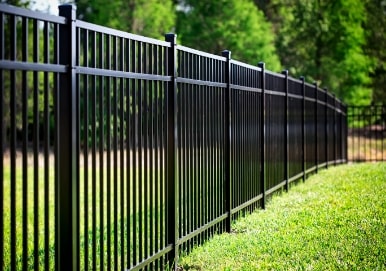



The right vinyl or aluminum fence for dogs depends on what your dog does at the fence line. Choose solid vinyl privacy panels for barkers, climbers and reactive dogs. Choose aluminum for calm dogs when you want an open view and an ornamental look.
We build both materials across Central Virginia, and homeowners tend to ask us the same few questions. How tall does it need to be? Will my small dog squeeze through? Will my dog bark at everything that walks by? This guide answers each one, so you can match the fence to your dog. For wood and chain link options too, see our guide to the best fence for dogs.
Vinyl or Aluminum Fence for Dogs: The Short Answer
A vinyl or aluminum fence keeps most dogs in when the height, gaps and gates are right. The real difference is what your dog can see, grip and squeeze through. Here is how we usually match them:
- Vinyl privacy for dogs that bark at people, fence-fight with the neighbor’s dog or try to climb.
- Aluminum for calm dogs, yards with a view worth keeping and front yards where an HOA wants an ornamental look.
- Aluminum with puppy pickets for small breeds and puppies that could slip through standard spacing.
- Either one for most medium dogs, as long as the fence is tall enough and the bottom gap stays tight.
How Vinyl and Aluminum Dog Fences Differ
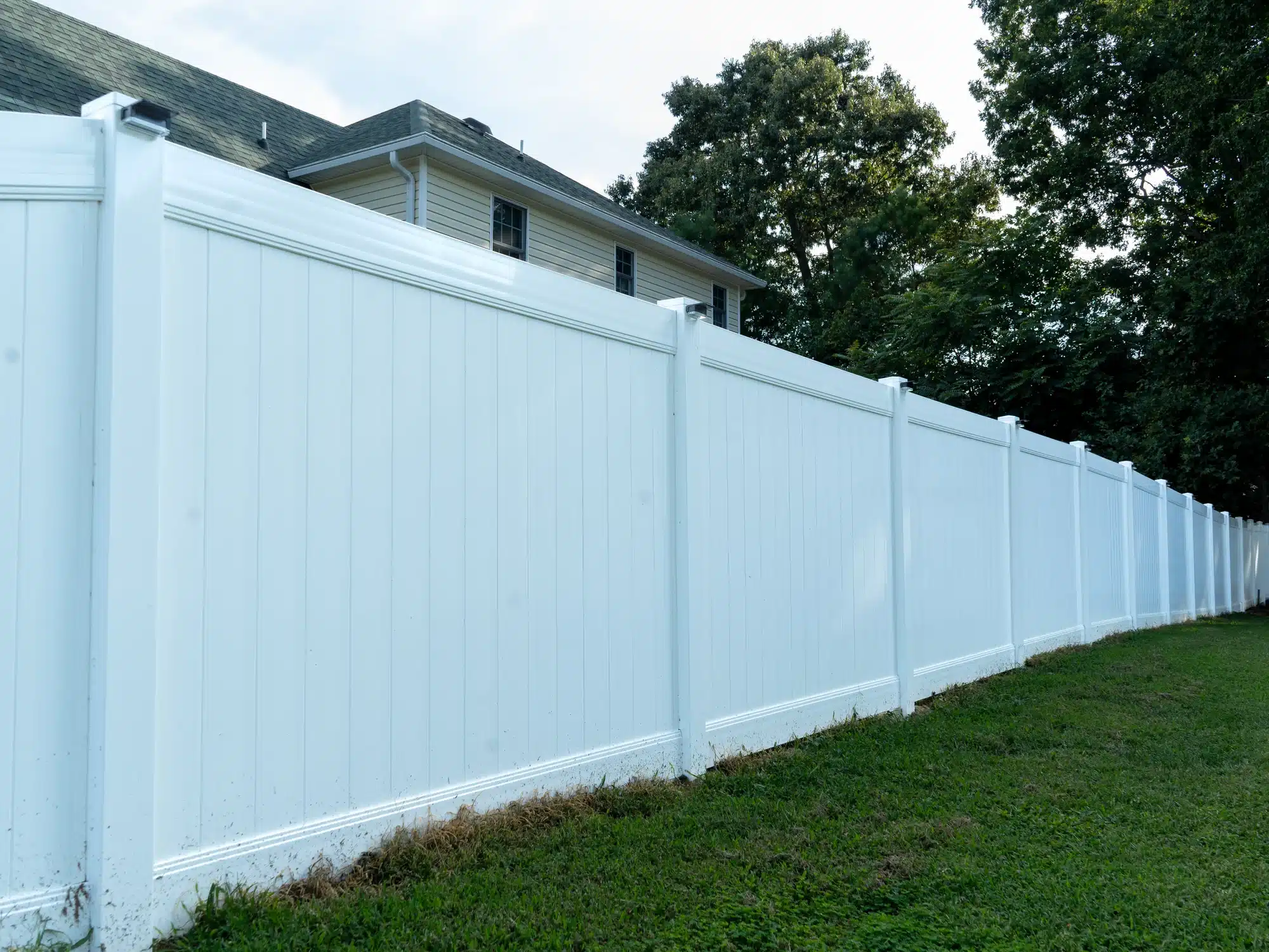
A vinyl privacy fence uses solid PVC boards that lock into top and bottom rails. The face is smooth, and there are no gaps to see through. Privacy styles are commonly 6 feet tall.
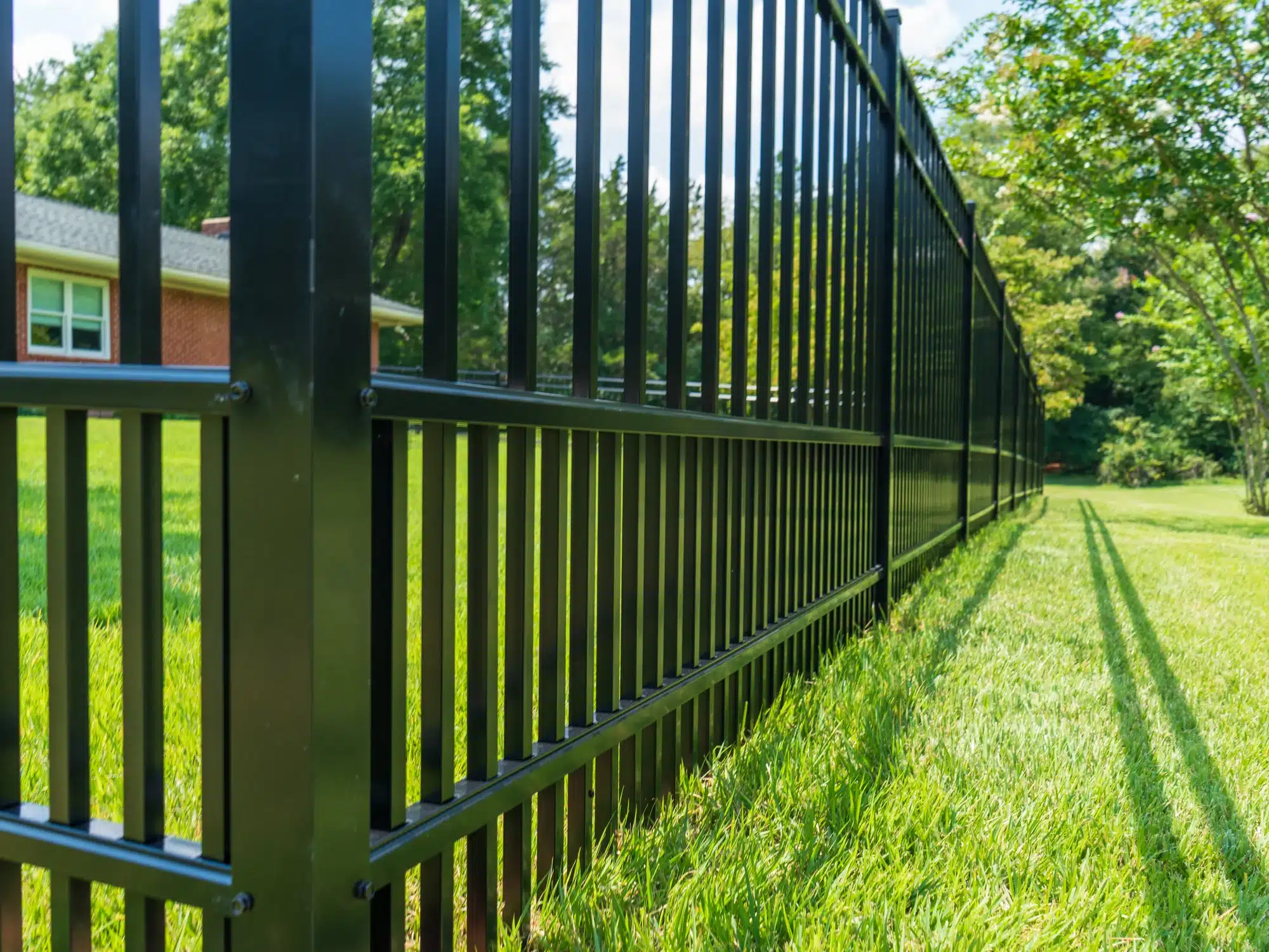
An aluminum fence uses powder-coated vertical pickets that run through horizontal rails. You can see straight through it, which is the point of the style. Jerith, an aluminum fence manufacturer, publishes its spacing. Its Liberty and Legacy lines have a standard air space of about 3.8 inches between pickets, plus a pet option with gaps of about 1.6 inches, according to the Jerith aluminum fence comparison guide.
Those two designs drive almost every difference below. Solid panels block the view and leave little to grip. Open pickets keep the view, but they also leave gaps and rails a dog can use. For a wider look at every material, see the pros and cons of each fence type.
How Tall Should a Dog Fence Be?
Height matters more than material for jumpers. Jerith’s pet fence guide recommends a minimum of 48 inches for dogs. For larger dogs that like to jump, it suggests 60 inches or taller.
A 6 foot vinyl privacy fence clears that bar with room to spare. Aluminum comes in several heights, so pick one of the taller options for big or athletic breeds. If you have a puppy, plan for the dog it will become, not the size it is today.
Before you settle on a height, check your HOA covenants and county rules. Our guides on building a fence in an HOA and Virginia property line fence rules cover what to ask.
Climbing: Where an Aluminum Fence for Dogs Falls Short
Some dogs don’t jump. They climb. A climber hooks its paws on anything horizontal and pushes up, and aluminum gives it that grip. The rails run across the fence, and the open pickets let a dog find a foothold.
Vinyl privacy panels are much harder to scale. The boards form a smooth, flat face with no openings, so a dog has nothing to push off. If your dog has already climbed a chain link fence, vinyl is usually the safer switch.
Digging: Neither Material Stops It Alone
Diggers get out under the fence, not over it. Neither a vinyl nor an aluminum fence stops digging dogs on its own. Both sit on posts with the bottom rail just above the ground. What matters is how tight that bottom gap is and what sits below it.
Ask your installer to keep the bottom rail close to grade, especially on slopes. Aluminum panels can rack to follow a slope. Vinyl privacy panels usually step down instead, which can leave a triangle gap at the low end of each section.
For a determined digger, homeowners often add a buried wire barrier or a row of pavers along the inside of the fence line. It is a small extra step, but it saves a lot of chasing later.
Barking and Visibility: Why Vinyl Wins for Reactive Dogs
If your dog barks at every walker, delivery truck and squirrel, what it can see matters. The ASPCA notes that dogs can bark excessively at people and animals approaching their territory. Its guide to barking recommends secure, opaque fencing around the outdoor areas your dog uses.
A vinyl privacy fence is that kind of barrier. It blocks the view of the sidewalk and the neighbor’s dog, which also cuts down on fence fighting along a shared line. An aluminum fence does the opposite. Your dog sees everything, and that is great for a calm dog but hard on a reactive one.
Want something in between? Vinyl semi-privacy styles and lattice toppers give a partial view while still breaking up the line of sight. Our privacy fence page shows the options.
Picket Spacing for Small Dogs and Puppies
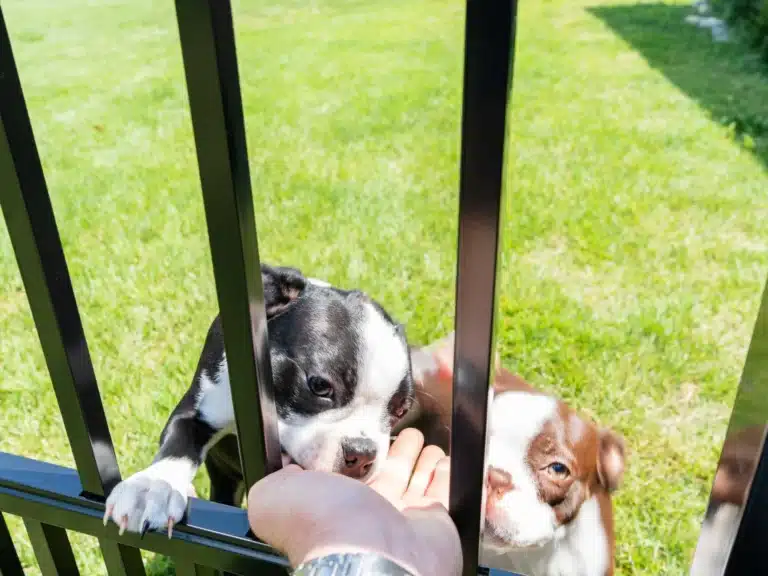
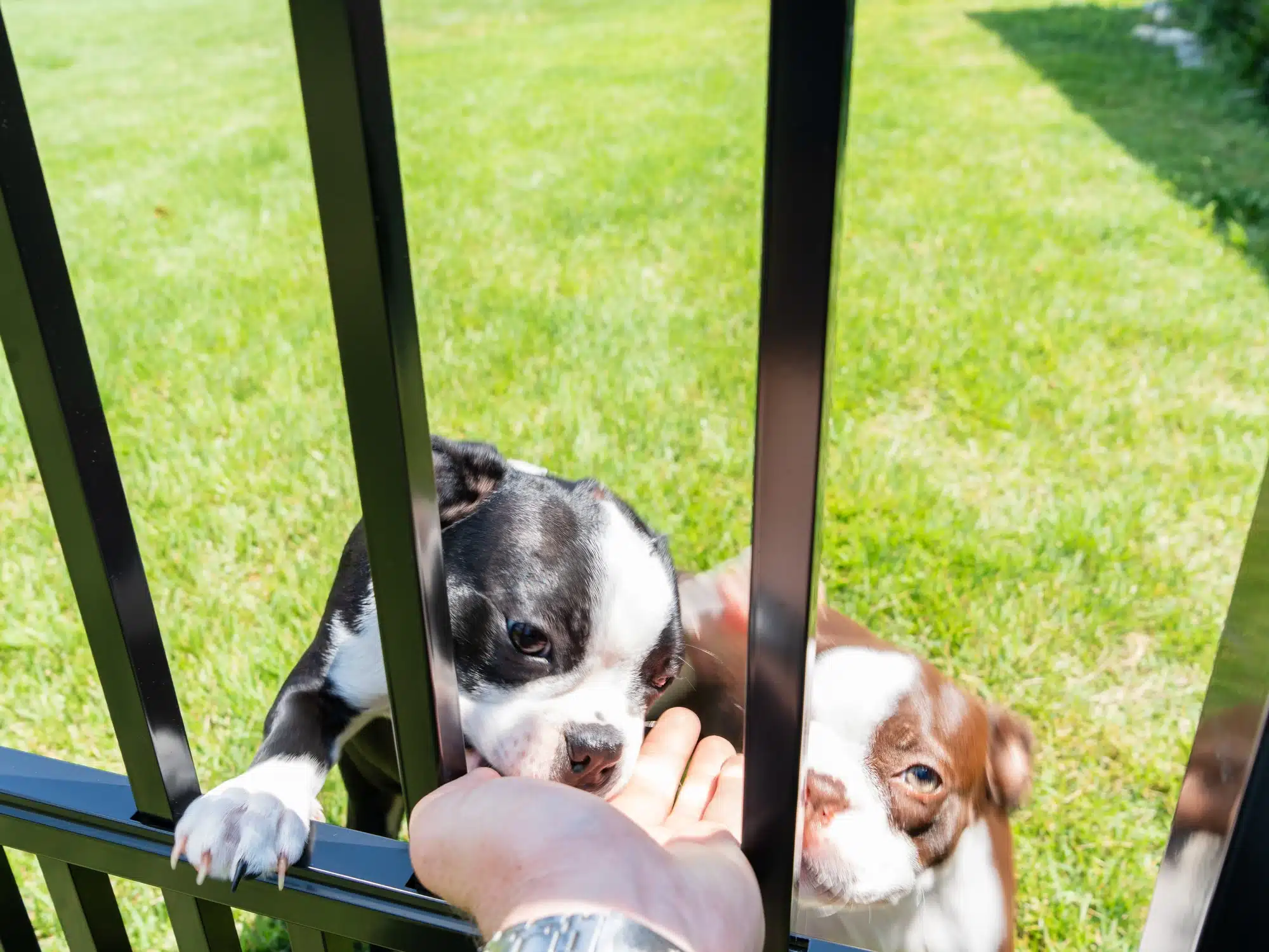
Standard aluminum spacing works for most medium and large dogs. Small breeds and young puppies are another story, because they can slip through a gap of a few inches. Jerith recommends reduced picket spacing for very small dogs and puppies. There are two common fixes:
- Puppy pickets. Extra pickets tighten the spacing on the lower half of each panel, while the top half keeps standard spacing. Jerith calls its version SafetyPup.
- Removable mesh. Jerith’s SafetyPup Mesh is a 24 inch tall panel that attaches to the fence and comes off later. It suits a puppy that will grow too big to fit through standard spacing.
Is a Vinyl Fence Safe for Small Dogs?
A solid vinyl privacy fence has no gaps between boards, so small dogs can’t squeeze through the panels. Watch the bottom edge and the gate instead. Vinyl picket styles are different because they have open space between pickets. Check that gap against your dog’s size before you pick one.
Durability, Weather and Everyday Wear
A vinyl or aluminum fence holds up well to Virginia humidity, rain and dogs running laps. Aluminum doesn’t rust, and the powder-coated finish protects the color. Vinyl won’t rot, and it never needs paint or stain.
Each one has a weak spot, though. A large dog hitting the fence at full speed, a mower or a falling limb can bend an aluminum picket. The same hit can crack a vinyl board. Either way, you can replace a damaged section without rebuilding the whole fence.
Wind is the other factor. Solid vinyl panels catch more wind than open aluminum pickets, so post depth and spacing matter on exposed lots. Our article on how much wind a vinyl fence can withstand explains what to look for.
Which Dog Fence Material Is Easier to Maintain?
Neither a vinyl nor an aluminum fence for dogs needs painting, staining or sealing. That alone saves a lot of weekend work compared with wood. A hose handles most of the mud dogs kick up. For vinyl, a soft brush and mild soap take care of mildew and grass stains. For aluminum, a rinse and an occasional wipe keep the finish clean.
White vinyl shows dirt faster, especially where a dog runs the fence line, while tan and other colors hide it better. On aluminum, cover deep scratches with touch-up paint so the finish stays sealed. For a yearly checklist, see why fence maintenance matters.
How Do Vinyl and Aluminum Compare on Cost?
Price depends on footage, height, style, gates and how much the ground slopes, so there isn’t one number that fits every yard. A taller fence, puppy pickets or extra gates all add to the total for either material.
For more on pricing, see our guides to aluminum fencing cost and fence installation cost. If you want to spread out payments, we also offer fence financing.
Gates and Other Escape Points
Most escapes happen at the gate, not the fence. A gate left open for a minute is all a quick dog needs. So plan the gates with the same height and spacing as the rest of the fence.
Self-closing hinges and a latch that catches on its own help a lot. The CPSC pool barrier guidelines call for that hardware on pool gates, and it keeps dogs in too. If your yard has a pool, our guide to Virginia pool fence rules covers the details.
Which Is Better for Your Dog: Vinyl or Aluminum?
Use this quick match-up to choose a vinyl or aluminum fence for dogs like yours:
- Big dogs and jumpers: 6 foot vinyl privacy, or aluminum at 60 inches or taller.
- Climbers: vinyl privacy, since the smooth face gives them nothing to grip.
- Small dogs and puppies: aluminum with puppy pickets, or solid vinyl with a tight bottom gap.
- Barkers and reactive dogs: vinyl privacy, to block the view that sets them off.
- Calm dogs, pools and front yards: aluminum, for an open view and an ornamental look.
- Diggers: either material, plus a buried barrier along the base.
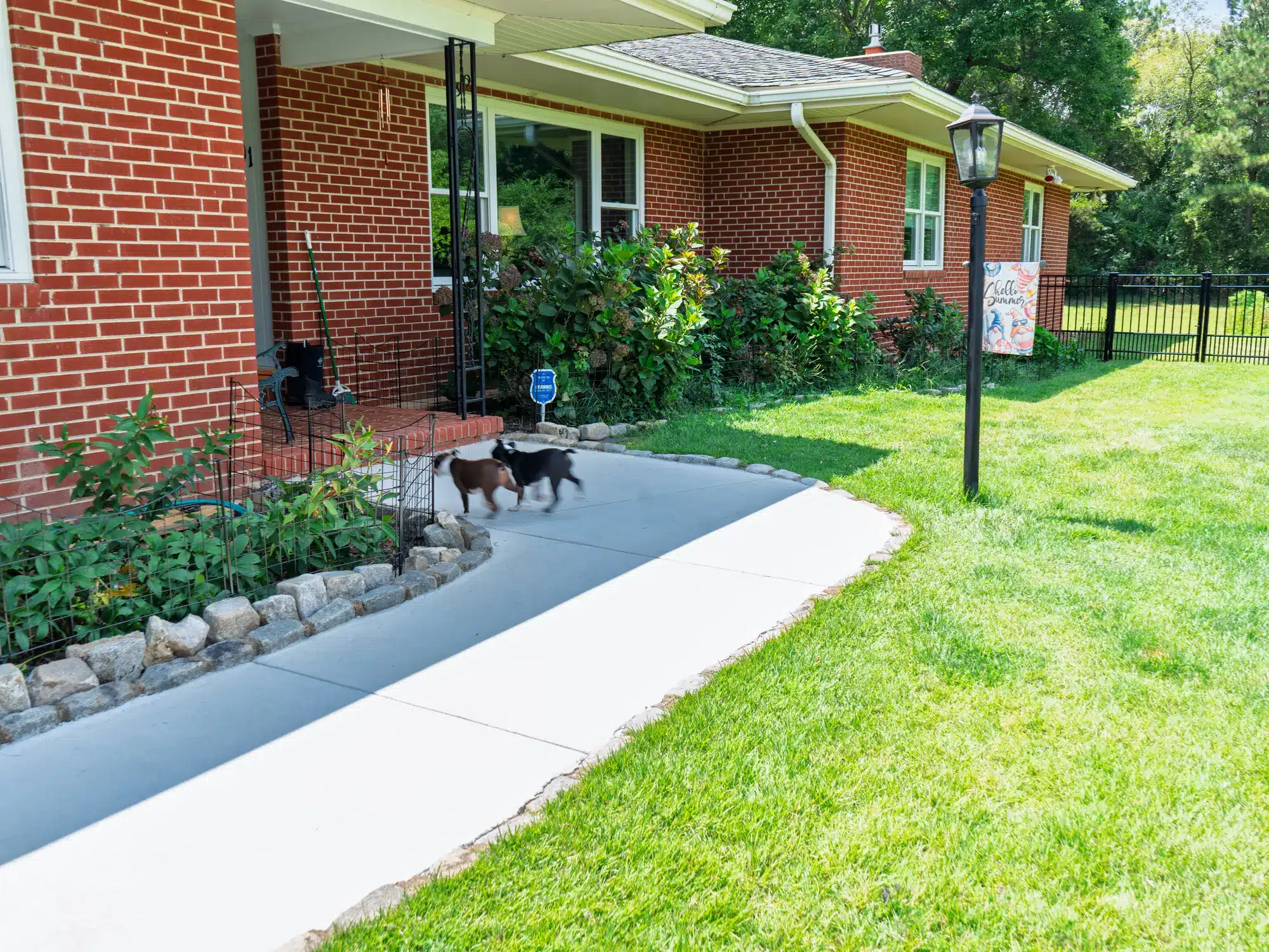
Some yards use both. For example, a vinyl privacy fence can run along the back and sides, with aluminum across the front where the view matters. You can see real builds on our Chesterfield vinyl privacy project and Chester aluminum fence project pages.
Get a Quote for Your Dog Fence in Central Virginia
Good Neighbor Fence is a family-owned fence company that has served the Richmond area since 2006, with 400+ five-star Google reviews. We build vinyl privacy fences and aluminum fences in Richmond, Chesterfield, Henrico, Hanover and nearby counties. Tell us about your dog when we visit, and we’ll help you pick the height, spacing and gates that fit.
Request a fast, free quote online or call (804) 737-4664 to talk through your yard.