


Fence installation cost depends on five things: the material, the total footage, the height and style, the number of gates, and the ground along the fence line. Because every yard mixes those differently, two fences of the same length can land far apart on price. So the fastest way to a real number is a free quote built on your own layout.
Below, you’ll find each cost driver explained, a side-by-side material comparison, and a simple plan for measuring your yard and comparing quotes. Good Neighbor Fence has been family owned since 2006 and builds fences across Central and Northern Virginia, so the advice here is written for Virginia yards, codes and ground.
What Drives Fence Installation Cost?
Every fence quote starts from the same handful of variables. Some are choices you control, like material and height. Others come with the property, like slope, soil and access. Here’s how each one moves the number.
Material and Grade
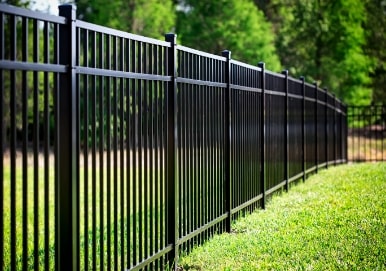
Material sets the floor for any fence installation cost. Chain link usually costs the least to install, and pressure-treated pine sits in the middle. Vinyl, cedar and ornamental aluminum sit at the higher end. Within each material, grade matters just as much. For example, a builder-grade vinyl panel and a heavy privacy panel with reinforced rails are both called vinyl fence, but they aren’t the same product.
So when you compare quotes, the material name alone tells you little. Instead, look at post size, board or panel thickness, and the product line by name. Those details tell you what you’re actually buying.
Height and Style
Taller fences need more material, longer posts and deeper holes, so height pushes the price up quickly. Style matters too. A spaced picket fence uses far less lumber than a board-on-board privacy fence of the same height, while a shadowbox layout falls in between. If screening is the goal, compare privacy fence styles before you pick a height.
Also check the local zoning limit first. In Chesterfield County, for example, fences can reach 7 feet in side and rear yards but only 4 feet in front and corner side yards, according to the county’s fence, wall and screening rules.
Footage: The Biggest Factor in Fence Cost
Footage is the biggest multiplier in fence installation cost. Every extra foot adds material and labor, and every corner adds a heavier post. A simple rectangle costs less to build than a run that zigzags around trees, garden beds and property jogs. If you only need to enclose part of the yard, tying into the house or an existing fence can shorten the run a lot.
Gates as Part of the Fence
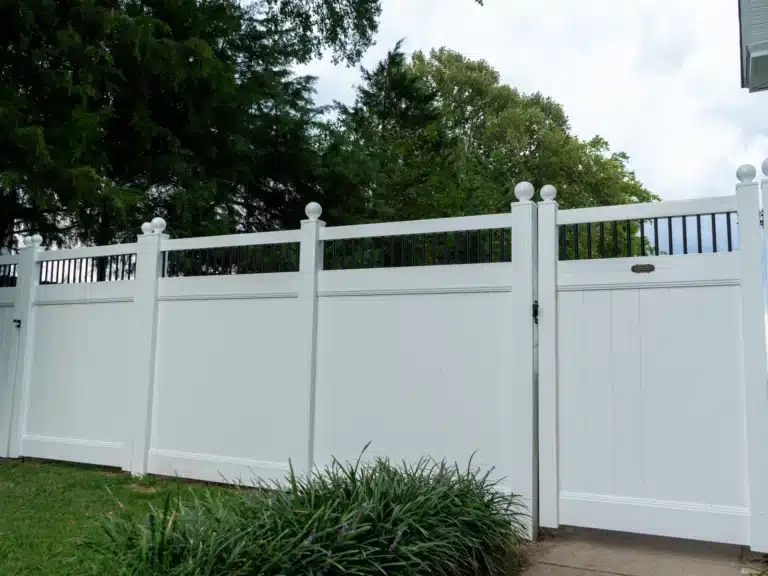
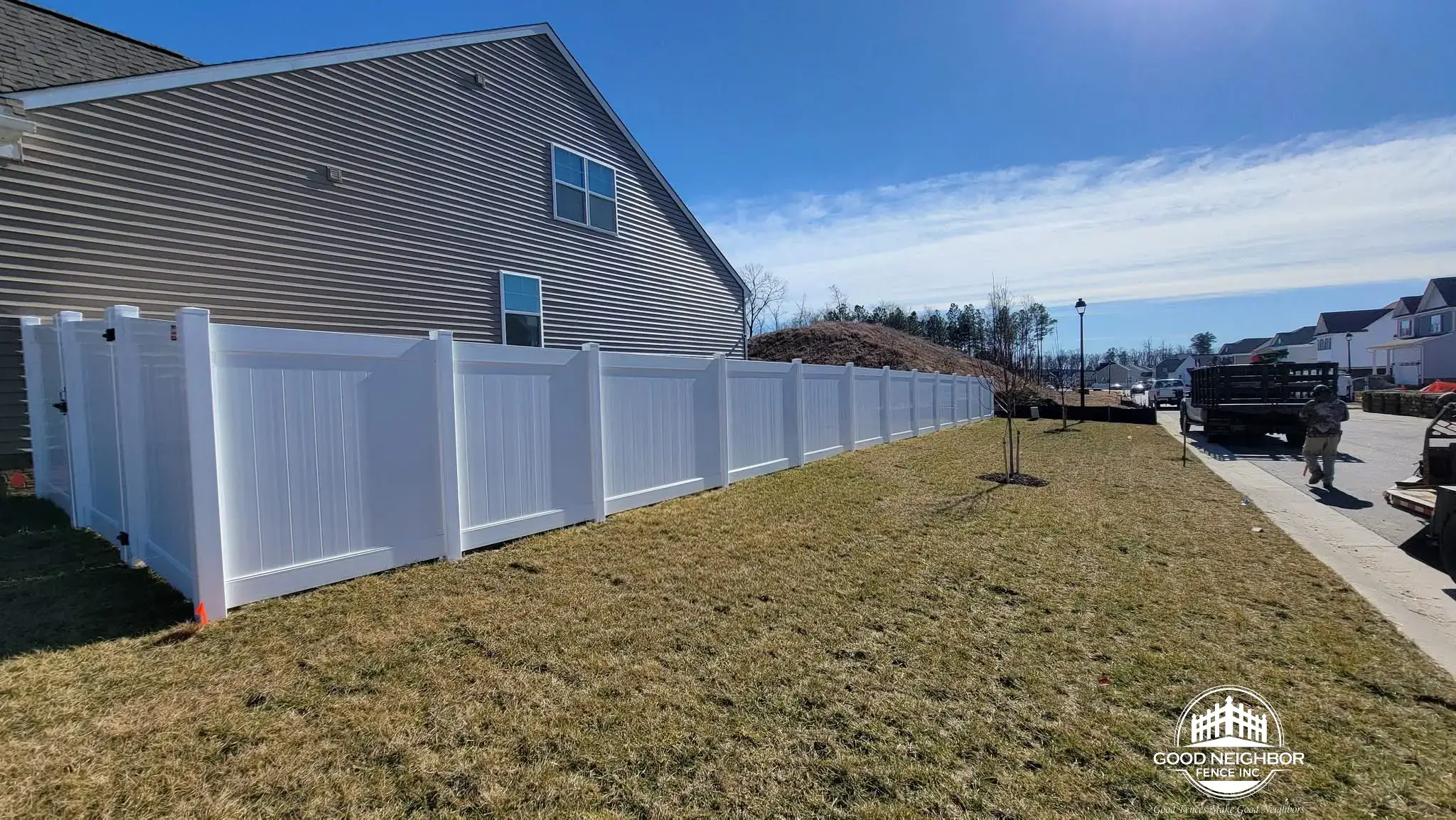
Gates cost more per foot than the fence around them. Each one needs heavier posts set deeper, a frame that won’t sag, and hinges and latches rated for its weight. So a wide double drive gate adds more than a single walk gate. On this new build vinyl privacy fence, for example, a braced walk gate handles foot traffic while a double gate opens wide for mowers and wheelbarrows.
Plan the number, width and location of every gate before you ask for quotes. Adding one later means reworking a finished run.

Slope, Soil and Obstacles
Flat, open ground is the easiest to fence. On a slope, a fence is either racked, so the panels follow the grade, or stepped, so each section sits level with a gap underneath. Racking works well for aluminum and many wood styles. Stepping usually suits rigid vinyl panels and needs taller posts at the low end. Clay, tree roots and buried rock also slow the digging, and every slow hole adds labor.
Removing an Old Fence
If you’re replacing a fence, the old one has to come out first. Tearing out panels, pulling posts set in concrete and hauling everything away all take time. Some quotes include removal and disposal in the fence installation cost, and some leave it off, so ask about it directly.
Access to the Fence Line
When a truck can park close to the work, materials move once. But if the only way into the backyard is a narrow side gate, every post, panel and bag of concrete gets carried by hand. That’s why a tight city lot in the Fan can take longer than a Glen Allen yard with the same footage.
How Fence Materials Compare on Cost
The table below ranks common residential materials by relative installed cost, from lowest to highest, with the upkeep and privacy you get in return. Your final fence installation cost still depends on the drivers above, so use it to choose a material, not as a price list.
| Material | Relative install cost | Upkeep | Privacy | Best for |
|---|---|---|---|---|
| Chain link | Lowest | Very low | None unless slats are added | Pets, large areas, tight budgets |
| Split rail | Low to moderate | Low | None | Boundaries and acreage with a rustic look |
| Pressure-treated pine | Low to moderate | Stain or seal every few years | Full with privacy styles | Privacy on a budget |
| Vinyl | Higher end | Occasional washing | Full with privacy panels | Low-upkeep privacy |
| Cedar | Higher end | Seal it or let it weather gray | Full with privacy styles | A natural wood look |
| Ornamental aluminum | Higher end | Occasional washing | None, open pickets | Pools, front yards, views and slopes |
Two patterns stand out. First, the lowest install cost isn’t always the lowest lifetime cost, because pine needs stain or sealer every few years while vinyl and aluminum mostly need a rinse. Second, vinyl and cedar often land close together on the same yard. So the choice usually comes down to how much upkeep you want.
For wood posts, ask for lumber treated for ground contact. The American Wood Protection Association says ground contact uses need Use Category 4A (UC4A) or higher. If you’re still choosing a material, our breakdown of the pros and cons of each fence type covers looks, durability and upkeep.
Cost Guides for Each Fence Type
Once you have a material in mind, these guides go deeper on what moves its price:
- How much a wood fence costs, with pine and cedar compared, board styles and upkeep over time.
- What shapes privacy fence pricing, from stockade to shadowbox and board-on-board.
- What drives vinyl fence pricing, including panel grade, reinforcement and styles from ranch rail to full privacy.
- Aluminum fencing grades and pricing factors, plus colors, pool rules and slopes.
- Chain link pricing by height and wire gauge, along with coatings, slats and framework.
When you know what you want, our wood fence installation, vinyl fence installation, aluminum fence installation and chain link fence pages show the styles and heights we build.
How to Plan and Measure Your Fence
A little planning before you call makes every quote more accurate and easier to compare. Start with these steps.
- Find your property lines. Use your plat or a recent survey, and if the line isn’t clear, get a boundary survey before any posts go in. Our post on Virginia property line fence rules covers the details.
- Measure the run. Walk the planned fence line with a measuring wheel or long tape, then add up each side. Leave out any stretch the house covers.
- Mark every gate. Note where you’ll walk through, where the mower goes, and whether a truck or trailer needs a drive gate.
- Check the rules. Look up your county’s zoning height limits and read your HOA covenants. Our guide to installing a fence in an HOA explains what boards usually ask for.
- Note the site. Flag slopes, trees, drainage ditches and any old fence that has to come out.
For land, the math surprises people. An acre is 43,560 square feet, so a square acre measures about 208.7 feet per side and about 835 feet around. Long, narrow parcels need even more fence for the same area. Before you pick a material for pasture or a large lot, read our breakdown of what it takes to fence an acre, and see our horse fencing guide if you keep horses.
Do You Need a Permit for a Fence in Virginia?
For most residential fences, no building permit is needed. The Virginia Uniform Statewide Building Code, 13VAC5-63-80, Section 108.2, lists fences of any height as work that doesn’t require a permit. The two exceptions are fences required for pedestrian safety during construction and fences that serve as a swimming pool barrier.
Counties say the same thing in their own terms. For example, the Henrico County Permit Center exempts fences up to 7 feet tall that don’t serve as a pool barrier. Still, no building permit doesn’t mean no rules. Zoning sets height limits and setbacks, and those vary from Richmond and Henrico to Chesterfield, Hanover, Stafford and Spotsylvania.
Pool fences need extra care. The U.S. Consumer Product Safety Commission’s pool barrier guidelines recommend a barrier at least 48 inches tall with self-closing, self-latching gates. Read our guide to Virginia pool fence regulations before you plan one. HOA review can also add its own height, style and color rules, and it’s often stricter than the county.
How to Compare Fence Installation Cost Quotes
The lowest bid is sometimes low because something is missing. Ask every contractor to spell out these items in writing, so you’re comparing the same fence:
- Posts: size, depth, how they’re set, and whether wood posts are rated for ground contact.
- Spacing: the distance between posts, since closer spacing makes a stiffer fence.
- Material by name: the species and grade of lumber, or the manufacturer and product line for vinyl and aluminum.
- Height and style: the exact height, board layout, and any caps or trim.
- Gates: the width of each gate, the gate post size, and the hinges and latches.
- Removal: whether tearing out and hauling away the old fence is included.
- Utility marking: who contacts Virginia 811 before digging starts.
Virginia 811 marks public utility lines for free, and you need to contact it at least 3 working days before digging. A quote that covers every line above can be compared fairly with another one. A single number with no detail can’t.
Ways to Manage Your Fence Cost
You have more control over the final number than you might think. These moves lower your fence installation cost without cutting corners on posts or hardware.
- Match the style to each side. Put full privacy where you need screening and a lower or more open style elsewhere.
- Rethink the gates. Fewer or narrower gates cost less, so place them where you’ll really use them.
- Shorten the run. Tie into the house or an existing fence where it makes sense.
- Phase the project. Fence the backyard now and the front or side later, in the same style.
- Finance it. Good Neighbor Fence offers fence financing through Wisetack, starting at 0% APR for qualified buyers, so you can spread out payments instead of settling for a lesser fence.
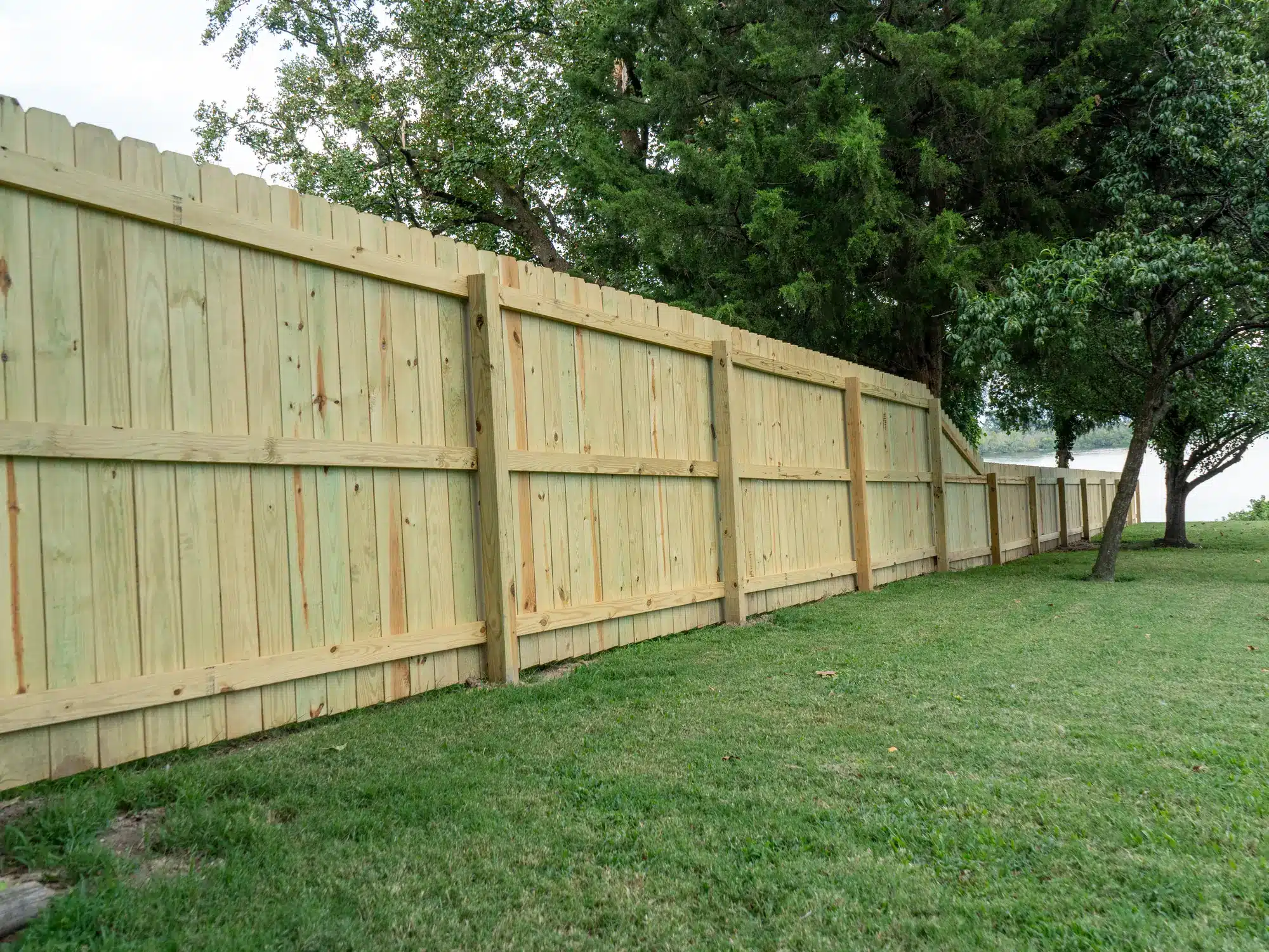
Mixing heights and materials lets each stretch of fence do its own job. On this vinyl and wood fence in Hopewell, we ran pressure-treated pine privacy along both side lines and stepped it down from 6 to 4 feet near the river. Then we used white vinyl with a black aluminum baluster topper beside the house. You can browse more fence projects from across Virginia for layout ideas.
Common Questions About Fence Cost
How much does a fence cost for an average backyard?
There’s no honest single number, because a backyard can mean a short run of chain link or a long stretch of cedar board-on-board. Instead, measure your run, pick a material and height, and count your gates. With those answers, a contractor can give you a real price instead of a guess.
Which fence costs the least to install?
Chain link usually costs the least to install around a yard. For privacy, a pressure-treated pine stockade fence is often the lowest-cost choice. On acreage, woven wire on wood posts and split rail tend to be the most economical options.
Is it cheaper to repair or replace a fence?
Small, isolated damage is usually cheaper to repair. But once posts rot at the ground, whole runs lean, or repairs keep coming back, replacement is the better buy. Here are the signs it’s time to replace your wood fence. Good Neighbor Fence doesn’t do repairs, but if your fence is past saving, we’ll quote a replacement.
How long does fence installation take?
Most of our installs take 1 to 2 days. Before any digging, though, allow at least 3 working days for Virginia 811 to mark utility lines. Large properties, steep slopes and long runs take longer.
Is it cheaper to install a fence yourself?
You save on labor, but tool rental, delivery, disposal and your own time add up fast. Post setting is the hard part, because a post set too shallow can lean, and a leaning line can’t be fixed one post at a time. A short, straight run on flat ground can be a fair weekend project. A tall privacy fence on a slope with gates usually isn’t.
Get a Free Fence Installation Quote
The quickest way to turn this guide into a real fence installation cost for your yard is a fast, free fence quote. Good Neighbor Fence has been family owned since 2006 and has earned 400+ five-star Google reviews. Call (804) 737-4664 in Central Virginia or (540) 506-4835 in Northern Virginia. You can also see every fence we build on our fence design and installation page.