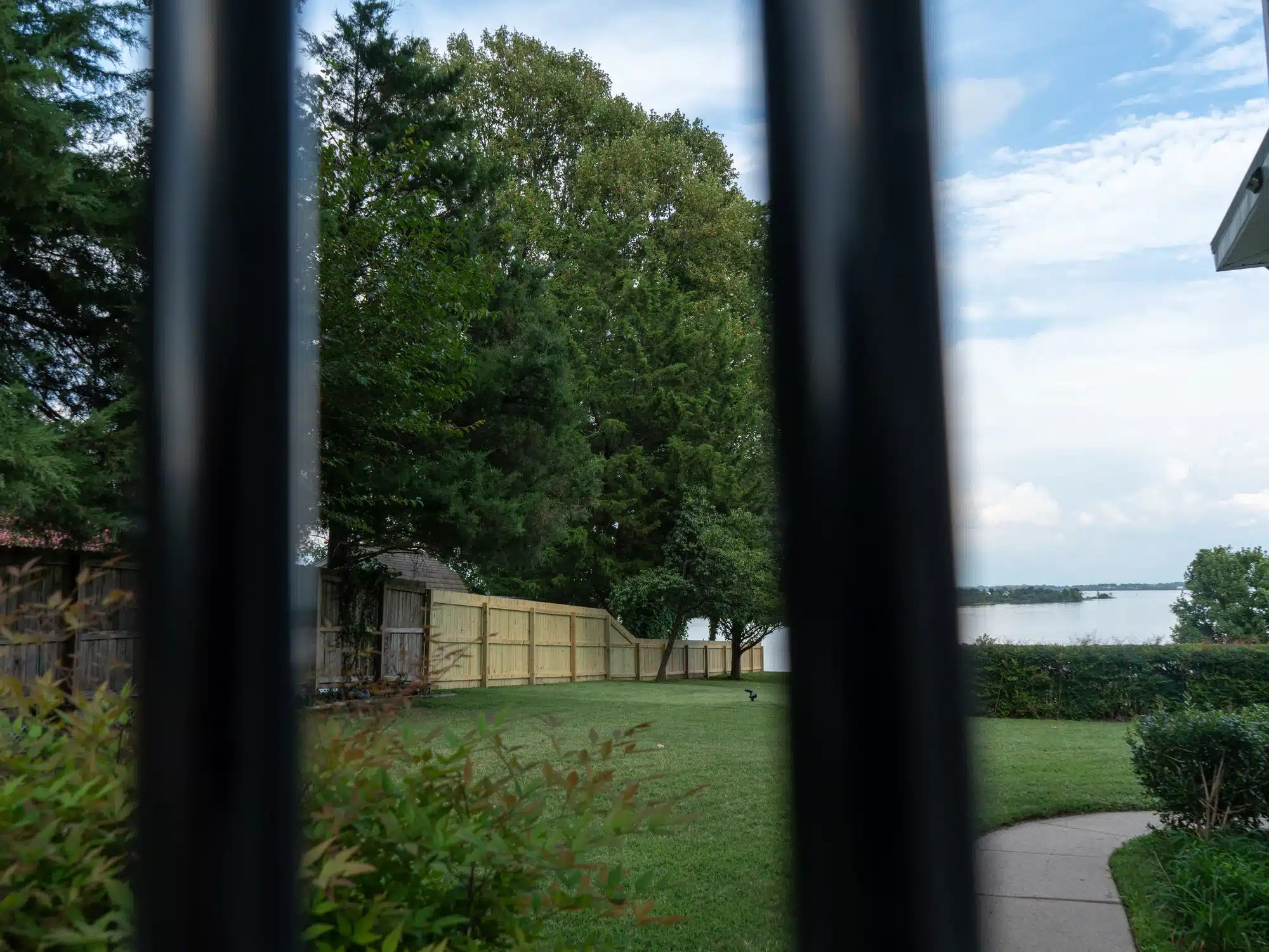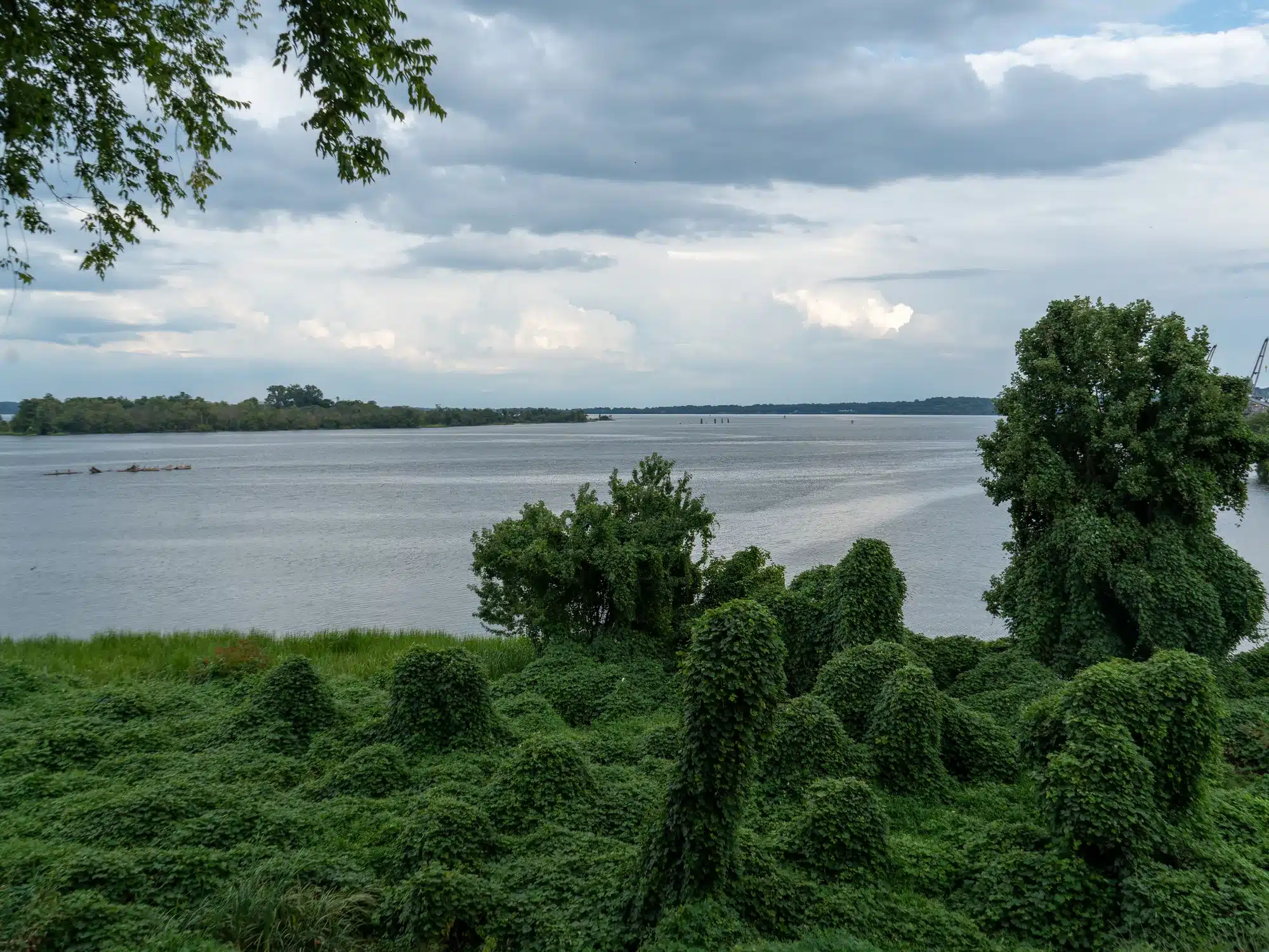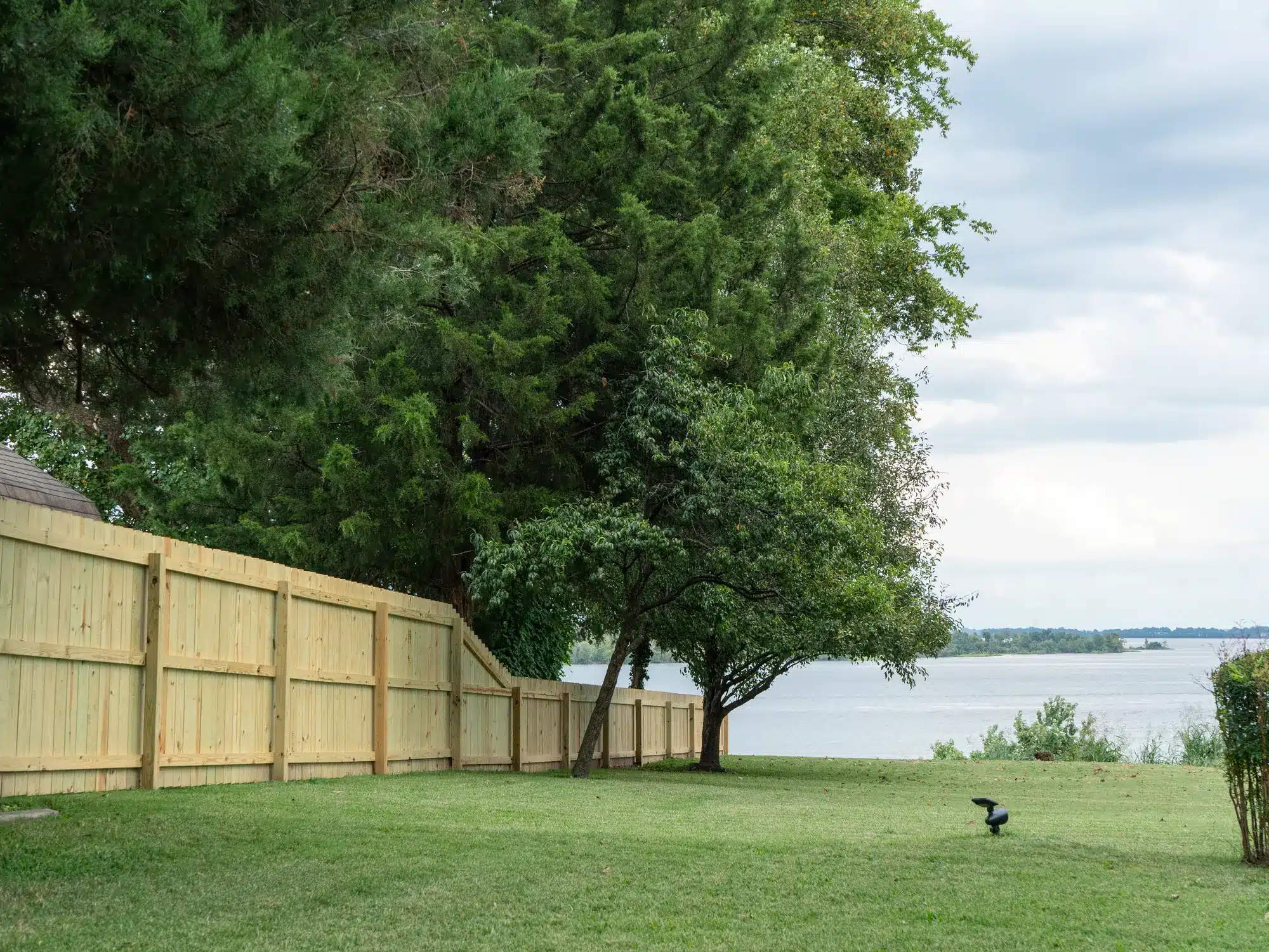





This vinyl and wood fence in Hopewell went in on a waterfront lot. The back lawn runs down to a wide stretch of river. Across the water you see a far shoreline and a lot of open sky. So the fence had two opposite jobs. Along the side property lines, the owners wanted real screening from the neighboring lots. At the water, though, they wanted nothing that would take the view away.
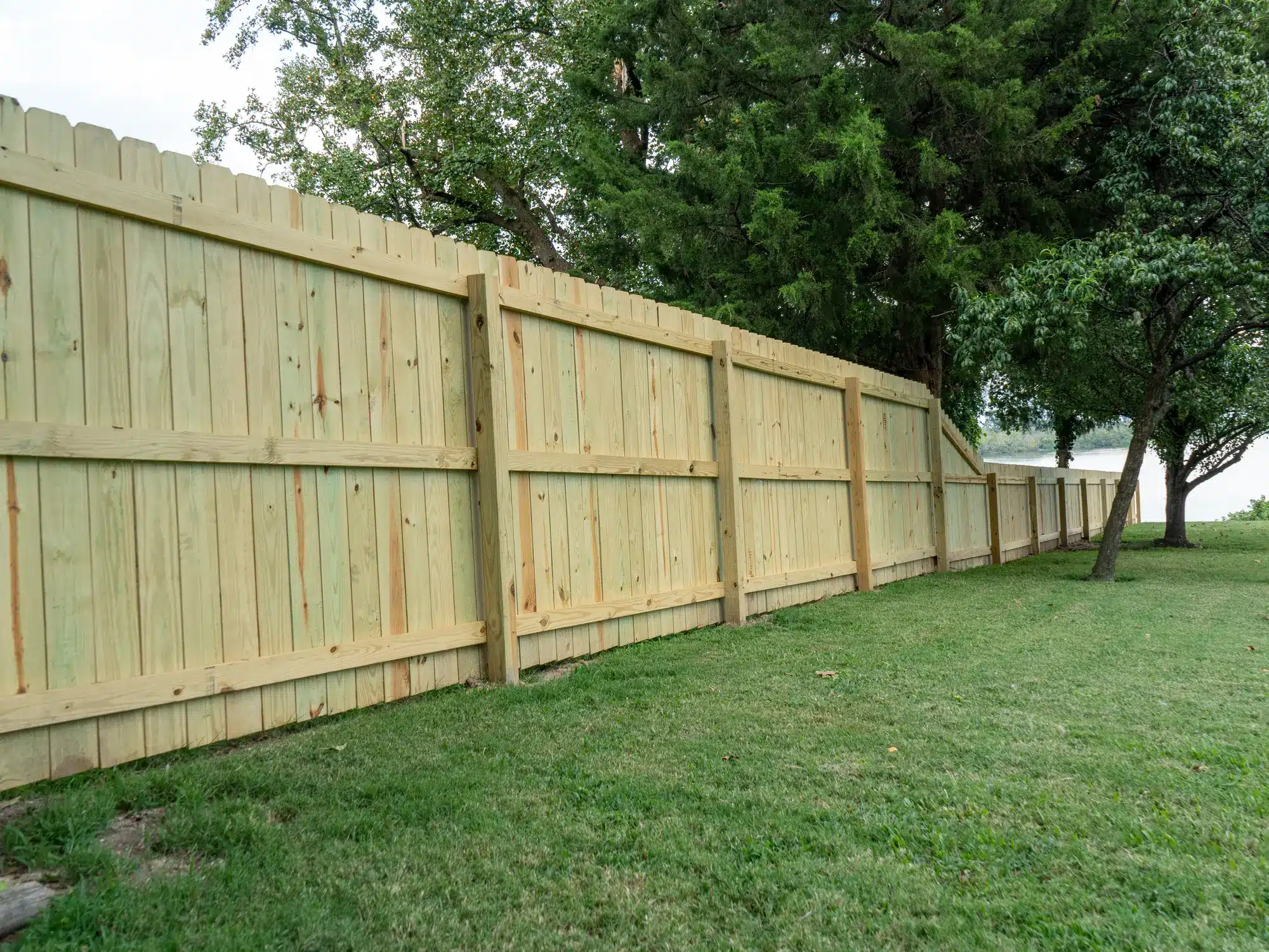
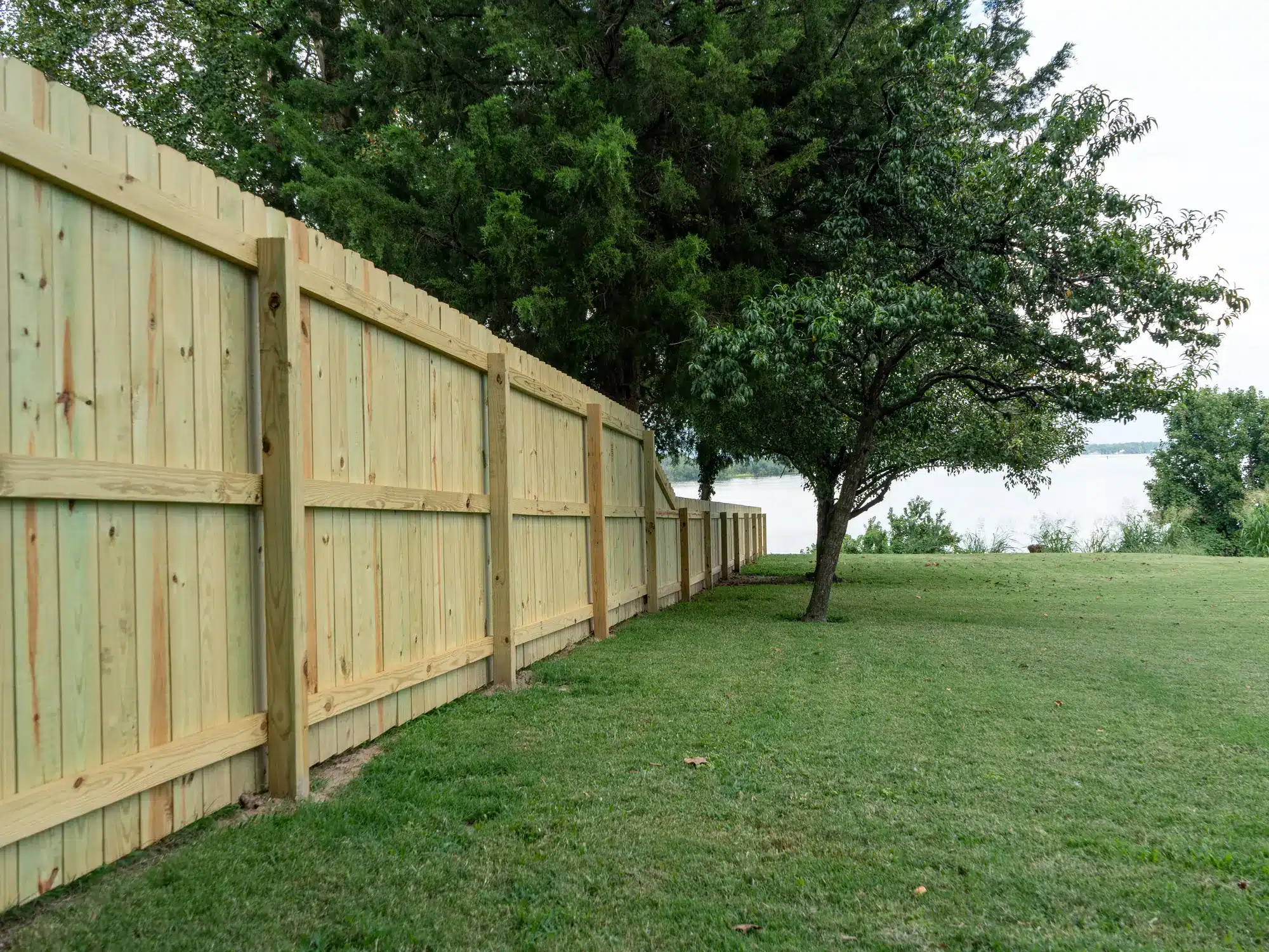
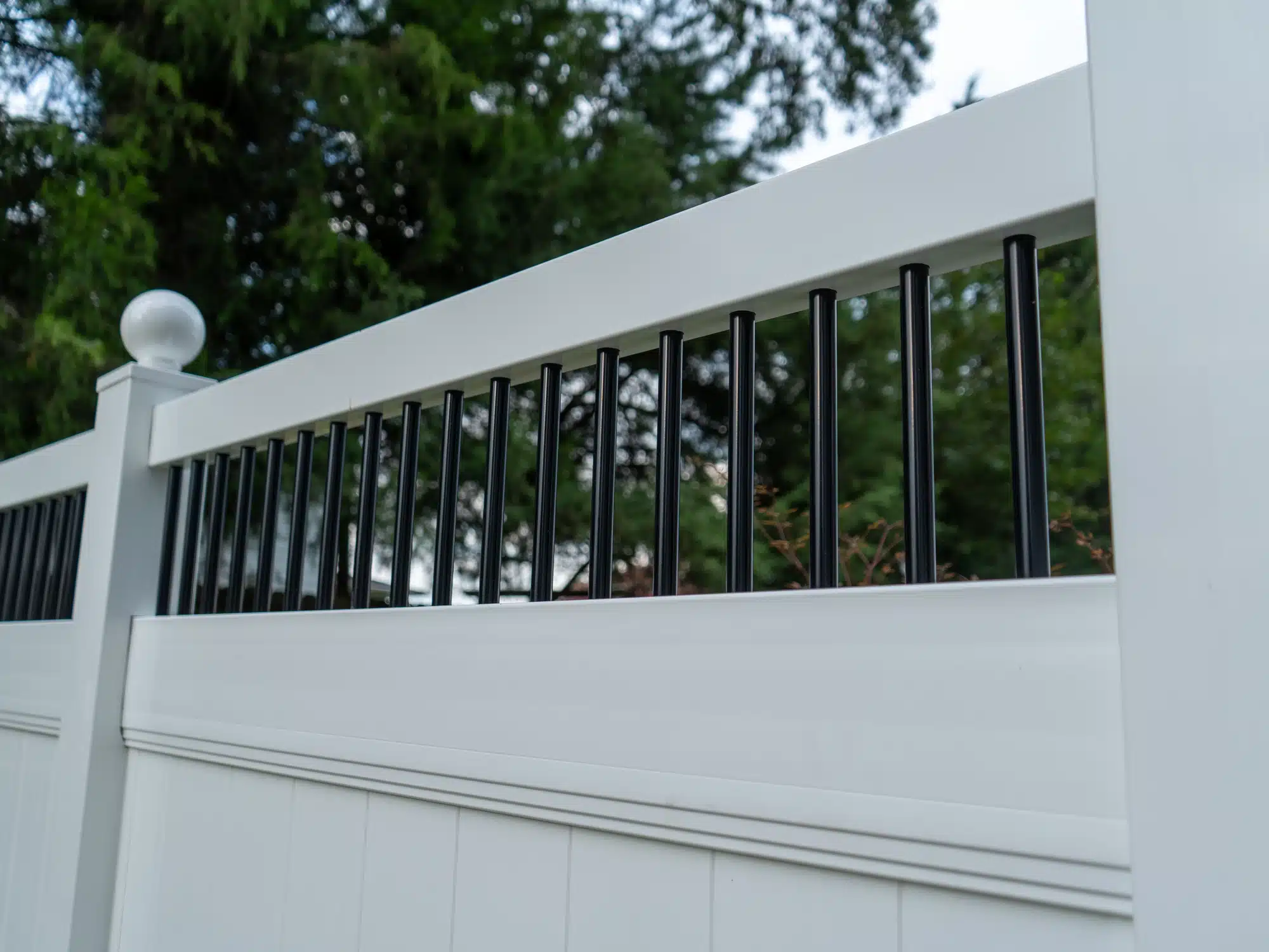
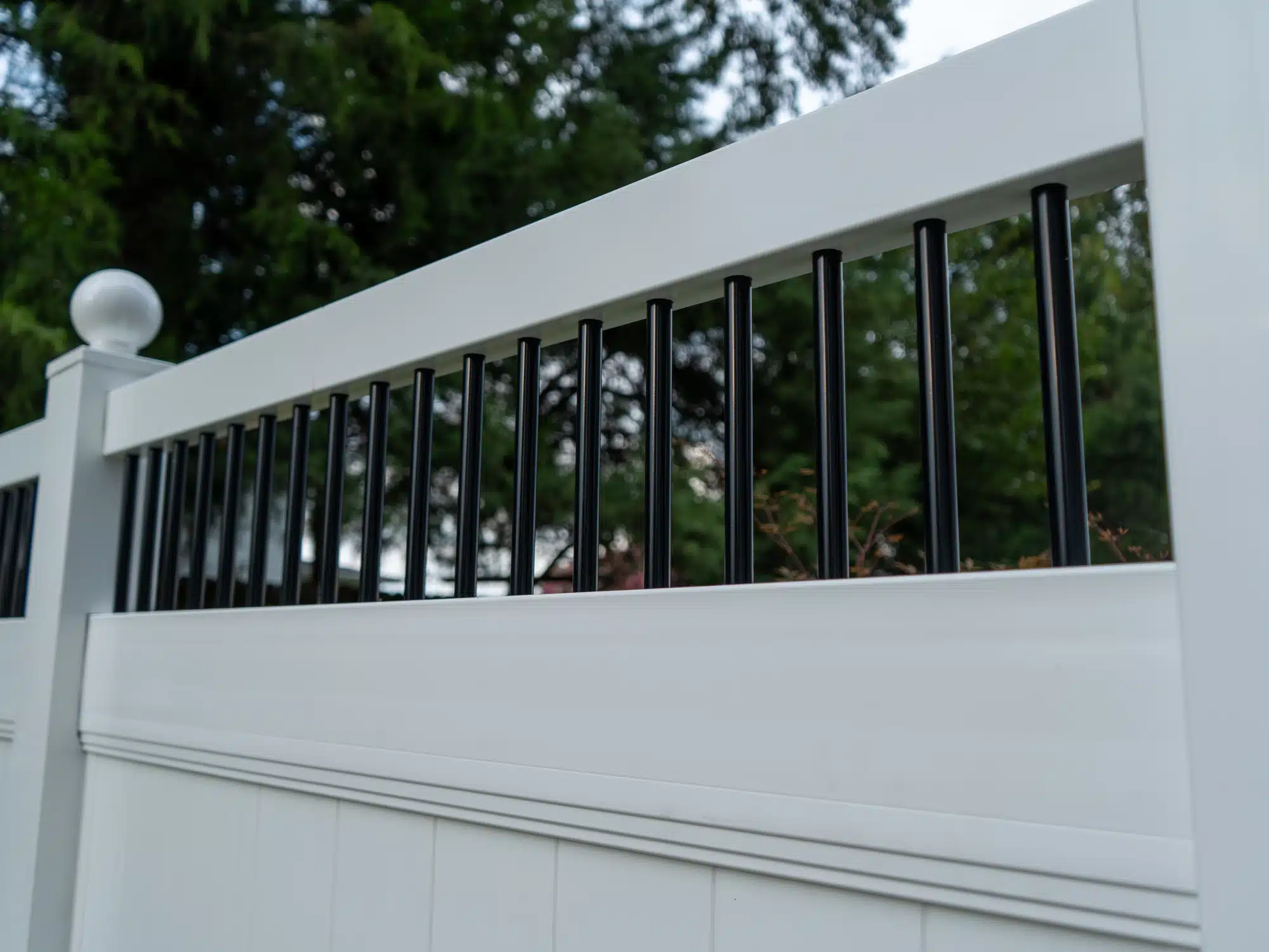
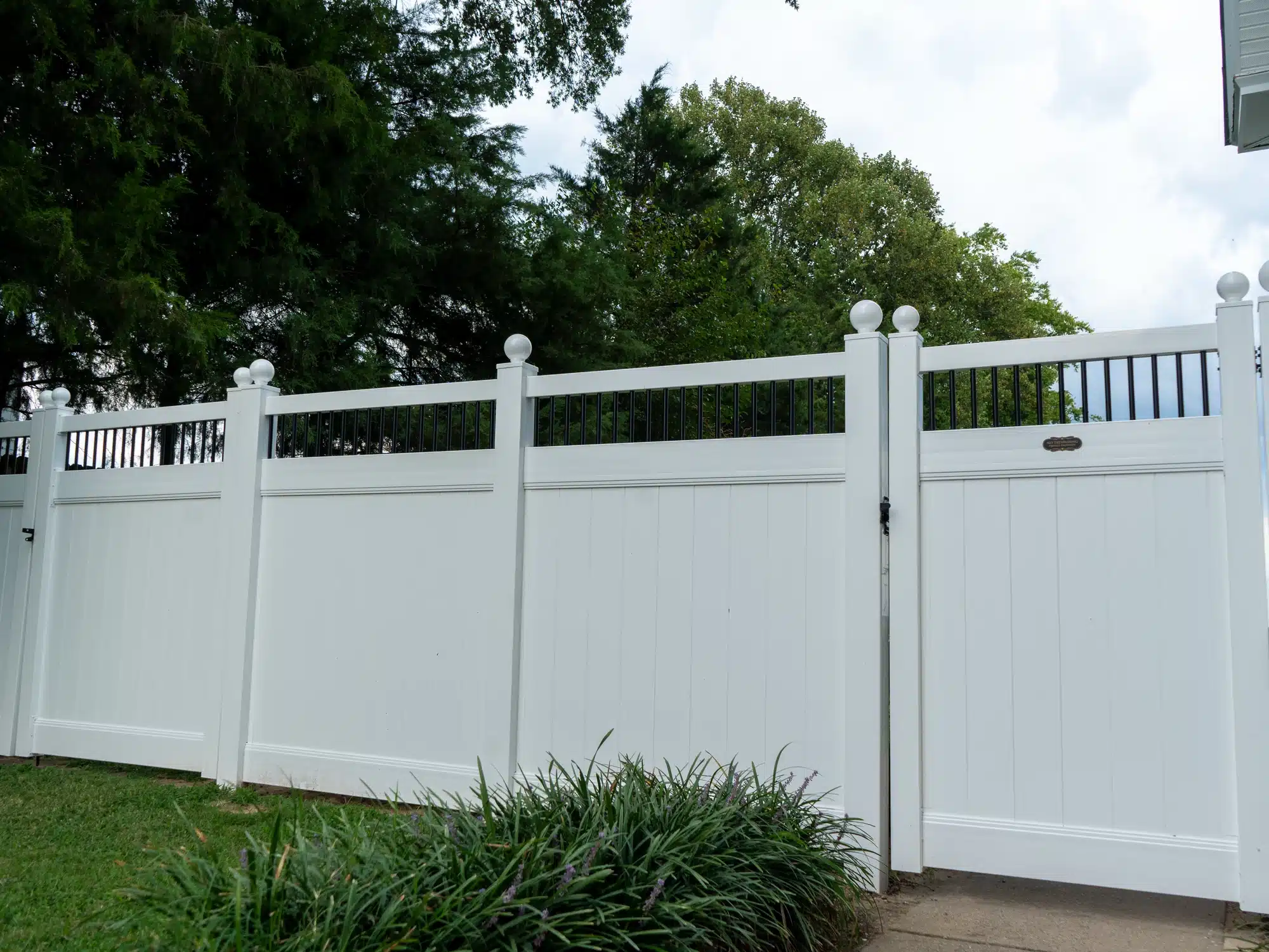
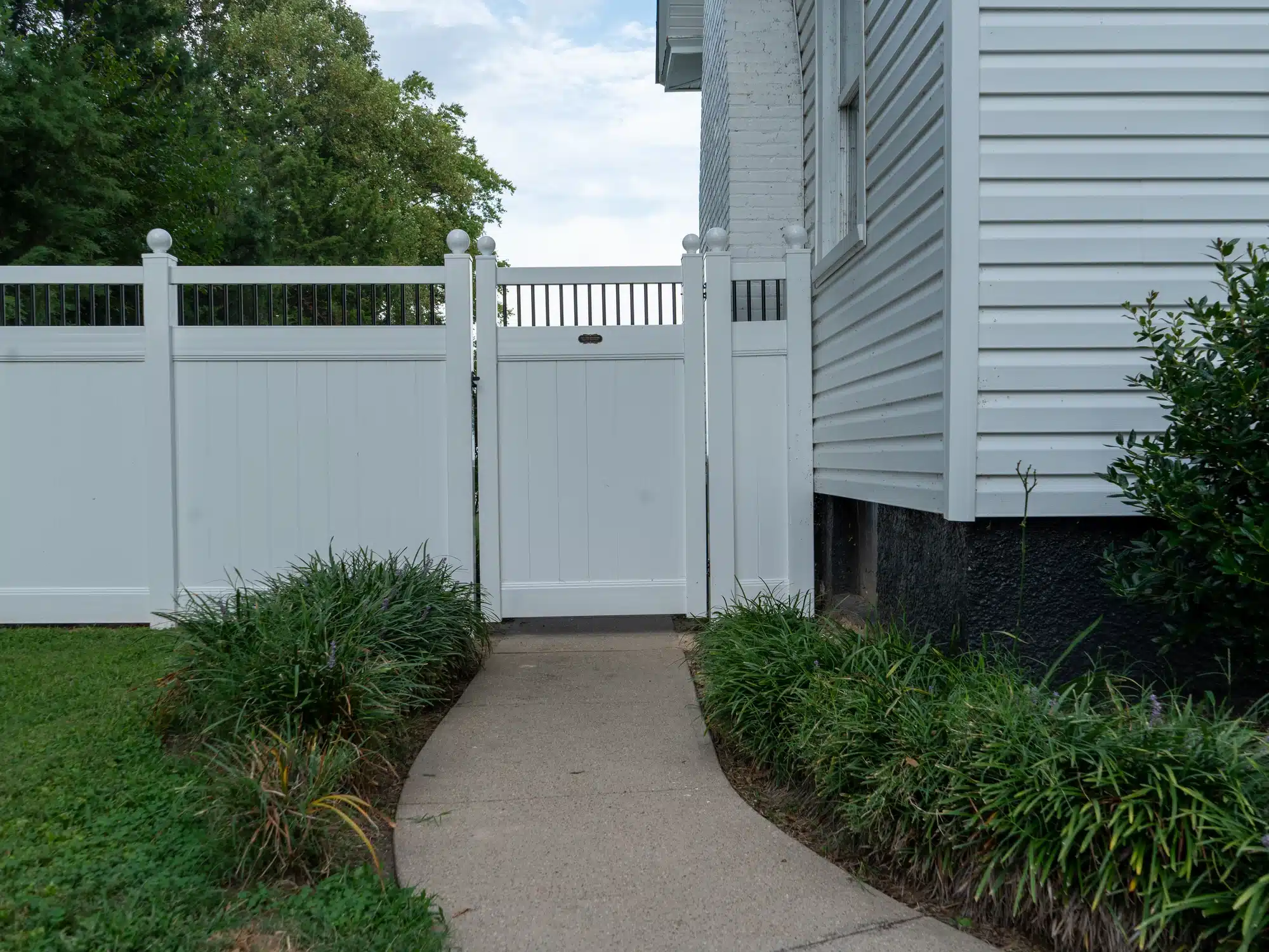
We built both in one continuous project. Facing the river, we installed white vinyl fencing in the Kinsale style. It has a solid lower panel topped with a run of black aluminum balusters. Along the sides, we ran natural pressure-treated pine dog-ear privacy at 6′. Then it steps down to 4′ as it approaches the water.
Vinyl and Wood Fence in Hopewell Project Highlights
Privacy on the Sides, the View at the Water
The layout was the whole design here. We ran full 6′ dog-ear board privacy along both side lines, because the neighboring homes sit close. That is where screening does real work. As the side runs near the water, they step down from 6′ to 4′. The yard stays fully enclosed, but the lower stretch leaves the view from the house and lawn alone.
At the water side, the Kinsale vinyl carries a solid white panel along the bottom for definition. Above it, black aluminum balusters let the view through. Your eye reads the fence at the lower half. Then it passes straight through the upper half to the river and far shoreline. In the end we have one fence line, three heights and an open view.
Two Materials, Each Doing Its Own Job
We picked each material for its job rather than for a matching look. The white vinyl at the waterfront has its color running all the way through. So sun off the water and humid Virginia summers won’t yellow, crack or warp it. It also never needs stain or sealer, so a rinse with a hose is the whole routine. Meanwhile, the black aluminum balusters won’t rust, which matters on a river lot. Powder-coated aluminum is the metal we trust this close to the water.
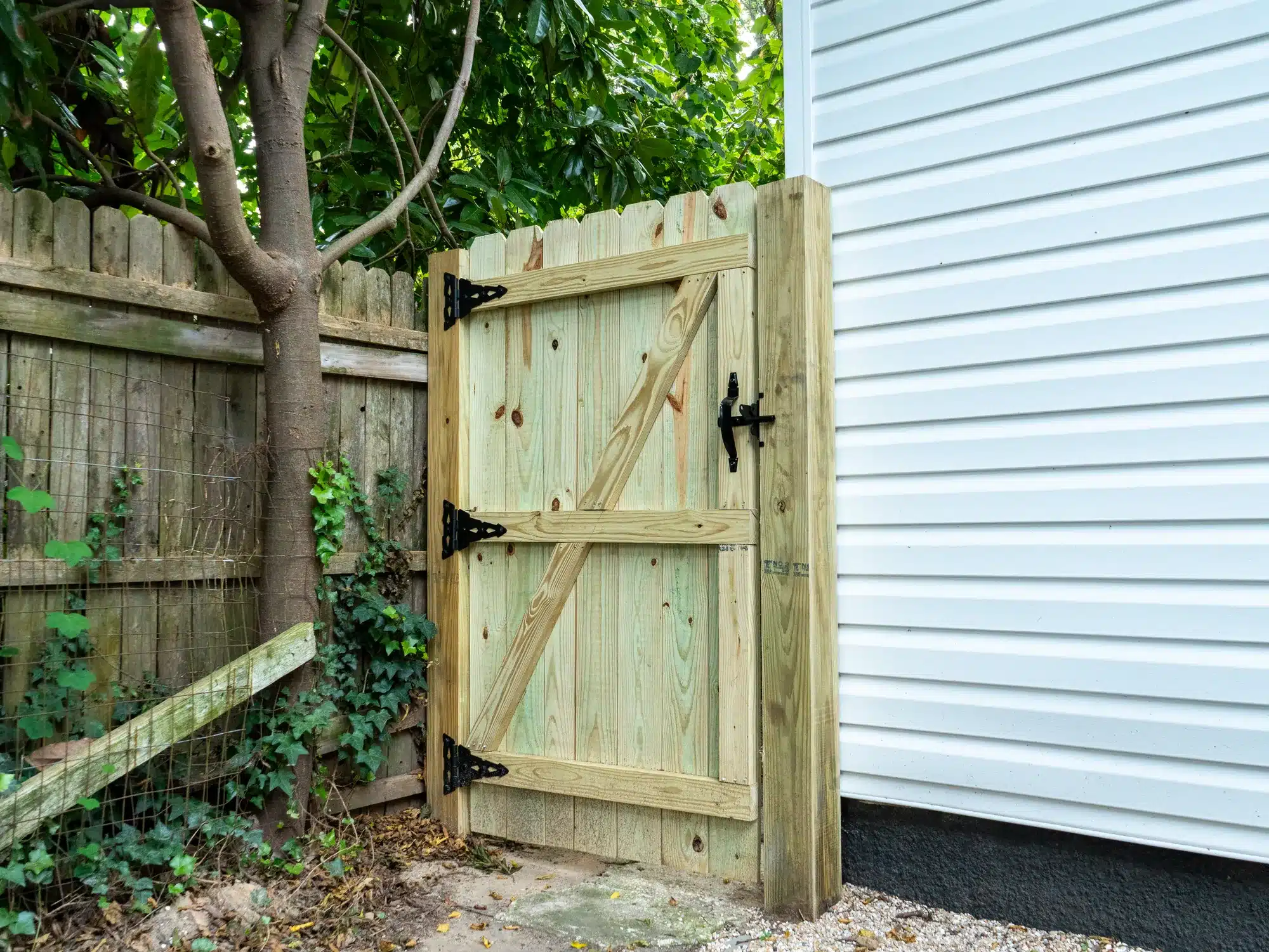
Along the sides, natural pressure-treated pine gives the owners a solid, cost-effective screen with real substance. In time it will weather to a soft silver-gray under the shade trees if left alone. If they would rather keep the warm natural tone, the boards take stain well once they dry out. We cover the reasons behind treated lumber in our post on pressure-treated wood for fences.
Planning Two Scopes on a Waterfront Lot
Two materials, three heights and a shoreline mean the plan has to come before any digging. Our team worked the site over two days. First we laid out the side runs and marked the step-down points. That way the drop from 6′ to 4′ lands where it looks deliberate, not where the panels run out.
After that, the vinyl at the water went in as its own sequence. We set the ball-capped posts plumb and evenly spaced, so the baluster sections read as one level band. Last, we hung the white vinyl gate and adjusted it until it swung clean and latched square. Mature shade trees stand throughout this yard, so we ran the line around them instead of through them. As a result, their canopies and root zones stayed untouched.
A Hopewell Wood and Vinyl Fence With the River in View
This vinyl and wood fence in Hopewell solves two problems at once without trading one for the other. The owners now have full screening from the neighbors. They also kept the wide river view that made the property worth buying. It all runs as one fence line that changes height and material right where the yard changes purpose.
Vinyl, aluminum and pressure-treated pine each earn their place here. After two days on site, we left the family a finished yard and a clean site. This is the kind of problem we enjoy solving across central Virginia, where no two lots want the same fence.