

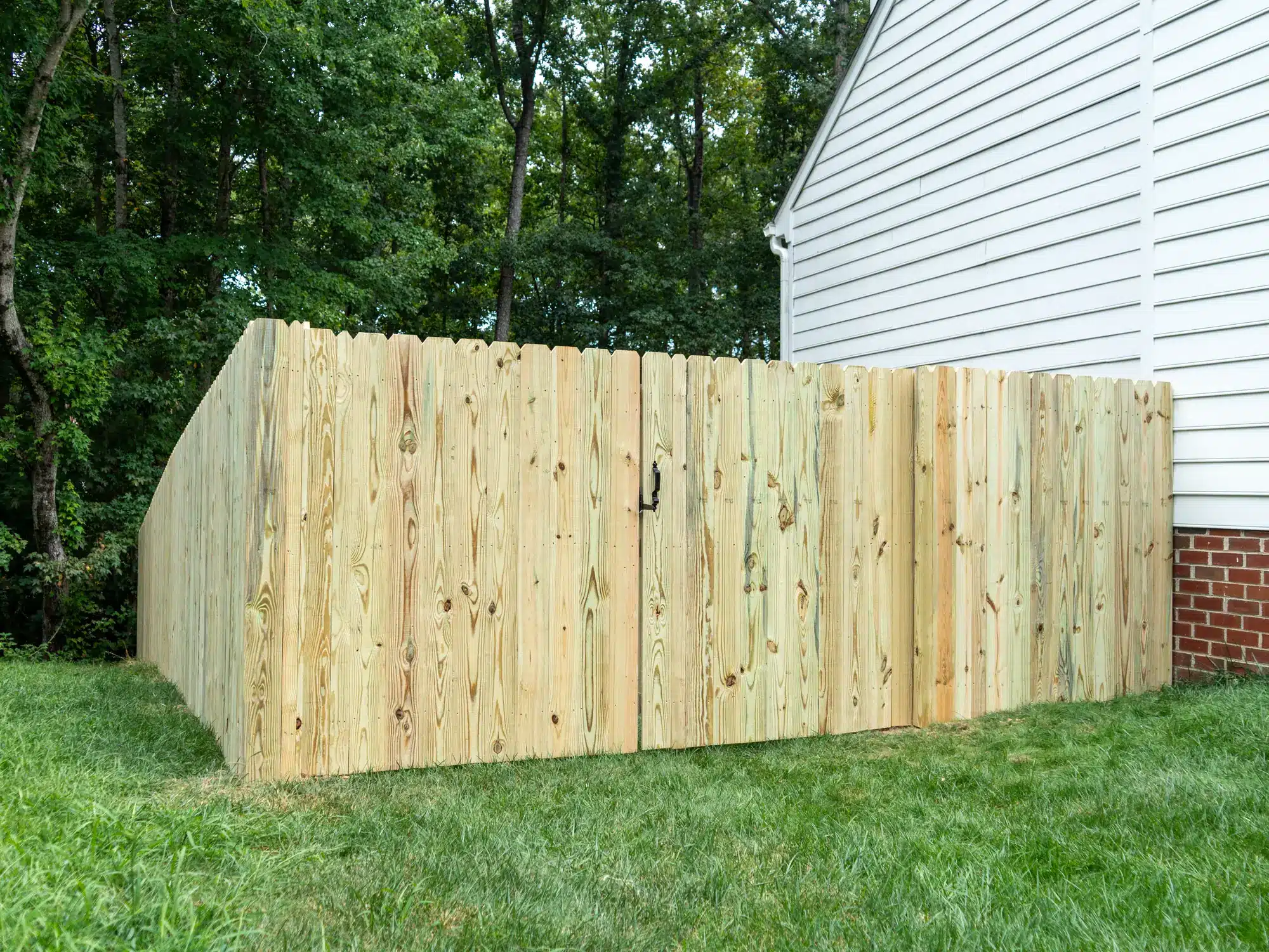
Privacy fence cost comes down to a handful of things: the material, the board style, the height, the total footage and the ground along your fence line. Pressure-treated pine in a simple stockade style usually costs the least, while board-on-board, cedar and vinyl panels sit at the higher end.
Because every yard is different, the only way to a real number is a quote based on your own layout. Good Neighbor Fence gives fast, free quotes across Central and Northern Virginia, so you can plan with actual figures instead of guesses. Below, you’ll see what drives the price, how the common privacy styles compare, and what every quote should spell out.
What Drives Privacy Fence Cost
Every privacy fence quote is built from the same few variables. Some are choices you make, while others come with the lot you own.
Material and Board Grade
Pressure-treated pine is a common choice around Richmond, and it’s usually the least expensive way to get a solid 6-foot wall. Cedar costs more for the boards but has straighter grain and natural decay resistance. Vinyl privacy panels cost more up front than pine, but they never need stain or paint.
Grade matters too, especially for posts. The American Wood Protection Association says ground contact calls for treated wood rated Use Category 4A (UC4A) or higher, so ask for that rating on every post. Our wood fence installation page shows the wood styles we build.
Board Style: Stockade, Shadowbox or Board-on-Board
Style moves the price more than most homeowners expect. Stockade and dog-ear panels butt the boards edge to edge, so they use the least lumber. Shadowbox alternates boards on both sides of the rails, so the fence looks finished from both yards and lets some air through.
Board-on-board overlaps each board over its neighbor. That takes more lumber and more labor, so it sits near the top of the wood range. In return, the overlap keeps the fence solid even as the boards dry and shrink.
Height and Local Zoning Limits
Most backyard privacy fences are 6 feet tall. A taller fence needs longer boards, longer posts set deeper, more concrete and often an extra rail, so the price climbs with the height. If you want extra screening, our tall wood fence ideas show a few ways to get it.
Height is also a zoning question. In Chesterfield County, for example, fences can be up to 7 feet in side and rear yards and up to 4 feet in front and corner side yards. Rules differ by county and city, so check yours before you pick a height.
Footage, Layout and Gates
Total linear feet is the biggest multiplier on any quote. Corners and end posts add work, so a yard with many turns costs more per foot than one long, straight run. Gates are part of the fence project too, and each one needs heavier posts and hardware. A double drive gate costs more than a single walk gate.
These general variables apply to every material, and our guide to fence installation cost covers them in more depth.
Slope, Soil and Old Fence Removal
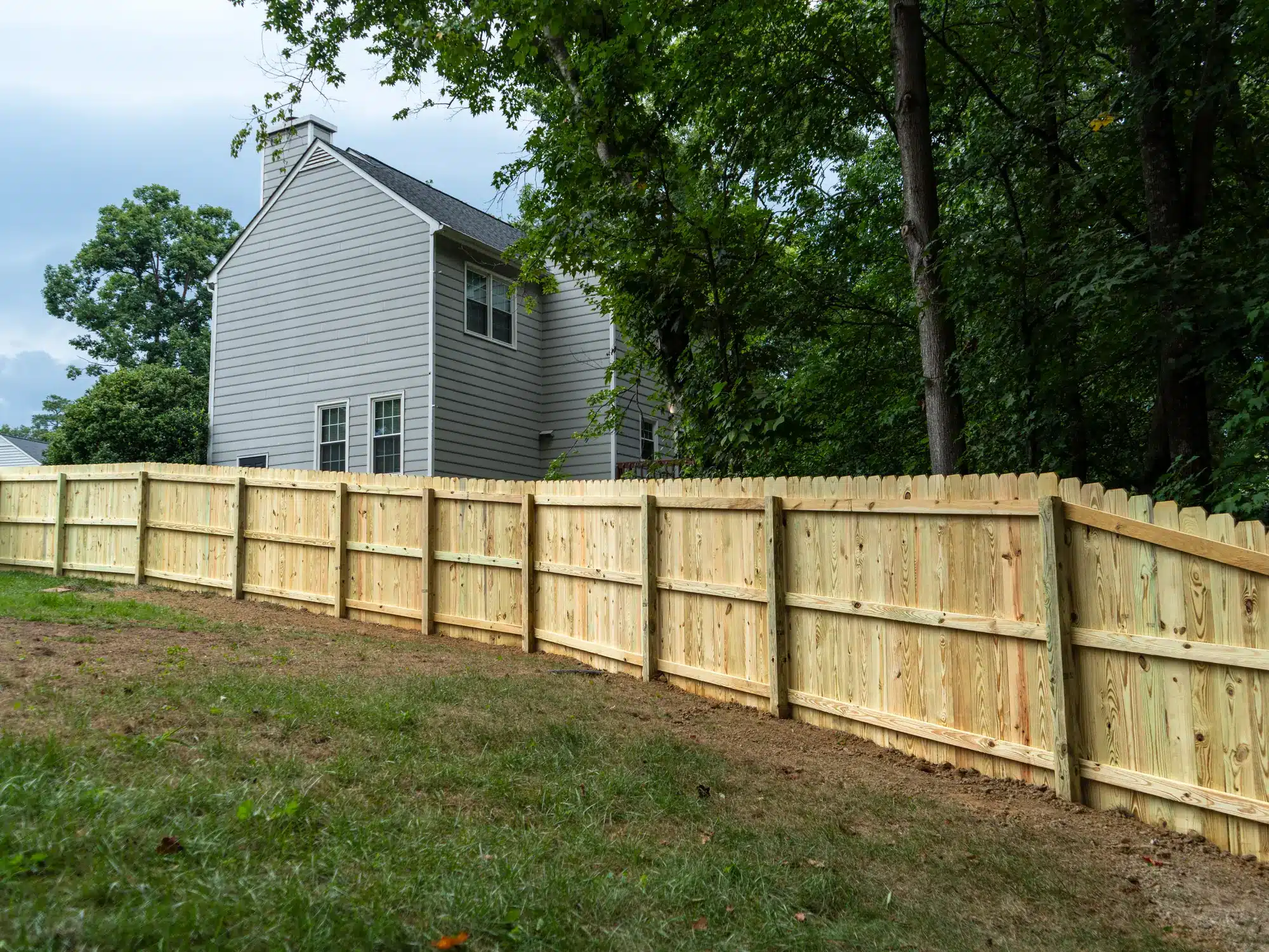
A flat, open fence line is the cheapest to build. Slopes mean stepping or racking each section, and Central Virginia clay and tree roots slow digging. If an old fence has to come out first, removal and haul-away add labor and disposal.
Before anyone digs, the utilities have to be marked. Virginia 811 marks public utility lines for free, and you need to contact them at least 3 working days before digging.
How Privacy Fence Styles Compare on Cost
The table below ranks the common privacy builds by relative installed cost. Your own quote will depend on footage, gates and ground, but the general order holds for most yards.
| Style and material | Relative install cost | Upkeep | Best for |
|---|---|---|---|
| Stockade or dog-ear, pressure-treated pine | Lowest | Stain or seal after the wood dries, then every few years | Full privacy on a tight budget |
| Shadowbox, pressure-treated pine | Moderate | Same as other pine fences | Looks the same from both yards |
| Board-on-board, pressure-treated pine | Moderate to high | Same as other pine fences | Staying private as boards shrink |
| Board-on-board, cedar | High | Weathers to gray or takes stain | A premium natural wood look |
| Vinyl privacy panel | High | Occasional wash, no stain | Low upkeep over the long haul |
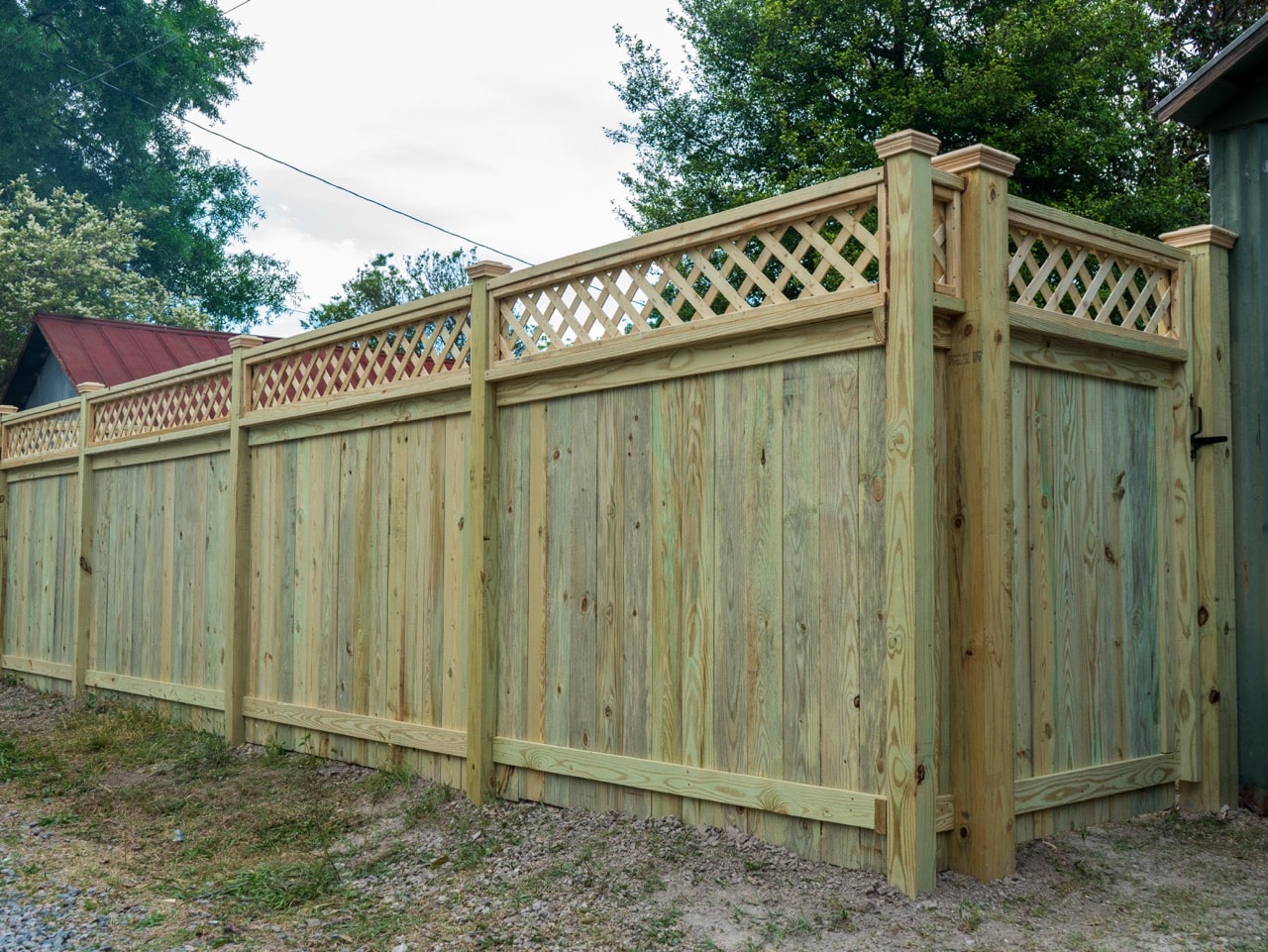
For a Richmond example, this board and lattice fence pairs solid pressure-treated boards with a diagonal lattice band on top. It keeps eye-level privacy while letting light and air through the upper band.
Board Shrinkage and the Cost of a Privacy Fence
Pressure-treated pine often goes up with plenty of moisture still in it from treatment. As it dries, each board shrinks across its width. The USDA Forest Products Laboratory’s Wood Handbook explains that wood shrinks most in the direction of the growth rings and only slightly along the grain.
On a stockade fence with tightly butted boards, that shrinkage can open thin gaps over the first months. So you have three choices. You can accept small gaps, pay more for board-on-board so the overlap hides them, or ask about kiln-dried-after-treatment lumber, which costs more but does most of its shrinking before it reaches your yard. Our post on wood fence board spacing goes deeper on gaps.
Plan the Job Before You Ask for Quotes
A little planning makes every quote more accurate and much easier to compare.
- Measure the fence line. Walk it with a tape or measuring wheel, note every corner, and sketch where the fence meets the house.
- Find your property line. A survey or plat shows the line and any easements. Our guide to Virginia fence rules on property lines explains why that matters.
- Place your gates. Decide where you need a walk gate and whether you need a wide opening for a mower or trailer.
- Check HOA rules. Many subdivisions set fence styles, heights and colors, so get written approval first. See our tips for installing a fence in an HOA.
- Confirm permits. Virginia’s building code lists fences as work that doesn’t need a building permit, except pool barriers and fences required for pedestrian safety. Local zoning rules still apply.
How to Compare Privacy Fence Installation Cost Quotes
Two quotes for a 6-foot wood privacy fence can describe very different fences. Ask every contractor to spell out the same details, so you’re comparing like with like.
- Board style, and whether the boards are butted or overlapped
- Material and grade by name, including the treatment rating on posts
- Post size, depth and spacing
- Number of rails, and whether a rot board runs along the bottom
- Gate count, gate widths, gate posts and hardware
- Removal and haul-away of any old fence
- Who contacts Virginia 811 before digging
If one quote is far below the rest, look for what’s missing from that list. A low number often means fewer posts, lighter lumber or a missing line item.
Ways to Manage the Cost of a Privacy Fence
- Match the style to the spot. Put board-on-board where privacy matters most, such as along a patio, and a simpler style along the back of the lot.
- Keep gates to what you need. Each gate adds posts and hardware, and a walk gate costs less than a double drive gate.
- Phase the project. Fence the backyard first and add side runs later, as long as the style can be matched.
- Spread the payments. Good Neighbor Fence offers financing through Wisetack starting at 0% APR for qualified buyers. See our fence financing options.
Privacy Fence Cost FAQ
Which privacy fence style costs the least?
Stockade or dog-ear pressure-treated pine is usually the least expensive full-privacy build. The trade-off is that butted boards can open small gaps as the wood dries.
Is a vinyl privacy fence worth the extra over wood?
Vinyl usually costs more to install than pressure-treated pine, but it never needs stain, so upkeep stays low for years. If you plan to stay in your home for a long time, that often tips the math toward vinyl. Our vinyl fence installation page shows the panel styles we build.
Do I need a permit for a privacy fence in Virginia?
Usually not a building permit, unless the fence serves as a pool barrier. Henrico County, for example, doesn’t require a permit for fences up to 7 feet that aren’t pool barriers. Zoning height limits and HOA rules still apply, so check both before you build.
How long does privacy fence installation take?
Most installs take 1 to 2 days once work starts. Long runs, steep slopes, rocky ground or an old fence to remove can add time.
Get a Free Privacy Fence Quote
Good Neighbor Fence has been family owned since 2006 and has earned 400+ five-star Google reviews. When you’re ready for a real number, request your fast, free quote or call (804) 737-4664 in Central Virginia or (540) 506-4835 in Northern Virginia. You can also browse our privacy fence styles before you call.