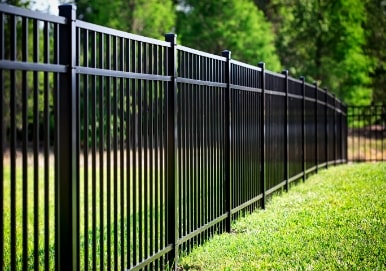




Privacy fence height in Virginia comes down to local zoning. The statewide building code exempts most fences from a building permit, but your city or county sets how tall a fence can be. In Richmond, Henrico, Chesterfield, Hanover and Stafford, front yard limits run 3 1/2 to 4 feet in most residential districts, while side and rear yards allow 6 1/2 to 8 feet.
Below you’ll find the actual limits from each locality’s zoning code, with links, plus the rules that trip people up: corner lots, slopes, HOAs, pool barriers and what to do if you need a taller fence.
- Virginia’s building code exempts most fences from a building permit. However, pool barriers are the main exception.
- Front yards: 3 1/2 to 4 feet in most residential districts.
- Side and rear yards: 6 1/2 feet in Richmond, 7 feet in Henrico, Chesterfield and Hanover, and 8 feet in Stafford.
- Corner lots and driveways also have sight triangles with lower limits.
- Your HOA can still set a lower limit than zoning.
Do You Need a Permit for a Privacy Fence in Virginia?
Usually not a building permit. Section 108.2 of the Virginia Uniform Statewide Building Code lists fences of any height as exempt from a permit. The two exceptions are fences required for pedestrian safety and fences that serve as a swimming pool barrier.
A permit exemption doesn’t mean there are no rules, though. Local fence height rules, easements and HOA covenants still apply. For example, the Henrico Permit Center lists fences up to 7 feet that aren’t pool barriers as not needing a building permit, while Henrico zoning still caps front yard fences lower. Stafford County also says a fence needs no permit but does have height restrictions, and it requires a fence affidavit.
Privacy Fence Height Limits by Locality
These are the by-right privacy fence height limits for single-family homes in each locality’s current zoning ordinance. Check your lot’s zoning district too, since a few districts have their own numbers.
| Locality | Front yard | Side and rear yards | Source |
|---|---|---|---|
| City of Richmond | 4 feet (6 1/2 feet in R-1) | 6 1/2 feet | Sec. 30-630.9(b) |
| Henrico County | 3 1/2 feet | 7 feet | Sec. 24-5404 |
| Chesterfield County | 4 feet (front and corner side yards) | 7 feet | County fence page |
| Hanover County | 4 feet | 7 feet | Sec. 26-249 |
| Stafford County | 4 feet | 8 feet | Sec. 28-39(a) |
Because zoning codes change, confirm the limit with your locality before you build.

City of Richmond
Richmond’s zoning code allows fences and walls up to 6 1/2 feet in required side and rear yards. In required front yards the limit is 4 feet, except in the R-1 district, where front yard fences can reach 6 1/2 feet. Posts, columns and gates may also rise an extra 1 1/2 feet in all districts. So a 6 foot privacy fence fits a Richmond backyard, but an 8 foot fence does not. Zoning codes change, so confirm with the city before you build. If you live in the city, see our Richmond fence company page.
Henrico County
Henrico’s fence height rules, in Table 5404, set 7 feet as the by-right limit for single-family interior side and rear yards. But the actual front yard, between the front lot line and the house, stops at 3 1/2 feet. On a corner lot, a street side yard less than 10 feet from the right-of-way also stops at 3 1/2 feet, while one 10 feet or more back allows 7 feet. The code also lets a 7 foot fence run along a shared side lot line up to the front yard of either lot. Homeowners there can start with our Henrico County fence page.
Chesterfield County
Chesterfield’s fence height rules allow fences and walls up to 7 feet in side and rear yards and up to 4 feet in front and corner side yards, according to the county’s fences, walls and screening page. Corner lots also get a stricter rule near the intersection: no fence or wall above 2 feet within 30 feet of the corner in either direction. See our Chesterfield County fence page for local projects.
Hanover County
Hanover’s zoning ordinance sets the maximum fence height at 4 feet in any front yard and 7 feet in side and rear yards. Columns attached to the fence can also rise up to 1 foot above it. On a residential corner lot, though, nothing taller than 3 feet above street grade may stand in the triangle formed 20 feet back from where the street lines meet. Our Hanover fence page covers the county.

Stafford County
For backyard privacy fence height, Stafford is the most generous of the five. In its rural and residential districts (A-2 and R-1 through R-4), fences can reach 8 feet in side and rear yards. Front yards, street-facing side yards (except in A-2) and the part of a side yard in front of the front setback line stop at 4 feet. In the A-1 agricultural district, the front yard limit is 5 feet instead. Stafford also bans barbed wire and razor wire in residential districts. Northern Virginia homeowners can visit our Stafford fence page.
Tell us about your yard and get a fast, free quote for the fence you want.
- Family owned since 2006
- Most installs take 1 to 2 days
- Financing from 0% APR for qualified buyers
or call (804) 737-4664
Fence Height Rules for Corner Lots
Corner lots and driveways get extra rules so drivers can see cross traffic. Each locality draws its sight triangle a little differently:
- Chesterfield: no fence or wall above 2 feet within 30 feet of the corner. Where a driveway meets the street, nothing between 2 1/2 and 8 feet tall inside a triangle measured 10 feet in from the driveway and property lines.
- Henrico: nothing that blocks vision between 30 inches and 8 feet in a triangle 20 feet back at street intersections, or 10 feet back where a single-family driveway meets the street.
- Hanover: nothing above 3 feet in the triangle 20 feet back from the intersecting street lines on a residential corner lot.
So on a corner lot, a privacy fence often has to stop short of the corner or drop to a low section. Plan that before you choose heights for each run.
Measuring Privacy Fence Height on a Slope
Richmond’s code measures fence height from the ground level at the base of the fence. That matters for privacy fence height on a slope. If you step a fence down a hill in level sections, the downhill end of each section stands tallest above the ground. Henrico’s ordinance includes its own figure showing how it measures fence height, and other localities have their own approach. So ask the zoning office how it treats stepped sections before you settle on a height.

Good Neighbor Fence wood fences are custom stick-built on site and fitted to the landscape with no gaps under the fence. That helps on uneven ground, where stock panels stepped down a hill can leave triangle-shaped gaps at the bottom.
HOA Fence Height Rules Can Be Stricter Than Zoning
Zoning sets the ceiling on privacy fence height, but your homeowners association can set a lower one. Many HOA covenants limit height, style, color and where a fence can sit, and they often require written approval before you build. Read your covenants first and get approval in writing. Our guide to installing a fence in an HOA walks through the approval process.
Pool Fences Follow Separate Rules
Pools change the fence height rules. A fence that serves as a pool barrier is the main exception to the permit exemption, so it needs a permit. The U.S. Consumer Product Safety Commission pool barrier guidelines call for a barrier at least 48 inches high, measured on the side away from the pool. Chesterfield also requires barrier permits for pool security fences, which must be at least 4 feet tall. Read our Virginia pool fence regulations post before you build.
What If You Need a Taller Privacy Fence?
If the privacy fence height limit leaves you short of the privacy you want, you still have options:
- Ask about an alternative height. In Henrico, the Planning Commission can approve taller fences for single-family homes, up to 7 feet in the front yard and 10 feet in side and rear yards. It has to find that the fence fits the site and meets sight distance rules.
- Apply for a variance. Under Virginia Code § 15.2-2309, the board of zoning appeals can grant a variance when strict rules would unreasonably restrict how you use the property, or to relieve a hardship caused by the lot’s physical conditions.
- Add height where it’s allowed. A lattice or other topper can help, as long as the total stays within your limit. Browse these vinyl fence topper ideas for options.
- Use plantings. Evergreen shrubs along the fence line add screening above the fence. Check local rules first, since some codes, including Stafford’s, also limit hedge height.
For designs that make the most of a 6 or 7 foot fence, see these tall wood fence ideas.

Solid pressure-treated boards below, a diagonal lattice band on top and a gate to the side yard.
Property Lines and Easements
Still, fence height rules are only part of the picture. Henrico allows fences on the property line between private parcels, but it bars fences in utility easements without written permission from the easement holder. Stafford says the same about easements. Before you build, confirm where your lines are. Our post on Virginia property line fence rules explains where a fence can sit. Also contact Virginia 811 at least 3 working days before anyone digs, since marking buried utility lines is free.
Privacy Fence Height FAQ
Can a Privacy Fence Be 8 Feet Tall in Virginia?
In some places. Stafford allows 8 feet in side and rear yards in its residential districts. Richmond caps side and rear yards at 6 1/2 feet, while Henrico, Chesterfield and Hanover allow 7 feet by right. So the maximum fence height in Virginia depends on where you live. In Richmond, Henrico, Chesterfield or Hanover, an 8 foot fence would need an alternative height approval or a variance.
Is a 6 Foot Privacy Fence Allowed in a Backyard?
Yes, in all five localities covered here, since each allows at least 6 1/2 feet in side and rear yards. Your HOA can still set a lower limit, so check your covenants.
How Tall Can a Front Yard Fence Be?
In these localities, 3 1/2 to 4 feet in most residential districts. Richmond’s R-1 district allows 6 1/2 feet, and Stafford’s A-1 district allows 5 feet.
Get a Free Privacy Fence Quote
Good Neighbor Fence has been family owned since 2006, with 400+ five-star Google reviews. Most installs take 1 to 2 days, and financing through Wisetack starts at 0% APR for qualified buyers. Explore our privacy fence installation options, or read what drives privacy fence cost.
Ready to choose your privacy fence height and style? Request a fast, free quote, or call (804) 737-4664 in Central Virginia or (540) 506-4835 in Northern Virginia.
Up to 6 1/2 feet in side and rear yards, and 4 feet in most front yards.
7 feet by right in side and rear yards, and 3 1/2 feet in the front yard.
Up to 8 feet in side and rear yards. Call (540) 506-4835.