


Chain link fence cost depends on four main things: the height, the wire gauge, the finish and how many feet your property needs. Chain link usually costs the least to install of the common fence materials, and a standard galvanized residential fence sits at the low end of that range.
Black or green vinyl coating, heavier wire and taller fabric all move the number up. So the fastest way to a real figure is a fast, free quote from Good Neighbor Fence, based on your own property and layout.
What Drives Chain Link Fence Cost
Because chain link has fewer parts than wood or vinyl, it costs less to build. Still, a few variables move the number, and these matter most.
How Height Affects Chain Link Fence Cost
Residential chain link is commonly 4 feet tall, which suits backyards, dog runs and boundaries. Five- and 6-foot fabric costs more because it needs taller posts, more fabric and often heavier framework. Fences 8 feet and up, on the other hand, are usually for sports courts, storage yards and commercial security.
Zoning limits height too. Chesterfield County, for example, allows fences up to 7 feet in side and rear yards and up to 4 feet in front and corner side yards. Check your own county or city before you settle on a height.
Wire Gauge
Gauge is the thickness of the wire the fabric is woven from, and it runs backward from what you might expect. A lower number means thicker wire. The Chain Link Fence Manufacturers Institute lists 9 gauge wire at 0.148 inch and 11 gauge at 0.120 inch, so 9 gauge is the heavier of the two.
Heavier wire also costs more. Master Halco’s chain link reference guide lists 9, 11 and 11.5 gauge fabric for residential galvanized systems, and commercial fabric as heavy as 6 gauge. Because two quotes for the same height can differ only in gauge, always ask for it in writing. Our overview of chain link fencing basics covers the other parts and terms.
Framework: Posts and Top Rail
The posts and top rail hold the fabric tight, so their size matters. Larger posts and a heavier top rail cost more, but they add stiffness, which matters on taller fences and long runs. Our post on chain link top rail sizes explains the common options.
Finish: Galvanized or Vinyl-Coated
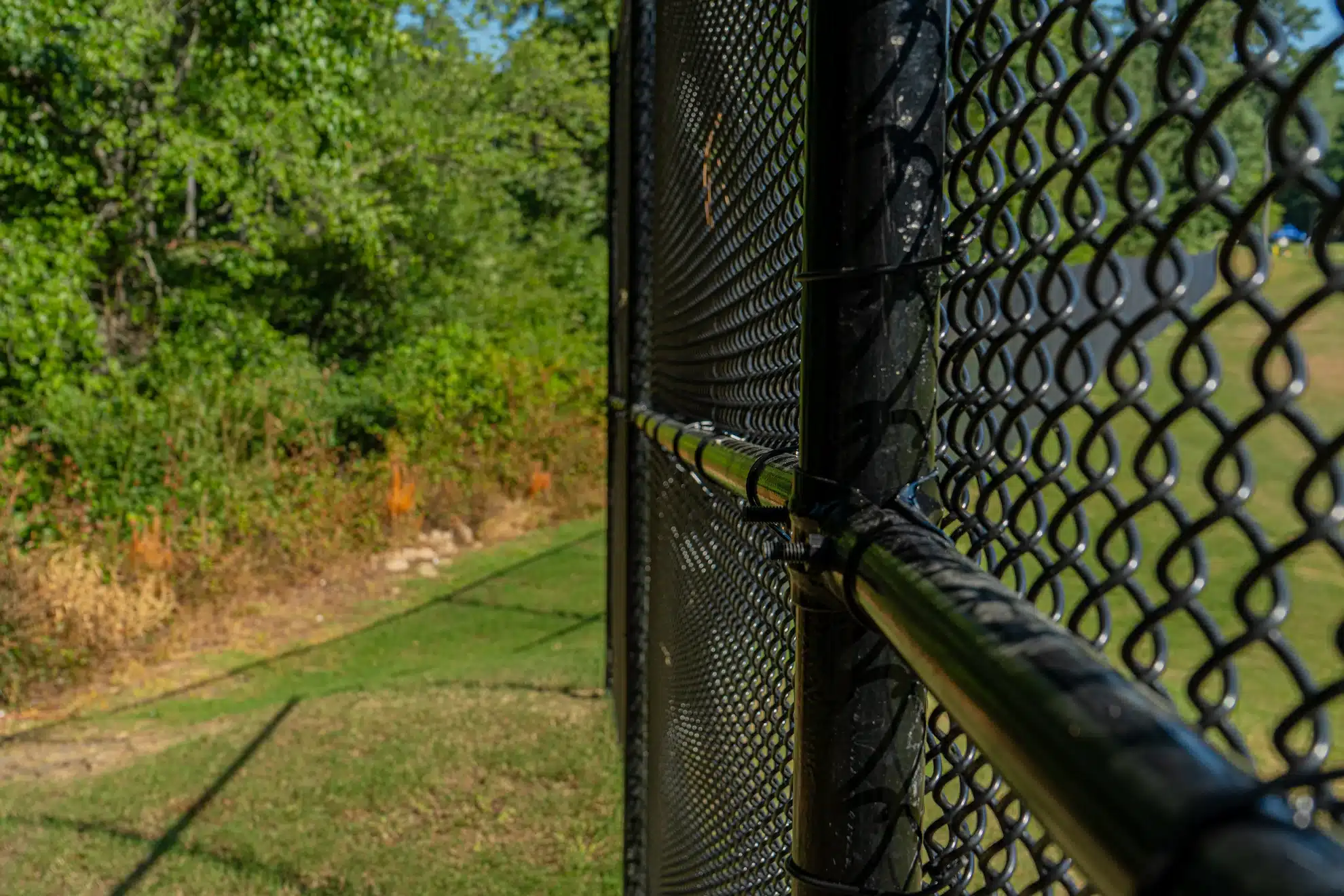
Galvanized steel is the standard silver finish and the lowest-cost option. Black or green vinyl-coated fabric costs more, but it blends into lawns and tree lines instead of catching the light. Master Halco describes its colored fabric as adding a polyvinyl chloride coating for extra corrosion protection. Our post on vinyl-coated chain link goes deeper.
Gates, Layout and Ground
Total footage is the biggest multiplier, and corners and end posts also add work. Gates are part of the fence project, and each one needs sturdy terminal posts and hardware, so a double drive gate costs more than a walk gate.
Slopes, clay, roots, rock and removal of an old fence also add labor. Before any digging, contact Virginia 811 at least 3 working days ahead to have public utility lines marked for free. For the variables every material shares, see our guide to fence installation cost.
Add-Ons: Tension Wire and Privacy Slats
A bottom tension wire runs along the base of the fabric and helps keep it from being pushed out, which matters if you have a dog. Privacy slats weave through the fabric for partial screening at less cost than a solid privacy fence. But slats catch more wind, so ask whether the posts and spacing account for them.
Chain Link Fence Cost by Option
The table ranks common chain link choices by relative installed cost. Your own quote depends on footage, gates and ground, but the order holds for most properties.
| Option | Relative cost | What it does | Best for |
|---|---|---|---|
| 4-foot galvanized, residential gauge | Lowest | Standard silver fabric and framework | Backyards, dog runs and boundaries |
| 5- or 6-foot fabric | Moderate | More height for pets and full perimeters | Dogs that jump, rear lot lines |
| Black or green vinyl coating | Moderate to high | Blends into lawns and tree lines | Yards where looks matter |
| Heavier gauge wire | Moderate to high | Thicker wire that takes more abuse | Commercial and high-traffic sites |
| 8 feet and up | Highest | Security and containment | Sports, storage and commercial yards |
| Privacy slats | Adds to any option | Partial screening woven into the fabric | Screening on a budget |
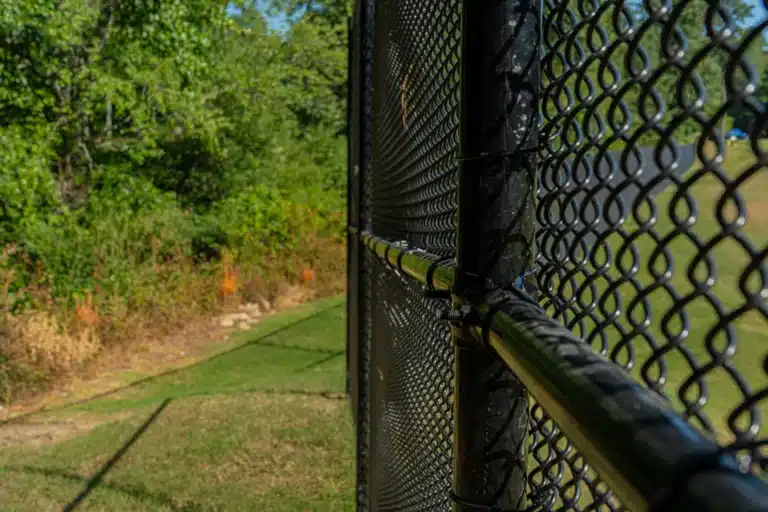
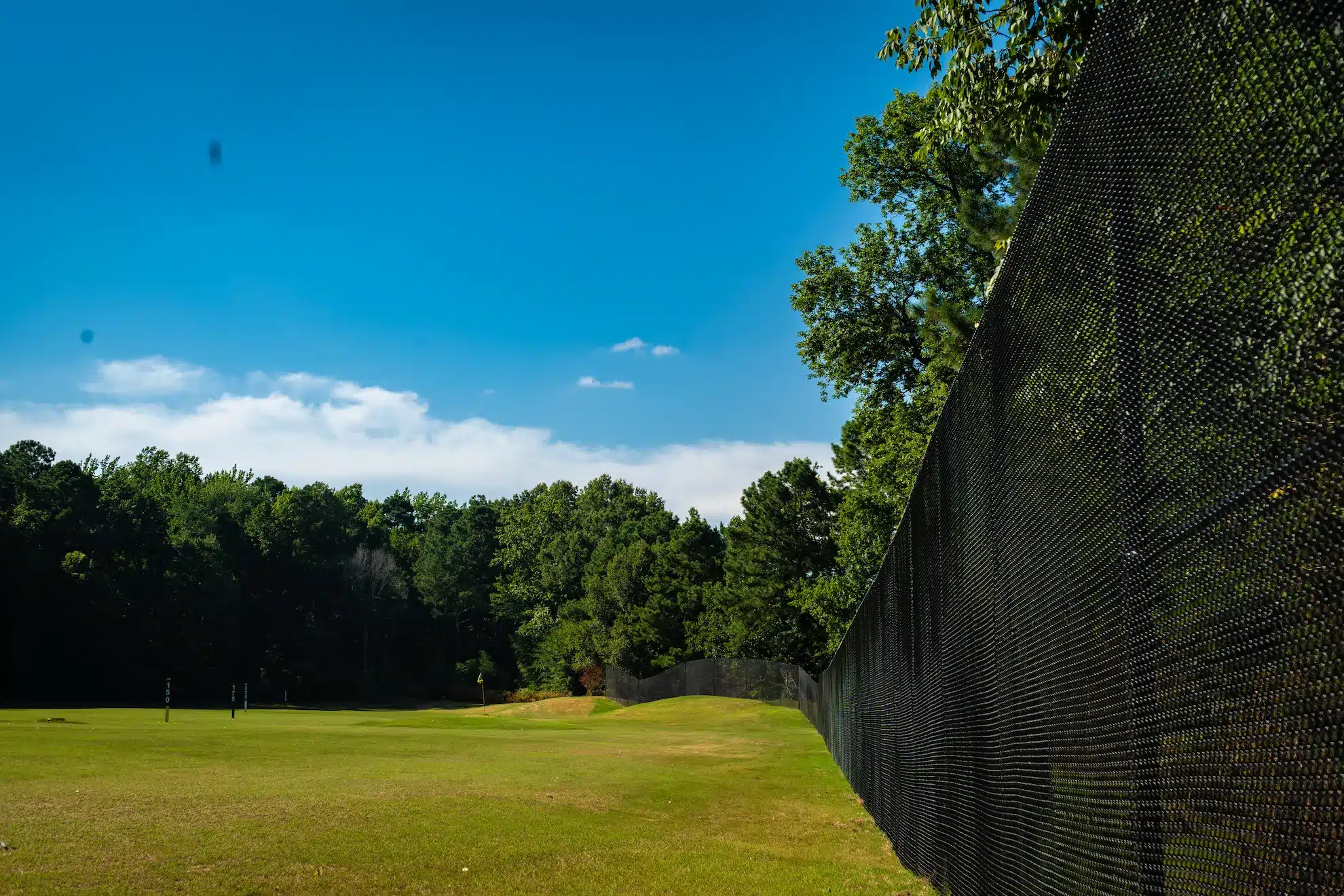
Black coating is a good example of money well spent on a fence people will see. At Brandermill Country Club in Chesterfield County, we installed black chain link along the golf course so the fence would fade into the tree lines and fairways instead of standing out.
Is Chain Link the Right Value for Your Property?
Chain link works best when the job is containment rather than looks: a dog run behind the garage, a long rear boundary against woods, a garden enclosure or a commercial perimeter. Upkeep is minimal too, since there’s nothing to stain or seal.
Still, it isn’t the best fit everywhere. For example, it gives no privacy without slats, and along the front of a house many owners prefer wood, vinyl or aluminum. If you’re comparing materials, our chain link and vinyl cost comparison walks through that choice. For pets, see our guide to the best fence for dogs.
How to Plan a Chain Link Fence
- Measure the line. Then note every corner, gate and spot where the fence meets a building.
- Decide what the fence must do. Containing a dog, marking a boundary and securing a site call for different heights and gauges.
- Find your property line. Use a survey or plat, and check HOA rules if you have them. Our HOA fence tips explain the approval process.
- Check pool rules. Virginia’s building code exempts most fences from a building permit, but not pool barriers. The CPSC’s pool barrier guidelines call for a barrier at least 48 inches high with self-closing, self-latching gates.
How to Compare Chain Link Fence Installation Cost Quotes
A chain link quote is easy to compare, as long as every contractor names the same specs. So ask for these in writing:
- Fabric height and wire gauge
- Finish, either galvanized or black or green vinyl-coated
- Line post, terminal post and top rail sizes
- Post spacing and depth
- Bottom tension wire, if you want one
- Gate count, widths and hardware
- Old fence removal and haul-away
- Who contacts Virginia 811 before digging
If one quote comes in far below the others, check that list first. A lighter gauge, thinner posts or a missing line item usually explains the gap.
Ways to Manage the Cost of Chain Link Fencing
- Match gauge to the job. Residential gauge suits most backyards, so save heavier wire for spots that take abuse.
- Coat what shows. Consider black coating on the runs people see and galvanized along a wooded back line.
- Keep gates to what you need. A walk gate costs less than a double drive gate.
- Add slats later. Slats weave into existing fabric, so screening can wait for a later budget.
- Finance it. Good Neighbor Fence offers financing through Wisetack starting at 0% APR for qualified buyers. See our fence financing options.
Chain Link Fence Cost FAQ
Is chain link fence cost lower than other materials?
In most cases, yes. Chain link usually costs the least to install of the common materials, while vinyl, cedar and ornamental aluminum sit at the higher end.
Is black chain link more expensive than galvanized?
Yes. Vinyl-coated fabric and framework cost more than plain galvanized, but many homeowners choose black because it blends into the yard.
What gauge chain link is best for a backyard?
For most backyards, a standard residential gauge is plenty. Heavier wire, such as 9 gauge, makes sense only when the fence will be leaned on, climbed or hit.
How long does chain link fence installation take?
Most installs take 1 to 2 days once work starts. Long perimeters, rocky ground or an old fence to remove can add time.
Get a Free Chain Link Fence Quote
Good Neighbor Fence has been family owned since 2006 and has earned 400+ five-star Google reviews. See the heights and finishes on our chain link fence installation page. Then request a fast, free quote, or call (804) 737-4664 in Central Virginia or (540) 506-4835 in Northern Virginia.