

Chain link fence pros and cons come down to one trade. You get a strong, affordable fence that needs very little care, but you give up privacy and some curb appeal. So if you need to keep a dog in, mark a property line or secure a big lot on a budget, chain link is hard to beat.
But if you want to block the view of your neighbor’s yard, it’s the wrong fence. Below, we break down what chain link does well, where it falls short, and how coatings, slats and wire gauge change the picture.
What Are the Main Chain Link Fence Pros and Cons?
Here’s the short version before we get into the details. First, the main advantages:
- Lower cost. Chain link is usually one of the most budget-friendly fence types, because it uses less material than a solid fence.
- Little upkeep. Galvanized or coated steel doesn’t need paint, stain or sealer.
- Open views. You can see your kids, pets and yard right through the mesh.
- Flexible layout. The mesh follows slopes and long runs, so it works on big or uneven lots.
Then the main drawbacks:
- Little privacy. Neighbors and people walking by can see right in.
- Plain look. Bare galvanized chain link looks utilitarian next to wood, vinyl or aluminum.
- Easy to climb. The diamond mesh gives kids and some dogs a foothold.
- Rules may limit it. Some HOAs restrict chain link, especially in front yards.
Chain Link Fence Benefits
These are the reasons homeowners, schools and businesses keep choosing chain link fencing.
It Costs Less Up Front
A chain link fence is a woven steel mesh stretched between posts, instead of solid boards or panels. Because it uses less material, it’s usually one of the most affordable fences to install. For a closer look, see what a chain link fence costs to install.
Still, your final price depends on height, coating, gates and site conditions. Our fence installation cost guide explains what drives the number. Also, our chain link vs vinyl cost comparison puts the two side by side.
Steel That Holds Up With Little Care
Most chain link is galvanized, which means the steel wire has a zinc coating. The American Galvanizers Association explains that zinc protects steel in two ways. It seals the surface, and it also corrodes first, so the steel under a small scratch stays protected.
So there’s no painting, staining or sealing. Instead, you walk the line once or twice a year, tighten loose ties and pull vines off the mesh. Our guide to fence maintenance covers the rest.
You Can See Through It
An open mesh lets you watch kids and dogs from the back door. It also keeps a small yard from feeling boxed in, and it won’t block a view you paid for.
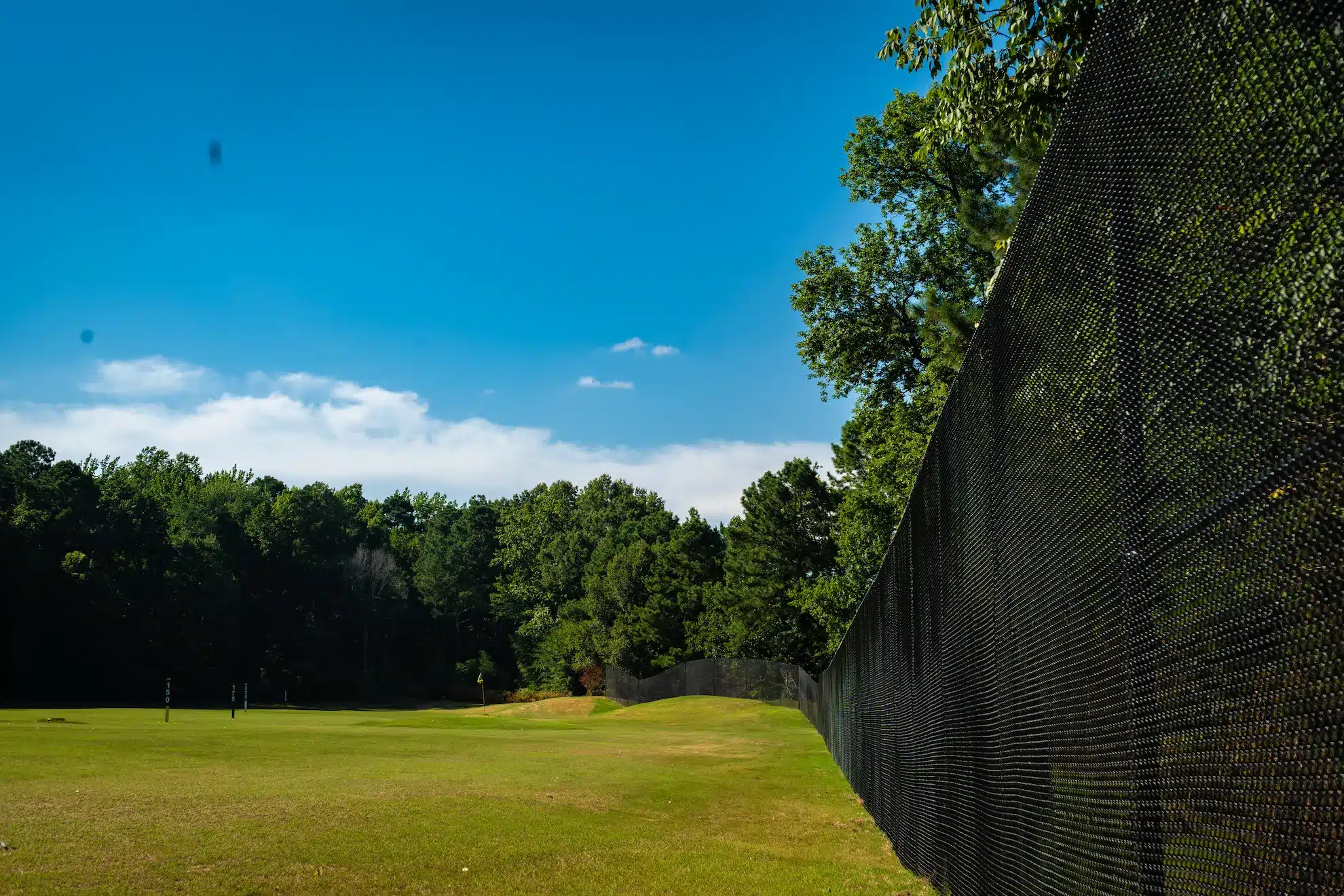
Black or green coated chain link takes this further, since dark colors fade into trees and grass. For example, we built a black chain link fence around the Brandermill Country Club golf course in Chesterfield County. The club needed to secure the course while keeping its open views.
It Handles Big and Uneven Lots
Chain link mesh follows the ground, so it works well on long runs, rolling yards and odd-shaped lots. The Brandermill fence runs thousands of feet past open fairways and wooded edges, with changes in grade along the way. A solid fence over that distance would take far more material.
Chain Link Fence Drawbacks
Chain link isn’t the right fence for every yard. Here’s where it falls short.
It Offers Little Privacy
This is the biggest drawback. Anyone can see through a standard chain link fence, and it does little to block noise or wind.
Privacy slats woven into the mesh help, but they won’t match a solid fence. If privacy is your main goal, look at our privacy fence options instead.
The Look Is More Utilitarian
Bare galvanized chain link has a silver, industrial look. That’s fine for a dog run or a back property line, but it may not suit a front yard. A black or green coating softens the look, and our post on vinyl-coated chain link explains the upgrade.
It’s Easier to Climb
The diamond openings give small feet a foothold. That matters most around pools. The U.S. Consumer Product Safety Commission’s pool barrier guidelines say chain link mesh should not exceed 1¼ inches square. The one exception is when slats fastened at the top or bottom reduce the openings to 1¾ inches or less.
So if your fence will double as a pool barrier, mesh size matters. Our guide to Virginia pool fence rules covers the other requirements.
Coatings Wear Over Time
Zinc wears away slowly. After many years, an older galvanized fence can start to show rust, especially where mowers and trimmers hit the posts. Vinyl-coated mesh can also nick or fade. Still, a quick check each year catches small problems before they spread.
Is Chain Link a Good Fence for Dogs?
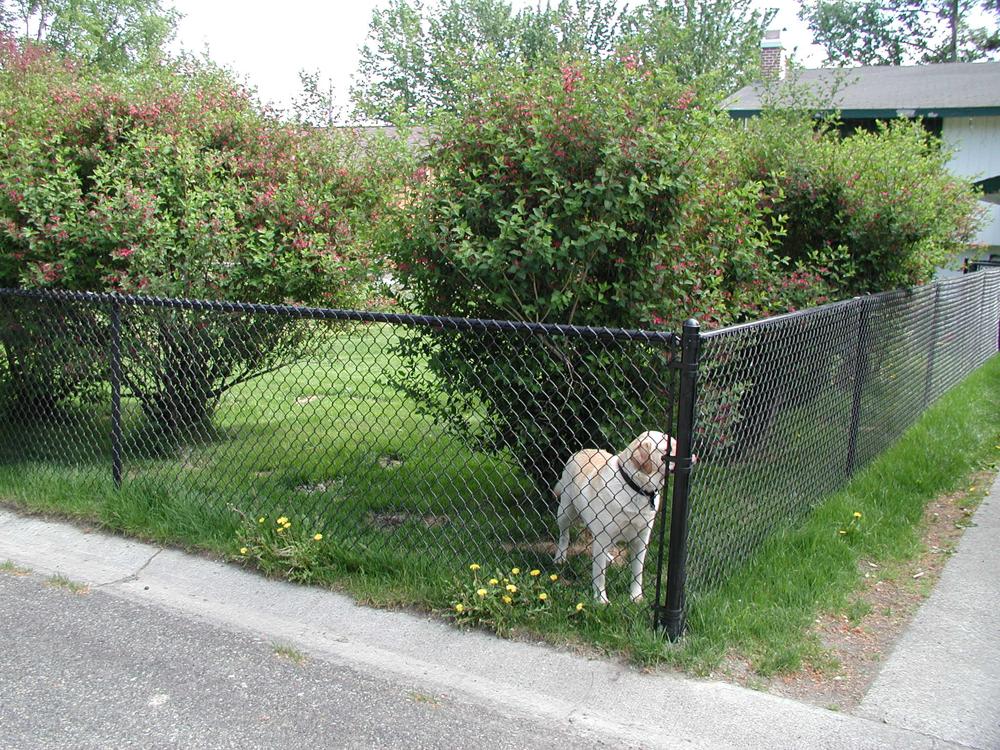
For many dogs, yes. Chain link is strong, it’s affordable to run around a big yard, and your dog can see out. Still, the chain link fence pros and cons look a little different for pet owners.
But watch for three things before you build:
- Climbers. Athletic dogs can use the mesh like a ladder, so go taller or pick a different style.
- Diggers. A dog that digs can push under the bottom edge, so ask your installer about ways to secure the base.
- Barkers. A dog that reacts to everything it sees may bark more behind an open fence. Slats cut down the view.
Our guide to the best fence for dogs compares chain link with other fence types for pets.
Galvanized or Vinyl-Coated Chain Link Fencing?
Standard chain link fabric is zinc-coated steel. The ASTM A392 specification covers this fabric, with the zinc applied either before or after the wire is woven. It’s the lowest-cost option, and it has the familiar silver look.
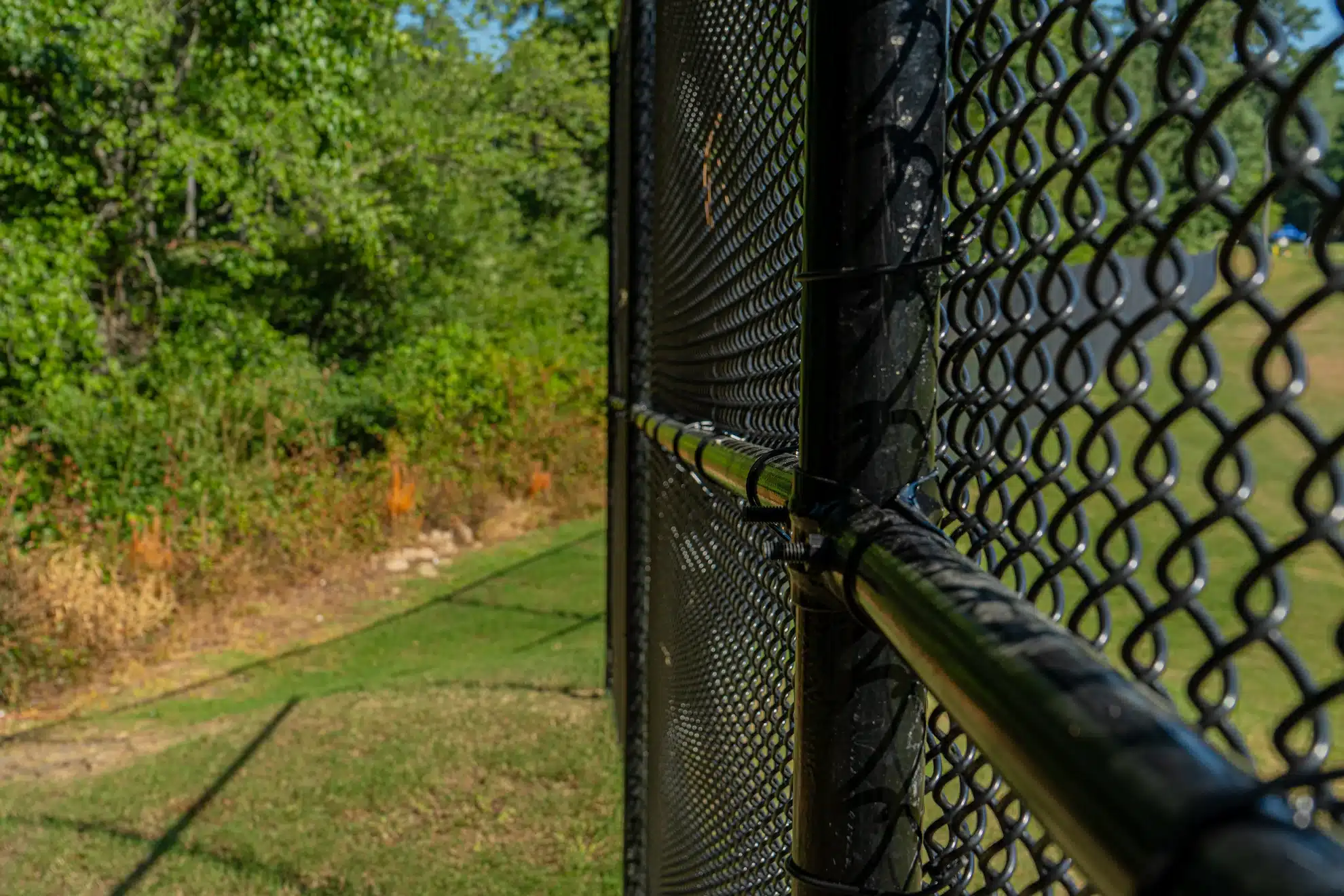
Vinyl-coated chain link adds a colored coating, usually black or green, over the steel. It costs more, but it blends into the yard and looks more finished. So the coating you pick shifts the chain link fence pros and cons toward looks or toward budget.
Wire gauge matters too. A lower gauge number means thicker wire, so 9 gauge is heavier than 11 gauge. Heavier wire and thicker posts resist bending better. Our guides to chain link fence parts and top rail sizes explain each piece.
When Chain Link Makes Sense
Chain link is usually a good fit if you:
- Need to keep a dog or kids in the yard on a budget.
- Want to fence a large lot or a long property line.
- Run a business, church or sports field that needs a secure, see-through boundary. Our look at commercial fence options covers more choices.
- Want to keep an open view of your yard.
But look at another material if you:
- Want privacy from neighbors or a busy road.
- Live in an HOA that limits chain link. Our HOA fence guide explains how approval works.
- Care most about curb appeal in the front yard, where aluminum fencing keeps an open look with a more finished style.
Once you’ve weighed the chain link fence pros and cons, the choice usually comes down to privacy and looks. If you’re still deciding, see how wood, vinyl, aluminum and chain link compare. You can also browse every style on our fence design and installation page.
Get a Chain Link Fence Quote in Central Virginia
Good Neighbor Fence has been building fences for Richmond neighbors since 2006, and we offer chain link fence installation across Central Virginia. Request a free on-site quote and we’ll walk your property, talk through height, coating and gate options, and give you a clear price. You can also call us at (804) 737-4664.