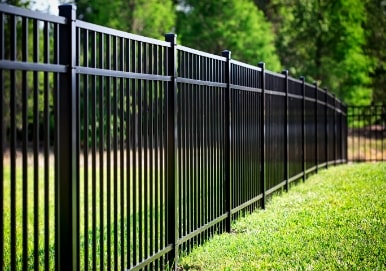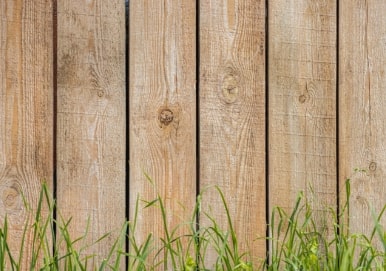



The most popular vinyl fence colors are white, tan (often sold as almond or khaki), gray and wood-look blends. White gives you the crispest look, while tan and gray blend into brick, siding and trees and show less dirt.
The right pick depends on your house trim, how much of the fence you see from the patio, and what your HOA allows. We have built white, tan and two-tone vinyl fences across Central Virginia and Fredericksburg, so here is how those choices play out in real yards.

Which Vinyl Fence Colors Can You Choose From?
Most manufacturers keep a short core palette of light neutrals, then add textured or wood-look finishes. For example, VEKA lists white, almond, khaki and stone as its standard VEKAfence colors. Bufftech sells its smooth fence in white, almond, gray and natural clay, and its product brochure shows several wood-look blends too.
Names change from brand to brand, but most palettes fall into four groups:
- White: bright and classic, and it suits picket, privacy and pool fences.
- Tan, almond and khaki: warm neutrals that sit well next to brick, beige siding and wooded lots.
- Gray and stone: cooler tones for modern homes, gray siding and black trim.
- Woodgrain and variegated: streaked or textured finishes that read like stained wood from the street.
White Vinyl Fences: Crisp and Classic
White is the classic among vinyl fence colors, and it is the look most people picture first. It frames a lawn cleanly and matches white trim, gutters and porch rails. It also keeps a small yard feeling open. On a 6 foot white vinyl privacy fence in Chesterfield, the bright finish kept the backyard from feeling boxed in.
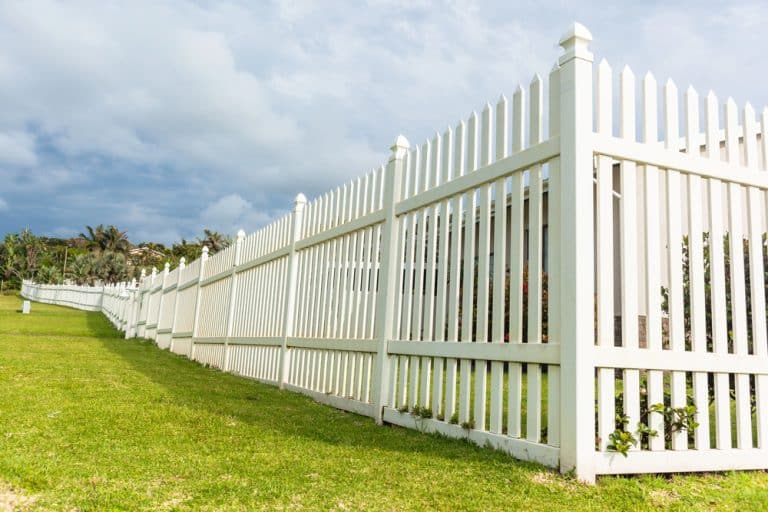
White works just as well low and open, as on this classic white vinyl picket fence in Richmond. The tradeoff is upkeep you can see. Pollen, mildew and grass clippings show up faster on white, so plan on an occasional rinse with a hose and mild soap.
Tan, Almond and Khaki: Warm Neutrals
Tan tones soften a long fence line because they sit closer to the colors of bark, mulch and brick. That makes them a strong choice for wooded lots and for homes with beige, cream or tan siding. They also hide dust and red clay splash better than white, which matters along driveways and garden beds.
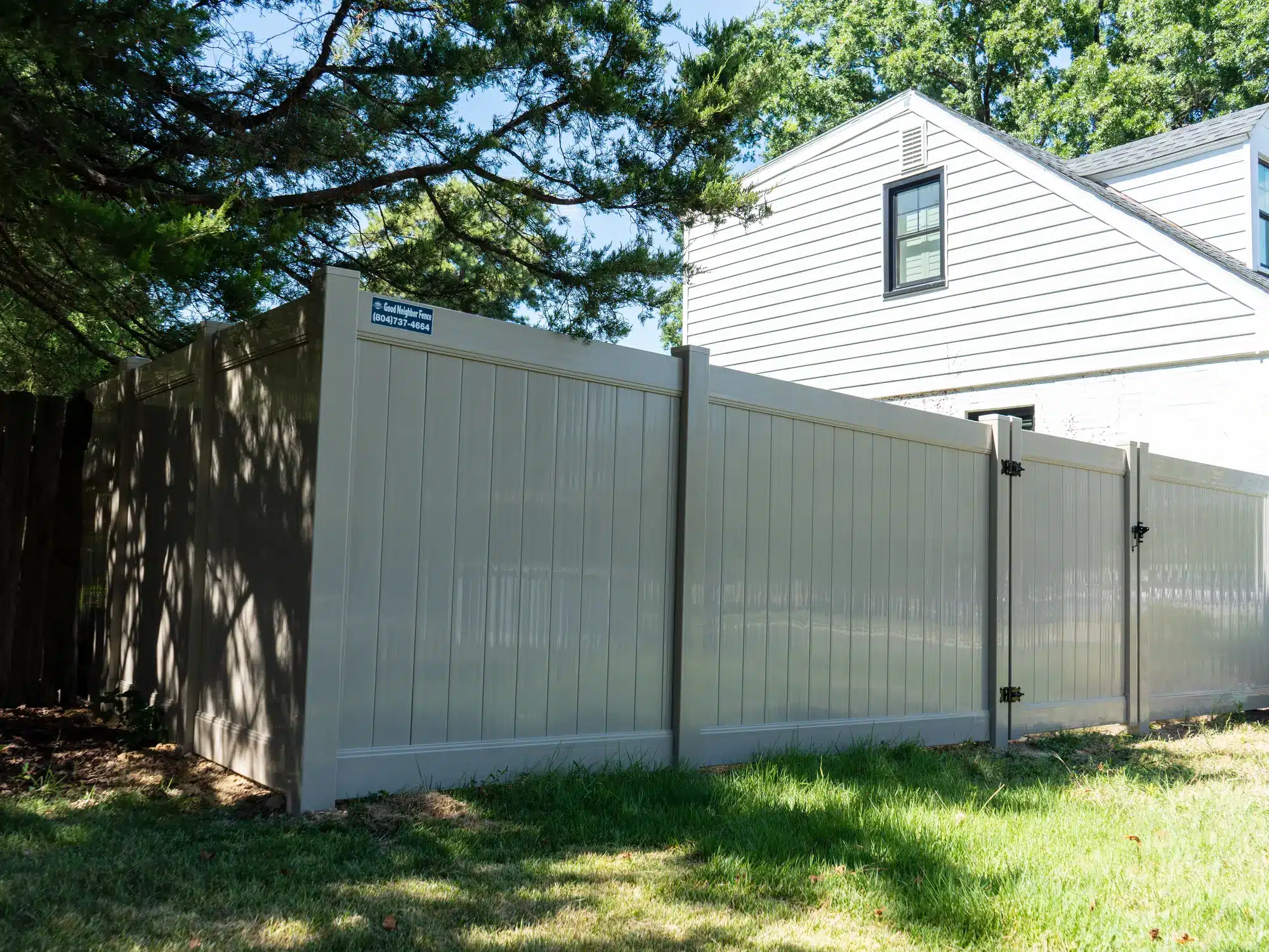
If you want privacy without a bright wall at the back of the yard, a tan privacy fence gives you full screening that recedes into the landscape. Still, compare samples against your trim before you commit. Almond, khaki and tan vinyl fence colors can look very different in morning shade and afternoon sun.
Gray and Woodgrain Vinyl Fence Color Options
Gray and stone shades fit newer homes with gray siding, black windows or a modern farmhouse look. They read as calm and deliberate, and they pair well with black hardware. Since gray sits between warm and cool, it also works on homes that mix brick and siding.
Woodgrain and variegated finishes are the closest you get to wood without the staining. VEKA, for example, makes its variegated pickets by adding darker resin streaks during extrusion, so no two runs look exactly alike. Bufftech says its vinyl never needs staining or painting. If you love the look of cedar but not the upkeep, this is the colored vinyl fence style to ask about.
Mixing Two Vinyl Fence Colors
A two-tone fence pairs one color for the posts and rails with another for the panels. For a two-tone vinyl fence in Fredericksburg, we paired white posts and rails with tan panels to match the house. The white frames each section, while the tan panels keep the long run soft on the eye.
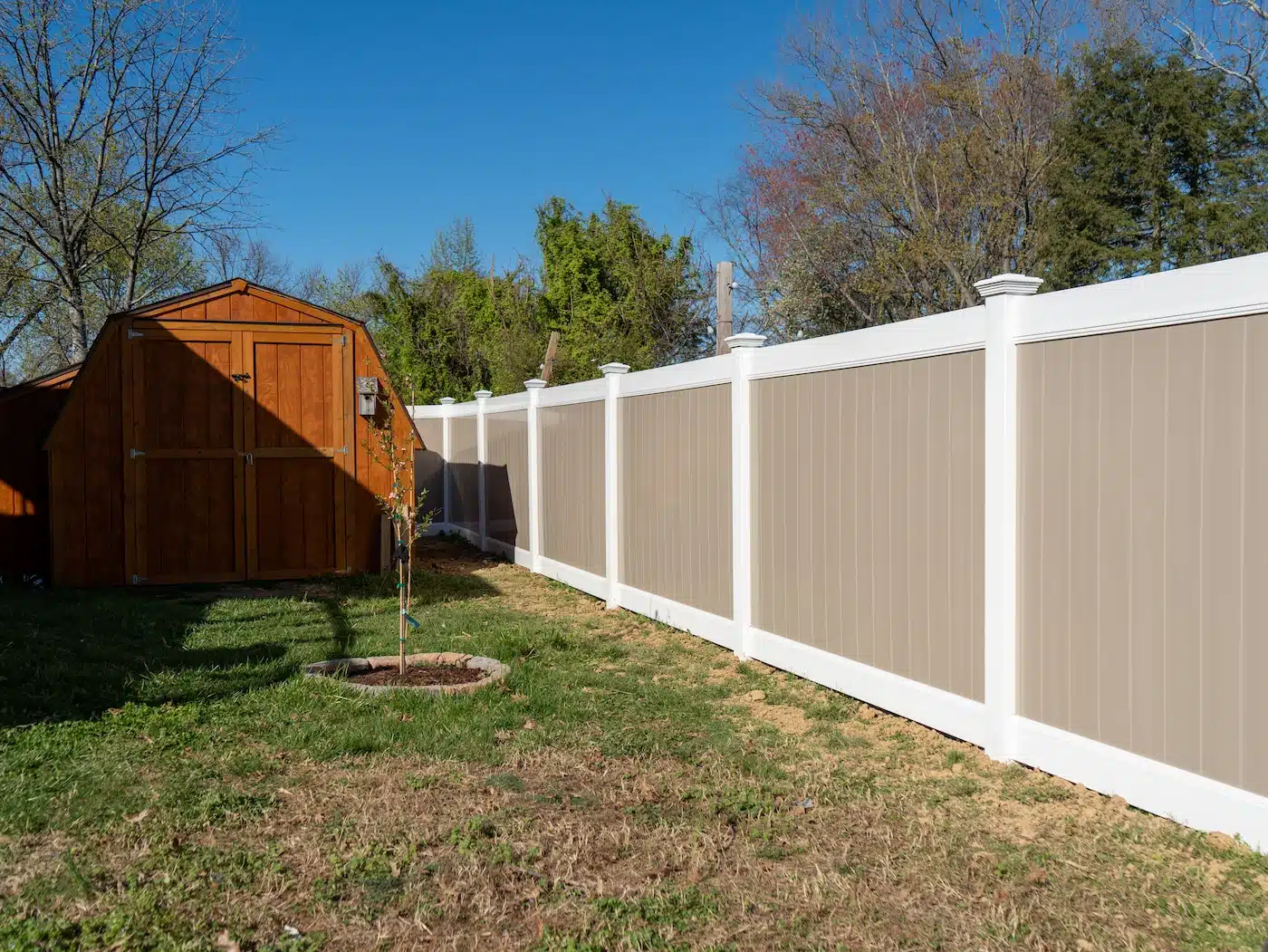
Two colors do raise the bar on layout. Every post, cap and color change has to line up, because a crooked seam stands out far more than it would on a one-color fence. So choose an installer who plans the whole line before the first post goes in.
How Do You Choose the Right Vinyl Fence Color?
Use these steps to narrow your vinyl fence color options before you sign a contract:
- Match the trim, not the siding. White trim usually calls for a white fence, while cream or tan trim points toward almond or khaki.
- Check your HOA rules first. Many associations approve only certain fence colors and styles, so read our tips on installing a fence in an HOA before you order.
- Look at real samples outside. Bufftech notes that printed colors are simulated and recommends checking product samples before you decide. Hold them against your house in morning and afternoon light.
- Think about the view from both sides. You see the fence from your patio, but your neighbors and the street see it too.
- Weigh the upkeep. White shows dirt fastest, while tan, gray and woodgrain finishes hide it longer.
- Compare the warranty. Fade coverage and pricing can differ by color and finish, so ask for each option in writing.
Does Color Change How a Vinyl Fence Holds Up?
Your choice among vinyl fence colors mostly changes the look, not the strength. Vinyl gets its color when it is made, not from a coat of paint, so there is no paint to peel, chip or touch up. That is a big reason vinyl beats painted wood on upkeep, and our guide to the pros and cons of each fence material covers the rest of that comparison.
Sun exposure is the other factor. Bufftech says it adds UV inhibitors to protect against the sun and keep colors vibrant. Still, south and west facing runs get the most sun, so ask how the warranty covers fading for the color you pick. Also ask how the color is made on any laminated finish, since a laminate puts the color in a surface layer.
Get a Quote for Your Vinyl Fence in Central Virginia
Good Neighbor Fence has been family owned since 2006, with 400+ five-star Google reviews from local homeowners. We handle vinyl fence installation from design to the last post cap, and we can walk you through colors, styles and financing options for your yard.
Request a fast, free quote or call (804) 737-4664 in Central Virginia. In the Fredericksburg, Stafford and Spotsylvania area, call (540) 506-4835.