



The cost to fence an acre depends first on footage, then on material, ground conditions and gates. A square acre needs about 835 feet of fence, not 208, so most people underestimate the job before they ever pick a material.
That footage surprise is why acreage quotes often land higher than expected. Below is the perimeter math for common parcel sizes, what moves the price, how to compare quotes, and how to get a real number with a fast, free quote from Good Neighbor Fence.
How Many Feet of Fence Does an Acre Need?
An acre measures area, not the distance around the edge. According to the National Institute of Standards and Technology, one acre is 43,560 square feet. So a perfectly square acre is about 208.7 feet on each side, and it takes about 835 feet of fence to enclose. The same acre in a longer shape needs more.
| Parcel size | Square | Rectangle (2 to 1) | Long strip (4 to 1) |
|---|---|---|---|
| 1 acre | 835 ft | 885 ft | 1,044 ft |
| 2 acres | 1,181 ft | 1,252 ft | 1,476 ft |
| 5 acres | 1,867 ft | 1,980 ft | 2,333 ft |
| 10 acres | 2,640 ft | 2,800 ft | 3,300 ft |
These are calculated perimeters, rounded to the nearest foot. Notice that 10 acres is ten times the area of one acre but only about three times the perimeter. So each acre needs less fence as the parcel grows, which brings down the cost to fence an acre on larger properties. To measure your own boundary from a plat, our guide to calculating fencing materials walks you through it.
What Drives the Cost to Fence an Acre?
Once you know the footage, a handful of factors decide where your project lands. These are the same things that shape what drives fence installation cost on any property, but a few of them matter more on open land.
Parcel Shape and Total Footage
Two neighbors with an acre each can need very different amounts of fence. A square acre takes about 835 feet, but the same acre as a long strip along a road takes about 1,044 feet. That is roughly a quarter more fence for the same land. Also, a boundary that follows a creek or a tree line runs longer than the straight lines on a plat suggest.
Fence Material and Style
Material sets the price of every foot you install. Wire fences cost the least per foot, board and rail fences sit in the middle, and solid privacy fencing costs the most. On a run of 800 feet or more, that gap adds up fast, so material changes the cost to fence an acre far more than it changes a small backyard job.
| Fence type | Relative install cost | Upkeep | Best for |
|---|---|---|---|
| Woven wire on wood posts | Lowest | Low | Livestock and long boundary lines |
| Chain link | Low | Very low | Pets and secure containment where looks matter less |
| Split rail (2 or 3 rail) | Low to moderate | Low | Marking a boundary with a rustic look |
| Split rail with welded wire | Moderate | Low | Keeping a dog in while keeping the split rail look |
| 4 board paddock | Moderate to high | Moderate, since wood weathers | Horses and equestrian property |
| Vinyl post and rail | High | Very low | A clean look with little maintenance |
| 6 ft wood privacy | Highest | Moderate | Screening near the house, rarely a whole acre |
Virginia Cooperative Extension notes that board fencing suits exercise paddocks and small areas, while wire mesh and high tensile wire suit larger pastures. For more styles, see our popular farm fence designs or learn how a split rail fence goes in. If horses are part of the plan, our guide to horse fence installation cost covers paddock materials in more depth.
Corners, Braces and Gates
Corners and gates cost more than straight runs. A corner or gate post takes pulling force from more than one direction, so it gets braced and set deeper than a line post. For example, Penn State Extension suggests setting horse fence line posts 36 inches deep and corner posts 48 inches deep. Every extra corner in an uneven boundary adds one of these assemblies.
On acreage, you will usually want at least one gate wide enough for a truck or mower, and Penn State recommends vehicle gates at least 12 feet wide. Gates are built as part of your fence project, and each one adds to the cost to fence an acre. So settle how many you need, and how wide, before you ask for quotes.
Ground, Slope and Clearing
Open, level pasture is the easiest ground to fence. But Central Virginia clay, rock, roots and slopes slow down post setting, and slower work raises the cost to fence an acre. If brush or small trees have to be cleared from the line first, that adds time before the first post goes in. Wet ground near a creek can also change where posts can go.
Removing an Old Fence
If an old wire or board fence still stands on the line, it has to come out and be hauled away before the new fence goes in. Contractors handle this differently, so ask each one whether removal and haul-away are included in the quote.
Access to the Fence Line
Crews and equipment need to reach every section of the line. A boundary along a paved road is easy to work. A back line behind a pond, through woods or across soft ground takes longer, and that time shows up in the price.
Permits, Zoning and Property Lines
Most Virginia fences do not need a building permit. The Virginia Uniform Statewide Building Code lists fences as exempt unless they serve as a pool barrier or a pedestrian safety barrier. Zoning height and setback rules are set locally, though, so check with your county before you order material.
On a large parcel, the property line itself matters most. If a fence lands on the wrong side of it, you may be building on a neighbor’s land. Our guides to Virginia fencing rules on property lines and building a fence on an easement explain what to check.
Should You Fence the Whole Acre or Just the Yard?
Many people who ask about the cost to fence an acre do not need the whole acre fenced. If the goal is keeping a dog in, giving kids a safe play area or defining a backyard, a fence around the yard near the house often does the job. For example, a 100 by 80 foot yard with the house closing one short side takes about 280 feet of fence. That is about a third of what a square acre needs.
Fencing the full boundary makes sense for horses or livestock, a property line you want clearly marked, or a big dog that needs room to run. If none of those apply, fence the yard in the material you like best and put the savings into a better fence. Our guide to the best fence for dogs can help you choose.
How to Plan Fencing an Acre
- Find your real boundary. Start with your plat or survey. Your county GIS parcel viewer can show approximate lines, but it is not a survey.
- Walk the line. Note creeks, tree lines, slopes, old fence and anything that blocks access.
- Mark where gates go. Put a wide gate where equipment comes in and walk gates where people cross every day.
- Decide what the fence has to do. Containing horses, keeping a dog in and marking a boundary each point to different materials.
- Check the rules. Confirm zoning height and setback limits with your county, plus any HOA or deed restrictions.
- Plan for utility marking. Virginia 811 marks public utility lines for free, and you need to contact it at least 3 working days before anyone digs.
How to Compare Quotes for Fencing an Acre
Acreage quotes vary more than backyard quotes because there is more room for different assumptions. So line up each quote against the same list:
- Total linear footage, and how it was measured
- Material by name and grade, including post size and type
- Post spacing and setting depth, especially at corners and braces
- Number, width and type of gates, plus gate posts and hardware
- Removal and haul-away of any old fence
- Clearing along the line, if it needs it
- Who contacts Virginia 811 before digging
- Payment terms and financing options
If one quote comes in far lower than the others, check the footage and the material first. Then compare totals.
Ways to Manage the Cost to Fence an Acre
- Fence only what needs fencing. A yard enclosure plus an open boundary costs far less than enclosing the full acre.
- Match material to purpose. Use wire or split rail on the back lines and a nicer style near the house.
- Keep gates to the ones you use. Each gate adds heavy posts and hardware, so plan one wide gate and the walk gates you need.
- Phase the project. Build the most important section first and add the rest later.
- Finance it. Good Neighbor Fence offers fence financing through Wisetack, starting at 0% APR for qualified buyers.
A Goochland Paddock Fence We Built
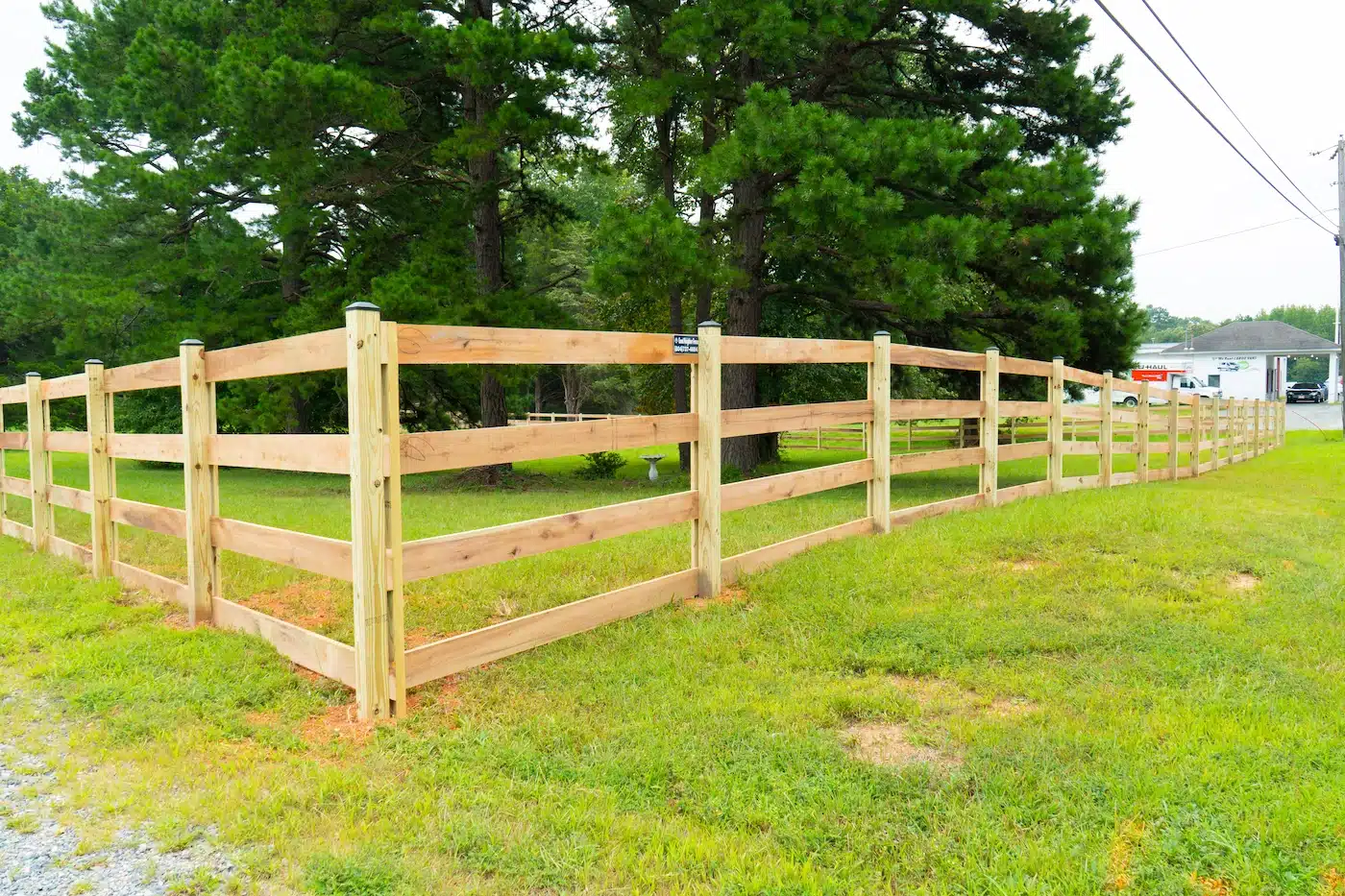
On one Goochland equestrian property, we built a 4 board paddock fence from pressure-treated lumber with black post caps. The runs follow the natural contours of the pasture, including a long stretch beside the gravel drive out to the road. Near the farmhouse and the drive, welded wire mesh runs behind the boards, and a black wire-filled farm gate opens onto the gravel. The project took 2 days.
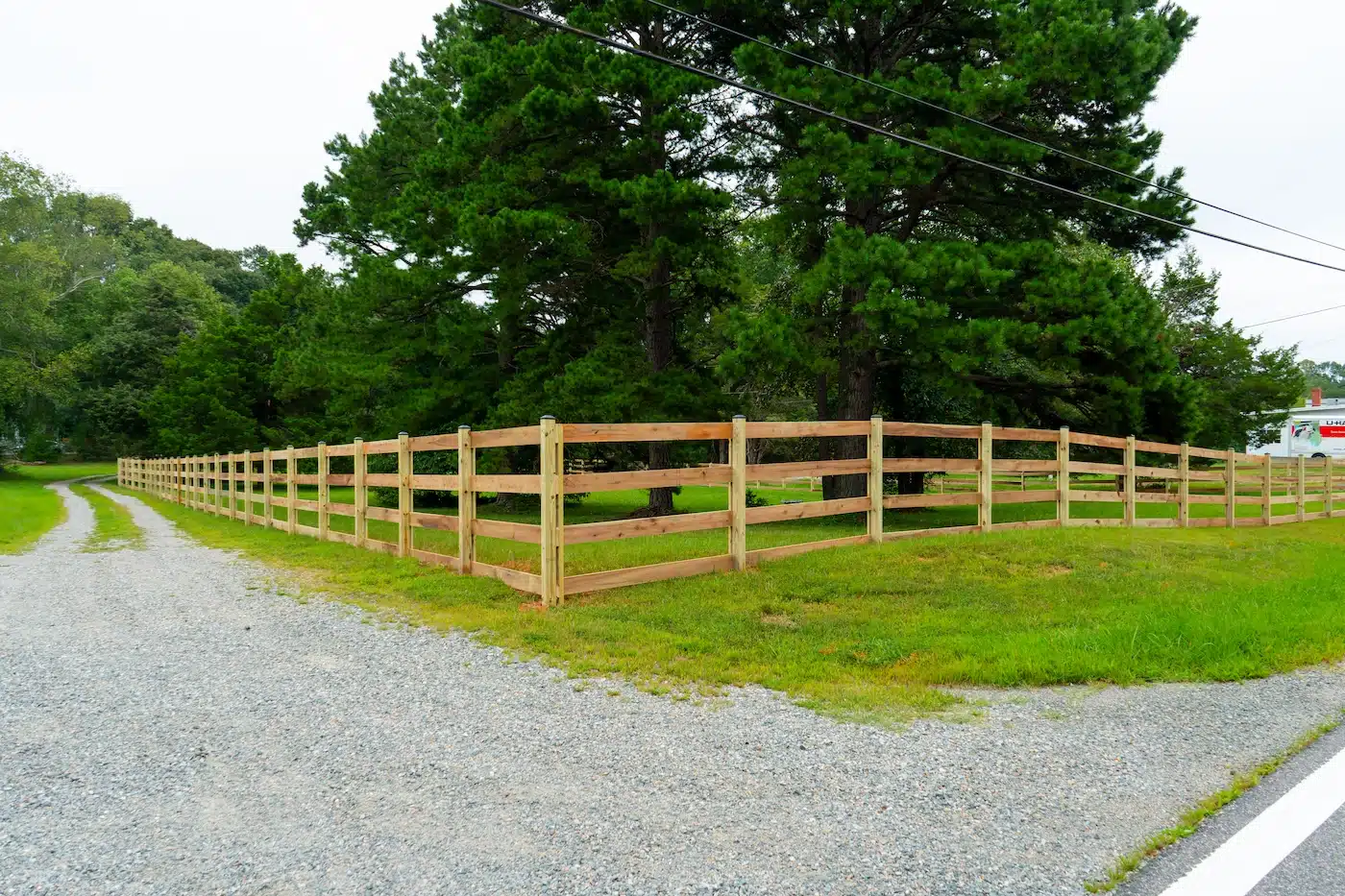
See the full 4 board paddock project in Goochland. We also work with acreage owners as a Goochland fence company and across Powhatan and Hanover.
Fencing an Acre: Common Questions
How Much Fence Do I Need for 1 Acre?
About 835 feet if the acre is square. An acre is 43,560 square feet, which makes a square acre about 208.7 feet on each side. A 2 to 1 rectangle needs about 885 feet, and a 4 to 1 strip needs about 1,044 feet.
Is It Cheaper Per Foot to Fence a Large Property?
Often, yes. Long straight runs go in efficiently, while corners, gates, slopes and obstacles push the per-foot cost up. So a long, open boundary can cost less per foot than a small backyard with two gates and a slope, even though the total is higher.
What Is the Least Expensive Way to Fence an Acre?
Woven wire on wood posts usually costs the least per foot, and it works well for livestock and long boundaries. It is not decorative, though. If you want a finished look near the house, split rail with welded wire is a popular middle ground.
How Much Fence Do 5 Acres Take?
A square 5 acre parcel needs about 1,867 feet of fence, and a 2 to 1 rectangle needs about 1,980 feet. Measure your real boundary before you budget, since shape changes the total.
Do I Need a Permit to Fence Acreage in Virginia?
Usually not a building permit, because the state building code exempts fences that are not pool or pedestrian safety barriers. Zoning height and setback rules still apply, and each county sets its own, so confirm with your county before you build.
Get a Free Quote to Fence Your Acre
The fastest way to learn the real cost to fence an acre of your land is a quote built on your actual boundary. Good Neighbor Fence has been family owned since 2006 and has earned 400+ five-star Google reviews. Browse our fence design and installation options, then request a fast, free quote or call (804) 737-4664 in Central Virginia or (540) 506-4835 in Northern Virginia.