

Wood fence cost depends on four things: the wood species, the fence height, the board style and the total footage. Pressure-treated pine keeps the price lowest, naturally rot-resistant woods like cedar cost more, and tall, solid privacy styles use more lumber and labor than a short picket fence.
So there is no honest single answer to how much a wood fence costs until those choices are made. The quickest way to a real number for your yard is a fast, free quote from Good Neighbor Fence. Below, you will see how each factor moves the price, what upkeep adds after installation and how to compare quotes.

What Drives Wood Fence Installation Cost?
Every wood fence quote is built from the same pieces. Here is how each one moves the number, starting with the biggest levers. For the bigger picture across every material, see our guide to fence installation cost.
Wood Species
Species sets the floor for wood fence cost. Pressure-treated pine is a common choice because the treatment protects it against rot and insects for less than a naturally durable wood. Cedar, cypress and redwood cost more because their heartwood resists decay on its own.
| Wood | Relative install cost | Natural decay resistance | Good to know |
|---|---|---|---|
| Spruce or whitewood panels | Lowest | Slight or none | Often sold as premade panels |
| Pressure-treated pine | Low | Added by the treatment | Ask for a ground contact rating on posts |
| Western red cedar | High | Very resistant heartwood | Weathers to silver gray if left unfinished |
| Cypress | High | Moderate to resistant | Availability varies |
| Redwood | Highest | Very resistant heartwood | Grows on the West Coast, so freight adds to the price |
The decay ratings come from the USDA Forest Products Laboratory Wood Handbook. It also notes that untreated sapwood of nearly every species has low decay resistance. That is why pine needs treatment, and why the heartwood in cedar matters.
Fence Height
Height is the next big lever on wood fence cost. A 6 foot privacy fence uses longer boards and posts than a 4 foot picket fence. An 8 foot fence needs longer posts again, deeper holes and often an extra rail. So each step up in height adds more than just taller boards.
Check the rules before you settle on a height. For example, Henrico County does not require a building permit for fences up to 7 feet that are not pool barriers. Zoning can still limit height depending on where the fence sits on your lot. Our tall wood fence ideas show what extra height looks like.
Board Style
Style decides how much lumber goes on each section, so it moves wood fence cost more than many people expect. Dog-ear or stockade boards set side by side use the least for a privacy fence. Shadowbox styles alternate boards on both faces of the rails, and board-on-board adds an overlapping layer. So both use more lumber and take longer to build, but they stay private as the wood shrinks.
| Style | Lumber used | Relative cost | Privacy |
|---|---|---|---|
| Spaced picket | Least | Lowest | Low |
| Dog-ear or stockade, side by side | Moderate | Low to moderate | High, with small gaps as boards dry |
| Shadowbox | More | Moderate to high | High, with some airflow |
| Board-on-board | Most | Highest | Highest |
See how wood fence board spacing affects privacy, or browse the privacy fence styles we build.
Footage, Posts and Gates
Total linear footage sets how many boards, rails and posts you need. Every corner adds a post, and an uneven lot line adds more. Gates are built as part of the fence project, and each one adds heavy posts and hardware. So a double drive gate adds more to the cost of a wood fence than a single walk gate.
Posts deserve the most attention because they sit in the soil. The American Wood Protection Association says ground contact calls for lumber treated to Use Category 4A (UC4A) or higher. Check the end tag, or ask for the rating in writing.
Site Conditions and Old Fence Removal
Flat, open ground is the easiest to build on. Slopes, Central Virginia clay, roots, rock, sprinkler lines and buried utilities all slow the work, and slower work raises wood fence cost. If an old fence has to come out first, removal and haul-away add to the job. If you are weighing a fix against a new fence, our look at wood fence repair cost can help you decide.
Permits, HOA Rules and Property Lines
Most Virginia fences do not need a building permit. The Virginia Uniform Statewide Building Code exempts fences unless they serve as a pool barrier or a pedestrian safety barrier. Still, zoning setbacks and HOA rules can shape your design, so settle them before you order lumber. Our guides to installing a fence in an HOA and Virginia fence rules on property lines cover the details.
Pine or Cedar: Which Wood Fence Is Worth the Cost?
Pressure-treated pine keeps wood fence cost lower up front, and it holds up well when the posts carry a ground contact rating. But treated lumber often arrives wet. As it dries, it shrinks across its width, so tightly butted boards open small gaps. The Wood Handbook explains that wood shrinks most across the grain as it loses moisture and only slightly along its length.
If gaps bother you, choose a style with overlapping boards. You can also ask about lumber that is kiln dried after treatment (KDAT), which costs more but starts out drier.
Cedar costs more, but its heartwood resists decay naturally. Left unfinished, it weathers to a silver gray, as the Western Red Cedar Lumber Association notes. So choose cedar for looks and natural durability, and choose pine when budget matters most. For more on treatment, see our guide to pressure-treated wood for fences.
Wood Fence Upkeep Costs After Installation
Wood is the one common fence material with an ongoing upkeep bill. A stain or sealer protects the boards from moisture and sun, and it needs renewing every few years. You can do it yourself over a weekend or hire a painter, so build that choice into the true cost of a wood fence.
Two things stretch that budget. First, a rot board along the bottom takes ground contact instead of your pickets, and our guide to fence rot boards shows how it works. Second, let new treated lumber dry before the first coat. Our guide to sealing a wood fence covers timing, and our stain color guide helps you pick a finish.
How to Compare Wood Fence Quotes
Two quotes for what looks like the same fence can differ a lot. So line them up against this list:
- Wood species and grade, named on the quote
- Treatment rating for posts (UC4A or higher for ground contact)
- Post size, setting depth and spacing, and whether posts are set in concrete
- Fence height, number of rails and board style
- Board spacing or overlap
- Number and width of gates, with gate posts and hardware
- Corrosion-resistant fasteners, such as the stainless steel screws recommended for cedar
- Removal and haul-away of any old fence
- Who contacts Virginia 811 to mark utilities before digging
If one quote comes in much lower, check the species, height and board style first, since those three explain big swings in wood fence cost. Then compare totals.
Ways to Manage Wood Fence Cost
- Choose pressure-treated pine with ground contact posts if budget leads.
- Match height to each side. Go tall where you need privacy and shorter where you do not.
- Pick a simpler style. Side-by-side dog-ear boards use less lumber than board-on-board.
- Keep gates to the ones you use. Each gate adds heavy posts and hardware.
- Finance it. Good Neighbor Fence offers fence financing through Wisetack, starting at 0% APR for qualified buyers.
A Chesterfield Wood Fence We Built
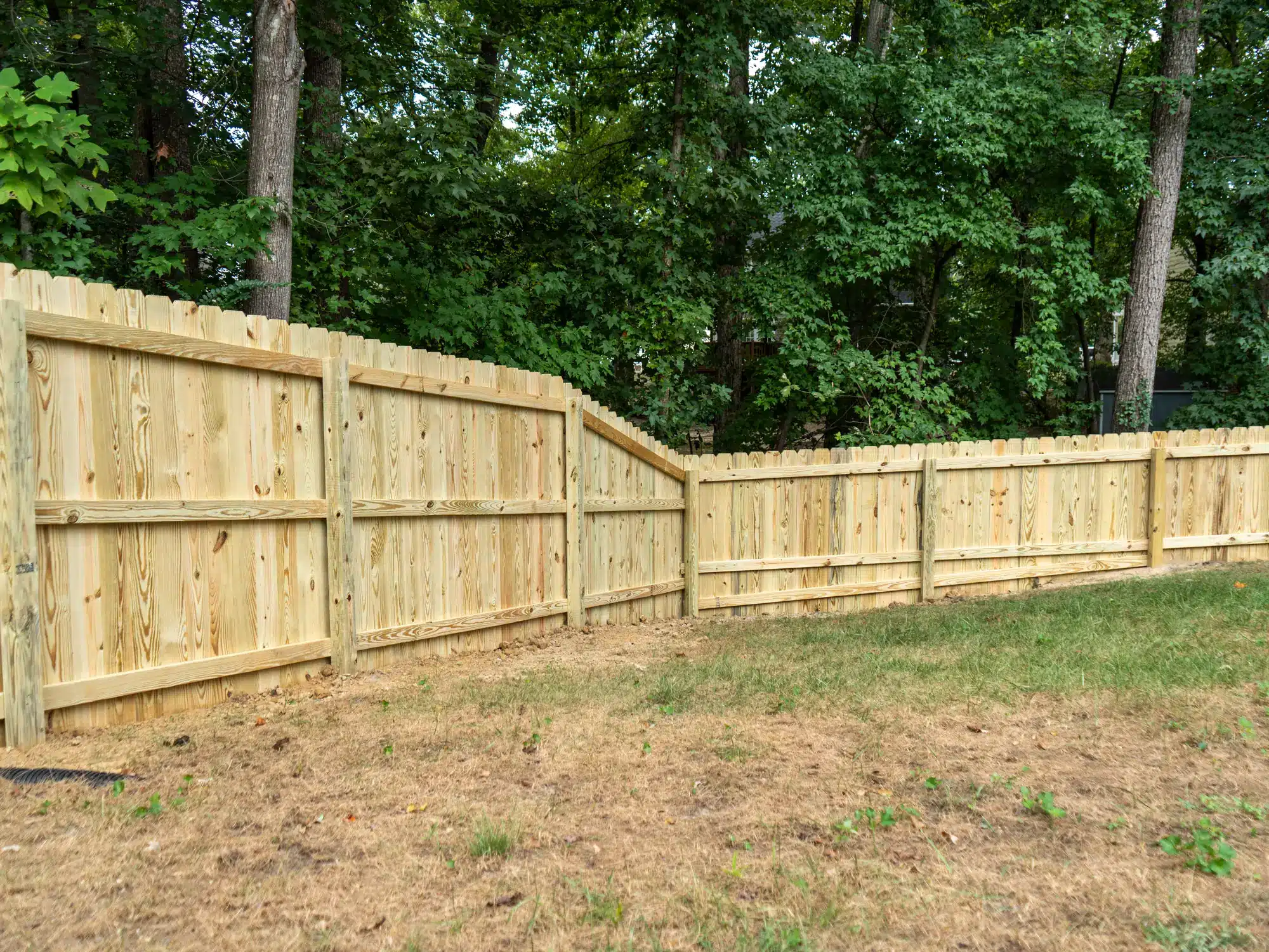
For one Chesterfield home, we built a classic dog-ear fence in pressure-treated pine that wraps the full backyard. A wide double gate on black strap hinges closes off the side yard, and it opens wide enough for mowers and wheelbarrows. We set every post plumb and let the picket tops follow the gentle roll of the yard. The install took 1 day.

See the full Chesterfield wood fence project for more photos.
Wood Fence Cost FAQ
Is Cedar Worth the Extra Cost Over Pressure-Treated Pine?
It depends on what you value. Cedar heartwood resists decay without chemical treatment and weathers to an even silver gray. Pressure-treated pine costs less and holds up well with ground contact posts. If budget leads, choose pine. If looks and natural durability lead, cedar earns its price.
How Much More Does an 8 Foot Wood Fence Cost?
More than the extra 2 feet suggests, because it needs longer posts, deeper holes and often a third rail. Before you price one, check your county zoning rules, since height limits can vary by where the fence sits on your lot.
How Long Does It Take to Install a Wood Fence?
Most of our installs take 1 to 2 days. Still, slopes, tight access and the number of gates can add time. Our guide on how long it takes to install a wood fence in Virginia covers the full timeline.
Why Do Gaps Appear in a New Wood Fence?
Treated lumber is often wet when it goes up, and it shrinks across its width as it dries. So small gaps between side-by-side boards are normal. If you want full privacy, choose shadowbox or board-on-board, since both overlap the boards.
What Is the Lowest Cost Wood Fence?
A short picket fence in pressure-treated pine usually costs the least, since it uses the fewest boards. For privacy, a side-by-side dog-ear fence in treated pine is the budget pick. Untreated spruce panels cost less at first, but spruce has little natural decay resistance, so they rarely last as long.
Get a Free Wood Fence Quote
Good Neighbor Fence has been family owned since 2006, with 400+ five-star Google reviews, and most installs take 1 to 2 days. Explore our wood fence installation options, then request a fast, free quote or call (804) 737-4664 in Central Virginia or (540) 506-4835 in Northern Virginia.