

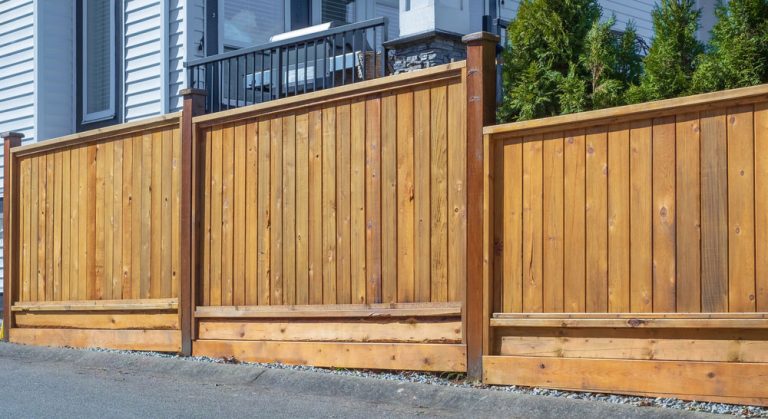
In the prefab vs stick built fence decision, the main difference is where the fence comes together. Premade panels come from a factory in set sizes, so they go up fast on flat, simple lots. A crew frames a stick built fence board by board in your yard, so it can follow slopes, curves and odd property lines.
So panels can make sense for a quick DIY job on level ground. But if your yard has any grade, or you want a custom look, stick built usually fits better. Here’s how the two compare, and why Good Neighbor Fence stick-builds every wood fence we install.

What Are Premade Fence Panels?
Premade fence panels, also sold as pre-built or prefab fence panels, are complete sections that a factory puts together for you. The most common are wood privacy fence panels with the pickets already fastened to the rails. You set the posts, then hang each panel between them.
Home centers and lumber yards sell panels in standard heights and widths. Because the factory does the framing, they take less labor on site. That speed is the main reason DIYers choose them.
Where Prefab Fence Panels Work Well
- Flat, level yards with long, straight runs
- Short screens, for example around trash cans or an AC unit
- DIY projects on a tight schedule
- Simple styles that a store already stocks
Where Panels Fall Short
Panels are rectangles, and most yards aren’t flat. On a slope, each panel has to step down from the one above it. That leaves a triangle-shaped gap under each section, where pets and small animals can slip through. This is where the prefab vs stick built fence choice matters most.
Panel widths also set your post spacing. If a run doesn’t divide evenly, you’ll need to cut a panel down and re-fasten its pickets. You are also stuck with the styles the store carries.
Quality varies by brand, so look closely before you buy. Compare the picket thickness, the rail size and the fasteners. Then check the treatment tag, which we cover below.
What Is a Stick Built Fence?
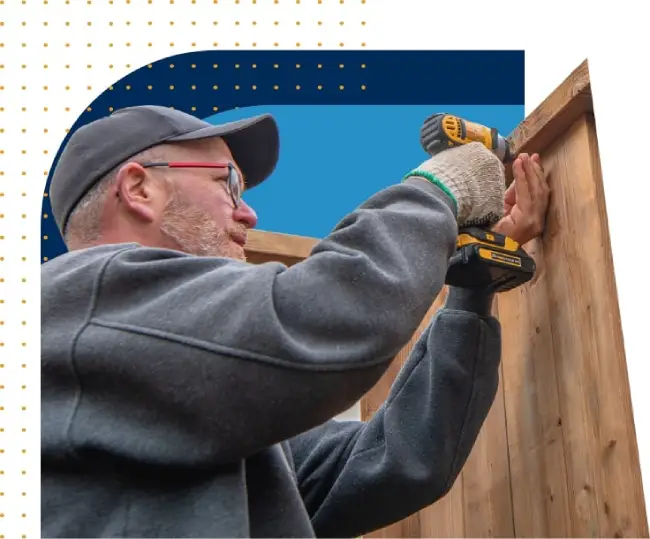
A crew builds a stick built fence piece by piece on site. First, it sets the posts. Next, it attaches the rails and pickets one at a time, cutting each part to fit. Because every board goes up in your yard, the fence can rake with the ground, bend around trees and fit any run length.
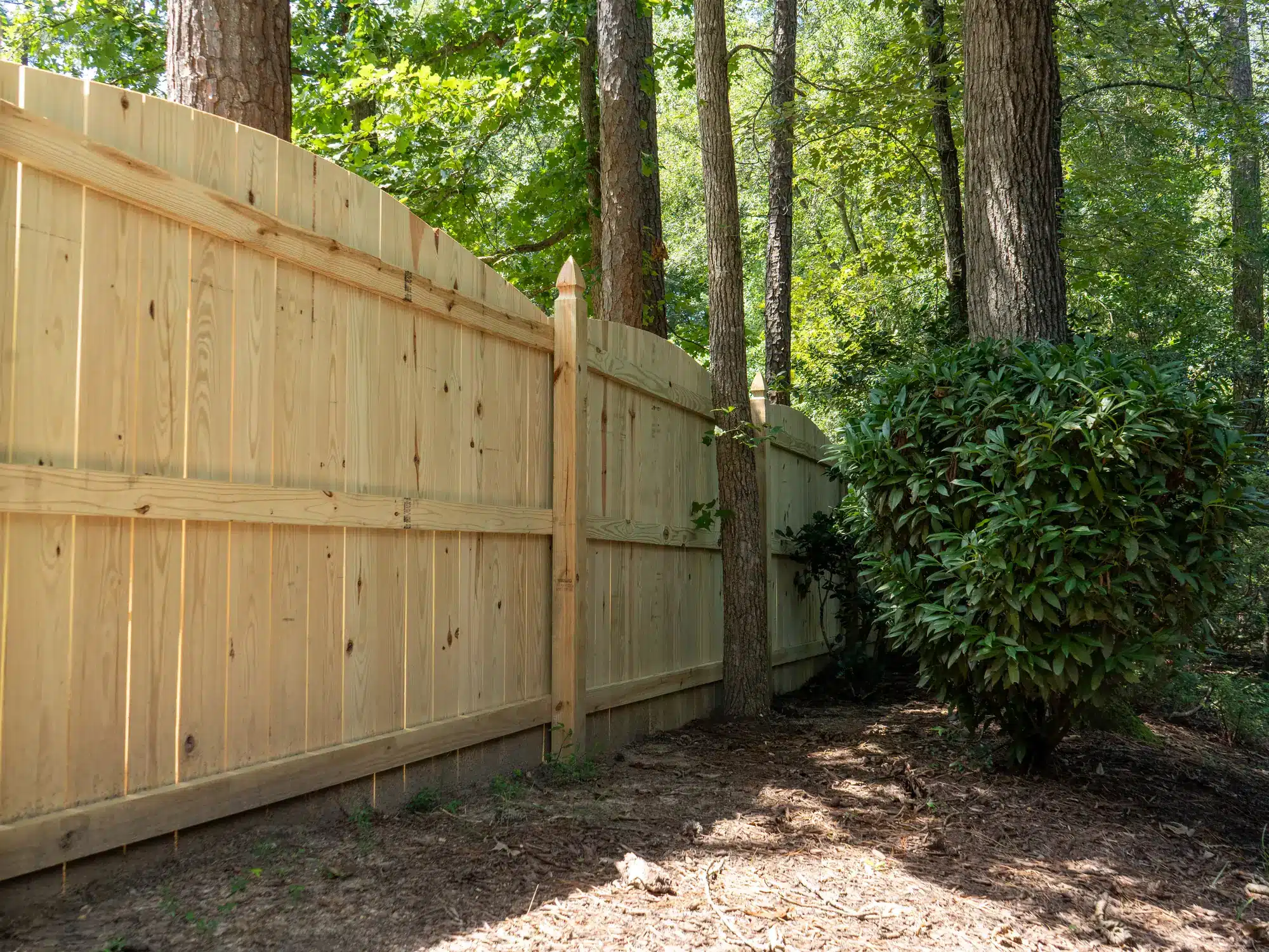
That flexibility also closes the gap at the bottom. On a sloped lot, the rails can follow the grade while the pickets follow the ground line. So the fence hugs the yard instead of stepping over it.
The tradeoff is labor. Building on site takes more skill and more hours than hanging panels. For a sense of timing, see our guide to how long a wood fence install takes.
Custom Styles Start With a Stick Built Fence
Board-on-board, shadowbox, horizontal and lattice top designs are all easier to build on site. You also pick the exact height, picket spacing and post caps. Our guide to wood fence spacing for privacy and our horizontal wood fence ideas show what’s possible.
Prefab vs Stick Built Fence: Side by Side
Here’s how the two methods stack up on the points homeowners ask about most.
- Assembly: A factory builds the panels. A crew frames a stick built fence in your yard.
- Slopes: Panels step down and leave gaps. On-site framing can follow the grade.
- Design: Panels come in stock styles. On-site builds can be almost any style or height.
- Labor: Panels go up faster. Building on site takes more skilled hours.
- Fit: Panels come in fixed widths. Stick building fits runs of any length.
Price depends on the job. Panels can save labor on a flat, simple run. But slopes, cut-down sections and custom styles add time either way. Our guide to wood fence pricing explains what drives the total.
What Makes Either Wood Fence Last
Build method matters, but the parts matter more. A stick built fence with weak posts won’t outlast a well-set panel fence. So check these details either way.
Posts Rated for Ground Contact
Posts sit in damp soil, so they need a stronger treatment than pickets. The American Wood Protection Association use category chart lists posts at Use Category 4A or higher, the level meant for ground contact. Fence pickets only need Use Category 3B or higher. So read the end tag on every post and panel you buy.
Deep, Well-Set Posts
Even good posts fail if they sit too shallow. Quikrete’s post-setting guide calls for a hole depth of one third to one half of the post’s height above ground, plus 6 inches. It also calls for a hole about three times the post’s width, with 6 inches of gravel at the bottom.
Before you dig, contact Virginia 811. It asks for at least 3 working days’ notice, even for fence posts, and the marking service is free.
Fasteners Made for Treated Wood
Treated lumber is hard on the wrong metal. The Western Wood Preservers Institute fastener guidance calls for hot-dip galvanized steel, stainless steel, silicon bronze or copper fasteners wherever they touch treated wood. Ask what a panel maker used, and match it when you add or swap boards later. Our post on screws for a wood fence covers sizes.
How to Choose Between Premade Panels and Stick Built
The prefab or stick built fence choice comes down to your yard, your time and your style. Premade panels may suit you if your yard is flat, you’re doing the work yourself, and a stock style looks right. A stick built fence is the better fit if your yard slopes, you want a custom style, or you don’t want gaps under the fence.
Either way, check your HOA and county rules on height and style before you order anything. Our tips for installing a fence in an HOA walk through that step. If you’re still deciding on wood at all, read our look at wood fence pros and cons.
Why We Stick-Build Every Wood Fence
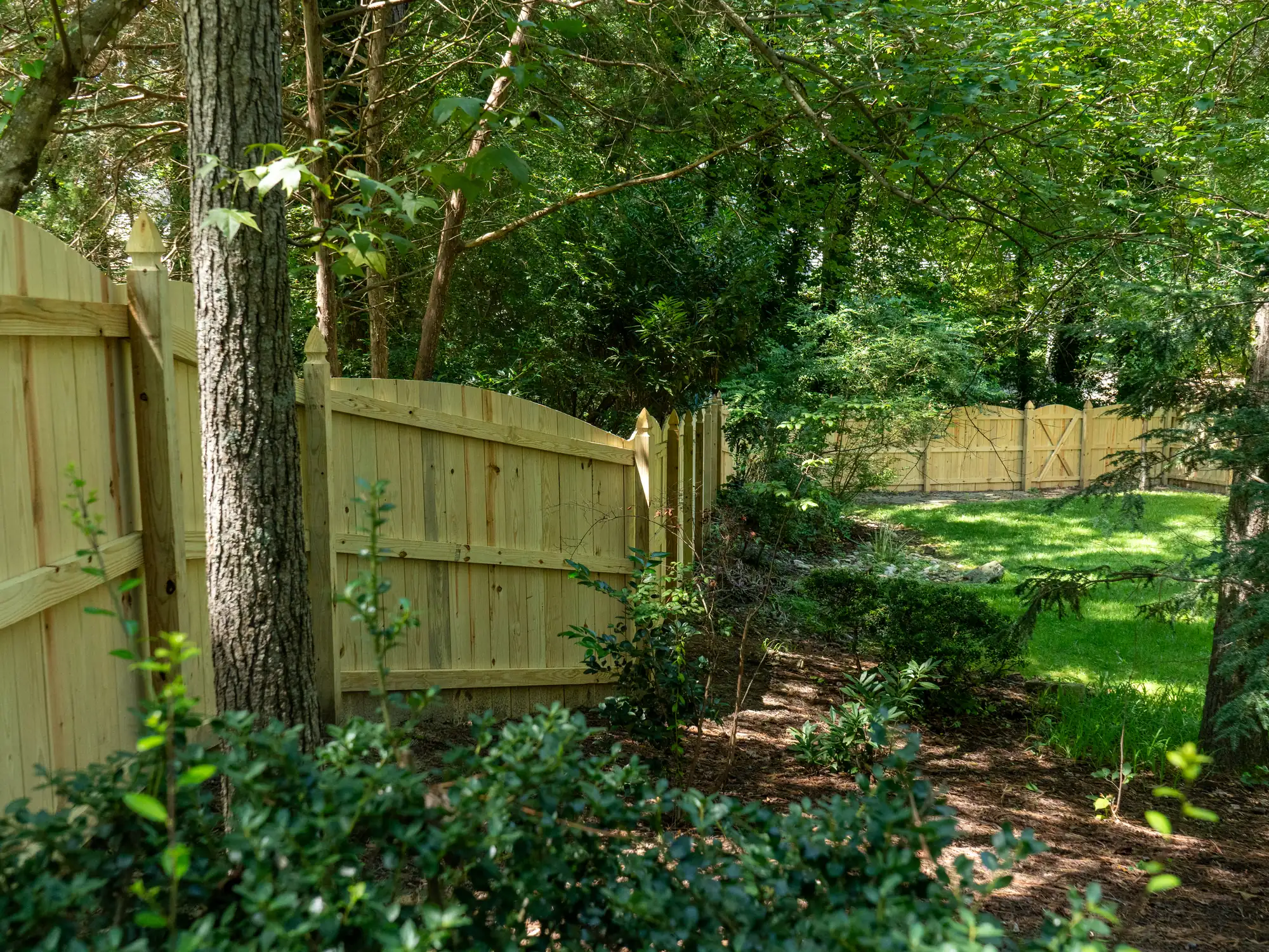
At Good Neighbor Fence, we custom build every wood fence on site, with no prefab panels. We fit each fence to the landscape, so there are no gaps underneath. For example, we shaped each section of this framed wood fence for a Powhatan home to suit the house and the land around it.
Get a Stick Built Wood Fence Quote in Richmond
Good Neighbor Fence is a family-owned company that has served the Greater Richmond area since 2006, with 400+ five-star Google reviews. We handle wood fence installation in Richmond and across Central Virginia.
Request a fast, free quote, and we’ll walk the line, check the grade and price a stick built fence that fits it. If you’re still weighing a prefab vs stick built fence, we’re happy to talk it through. Ask about our 0% APR financing promotions, or call us at (804) 737-4664.