


In a vinyl vs wood fence matchup for privacy, vinyl usually lasts longer with less upkeep. It can’t rot, and its boards lock together with no gaps between them. Pressure-treated wood costs less up front and looks natural, but it needs ground-contact posts and regular sealing to hold up in Virginia’s humid summers.
So the right choice depends on your yard, your budget and how much care you want to give a fence. Below, we compare the two on the things that decide privacy: gaps, height, heat and humidity, upkeep, looks and cost. If you’d rather talk it through for your own lot, request a fast, free quote.
Vinyl vs Wood Fence at a Glance
| Factor | Vinyl privacy fence | Wood privacy fence |
|---|---|---|
| Gaps between boards | Tongue-and-groove boards lock together, so gaps stay closed | Boards shrink as they dry, so overlapping styles work best |
| Gaps under the fence | Rigid panels step down slopes and can leave triangles | Stick-built boards can follow the ground |
| Height | Set panel heights from the maker | Cut to any height your zoning allows |
| Rot and insects | Does not rot, and termites have nothing to eat | Needs treated or decay-resistant wood and ground-contact posts |
| Upkeep | A wash at least once a year | Cleaning plus sealer or stain every few years |
| Up-front cost | Usually higher than pressure-treated pine | Pine is usually the lower-cost option; cedar costs more |
| Look | Clean, uniform color | Natural grain that weathers to gray unless sealed |
Relative cost depends on height, footage, gates and the site. A fast, free quote gives you a real number.
Which Lasts Longer: Vinyl or Wood?
In most vinyl vs wood fence comparisons, lifespan comes down to moisture. The USDA Forest Products Laboratory’s Wood Handbook explains that serious decay happens only when wood stays wet, above its fiber saturation point. It also notes that untreated sapwood of nearly every species resists decay poorly. Fence posts sit in damp soil all year, so they are usually the first part of a wood fence to fail.
That’s why the lumber grade matters so much. The American Wood Protection Association says ground contact calls for wood treated to Use Category 4A (UC4A) or higher. So ask for ground-contact posts by name, and check the end tags when the material arrives. Our guide to pressure-treated wood for fences explains the ratings.
Vinyl can’t rot, and termites won’t touch it. Still, quality varies by maker. ASTM F964 is the standard for rigid PVC fence profiles, and it covers extrusion quality, dimensional tolerances and weatherability. One manufacturer, Bufftech, backs its smooth vinyl fence line with a transferable limited lifetime warranty. Read what any warranty covers, though, because coverage is not the same as a promise about lifespan.
Wood can still give you many good years. A pressure-treated fence with UC4A posts, set in holes that drain and sealed on schedule, holds up well in Central Virginia. But if sprinklers soak the boards and nobody seals them, expect soft wood at the base of the posts first.
Tell us about your yard and get a fast, free quote for the fence you want.
- Family owned since 2006
- Most installs take 1 to 2 days
- Financing from 0% APR for qualified buyers
or call (804) 737-4664
Privacy and Gaps: Where Each Material Wins
Gaps Between Boards
Wood moves with the weather. The Wood Handbook notes that wood shrinks and swells mostly across the grain as its moisture content changes with the seasons. Treated pine often arrives wet, so boards butted tight on install day can open thin gaps by fall. That’s why our guide to wood fence spacing matters before you build.
Overlapping styles solve the problem. Board on board keeps the view blocked even after the boards shrink, while a shadowbox layout blocks straight-on views and lets some air through. Our good neighbor privacy fence in Richmond uses alternating boards, so both sides look finished.
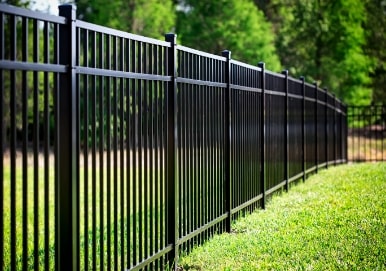
Vinyl privacy panels don’t have that problem. Most use tongue-and-groove boards that fit together tightly, so the screen stays solid for the life of the fence. Our Chesterfield vinyl privacy fence shows that look at 6 feet.
Gaps Under the Fence
The bottom edge matters as much as the boards. Vinyl panels are rigid rectangles, so on a slope they usually step down the hill, and each step can leave a triangle of open space underneath. Bufftech’s installation guide, for example, describes both stepping and racking, and its racking method is for slopes of 10 degrees or less.
Wood handles uneven ground better when it’s built in place. Good Neighbor Fence wood fences are custom stick-built on site and fitted to the landscape, with no gaps under the fence. That matters if you have a small dog, or if you want the yard to feel closed in right down to the grass.

Alternating boards give a Richmond home full privacy and a finished face on both sides.
Height Options for a Private Yard
Both materials reach typical privacy heights, but they get there differently. Vinyl comes in set panel heights, and taller systems need deeper posts. The same Bufftech guide calls for 30 inch post holes (or holes to the frost line) on standard installs and 48 inch holes for 8 foot privacy fences.
Wood is cut to fit, so the height can match your grade and the view you need to block. You can also add a lattice top to either material. Our tall wood fence ideas and vinyl fence topper ideas show what extra height looks like.
Before you pick a height, check local zoning and any HOA covenants. Virginia’s building code exempts most fences from a building permit, except pool barriers and pedestrian safety fences. Zoning still caps fence height, often lower in front yards, and our tips for building a fence in an HOA cover the approval side. For the actual limits in Richmond, Henrico, Chesterfield, Hanover and Stafford, see our guide to privacy fence height in Virginia.
How Heat and Humidity Treat Vinyl and Wood
Central Virginia summers are hot and humid, and that’s hard on wood. The Wood Handbook says most decay fungi grow best around 77 degrees Fahrenheit, so warm, damp months are when wood is most at risk. Shaded fence lines that never fully dry after a storm take the most abuse, especially at the post bases and bottom boards.
Vinyl doesn’t mind humidity, but it does move with heat. It expands on hot days and contracts in the cold, so installers leave room for that movement. Bufftech’s guide has installers cut panels half an inch shorter than the stiffeners to allow for expansion and contraction. Solid panels also catch wind, so read up on how much wind a vinyl fence can take before you choose a height.
Upkeep: The Real Difference Over Time
Upkeep is where the vinyl vs wood fence gap grows every year. Vinyl mostly needs a wash. VEKA’s care guide recommends cleaning at least once a year with a garden hose, a soft brush and a mild cleaner, and it warns against bleach and harsh solvents. Our vinyl fence maintenance tips walk through the routine.
Wood needs more attention. Plan to clean it and apply a sealer or stain every few years, and walk the line each spring for loose boards, popped fasteners and soft spots at the posts. Our guide to sealing a wood fence covers timing and products. If you’d rather skip that work, vinyl gives you those weekends back.
Looks and Style
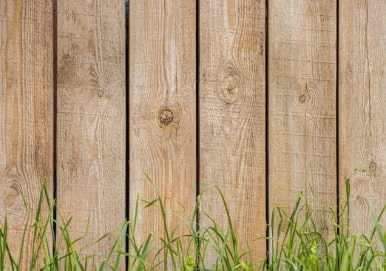
Wood gives you grain, warmth and a look that suits older Richmond neighborhoods and wooded lots. Left alone, it weathers to a soft gray, or you can stain it the color you want. Styles run from dog ear to board on board, horizontal slats and lattice tops.
Vinyl gives you a clean, uniform finish. White is the classic choice, but tan, gray and wood-grain textures are common too, and quality panels include UV protection to resist fading. Our guide to vinyl fence colors shows the range.
What Drives the Cost of Each
Pressure-treated pine is usually the lower-cost way to build a privacy fence up front, while vinyl and cedar usually cost more to install. After installation, though, the picture shifts. Wood adds sealing and the odd board replacement, while vinyl care is mostly a hose and an afternoon. These factors move the price of both:
- Material grade: post size, board thickness and, for vinyl, wall thickness and rail reinforcement
- Height and style: taller fences and overlapping styles use more material
- Footage and gates: total length, corners and every gate in the project
- Ground and access: slopes, roots, rock and tight side yards take more time
- Removal: tearing out and hauling away an old fence
For the details, see our breakdowns of vinyl fence cost and what a wood fence costs. If you want to spread out payments, financing through Wisetack starts at 0% APR for qualified buyers.
Vinyl and Wood on One Property
You don’t have to pick one material for the whole yard. On a Hopewell waterfront project, we ran 6 foot wood dog-ear privacy along the side property lines. Beside the house, we installed white Kinsale vinyl with a band of black aluminum balusters on top. The wood screens the neighbors, while the balusters let the river view show through.

It works because each run has one clear job: full privacy where neighbors are close, and an open top where the view matters.
Vinyl vs Wood Fence: How to Decide
- Choose vinyl if you want the longest-lasting privacy with the least upkeep, your yard is fairly level, and a clean, uniform look suits your home.
- Choose wood if you want a lower up-front cost, a natural look, custom heights, or a fence that follows sloped ground with no gaps underneath.
- Consider both if your property needs different things on different sides.
Next, look through our vinyl fence installation and wood fence installation pages, or browse the privacy fence styles we build across Central Virginia. Our guide to privacy fence ideas covers more styles and materials.
Vinyl or Wood Privacy Fence FAQ
Does a vinyl privacy fence last longer than wood?
Usually, yes. Vinyl cannot rot or feed termites, and makers back it with long warranties. A wood fence with ground-contact posts and regular sealing can still last many years, but it needs more care to get there.
Is vinyl or wood more private?
Both give full privacy at the same height. Tongue-and-groove vinyl stays gap-free, while wood needs an overlapping style such as board on board to stay fully private as the boards shrink.
Which works better on a sloped yard?
Wood, in most cases. A stick-built wood fence can follow the ground with no gaps under it, while most vinyl privacy panels step down a slope and leave small triangles at the bottom. Our guide to the best fence for a sloped yard covers every option.
Which costs less to install?
Pressure-treated pine usually costs less up front than vinyl. To compare fairly, get quotes for the same height, footage and number of gates.
Get a Free Privacy Fence Quote
Still weighing a vinyl vs wood fence for your yard? Good Neighbor Fence has been family owned since 2006, has 400+ five-star Google reviews, and finishes most installs in 1 to 2 days. Request a fast, free quote, or call (804) 737-4664 in Central Virginia or (540) 506-4835 in Northern Virginia.
Home of the 6 foot white vinyl privacy fence at the top of this post.
Older neighborhoods and wooded lots, where natural wood grain suits the house.
Up to 8 feet in side and rear yards. Call (540) 506-4835.