

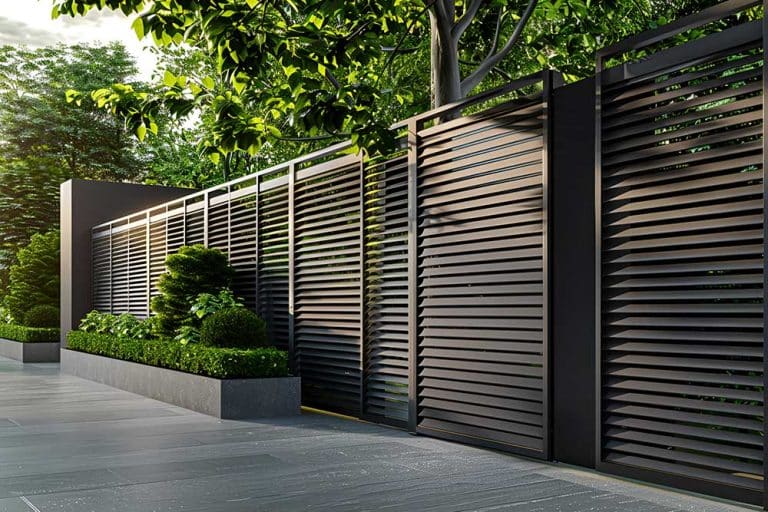
The five aluminum fence parts you need are posts, panels, mounting brackets, gate hardware and fasteners. Posts anchor the fence, panels of rails and pickets fill each section, and brackets and screws tie it all together.
Most residential aluminum fences arrive as factory-built panels. So the factory decides much of the quality before anyone digs a hole, and knowing what to look for helps you compare quotes with confidence.
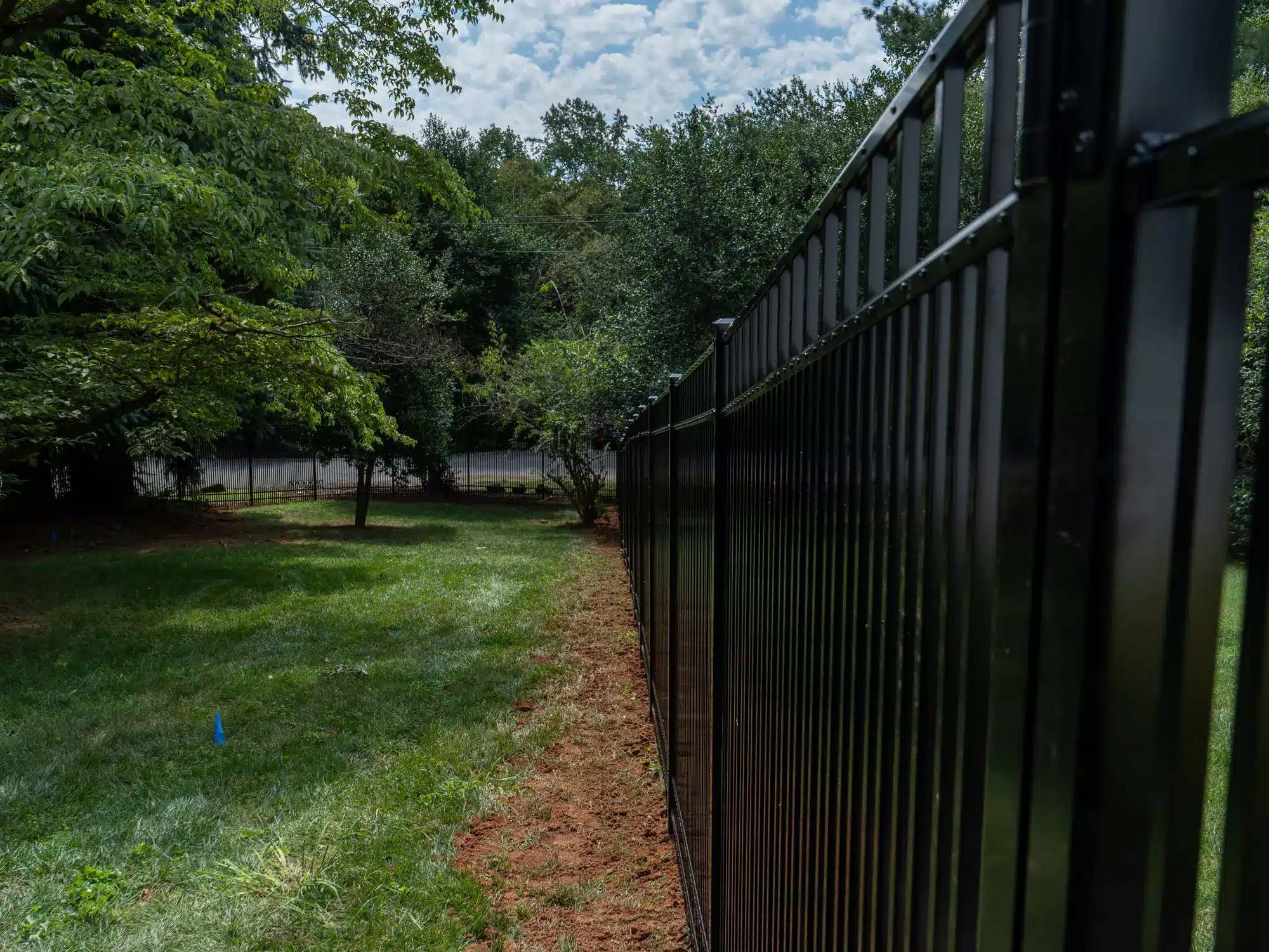
Aluminum Fence Parts at a Glance
Here’s what each of the five main aluminum fence parts does:
- Posts: square hollow posts set in the ground that carry each panel.
- Panels: prebuilt sections of horizontal rails and vertical pickets.
- Brackets or routed posts: the connections that join each panel to its posts.
- Gate hardware: hinges and latches that let a gate swing and close.
- Fasteners: the screws that lock brackets, rails and hardware in place.
The Main Parts of an Aluminum Fence
Posts
Posts carry every panel, so their size and wall thickness matter. Line posts sit between panels, while corner, end and gate posts handle turns, stops and the weight of a swinging gate.
Manufacturer specs show how much posts can vary. For example, the published OnGuard specifications list residential line posts at 2 inches square with a 0.060-inch wall. Residential gate posts step up to a 0.075-inch wall. Then commercial posts use a 0.125-inch wall, with 3-inch gate posts. So ask which grade your quote includes, especially for gate posts.
Post depth depends on fence height, soil and the frost line, and installers typically set aluminum posts in concrete. A plumb, solid post keeps the panels level and the gate swinging true.
Panels: Rails and Pickets
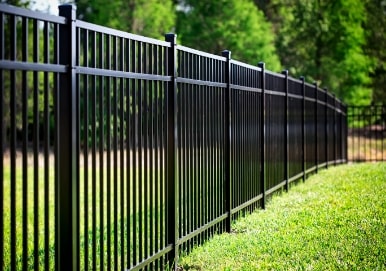
Panels, also called sections, combine the rails and pickets into one unit. Most styles have two or three horizontal rails, with vertical pickets running through them. Common looks include flat top, spear top and puppy picket styles with extra pickets at the bottom.
Picket size is another quality marker. The same OnGuard sheet lists 5/8-inch square pickets for residential panels and 3/4-inch pickets for commercial ones. Many panels are also rackable, which means they can shift to follow a gentle slope instead of stepping down. For a finished example, see this aluminum fence for a Richmond home.
Mounting Brackets and Routed Posts
Panels connect to posts in one of two ways. Some systems use brackets that screw to the post and hold the rail ends. Others use routed posts, where the rails slide into punched holes and screws lock them in place.
Brackets make it easier to handle angles and uneven ground, and some swivel for corners that aren’t square. Routed posts give a cleaner look with fewer visible parts. Either way, the connection needs to be tight so panels don’t rattle in the wind.
Gate Hardware
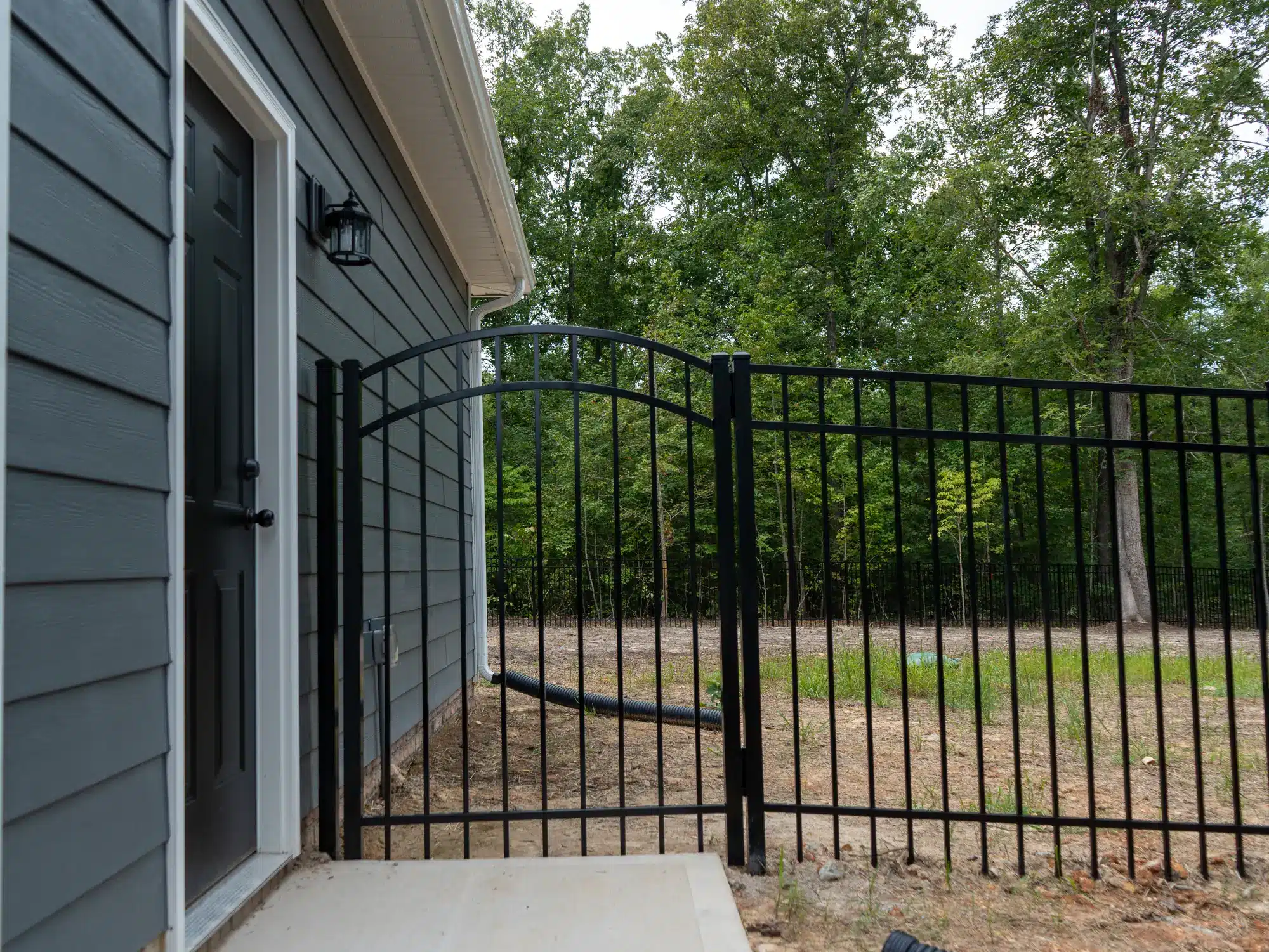
Aluminum gates use hinges, a latch and sometimes a drop rod to hold a double gate in place. Self-closing hinges pull the gate shut behind you, which helps if you have kids or pets.
Gates see more wear than any other section, so the gate posts and hinges should match the gate’s width and weight. We build gates as part of a full fence project, and our guide to gates and security covers more options.
Fasteners
Screws hold brackets, rails and hardware together, and plain steel screws can rust and streak a dark fence. OnGuard’s spec sheet lists stainless steel screws painted to match the fence. That’s a good benchmark to ask about.
Finishing Aluminum Fence Components: Caps and Coating
Post caps close off the open top of each post and keep out water and debris. Flat caps give a clean, modern line, while ball and pyramid caps add a more traditional look.
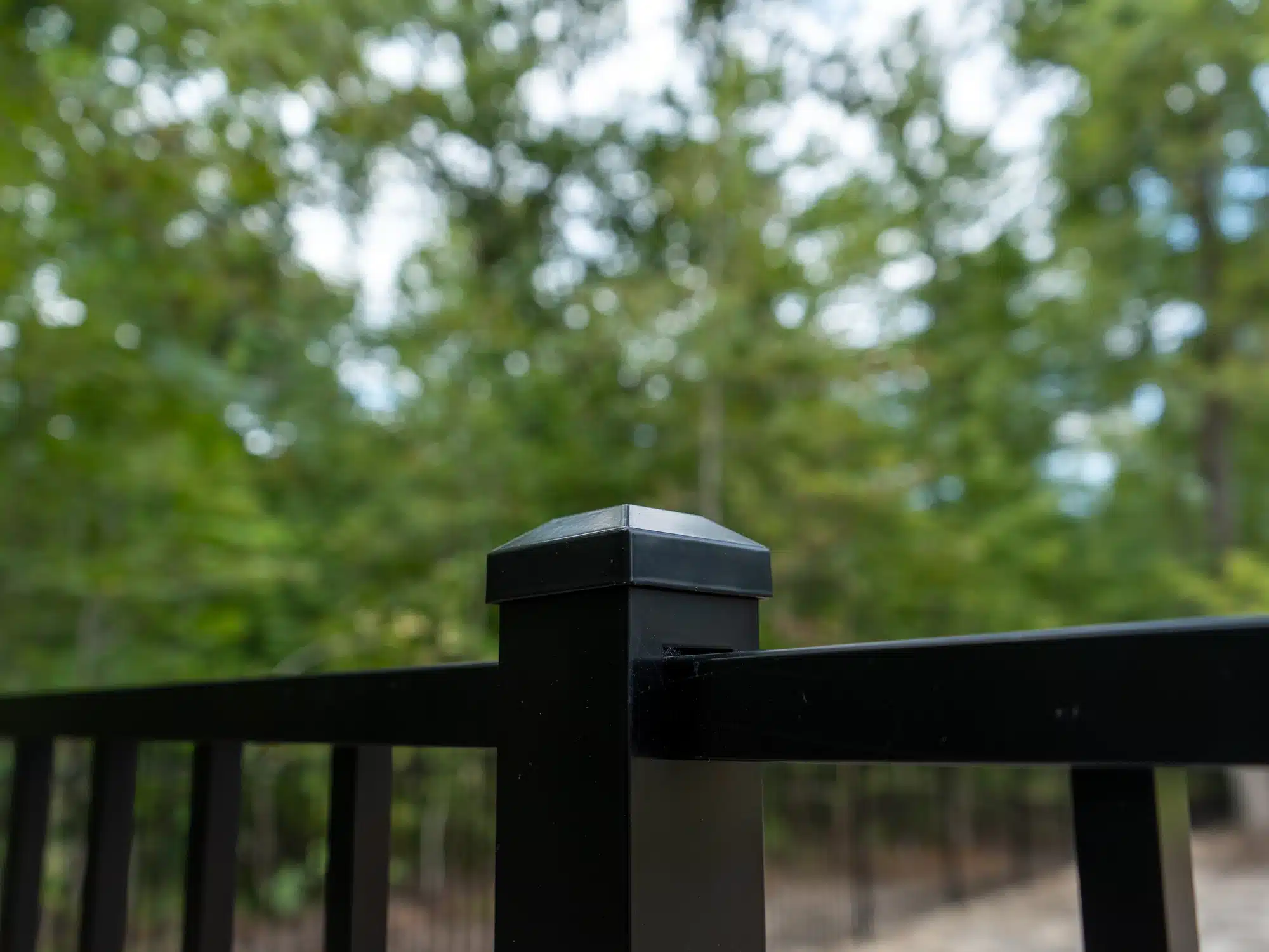
The finish matters just as much. Aluminum doesn’t rust, but the powder coat is what keeps the color even. OnGuard specs a TGIC polyester powder coating for fade and scratch resistance, so ask what coating your fence uses.
That low upkeep is one reason aluminum stays popular. For more on long-term care, see our overview of fence maintenance and our breakdown of aluminum fence costs.
What Makes Aluminum Fence Parts Pool Safe?
Aluminum is a common choice around pools, but the parts have to meet barrier rules. The U.S. Consumer Product Safety Commission’s pool barrier guidelines call for a barrier at least 48 inches high. When horizontal rails sit 45 inches or more apart, the gaps between pickets should not exceed 4 inches. If the rails are closer together, that limit drops to 1 3/4 inches.
Gates need to be self-closing and self-latching under the same guidelines. Local codes can add their own rules, so read our guide to Virginia pool fence rules and see these pool fencing ideas.
How Aluminum Compares With Wood and Vinyl Fence Parts
Wood fences use more pieces, including rails, pickets, cap boards and kick boards that crews build board by board. Vinyl fences use hollow posts with routed holes and often hide metal reinforcement inside. Compare our guides to wood fence parts and vinyl fence parts to see how each system goes together.
If you’re still choosing a material, the pros and cons of each fence type lays out the tradeoffs side by side.
Plan Your Aluminum Fence With Good Neighbor Fence
Good Neighbor Fence has been a family-owned business since 2006, with more than 400 five-star Google reviews. We install aluminum fences across Richmond, Chesterfield, Henrico and nearby counties. Tell us about your yard, and we’ll help you pick the right grade, height and style.
Learn more about our aluminum fence installation, explore fence financing, or request a fast, free quote online. You can also call us at (804) 737-4664.