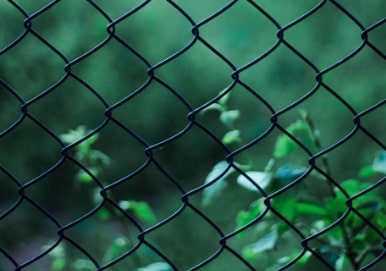



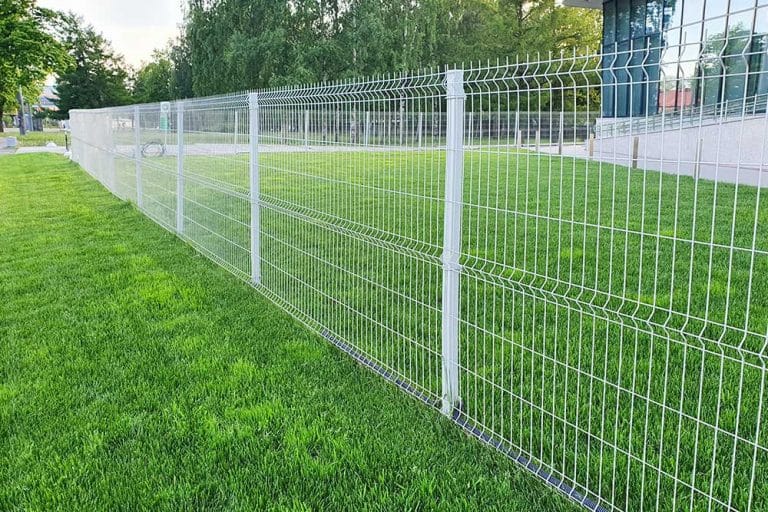
A wood and wire fence pairs wood posts and rails with wire mesh. You get a rustic, open look that still holds in pets or keeps out garden pests.
Below are four ideas that suit Central Virginia yards and small farms, plus tips on choosing wire and posts that last.
What Is a Wood and Wire Fence?
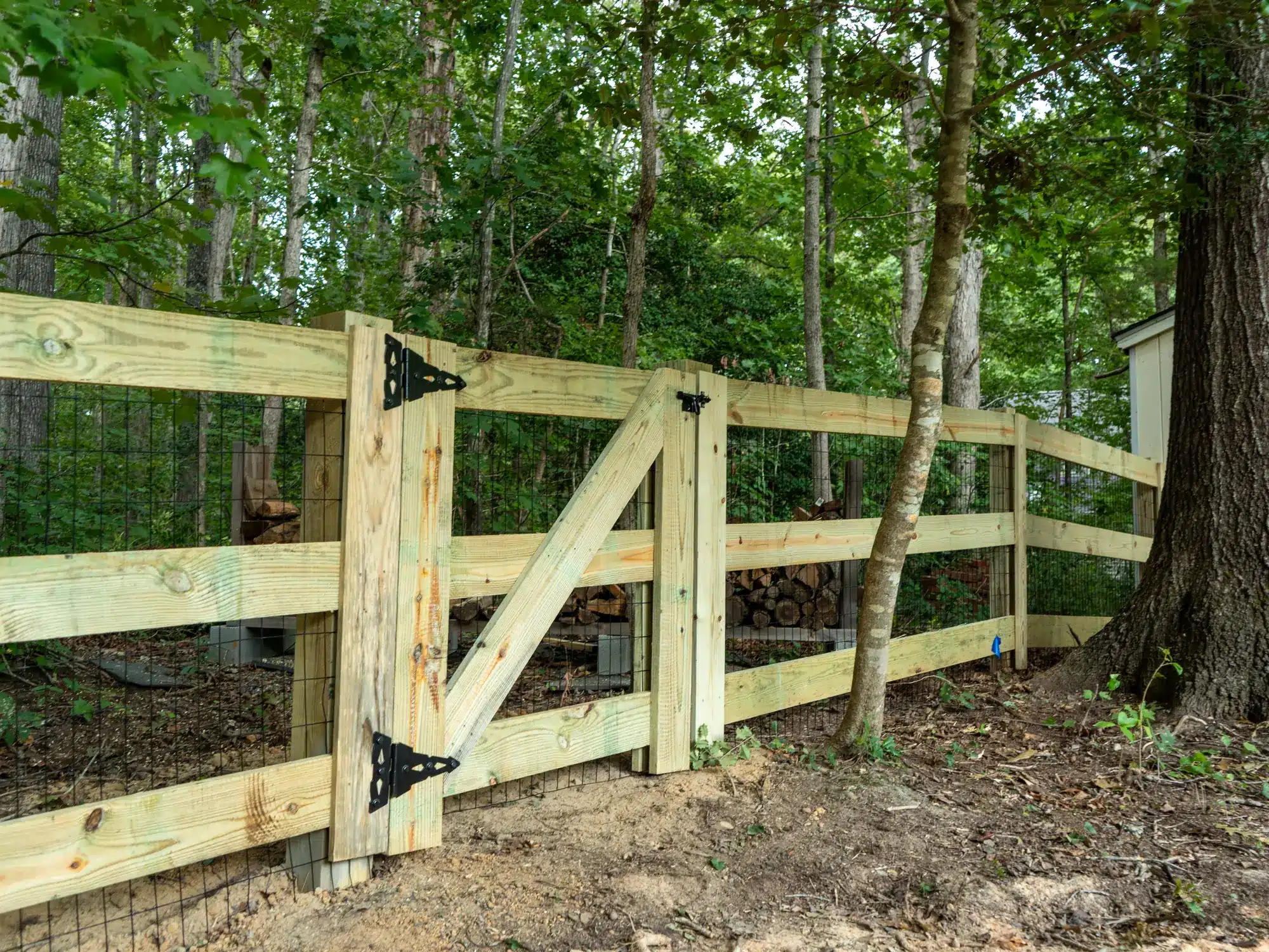
It’s a fence with a wood frame and wire infill. The wood carries the structure and gives the fence its look. The wire, fastened to the inside face, closes the gaps so dogs, livestock or rabbits can’t slip through.
Because the mesh is open, the fence keeps your view and lets air and light through. That’s why it fits rural lots, garden beds and anywhere a solid privacy fence would feel too heavy.
4 Wood and Wire Fence Ideas
1. Wire-Backed Paddock
A wire-backed paddock fence adds welded wire to a classic board fence with three or four rails. It’s one of the wood fence styles we build, and it gives you pet and livestock security without blocking the view. The boards give the fence its farm look, while the wire stops small dogs from squeezing between rails.
Horses need a different wire, though. The University of Georgia Extension’s horse fence guide calls for mesh with 2 x 4 inch openings. It also warns that welded wire joints don’t hold up under field conditions, so it doesn’t recommend welded wire for horses. A top board helps too, because it makes a mesh fence easier for horses to see.
Want to see the board fence without the wire? This 4-board paddock in Goochland shows the classic look. Also read our breakdown of horse fence costs in Virginia. The same wire backing works on a split rail fence.
2. Crossbuck With Mesh Backing
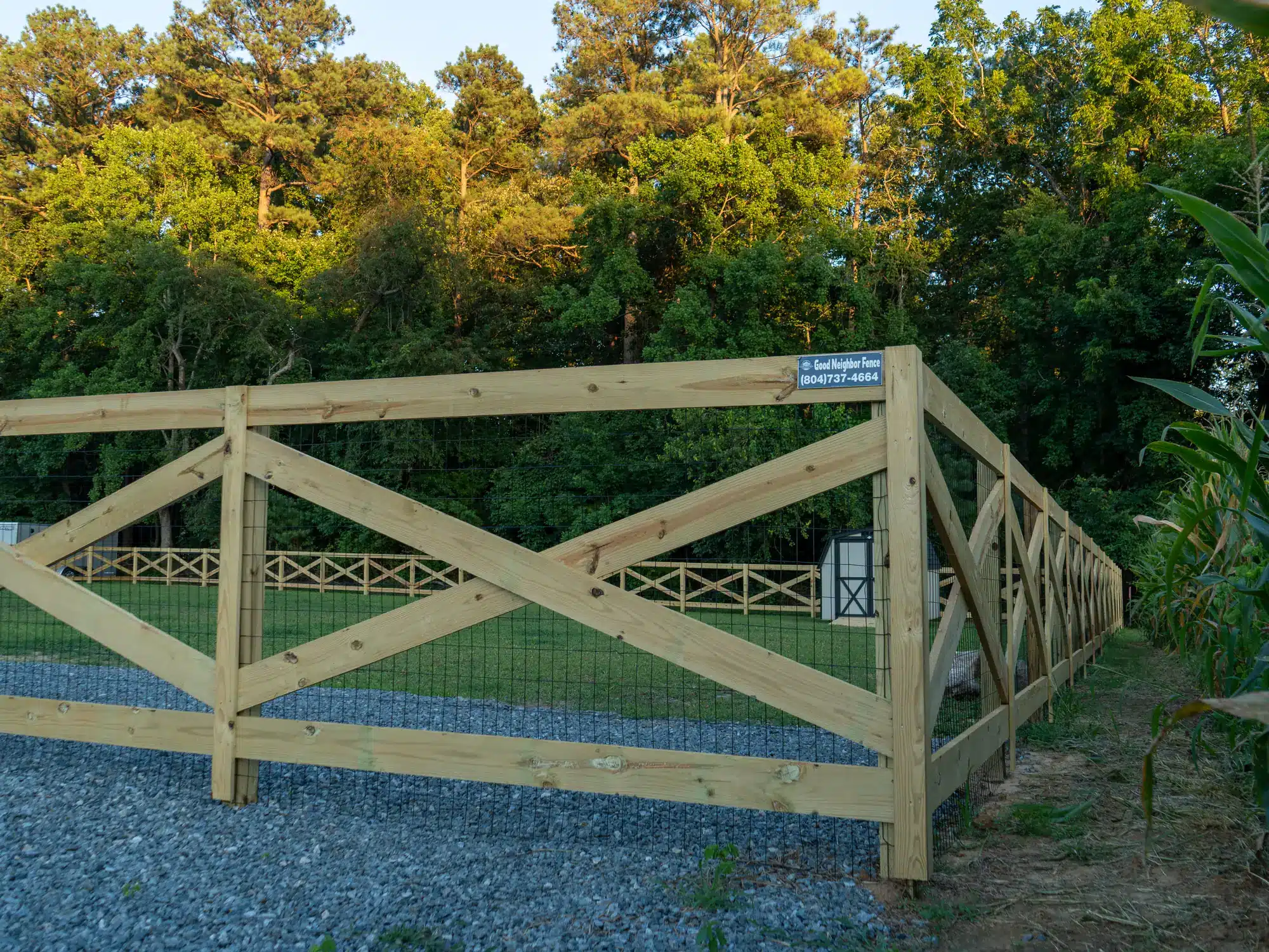
A crossbuck fence adds an X-shaped brace between the rails in each section, which gives it a classic barn look. We build crossbuck fences, and wire backing turns one into a working wood and wire fence for dogs or small animals.
The X braces make a strong statement along a driveway or road frontage. Since the wire sits behind the rails, the fence keeps its open, farmhouse feel.
3. Framed Hog Wire Panels
For a more modern rustic look, fill wood frames with rigid welded wire panels. It’s a popular wood and wire fence for newer homes, and people often call it a hog wire fence. Heavy panels stay flat, so they read as clean grids instead of floppy mesh.
Framed panels suit backyards, patios and dog runs where you want a clear edge but still want to see through. A cap board across the top finishes the frame. If a dog is the main reason for the fence, check our guide to the best fence for dogs first.
4. Wood and Wire Garden Enclosure

A walk-in garden enclosure uses a timber frame with wire mesh walls to keep deer and smaller pests off your plants. For one Virginia homeowner, we built a custom garden enclosure from natural timber and black-coated welded wire. Its pergola-style top gives climbing plants a place to grow, and the build took one day.
The black mesh fades into the greenery, so the garden still feels open. You still get sun, airflow and a clear view of your beds.
Choosing Wire for a Wood and Wire Fence
Wire choice matters as much as style for any of these rustic fence ideas, and it depends on what you’re keeping in or out. Welded wire is stiff and neat, which suits dogs, gardens and framed panels. Woven mesh holds up better under livestock pressure, which is why the UGA guide prefers it for horses.
Coatings matter too. Galvanized wire resists rust, and a black coating adds protection while helping the mesh blend into the landscape.
Mesh size is the last choice. Smaller openings stop smaller animals, so match the grid to the smallest pet or pest you’re dealing with.
Can a Wire and Wood Fence Keep Out Garden Pests?
Yes, if you build it for the pest you have. Groundhogs are a good example. Virginia Cooperative Extension recommends fencing with openings under 2 inches that stands 3 to 4 feet tall. Bury the bottom at least 1 foot deep, and bend another 8 to 10 inches outward into an L shape.
VCE also suggests bending the top 15 inches outward and leaving the fence a little loose, so groundhogs can’t climb over. Deer are harder, because they can jump a short fence. So plan for height if deer visit your yard, and see our garden fence guide and these farm fence designs for more options.
Posts and Lumber That Last
Every wood and wire fence depends on its posts. Since they sit in wet soil, they face the most decay. The USDA Forest Products Laboratory’s Wood Handbook treats direct soil contact as a severe decay hazard. So choose posts rated for ground contact.
Use corrosion-resistant fasteners, and check the mesh for sagging or loose staples when you walk the fence line. Our guide to wood fence parts and fence maintenance tips cover the details.
Plan Your Project With Good Neighbor Fence
Good Neighbor Fence has been a family-owned business since 2006. We build wire-backed paddock, crossbuck and custom wood fences across Richmond, Hanover, Goochland and nearby counties. Tell us what you need to keep in or out, and we’ll help you pick the right wood, wire and layout.
See our wood fence installation page, explore fence financing, or request a fast, free quote online. You can also call us at (804) 737-4664.