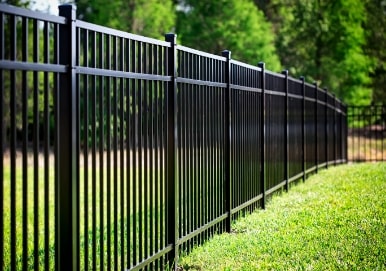



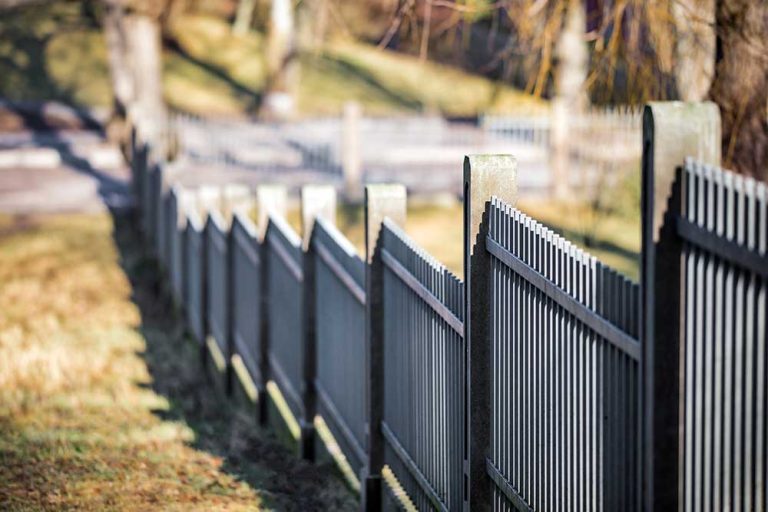
An aluminum fence on a slope or hill can follow the ground in one of two ways. The panels either rack (tilt) so the rails run parallel with the grade, or they step down the hill in level sections. Racking suits gentle to moderate slopes and leaves an even gap underneath. Stepping handles steeper ground, but it leaves triangle-shaped gaps under each panel that you’ll need to plan for.
The right choice depends on how steep your yard is, what the fence needs to keep in or out, and the look you want. The same choices apply to any metal fence on a slope. So before anyone orders panels, it pays to measure the grade, think about gaps and decide where the gate goes. Here’s how to work through each step.

Should You Rack or Step an Aluminum Fence on a Slope?
Racking is usually the first choice for an aluminum fence on a slope when the grade allows it, because the fence reads as one clean line. Stepping is the fallback when the ground is too steep or the style you want can’t rack. Here’s how each method works.
How a Racked Aluminum Fence Works
Rackable panels use rail and picket connections that can pivot. When you tilt the panel, the rails follow the slope while the pickets stay vertical. The result is a smooth top line and a consistent gap at the bottom. But every panel has a limit, and it varies by manufacturer and style, so check the rack spec against your grade before you order.
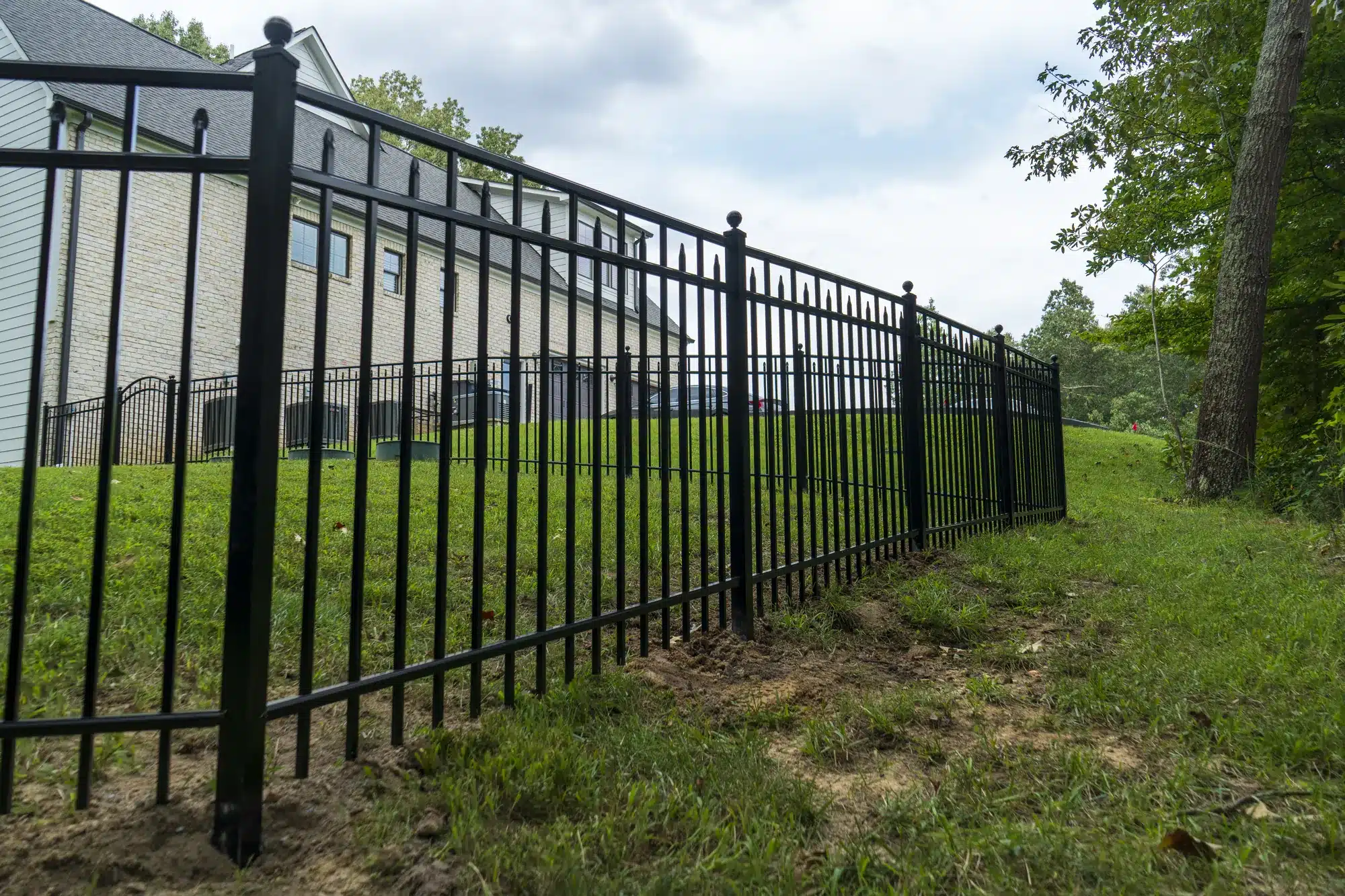
We used this approach on a Siskin style aluminum fence for a Chester new build. Behind the house, the ground falls away in a gentle grade toward a hardwood treeline, and the sections are racked to follow it. That keeps the top line smooth all the way to the woods.
How Stepping Works
Stepped panels stay level, and each one sits a little lower than the one before it, like stairs. This works on steep slopes and with styles that won’t rack. The trade-off is a triangle-shaped gap under the downhill end of each panel, and those gaps grow as the slope gets steeper.
Stepping also calls for longer posts, since each post has to hold one panel higher than the next. Plan for that when you compare quotes or order material.
When to Combine Both
Few yards drop at one steady angle. For example, a run might rack along a gentle stretch and then step where the ground falls off near a ditch or tree line. For steep but consistent slopes, some manufacturers can also build panels to match a specific grade.
How to Install an Aluminum Fence on a Slope
The install follows the same order as on flat ground, with a few changes for the hill. Work through it in three stages.
Step 1: Measure the Slope
Sizing up the grade is the first step in planning an aluminum fence on a slope, and you don’t need a transit to do it. First, drive a stake at the top and bottom of one section. Then tie a string to the uphill stake at ground level, pull it tight to the downhill stake and level it with a line level.
Now measure from the string down to the ground at the downhill stake. That number is the rise over one section. If it’s within the panel’s rack limit, racking will work. If it isn’t, plan to step that section or ask about custom panels. While you’re walking the line, also note dips, humps, roots, rock and spots where water runs after a storm.
Step 2: Set the Posts on Uneven Ground
Posts carry the load on any aluminum fence on a slope, so take your time here. Set the gate posts first, then work out from them. Measure each hole’s depth from the ground at that post, not from a level line, so uphill and downhill posts get the same embedment. Follow the manufacturer’s depth spec, set each post plumb, and let the concrete cure before you hang panels.
Before any digging starts, contact Virginia 811 at least 3 working days ahead so utility crews can mark buried lines. The service is free, and it applies to fence posts. If your soil is loose or washes out, a little gravel in the bottom of each hole helps drainage, and crowning the concrete sheds water away from the post.
Step 3: Rack or Step the Panels
How you hang the panels depends on the method. For example, Ultra Aluminum says its standard panels rack up to 4 inches per section, with rackable and heavy rackable panels for steeper grades. Other brands set their own limits, so compare the rise you measured with your panel’s spec.
On a stepped run, the panels on each side of a post attach at different heights, so each one sits level and a little lower than the last. Either way, stand back every few sections and sight down the line so the fence flows with the hill.
How Do You Close the Gaps Under a Sloped Fence?
Gaps under a sloped aluminum fence matter most when the fence has a job to do. Small dogs, rabbits and toddlers can all fit through a gap you might not notice from the patio. Pool fences are the strictest case. The CPSC pool barrier guidelines call for no more than 4 inches under the barrier on a solid surface, and only 2 inches over grass or gravel. Your local code decides the final rule, so read up on Virginia pool fence regulations before you build.
Here are the usual ways to close the gaps:
- Rack instead of step wherever the grade allows, since racked panels keep the gap even.
- Regrade the soil under each panel to fill the triangles, then seed or mulch it so it holds.
- Add a low wall or edging along the fence line where the ground drops quickly.
- Choose a style with extra pickets at the bottom if you’re fencing in a small dog. Our guide to the best fence for dogs covers other pet options.
- Plant shrubs along the line for looks, but don’t count on them to stop a pet.
Where Should the Gate Go?
Gates are the hardest part of any sloped aluminum fence. A gate that swings uphill will hit the ground partway open, so place it on the flattest stretch of the line or hang it to swing downhill. Also leave enough clearance under the gate for its full swing, and check it against the gap rules above if it’s part of a pool fence.
Your gate should match the rest of the fence and close on its own if children or pets use the yard. Our post on gate hardware and security explains latches, hinges and placement as part of a full fence project.
Keep the Line Straight Over Time
Aluminum won’t rust like steel, so an aluminum fence on a slope needs little upkeep. Still, hills move more than flat ground. After heavy rain, walk the fence and look for washed-out soil at the posts, leaning sections or panels that have shifted in their brackets. Refill and tamp any washouts right away, then rinse the fence with water and mild soap once or twice a year.
Get a Quote for an Aluminum Fence on Your Sloped Yard
Good Neighbor Fence has built fences across Richmond, Chesterfield, Henrico and the rest of Central Virginia since 2006, and we’ve earned 400+ five-star Google reviews along the way. Our aluminum fence installation accounts for terrain, boundary lines and how you use the yard. If you’re budgeting, start with our guide to the cost of aluminum fencing, and ask about our 0% APR financing promotions.
Call (804) 737-4664 or request a fast, free quote online. We’ll look at your grade and recommend racking, stepping or a mix that fits your yard.