



An automatic gate opener is a motor and control system that opens and closes a driveway gate for you when you press a remote, enter a code or drive up to a sensor. The right one depends on how your gate moves, how heavy it is and how you plan to power it.
Good Neighbor Fence builds gates as part of complete fence projects. So this guide looks at openers the way a fence contractor does, starting with the gate and posts the opener has to work with.

How Does an Automatic Gate Opener Work?
Every system has three main parts. The operator is the motor and arm (or gear) that moves the gate. The control board tells it when to open, close, stop or reverse. Then the access controls, such as a remote, keypad or phone app, send the signal.
Safety devices connect to the control board too. Photo eyes and edge sensors watch for a person or car in the gate’s path, and they stop or reverse the gate when something is in the way.
Many systems also use an exit sensor buried in or beside the driveway. When a car rolls toward the gate from inside, the sensor opens it, so you don’t need a remote to leave.
Swing vs Slide: Choosing an Electric Gate Opener
The biggest choice is how the gate moves. That depends on your driveway, the slope and the space beside the opening.
Swing Gate Openers
Swing openers push and pull a gate that hinges like a door. Linear arm openers mount between the post and the gate, while articulated arms fold like an elbow and suit thick posts or brick columns. Some models also sit below ground at the hinge for a cleaner look.
A swing gate needs clear space across its full arc. So a driveway that rises inside the gate, a parked car or a low wall can block it.
Slide Gate Openers
Slide openers roll the gate sideways along the fence line, usually with a gear that runs on a toothed rack mounted to the gate. They suit driveways that slope up from the street and tight yards with no room for a swing. But they need clear space along the fence at least as wide as the opening.
Sliding gates also need guarding. According to DASMA’s guide to UL 325 gate installations, the ASTM F2200 gate standard calls for screening on a horizontal slide gate from the bottom to at least 6 feet up, so a 2 1/4 inch ball can’t pass through its openings.
Barrier Arms
Barrier arms are the lift arms you see at parking lots and gated communities. They control traffic but don’t enclose anything, so they fit commercial sites better than homes. For more on business properties, see our guide to commercial fences.
Power Options for an Automatic Gate
Openers run on standard household power (AC), on low-voltage DC motors with a battery, or on solar panels that charge that battery. A battery backup keeps a DC opener working through a short power outage.
Solar can make sense when the gate sits far from the house, since running power out there means trenching. Still, it needs good sun and a gate that doesn’t open and close all day. That makes it a good fit for long rural driveways, like many in Goochland, Powhatan and Hanover.
Also ask how the gate opens with no power at all. Openers typically include a manual release, so you can release the arm and move the gate by hand.
Access Controls and Entry Systems
The access controls decide who can open the gate and how. You can mix and match these:
- Remotes: Small transmitters for your car or key ring.
- Keypads: A code for family, guests or deliveries. You can change it after contractors finish.
- Intercoms and phone entry: Visitors call the house, and you open the gate from inside.
- Smartphone apps: Wi-Fi or cellular modules let you open the gate from your phone and see when it moves.
- Exit sensors: Open the gate for cars leaving the property.
Placement matters as much as the device. DASMA notes that UL 325 requires user controls to sit at least 6 feet away from any moving part of the gate, and reset switches must be in the line of sight of the gate. So a keypad usually goes on its own post, set back where a driver can reach it.
What Safety Features Does an Automatic Gate Need?
A moving gate is heavy, and it can hurt someone who gets caught in its path. That is why the UL 325 standard sets safety rules for gate operators. According to DASMA, the Door and Access Systems Manufacturers Association:
- Each entrapment zone needs two means of entrapment protection, such as photo eyes and edge sensors.
- Since 2016, photo eyes and edge sensors count as monitored devices, so the opener checks that they are connected and working.
- People on foot must have a separate access opening, so no one walks through the driveway gate.
- Warning signs must be posted where people can see them near the gate.
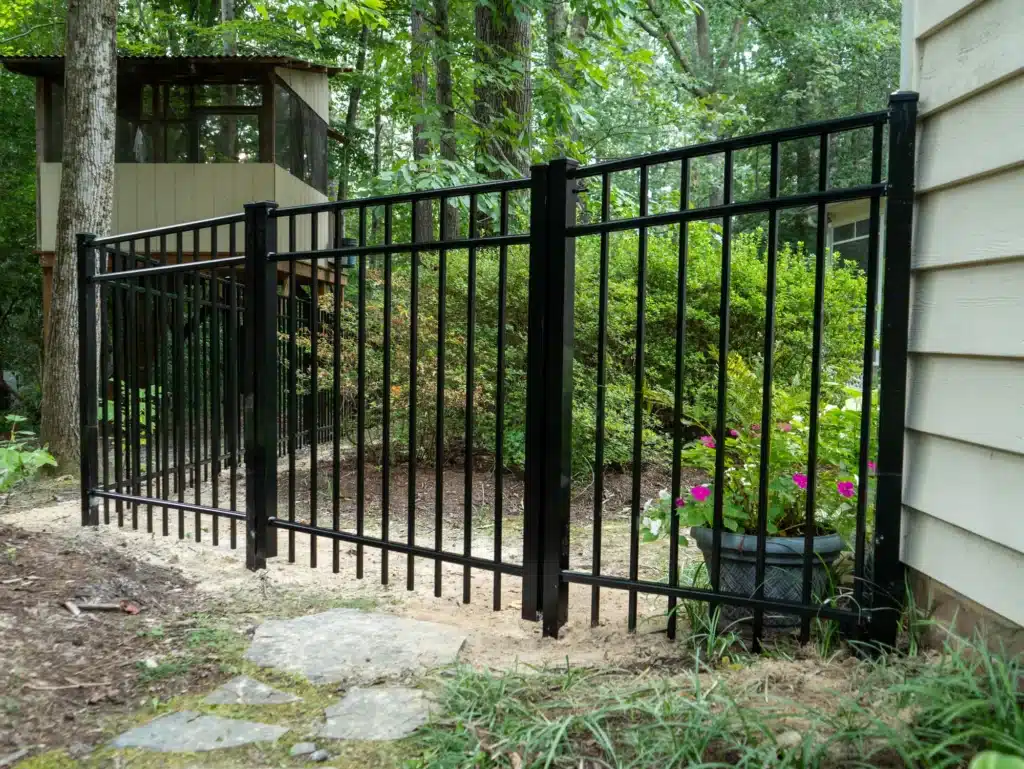
So if you’re planning a driveway gate with a new fence, plan a walk gate beside it. It keeps foot traffic out of the gate’s path, and it’s easier for daily trips to the mailbox. Our guide to fence gate security covers latches, hinges and posts for both.
Plan Your Automatic Gate Opener With Your Fence
An opener is only as good as the gate it moves. A gate that sags, binds or drags will strain any motor. So the gate frame, hinges and posts need to suit automation from the start.
If you think you might add an automatic gate opener later, tell your fence contractor early. It affects the gate width, post size and which way the gate swings or slides. It also affects where a walk gate and a keypad post could go.
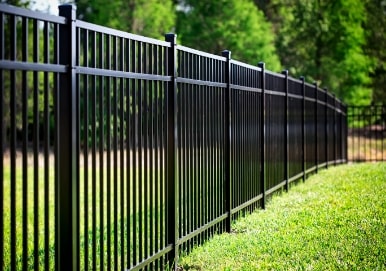
Good Neighbor Fence builds gates as part of a complete fence design and installation, not as a standalone job. Aluminum gates are light and won’t rust, so they pair well with an aluminum fence installation. You can see one in this Siskin style aluminum fence for a Chester new build. For a warmer look, browse these wood fence gate designs.
Get a Quote for Your Fence and Driveway Gate
Planning a new fence with a driveway gate in Central Virginia? Request a fast, free quote and our team will measure the opening and recommend a gate style and layout that fit the way you use your driveway. We don’t install gate openers or do electrical work, so plan on a separate opener installer for that part. You can also call us at (804) 737-4664.