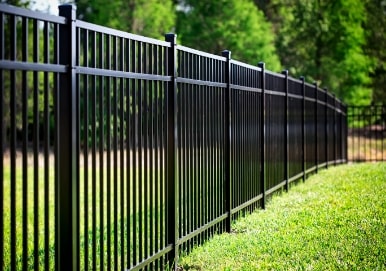



For most Virginia yards, ornamental aluminum is the better side of the aluminum fence vs wrought iron choice: you get the same black spear-top line without rust, without repainting, and without hauling heavy panels around the yard. Real iron still has a place, usually on an older home where the weight and the hand-worked detail are the whole point.
From the street, an aluminum fence and a wrought iron fence read almost the same. What separates them is how they age in our weather, what they ask of you every spring, and what happens the day a mower or a falling limb bends a section.
At a glance
- Aluminum does not rust, so nothing works against the black finish from underneath.
- Iron needs sanding and touch-up paint anywhere the coating gets nicked or chipped.
- Richmond air averages 83% relative humidity in the morning, which is what bare iron is up against here.
- A damaged aluminum picket or section can usually be straightened or swapped out.
- Both are quoted per foot installed, but only one of them keeps asking for money after install day.
Aluminum fence vs wrought iron: what is the real difference?
The shape is shared. Pickets, rails, spear points or flat tops, posts with caps: an ornamental aluminum fence and an iron fence are drawn from the same playbook, and plenty of homeowners cannot tell them apart at twenty feet.
The metal is where an aluminum fence and wrought iron part ways. Aluminum is naturally corrosion resistant, so water sitting against a rail does not start anything. Iron is iron: wherever moisture reaches bare metal, rust starts, and it spreads under the paint from there.
The finish works differently too. On the aluminum we install, the powder coat cures onto the metal rather than sitting on top like paint, which is why it holds its depth through humid summers and hard freezes. Paint on iron is a coating laid over the surface, and a coating is only as good as its last touch-up.
Weight is the third difference between an aluminum fence and wrought iron, and it shows up on install day. Iron sections are heavy to carry and slower to set. Aluminum sections are light enough to place carefully, and they rack, which is what makes following a sloped yard possible without stepping the panels and leaving wedge-shaped gaps under each one.
The two materials side by side
| What matters in a yard | Ornamental aluminum | Wrought iron |
|---|---|---|
| Rust | Does not rust | Rusts wherever the coating opens up |
| Yearly upkeep | Rinse it off | Inspect, sand, repaint the bad spots |
| Weight | Light to carry and set | Heavy, slower to handle |
| A hard knock | Bends, then straightens or swaps | Takes more to bend, harder to put right |
| Sloped ground | Racks to follow the grade | Usually stepped, with gaps underneath |
| After install | Close to nothing | Paint and labor on a repeating cycle |
Does an aluminum fence rust in Virginia humidity?
No. Aluminum does not rust, and that is the single biggest reason it has taken over the ornamental fence market in Central Virginia. There is no iron in it for the weather to attack, so you never see orange streaks running down a post or bleeding out around the fasteners after a wet spring.
Our climate makes that matter more than it would somewhere dry. Richmond averages 83% relative humidity in the morning and 52% in the afternoon, a daily average of 70%, according to long-run Virginia weather averages. Add afternoon thunderstorms, irrigation heads that hit the bottom rail twice a week, and leaf litter piling against a fence line in a wooded yard, and bare iron spends a lot of the year damp.
An iron fence in that climate is not doomed. It just needs an owner who keeps up with it: walk the line each spring, find the nicks, sand them back and touch up the paint before rust gets under the coating. Skip a few years and the repair stops being a paintbrush job.
Aluminum asks for far less. The aluminum fences we install require no painting, staining, or sealing, and upkeep mostly comes down to a rinse with a hose when pollen season is over.
Is an aluminum fence as strong as wrought iron?
Not in the way people mean when they ask. A heavier iron or steel section takes more force before it gives, so if your worry is a vehicle, a large animal or a tree limb, iron has the edge on raw toughness.
For a residential yard, though, strength is rarely the deciding factor. A properly set aluminum fence holds pets and kids in, defines a property line, and stands up to the weather without complaint. Posts set correctly matter far more than the metal: a strong panel on a weak post leans either way.
Damage is also easier to live with in aluminum. A bent picket or a knocked section is usually a straightening job or a swap for a matching part, and you can read how we handle that in our guide to fixing a bent aluminum fence. Iron takes more force to bend, but putting a bent iron section right again means metalwork, then primer and paint to match the rest of the run.
One more practical point: aluminum pool enclosures are common for a reason. Light sections, no rust around splashing water, and gates that keep working year after year. If the fence is a pool barrier, check the Virginia pool fence requirements first.
Aluminum fence vs wrought iron: what does each cost to own?
The sticker price is only half the question. Both materials are quoted per foot installed, and the number moves with height, style, gates and ground conditions. Nationally, HomeGuide puts installed aluminum fencing at $25 to $75 per linear foot and wrought iron at $50 to $85, so aluminum usually comes in lower. Our aluminum fence cost guide walks through what moves the price either way.
The gap widens over the years you own it. Aluminum’s cost after install day is a hose and an hour. Iron carries a repainting cycle, and sooner or later that is either a weekend you give up or a contractor you pay. Over the life of a fence, that difference usually outweighs whatever you saved or spent at the start.
So which one suits your yard?
Pick ornamental aluminum when you want the black spear-top look with no maintenance calendar, when the yard slopes, when the fence surrounds a pool, or when the fence will sit in shade and leaf litter that stays damp.
Pick iron when you are matching existing ironwork, restoring a period home, or you specifically want the weight and hand-forged detail and you accept the upkeep that comes with it.
If you are torn, stand at the curb and ask what you want to be doing with the fence in ten years. Most Virginia homeowners answer “nothing,” and that answer points at aluminum.
Not sure which one fits?
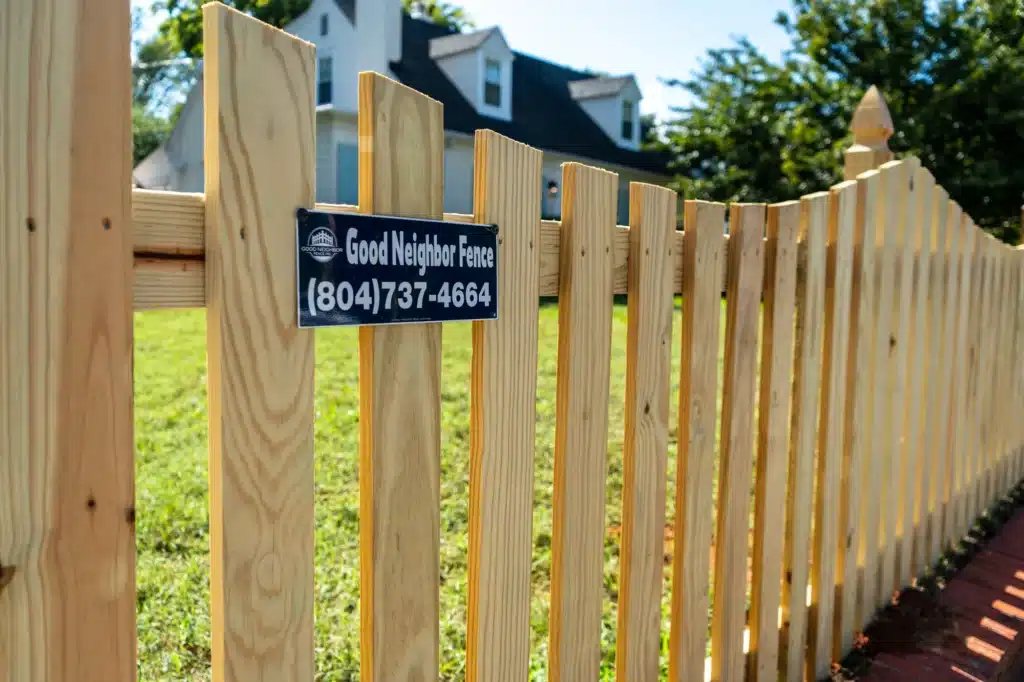
We will walk your property, look at the grade, the drainage and the style of your house, and give you a clear price with no pressure. Good Neighbor Fence has been family owned and building fences for Richmond neighbors since 2006, and most full installations are finished in 1 to 2 days.
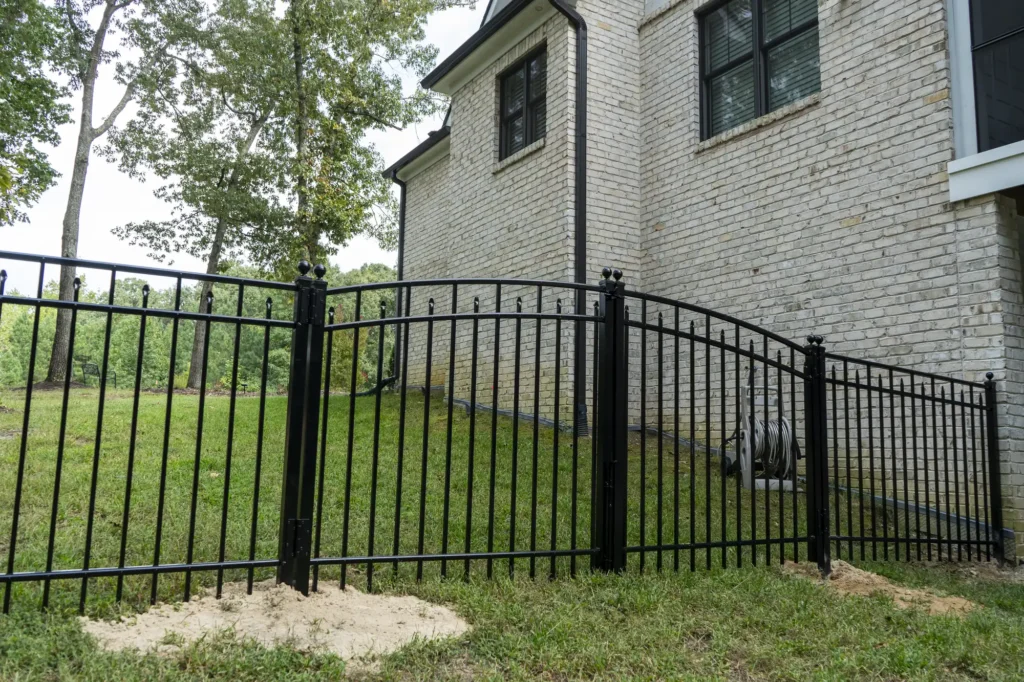
Siskin Style Black Aluminum Fence for a Chester New Build
A 4′ black aluminum fence with three rails and spear-point pickets gave a new Chester home a clear property line while keeping the hardwood treeline in view.
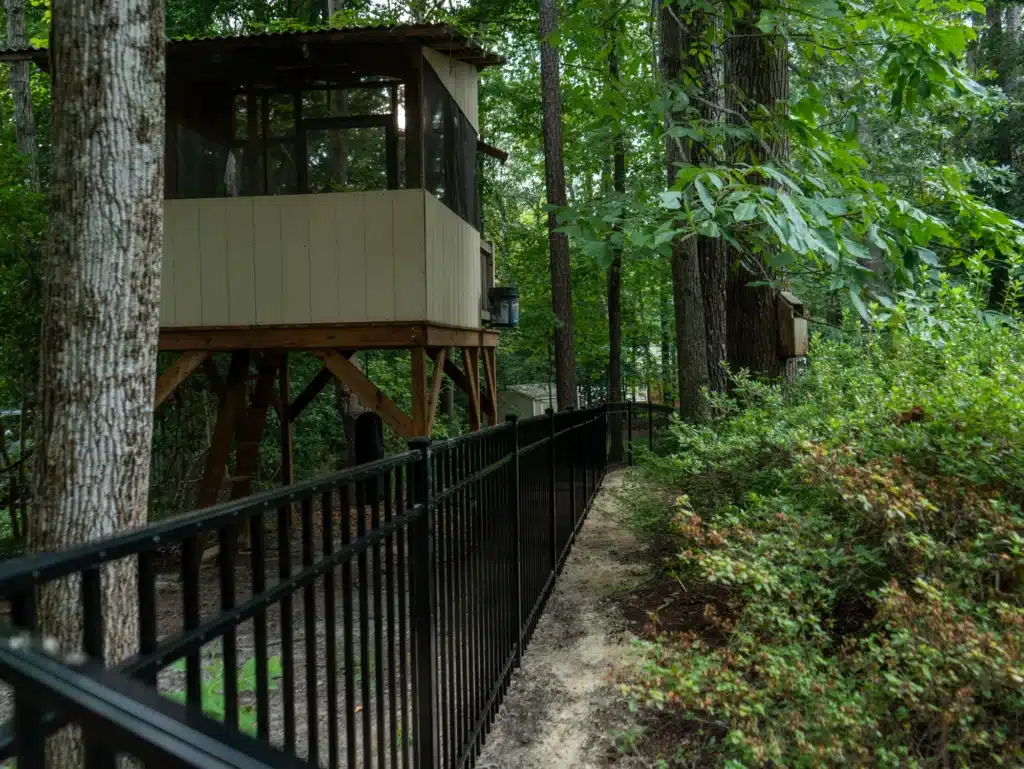
4′ Black Aluminum Down a Steep Wooded Slope in Henrico
We ran a 4′ black aluminum fence down a steep, wooded ravine lot in Henrico and kept it reading level the whole way by racking every section to the grade.
You can see more of this work on our aluminum fence installation page and across the yards we build in Richmond and the surrounding counties.
Aluminum fence vs wrought iron questions
Which is better, wrought iron or aluminum railings?
Aluminum is the easier choice for most homes because it does not rust and needs no repainting, while iron railings hold heavier detail and suit a period property that already has ironwork to match.
Does an aluminum fence rust?
No. Aluminum is naturally corrosion resistant, so there is no iron in the fence for rust to form on, even where leaves or mulch sit against the bottom rail.
Is it rod iron or wrought iron fence?
Wrought iron is the correct term, and “rod iron” is how many people say it. Both usually describe the same classic ornamental metal fence, and today most of what shoppers compare against it is powder-coated aluminum.
How much does 300 feet of aluminum fence cost?
Multiply the installed per-foot price by the run, then add gates and any hard digging. At HomeGuide’s national $25 to $75 per linear foot, 300 feet lands near $7,500 to $22,500 before gates, so get the number confirmed with an on-site measure.
Can you put an aluminum fence on a slope?
Yes. Aluminum sections rack, meaning the rails pivot to run parallel to the ground, so the fence follows the grade instead of stepping down it and leaving gaps underneath.
Keep reading