



To clean a vinyl fence, wash it with warm water and a mild liquid dish soap. Scrub one section at a time with a soft brush, then rinse it off with a garden hose. That clears the dirt, pollen and green algae a Virginia yard puts on a fence, and it leaves the panel surface alone.
The damage comes from the shortcut: a pressure washer wand held close, an abrasive pad, or a strong cleaner used at full strength. Vinyl does not take scratches back out the way wood does, so the goal is a clean fence with the finish still intact.
What a safe wash looks like
- Warm water and a mild dish soap in a bucket lifts most dirt, pollen and algae.
- Use a soft brush or a sponge. Stiff brushes and abrasive pads leave scratches you cannot sand out.
- Work the soapy water in from the bottom up, then rinse each section from the top down before it dries.
- Test any stronger cleaner on a hidden panel first, and never mix two cleaners in one bucket.
- If you use a pressure washer, keep it on a low setting with a wide tip and the wand well back from the panel.
What should you use to clean a vinyl fence?
Start with the mildest thing that works. CertainTeed's care sheet for its Bufftech vinyl fence says soil, grime and chalk come off with a garden hose and a bucket of soapy water. For stubborn stains, it calls for a vinyl fence cleaner and a soft scrub brush. Stiff brushes can scratch the fence under pressure. This Old House gives the same short list for upkeep: mild soap, water and a soft brush, and no harsh chemicals that can erode the vinyl surface.
Two habits save panels. Test any cleaner stronger than dish soap on an inconspicuous spot, such as the back of a post or the gate side nobody looks at. Wait to see what it does before you take it down the whole run. And keep concentrations low. The same care sheet warns that greater concentrations can damage vinyl material. That is how a fence ends up with a pale, dulled patch exactly where someone attacked a stain.
Skip the things made to strip a surface: paint thinner, acetone, oven cleaner, and scouring powder on a green pad. Spray paint and marker are their own problem with their own fix, and we wrote that one up separately in how to remove graffiti from a vinyl fence.
How do you wash a vinyl fence step by step?
One pass, one section at a time. A 100 foot run takes an afternoon with a hose, a bucket and a brush on a pole.
How to wash the run
- Clear leaves, grass clippings and vines away from the base of the fence so the bottom rail can dry out.
- Rinse the whole run with a garden hose to knock off loose dirt, pollen and cobwebs.
- Mix warm water with a few squirts of mild dish soap in a bucket.
- Scrub a section at a time with a soft brush or sponge, starting at the bottom and working up.
- Rinse that section from the top down with the hose before the soap dries on it.
- Walk the finished run and check posts, rails, caps and gate hardware while everything is clean and visible.
Washing bottom to top and rinsing top to bottom is not fussiness. Soapy water running down a dirty panel leaves streaks that set, and those streaks are harder to shift than the dirt was.
Fence looking worse than dirty?
A wash tells you what you really have. If the panels come up clean but a post leans, a rail sags or a section is cracked, send us a photo. We will tell you whether it is a repair or a replacement section. On-site quotes are free.
How do you remove green algae from a vinyl fence?
Green algae and black mildew grow where the fence stays damp and out of the sun. Look at the north side, the stretch under trees, the panels behind a shed, and anywhere rain does not reach. CertainTeed's care sheet makes the same point about mildew, which it describes as black spots on surface dirt, usually found first in areas not subjected to rainfall. In central Virginia that means autumn. The leaves come down, the yard stops drying out, and the shaded side of a white fence goes green over a few damp weeks.
Soapy water and a soft brush take off most of it. Scrub the green area, rinse it well, and let the panel dry before you decide whether anything is left. If a shadow of staining remains, move up to a vinyl fence cleaner, test it on a hidden panel, and follow the label rather than making it stronger.
Then fix the cause, or you will do it again next fall. To keep a vinyl fence clean longer, cut back the shrubs and limbs that keep that run wet. Pull mulch and soil back off the bottom rail, and aim sprinkler heads away from the fence. Colour matters too: on a tan vinyl privacy fence we built for a shaded Henrico backyard, the warmer tone shows less of the pollen and dust every Virginia yard collects between washes than bright white would.
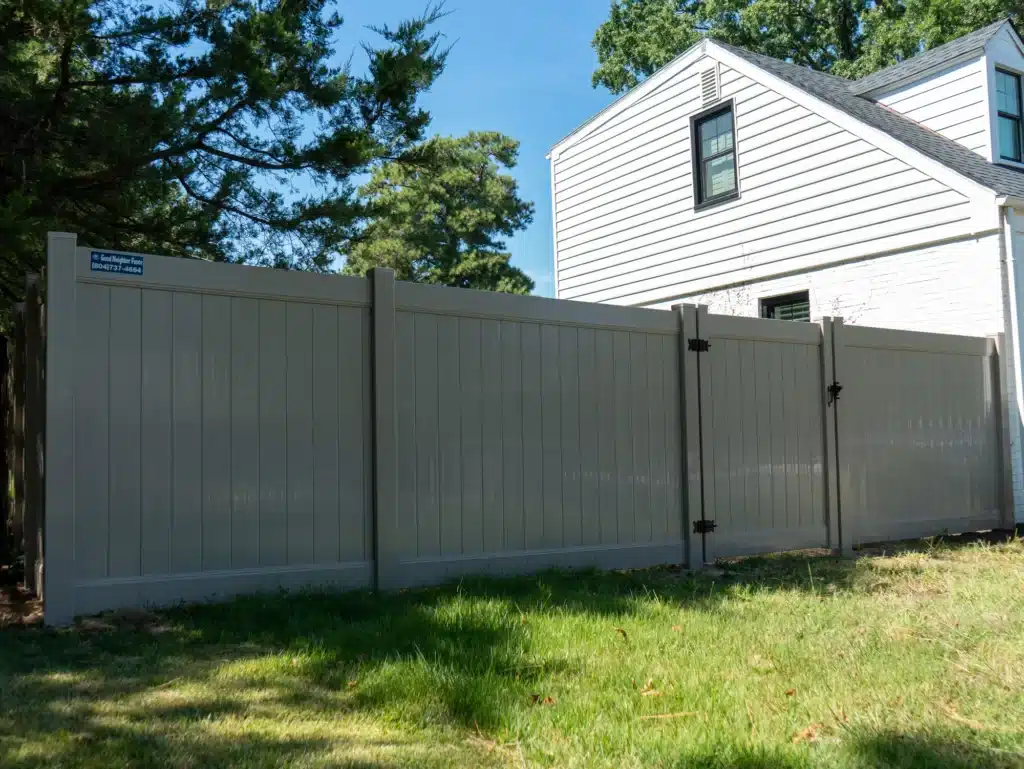
The tan vinyl privacy fence our crew built for a shaded Henrico backyard. Warmer tones show less pollen and dust between washes than bright white.
Is it safe to pressure wash a vinyl fence?
It can be, on a low setting with a wide tip, and it is the fastest way to ruin a fence otherwise. When you clean a vinyl fence, This Old House puts power washers in the same category as abrasive cleaners, as something that can damage the vinyl surface. Simple Green's directions for washing vinyl with a pressure washer are specific: a low-pressure setting and a 25 to 40 degree nozzle tip, the nozzle angled down at the surface, at least 18 inches back, working in sections.
Keep the tip wide and the wand back
A narrow red or yellow tip held close to a panel can score the surface. It can also drive water into the hollow rails and blow out the caulk and seams around gates and post caps. Use the widest tip you have, stand back, and never point the wand upward under a cap or rail where water can sit.
Two more pressure washer habits worth keeping: rinse nearby plants and grass with plain water before and after, as Simple Green's directions advise. Also, keep the spray off the ground line, where it will dig out the soil and gravel holding your posts.
Why does a white vinyl fence look chalky after a wash?
Because a thin layer of chalk builds up on any pigmented material left in the sun. CertainTeed calls chalk accumulation a normal condition for pigmented materials constantly exposed to sunlight and the elements. It comes off when you clean the vinyl fence with the same hose and soapy water as ordinary grime. A fence that has not been washed in several years may need two passes before the colour reads evenly again.
What will not come back is a surface someone sanded, scoured or seared. Abrasive pads and strong solvents leave a dull patch that holds dirt faster than the panels around it. As a result, the fence looks dirty again sooner. If a wash leaves you looking at cracks, warping or brittle panels instead of dirt, that is a different conversation. See the vinyl fence problems we get called about most and how vinyl fence panel replacement actually works before you order parts.
Low upkeep is most of the reason people choose the material in the first place. Our vinyl fence installation is stick-built on site for Richmond-area yards. Once it is up, cleaning the vinyl fence once or twice a year is the whole maintenance calendar.
Questions people ask
What is the best cleaner for a vinyl fence?
Warm water with a mild liquid dish soap handles most of what lands on a fence. For stains it will not shift, CertainTeed's care sheet points to a vinyl fence cleaner used with a soft scrub brush, tested on an inconspicuous area first.
Can I use dish soap on vinyl?
Yes. A few squirts of mild, non-abrasive liquid dish soap in a bucket of warm water is the standard mix. It is also what manufacturer care sheets point to before anything stronger.
Is it okay to power wash a vinyl fence?
Only on a low-pressure setting with a wide 25 to 40 degree tip, held at least 18 inches from the panel. Held closer or with a narrow tip, a pressure washer can mark the surface and force water into rails and seams.
How often should you clean a vinyl fence?
Once or twice a year suits most Virginia yards: a spring wash after pollen season, and a second pass in late autumn once the leaves are down. Shaded runs under trees usually need the second wash more than open ones do.
Will cleaning fix a yellowed or chalky fence?
Often, yes. Chalk and surface grime rinse off with soap and water, though a fence left unwashed for years may take two passes. Panels that are cracked, warped or brittle need replacing, not cleaning.
Keep reading