


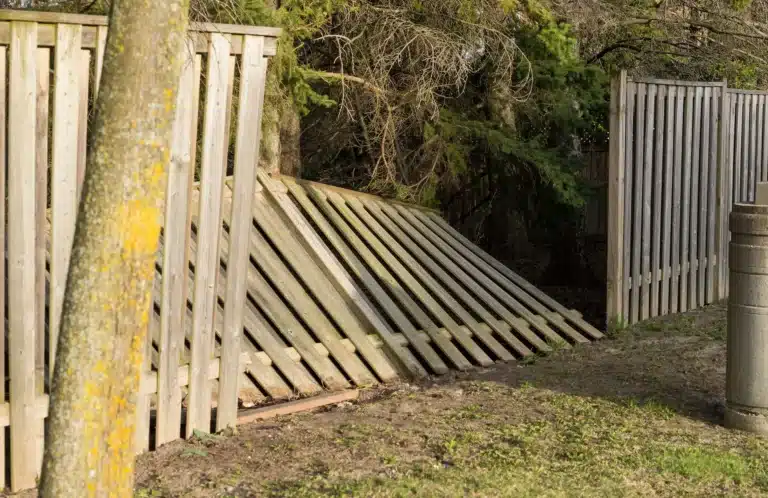
To fix a leaning fence, work on the post, not the panel. A post leans for one of two reasons: it has lost its grip on the soil, which you can reset, or it has rotted through at ground level, which means the post has to come out.
So the first job is a two minute test that tells you which one you have. Get that right and the repair holds for years. Get it wrong and you are back out there after the next storm, wondering why the post went over again.
What to check first
- Push the post at waist height. If it rocks and the soil heaves with it, the post is sound and can be reset.
- Press a screwdriver into the post right at ground level. If it sinks into soft wood, the post has rotted below grade and needs replacing.
- One post out of line is a post problem. A whole run leaning the same way is usually wind, water or soil.
- Contact Virginia 811 before you dig. The notice is free, and state law requires it.
- A brace holds a fence up for a season, not for a decade.
Why is my fence leaning?
Posts move because the ground around them moves, or because the wood at ground level gives way. Everything else, the racked panels, the gate that will not latch, the gap under the boards, follows from that.
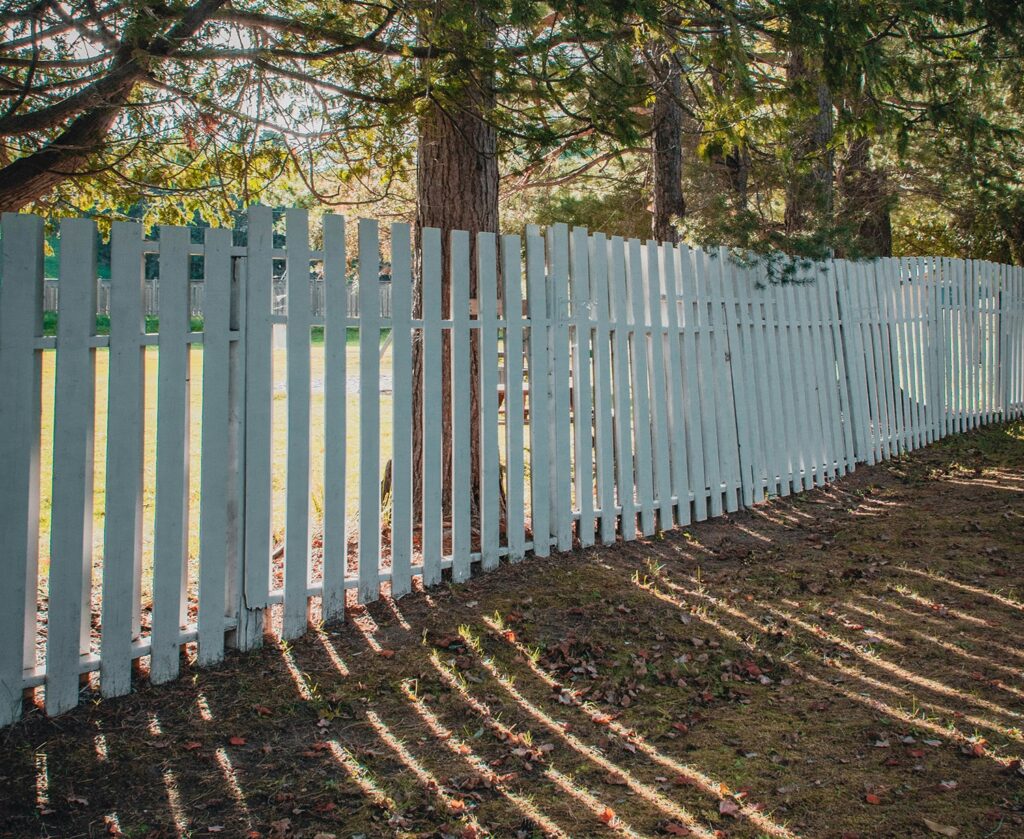
A run leaning out of line like this is almost always a post problem, not a panel problem.
Here is what sits behind most leaning posts in Central Virginia yards:
- Rot at grade. The few inches right at soil level stay damp longest. That is where a wood post loses its strength first, and the post hinges there while the part below still looks fine.
- A post set too shallow. A short hole gives the post almost no leverage against wind.
- Clay that swells and shrinks. Our soil holds water through a wet spring, then dries and pulls back in August. Over a few cycles the hole ends up wider than the post.
- Wind on a solid fence. A 6 foot privacy fence is a sail. Storm gusts push the whole run one way, and the end and corner posts take the worst of it.
- Water running along the line. A downspout or a low spot that drains against the post line keeps the soil soft all year.
- Gate weight. A heavy gate pulls its hinge post inward, which is a different fix again.
How deep should the post have been?
For reference on depth, the Virginia Residential Code puts exterior footings no less than 12 inches below undisturbed ground, and Virginia localities publish a local frost depth: Campbell County, for example, lists 18 inches. A fence post set shallower than that has very little holding it when the wind leans on the panel. Our guide to how deep fence posts should be covers the numbers by fence height.
Is the post rotten, or just loose?
This is the question the whole repair turns on, and two checks answer it.
The push test
Push the post hard at waist height and watch the base. If the post stays stiff and the soil around it lifts or opens up, the wood is still strong and the ground has let go. That post can be reset.
If the post bends or hinges at ground level while the base stays put, the wood has failed. No amount of fresh concrete fixes that.
The probe test
Scrape the soil back two or three inches and push a screwdriver into the post at grade, then again two inches lower. Sound wood resists. If the tip goes in easily, or comes out with wet fibers on it, the post has rotted below grade.
Check the direction of the lean too. One post out of line is a post problem. Six posts leaning the same way after a storm is a wind and depth problem, and that is a different conversation about how the fence was set in the first place.
How to fix a leaning fence: brace, reset or replace?
How to fix a leaning fence post that is still sound
Contact Virginia 811 before you dig
Gas, water, electric and communication lines run through yards at shallow depth, and a post hole is deep enough to find them. Virginia 811 is the free one call center for the state, and the Underground Damage Prevention Act requires you to give notice before excavation, so make the call and wait for the marks.
Work on a dry day if you can. Wet clay packs badly and will not hold the post where you put it.
Straightening a leaning post
- Unscrew the rails or panels from the leaning post so the neighboring posts are not fighting you.
- Dig a trench around the base, about a foot wide and at least a foot deep, and clear out the loose soil.
- Lever the post upright and hold it with a post level on two faces.
- Brace it with two stakes and scrap lumber so it cannot move while you backfill.
- Backfill in layers of four to six inches, tamping each layer hard before you add the next, or set a fresh concrete collar if the run needs the strength.
- Leave the braces on overnight, then refit the rails and panels and re-hang anything attached to the post.
The tamping is the part people skip, and it is the part that decides whether the post stays put. Loose backfill is just a new hole waiting for rain.
How do you fix a leaning fence post set in concrete?
If the post sits in a concrete footing and the whole footing has tipped, the lump has to come up. Dig around it, break the hold with a bar, and lever the footing out as one piece. Trying to plumb a post while its old footing is still attached rarely ends well, because the tipped base goes straight back to the angle it was in. Whether the new post goes back in concrete or gravel is covered in do fence posts need concrete.
If the post has rotted inside an intact footing, you have two routes. You can break the footing out with a sledge and start the hole clean, or you can cut the old post off at the top of the concrete, dig a fresh hole beside it, and set the new post there, moving the rail connections to suit. The second is faster, but it only works where the post spacing can shift a few inches without the panels looking odd.
One thing worth knowing before you reach for another bag of mix: concrete poured flat around a wood post holds water against the wood. A collar crowned above grade so rain runs off, or a gravel base that lets water drain away, treats the post better over its life. Our post on fence post rot protection goes through the detail.
When you can’t fix a leaning fence post in place
A replacement post is only as good as three choices.
The lumber. Use a post rated for ground contact. Under the AWPA use category system, fence posts fall in UC4A, ground contact, general use, which is treated for continuous or prolonged wetting. Above ground treated lumber in a post hole is a short-term post.
The depth. Deeper than the frost depth for your area, and deep enough that the buried length can resist the wind load on the panel. A 6 foot privacy fence asks more of its posts than a 4 foot picket.
The drainage. Several inches of compacted gravel in the bottom of the hole gives water somewhere to go instead of standing against the end grain.
Then match the new post to the rest of the run. If the fence is 15 years old and three posts have gone soft in one autumn, you are no longer repairing a fence, you are replacing it in pieces. That is the point to price both and decide. Our guide to wood fence repair cost sets out what drives the number either way.
Fence leaning after a storm?
Our estimator will walk the line with you, check the posts, and tell you straight which ones can be reset and which ones have to come out. Free on-site quotes, no obligation.
Need help to fix a leaning fence around Richmond?
Leaning posts come in waves here, after summer storms and again once the autumn rain softens ground that spent August baked hard. Good Neighbor Fence is family owned and has been building fences for Richmond neighbors since 2006, serving Richmond, Mechanicsville, Chesterfield, Henrico, Glen Allen and Midlothian, and the same crews who set posts for a new wood fence installation are the ones who come out to reset them. See the work across the area on our Richmond fence company page, or call (804) 737-4664. Our fence repair page covers what we fix, and when replacing a section makes more sense.
If boards and rails went over with the post, repairing a damaged wooden fence covers putting the rest of the panel back together.
How to fix a leaning fence: questions people ask
How do I reset a fence post?
Dig out around the base, lever the post plumb, brace it, and tamp fresh backfill or a concrete collar in layers. Take the rails off the post first so the neighboring posts are not holding it at the old angle.
How much does it cost to fix a leaning fence post?
It depends on whether the post can be reset or has to be replaced, how it was set, and how many posts have moved. A reset on a sound post is the cheaper end, while a replacement adds the post, the dig out and the panel work. Ask for a quote on the whole run rather than one post, so you are not paying for two trips.
Can you fix a leaning fence without replacing the post?
Yes, when the wood at ground level is still sound. If a screwdriver sinks into the post at grade, the post has rotted below the surface and resetting it will not hold.
How do you get fence posts perfectly straight?
Use a post level on two faces, brace the post with stakes before you backfill, and run a string line along the fence so every post sits on the same plane. Tamp in layers, then check plumb again after the last layer.
Will a leaning fence straighten itself once the ground dries?
No. Soil that dried and shrank is part of what loosened the post, and the next wet spell will take it further over. Deal with it while it is one post.
Keep reading
Sources
- Virginia 811, the state one call center for excavators and property owners
- Virginia Professional Excavators Manual, Virginia State Corporation Commission
- 2015 Virginia Residential Code, R403.1.4 Minimum depth
- Campbell County, Virginia design criteria, frost line depth
- Pressure treated wood and AWPA use categories