



Not every fence post needs concrete, and in Central Virginia clay a few of them hold better without it. Gate, corner and end posts take the leverage, so those get a concrete footing. Straight line posts in the middle of a run will stand for years in well compacted gravel.
Ask ten fence crews do fence posts need concrete and you get answers both ways. Concrete resists the push and pull that works a post loose. It can also keep a wood post wet if the hole is shaped like a bucket.
What actually holds a post
- Gate, corner and end posts: concrete. They carry the load the rest of the fence pushes onto them.
- Line posts on a 4 to 6 foot residential fence: compacted gravel holds well, and a future post swap is far easier.
- Vinyl, aluminum and steel posts cannot rot, so the rot argument against concrete does not apply to them.
- Put 6 inches of gravel in the bottom of every hole, whatever goes in on top of it.
- Shape the top of the hole so water runs away from the post instead of sitting against it.
When does a fence post need concrete?
Concrete earns its place wherever a post has to fight leverage rather than just stand still. A gate post is the clearest case. Every swing of the gate tries to pull the hinge side out of the ground, and a 5 foot gate is a long lever. Corner posts and end posts are next, because the fence pulls on them from one side only with nothing on the other side to balance it.
After that, think about height and wind. A 6 foot solid privacy fence is a sail, and the posts take that load. On sloped ground, on loose backfill around a new build, and anywhere the hole will not hold its shape, concrete is the safe call.
Size the hole before you decide what fills it. QUIKRETE’s post setting instructions call for a hole three times the width of the post and a depth of one third to one half of the post’s above ground length, plus 6 inches of gravel in the bottom, with the concrete finishing 3 to 4 inches below grade.
Split rail is the usual exception. The posts are heavy, the rails are light, and the fence is built to flex with the ground, so most rail posts get tamped rather than poured. Our walkthrough on installing a split rail fence in Virginia covers how that goes in.
Concrete, gravel or tamped soil: what goes in the hole?
Three backfills do the job, and each one trades something away.
Why does concrete rot wood posts at the collar?
Posts almost never rot in the middle. They rot in the few inches right at ground level, the collar, where air and water meet the wood. Concrete gets blamed for that because a flat concrete ring finished level with the lawn makes a shallow dish, and that dish holds a puddle against the post after every storm.
The fix is shape, not avoidance. Either fill the concrete to 3 to 4 inches below grade and backfill with soil so the water drains through, or bring the collar slightly above grade and slope it away from the post so rain runs off. Both methods sit in QUIKRETE’s own guidance. A gravel base and a base sloped away from the post are common ways to protect posts against rot.
The second fix is the lumber itself. A post in soil needs a ground contact treatment, not an above ground one, and the rating is printed on the tag: the American Wood Protection Association’s residential guide notes that use category information is found on the end tag or treatment stamp. Our posts on pressure treated wood for fences and on fence post rot protection go further into which lumber to buy.
What backfill holds best in Virginia clay?
Clay is the part most online advice skips. Gravel only drains if the water it collects has somewhere to go, and a gravel filled hole punched into dense clay has nowhere to send it. The hole becomes a tank that fills in spring and empties slowly, which is the worst case for a wood post.
So in heavy clay, lean toward concrete for anything structural, finished so the collar sheds water, with gravel underneath to keep the end grain of the post off the bottom of the hole. In sandier ground, the loamy pockets and the river lots, gravel drains properly and makes a fine setting for line posts.
Test one hole before you commit
Dig a single hole on the fence line, fill it with water, and come back in an hour. If it is still full, you have clay that drains slowly, and your plan needs to move water off the post rather than store it around the post.
And before any of it, have the utilities marked. Locating is free, and a phone line or an irrigation main is a far more expensive mistake than a bag of concrete.
Want the posts set right the first time?
Our estimator walks the property, reads the ground, and gives you a free quote with the post plan spelled out. Most full installs are finished in one to two days.
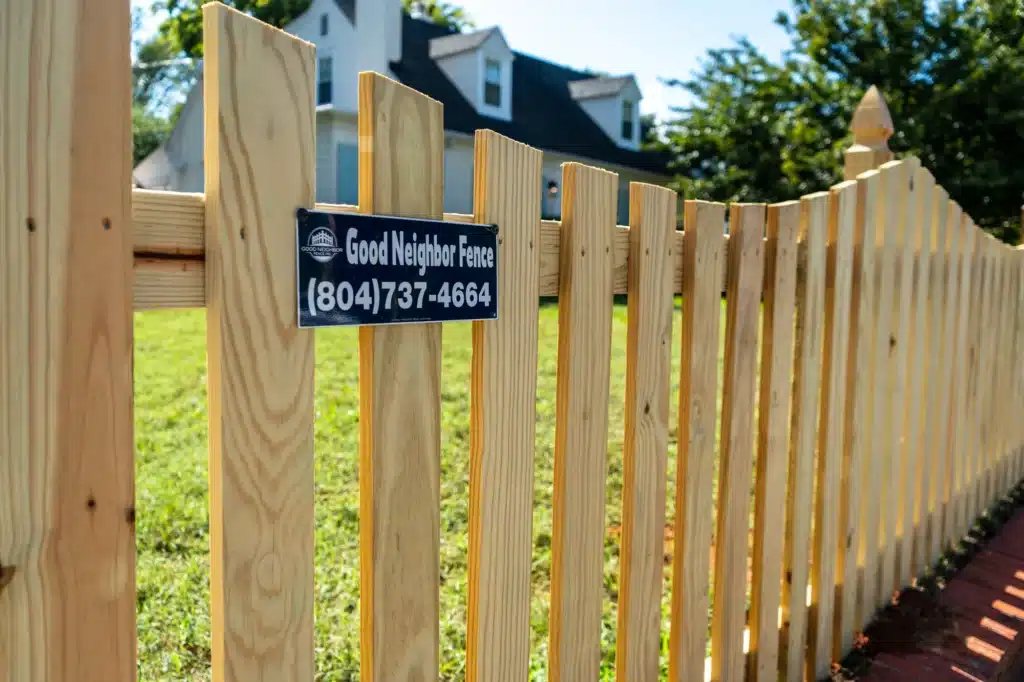
Every fence we build is stick built on site rather than hung from pre-fab panels, which means the post line is set to your grade instead of the other way around. You can see that on a Hopewell waterfront lot, where 6 foot pressure treated pine privacy runs the side lines and steps down to 4 foot as the yard reaches the river. For the whole picture of what we build in Richmond yards, start with our wood fence installation page, and the same crew handles concrete work around the rest of the property.
What about vinyl, aluminum and chain link posts?
None of these rot, so the main argument against concrete disappears. Vinyl posts are usually hollow and often sleeve over or reinforce a buried member, so follow the panel maker’s instructions for that system rather than a general rule.
Aluminum and steel posts are set in concrete on most residential jobs, because the post walls are thin and the footing does the work. Chain link line posts can also be driven into undisturbed ground on long agricultural runs, while terminal and gate posts still get poured.
Questions people ask
Should fence posts be set in concrete or on top of concrete?
In the concrete, not on top of it. A post sitting on a concrete pad relies on a bracket to resist leverage, which is fine for a deck beam but weak for a fence post. Set the post in the hole with gravel below it and the concrete around it.
Can you set fence posts without concrete?
Yes, for line posts on a modest fence. Crushed gravel tamped in thin layers holds a 4 to 6 foot line post well and drains better than concrete. Gates, corners and ends should still be poured.
Why should you not put concrete around treated posts?
The warning is really about the shape of the collar and the grade of the lumber. Concrete that traps a puddle at the surface keeps the post wet, and lumber treated only for above ground use will not survive in soil. Slope the collar and buy ground contact rated posts.
How many bags of concrete does one fence post take?
It depends on the hole, not the fence. Work out the hole volume from its diameter and depth, check the yield printed on the bag, and buy one spare bag for the hole that turns out wider than planned.
How long should a post set before you hang panels?
Fast setting mixes firm up quickly, but bracing the post until the concrete has set is what keeps the line straight. Follow the time on the bag, and give gate posts the longest.
Keep reading