


To fix a sagging gate, check three things in this order: the post it hangs on, the hinges and their screws, and whether the gate frame has gone out of square. Most dropped gates come back into line in an afternoon with longer hinge screws or an anti-sag cable. If the hinge post is moving in the ground, though, nothing you bolt to the gate will hold it.
A sagging fence gate is usually the first warning that a fence line is in trouble. The gate is the heaviest moving part of the fence, it hangs all of that weight on two or three hinges, and it starts dragging months before a panel ever leans.
At a glance
- A gate that drags at the latch corner but keeps an even gap down the hinge side has racked out of square. Brace it or cable it.
- A gap that opens at the top of the hinge side means the hinges are pulling out of the post. Go to longer screws or a through-bolt.
- An anti-sag cable pulls, it does not push. Run it from the top hinge corner down to the bottom latch corner.
- Push the hinge post hard with both hands first. If it rocks, reset the post before you buy hardware.
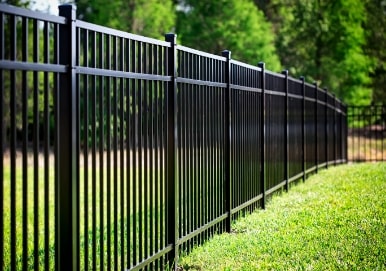
- Wood, vinyl, aluminum and chain link gates drop for different reasons, so the right fix depends on the material.
Why is my fence gate sagging?
A gate is a lever. All of its weight hangs off one side, so the hinges are in a constant tug of war with gravity, and the far corner wants to swing down. Every sag you will ever see is one of three failures, and the gap around the gate tells you which one you have.
The hinges are pulling out of the post. Close the gate and look down the hinge side. If the gap is tight at the bottom and open at the top, the top hinge is working its way out. Short screws into pine, or screws driven into the soft outer inch of an older post, are the usual reason.
The frame has racked. Look at the latch corner instead. If the gap along the hinge side is even but the latch corner has dropped, the frame has gone from a rectangle to a parallelogram. That is racking, the same sideways distortion builders use diagonal bracing to resist in a stud wall.
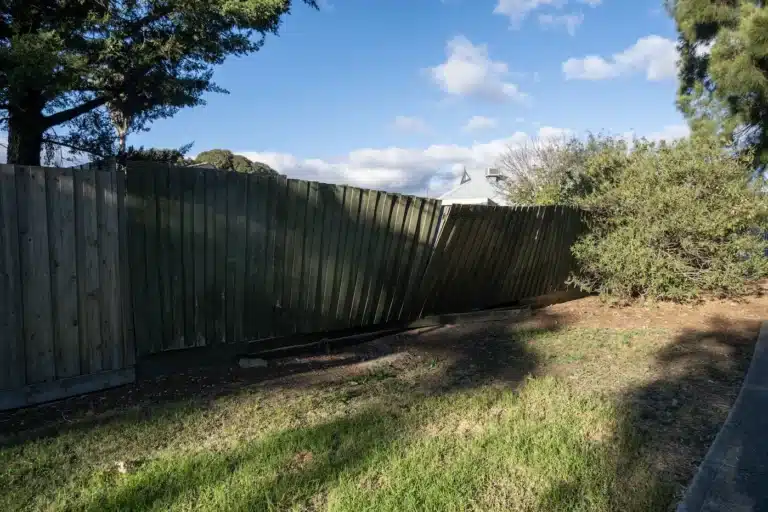
The post is moving. If the whole gate has tipped and the post leans with it, the problem is in the ground, not in the hardware. Wet clay, a shallow footing, rot at the base of the post, or years of a heavy gate swinging on it will all do this.
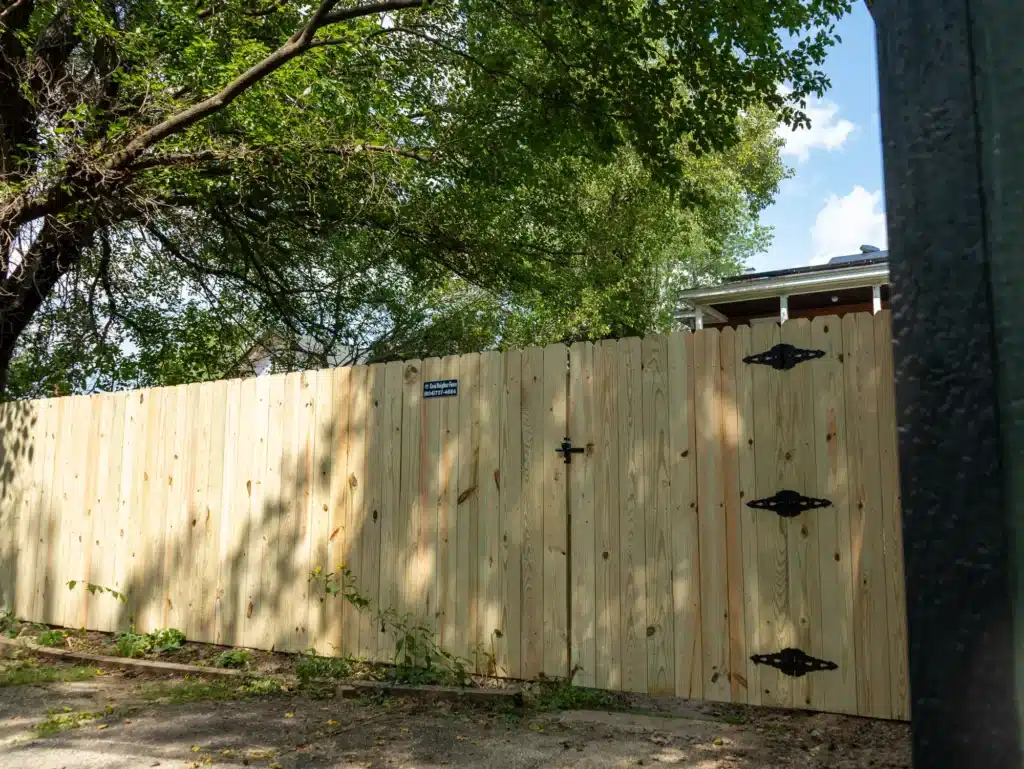
A wood privacy double gate with black hinges at the end of a Richmond driveway. Wide gates like this one carry the most leverage, so they are the first to drop.
Check the hinge post before you touch the gate
Open the gate halfway, grab the hinge post with both hands and push and pull it. A sound post barely moves. If the top travels an inch or more, or you can see the soil lift around the base, stop there: tightening hinges on a loose post just transfers the load back to the ground and the gate drops again by spring.
Then hold a level against the post on two faces. A post that reads plumb but still rocks has a footing problem. A post that reads out of plumb and feels solid has already tipped and set, and it will need pulling and resetting. While you are down there, press a screwdriver into the wood at ground level. If it sinks in, the post is rotting and no hinge will hold, which is why fence post rot protection matters more than the hardware you hang off it.
Footings are part of the story in Virginia too. Frost depth here runs roughly 12 to 24 inches depending on the locality, and a gate post set shallower than its neighbours will move first when the ground freezes and thaws.
How to fix a sagging gate, step by step
Work from the cheapest fix to the most involved. Nine gates out of ten are back in line before step five.
Fixing the sag, in order
- Support the gate level with a block of wood or a helper so you are working on a square opening.
- Tighten every hinge screw, then replace any that spin with a longer screw that reaches fresh wood, 3 inches or more.
- Swap the top hinge for a heavier one, or add a third hinge in the middle, if the post is sound but the hardware is undersized.
- Check the frame for square by measuring corner to corner both ways. Equal diagonals mean the frame is fine and the hinges are the problem.
- Fit an anti-sag cable kit, running the cable from the top hinge corner down to the bottom latch corner, and tighten the turnbuckle until the diagonals match.
- Add a wood brace instead if you prefer timber: it works in compression, so it runs from the bottom hinge corner up to the top latch corner.
- Reset the latch and strike plate last, once the gate hangs true.
Which way does the brace run?
Get the direction right or the fix does nothing. A steel cable can only pull, so it must run down from the hinge side; a wood brace can only push, so it must run up to the latch side. Fitting either one backwards is the most common mistake we see on gates a homeowner has already had a go at.
One thing to avoid: do not plane or cut the latch stile to make a dragging gate close. It buys you a season, it leaves you with a gate that no longer matches the fence, and the sag keeps going until the gate will not latch at all.
What if the gate still won't latch?
If the gate swings freely but the latch misses, measure before you move anything. A latch that sits low against the strike is a sag problem. A latch that lines up vertically but will not catch is usually a post that has leaned away from the opening, widening the gap at the top.
Shimming the top hinge out, or the bottom hinge in, pulls the latch corner up a little and is worth trying on a gate that only misses by a fraction. A gate wheel under the latch corner is a last resort: it holds the gate up, but it hides a failing post rather than fixing it, and it will not work on a drive or a slope.
Which fix does your gate need, by material?
We build gates on site in all four materials, and each one fails in its own way.
Gate dragging, and out of fixes?
We hang and repair gates across Richmond, Chesterfield, Henrico and Central Virginia, and we reset the posts that drop them. Tell us what the gate is doing and we will come and look.
When to stop and have the post reset
Stop and call a fence company when the post rocks in the ground, when a screwdriver sinks into the wood at grade, when the concrete footing has lifted out of the soil, or when a wide gate is hanging on a 4×4 that was never sized for it. Those four gates will keep dropping no matter how good the hardware is, because the problem sits below the latch, not beside it.
Resetting a gate post properly means pulling the old post and footing, digging deeper, and often stepping up to a larger post with a wider footing on the hinge side. It is a half-day job and it ends the problem. Good Neighbor Fence has been family owned since 2006, and we build and repair fences across Richmond and Central Virginia, from city lots to rural property lines.
You can see the kind of gate work we mean on this Richmond city garden project, where a walk gate and a wood double gate sit in a tight backyard that was planted right up to the line. If you are replacing a tired gate rather than repairing it, our round-up of simple wood gate designs is a good place to start.
Questions people ask
What causes a gate to sag?
Weight and leverage. The gate's load hangs off the hinge side, which pulls the top hinge out of the post, racks the frame out of square, or slowly tips the post itself. Wide gates, heavy wet wood and undersized hinges all speed it up.
How do I fix a sagging gate with a turnbuckle?
Run the cable from the top corner on the hinge side down to the bottom corner on the latch side, then tighten the turnbuckle until the gate's two diagonal measurements are equal. Stop there. Over-tightening twists the frame the other way.
How do I keep a wooden gate from sagging in the first place?
Hang it on a larger, deeper-set post than the fence line uses, use three hinges on anything over 4 feet wide, screw into solid wood rather than the outer inch, and build the frame with a diagonal brace from the start.
How do I fix a sagging metal fence gate?
On chain link, tighten the truss rod across the frame. On aluminum, the frame is welded, so check the hinges and the post instead. Both usually come back into line without touching the gate itself.
Can I just put a wheel on it?
A gate wheel holds the latch corner up and gets a gate closing again, but it carries the gate's weight on the ground instead of on the post. On a sloped or paved opening it will bind, and it does nothing for a post that is failing.