


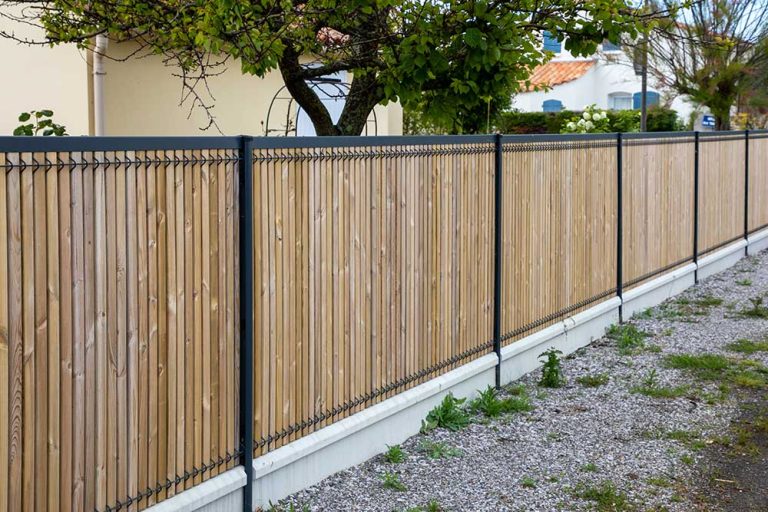
You can build a wood fence on metal posts by setting galvanized steel posts in concrete. Then you screw 2×4 rails to the posts and fasten pickets to the rails. The steel carries the load in the ground, where wood posts tend to rot first. The boards still give you the classic look of wood.
So you get the warmth and privacy of a wood fence with a stronger frame underneath. Here’s how to attach a wood fence to metal posts in five steps, plus the hardware choices that decide how long it lasts.

Why Build a Wood Fence on Metal Posts?
On many wood fences, the posts give out before the boards do. Soil stays damp around the base of each post, so rot and insects go to work right where the fence needs the most strength. Once a post softens, the whole section starts to lean.
That’s the main reason to build a wood fence on metal posts. For example, Master Halco makes its PostMaster steel fence posts from pre-galvanized G90 steel and says they won’t shrink, warp or rot. Steel also doesn’t twist as it weathers, so your rails are less likely to pull out of line.
The trade-off is hardware and looks. You’ll need screws or brackets made for the job, and you’ll want to cover the steel if you prefer an all-wood face. If you’re still weighing materials, our fence material comparison lays out the options. Our breakdown of wood fence costs helps you set a budget.
What You Need to Attach Wood Fence to Metal Posts
Gather everything before you dig so the job doesn’t stall halfway through:
- Galvanized steel fence posts made for wood fences, or round steel pipe posts with wood-to-pipe rail brackets
- Pressure-treated 2×4 rails and your choice of pickets
- Exterior deck screws or lag screws rated for treated lumber
- Bags of concrete mix and a mixing tub
- A post hole digger, level, string line, tape measure and drill
Choose Fasteners Rated for Treated Lumber
Hardware choice decides how long a wood fence on metal posts holds together. The American Wood Council notes that fasteners in wood treated with ACQ or copper azole corrode faster than fasteners in older CCA-treated wood. So it recommends hot-dip galvanized or other corrosion-resistant fasteners, and it warns against mixing galvanized and stainless steel in the same connection.
Also skip aluminum posts for this project. The same guidance says aluminum should not touch lumber treated with CCA, ACQ, copper azole or ACZA. Check the tag on your lumber before you pair it with any metal.
Step 1: Set the Metal Fence Posts in Concrete
First, call Virginia 811 so buried utility lines get marked before you dig. Then check your county’s rules on height and placement, and read our guide to Virginia fence rules on property lines.
Next, run a string line between the corner posts and mark each hole. If you use a channel-style post like PostMaster, follow the maker’s specs. Its installation guide calls for holes 6 to 10 inches wide. Line posts go 24 inches deep, and corner and gate posts go 30 inches deep. It also spaces line posts at your rail length plus 1.5 inches on center.
Fill each hole in one continuous pour and mound the concrete at the top so water runs away from the post. While the concrete is wet, check plumb on two sides with a level. Then let it cure before you hang any rails.
Step 2: Attach the Rails With Screws or a Metal Post Bracket
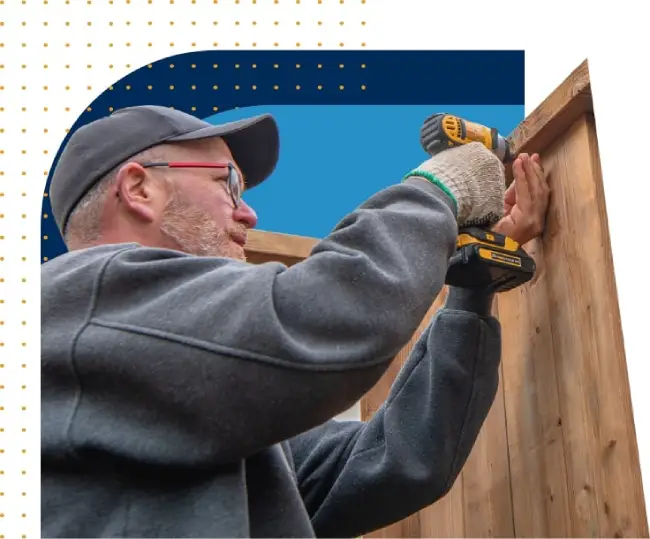
Channel-style steel posts come with pre-punched holes, so you screw each 2×4 rail straight to the post. Master Halco specifies #8 or #9 countersunk deck screws for a flush fit, or 1/4-inch lag screws, driven in an alternating hole pattern.
Round pipe posts work differently. They need a metal bracket that clamps around the post and gives each 2×4 a flat seat to screw into. Buy brackets sized to the post’s outside diameter, and keep every rail level with a string line, because a crooked rail shows up in every picket.
Step 3: Hang the Pickets
Now fasten the pickets to the rails, starting at an end post. The same Master Halco guide sets pickets about 2 inches above the ground, which keeps the wood out of standing water and grass clippings. Check every third or fourth picket with a level so the line doesn’t drift.
If privacy is the goal, butt the boards tight or overlap them in a shadowbox pattern. Our post on wood fence spacing for privacy explains which gaps block the view and which don’t.
Step 4: Cover the Steel With Trim Boards
Bare steel posts look fine on a modern fence. But if you want a traditional look, cover them. Master Halco finishes its install by adding 1×6 cover boards over the posts. That way your wood fence on metal posts reads as all wood from the street.
Step 5: Check the Fence and Seal the Wood
Finally, walk the whole line. Push on each section, drive any loose screws and fix high or low pickets before the wood weathers. After the lumber dries out, seal the wood fence to slow graying and checking.
Can You Hang Wood Fence Panels on Metal Posts?
Yes. Premade wood panels hang on metal posts much the way loose rails do. On channel posts, you screw the panel rails through the pre-punched holes. On round posts, you add a pipe bracket at each rail.
Measure your panels before you dig, since you can’t stretch a panel to reach a post that’s set too far away. The Master Halco guide spaces posts at the rail length plus 1.5 inches on center, so use your actual panel width. Also remember that a solid panel catches more wind than spaced pickets. Our comparison of premade and stick built wood fences explains the trade-offs.
Hanging panels on wooden posts instead? The idea is the same. Use galvanized panel brackets or exterior screws through the rail ends into the post, with fasteners rated for treated lumber.
Can You Add Wood to an Existing Metal or Wrought Iron Fence?
Sometimes. Many homeowners want to reuse the posts from an old chain link fence and hang wood boards on them. Whether that works depends on the posts.
Chain link line posts were sized for open mesh that lets wind pass through. A solid wood privacy fence catches the full force of the wind instead, so a light post can bend or lean over time. Check the diameter, wall thickness and depth of each post before you commit. If the posts are rusted at the ground or out of plumb, pull them.
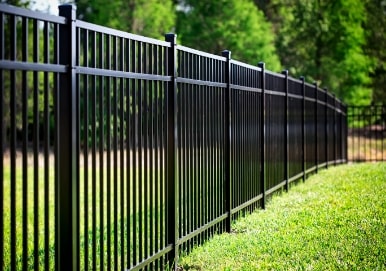
The same goes for an ornamental iron or aluminum fence. You can bolt boards or a wood frame to its rails with galvanized U-bolts or brackets, but those posts were built for an open fence, not a solid wall of wood. Also watch where the two materials touch. Wet wood pressed against iron holds moisture and speeds rust, and treated lumber shouldn’t touch an aluminum fence at all, per the AWC guidance above.
When you’re replacing an old chain link fence with wood, new posts are often the simpler path. That way you can size and space them for the heavier boards from day one.
Get a Quote for Your Wood Fence in Central Virginia
Building a wood fence on metal posts is a doable DIY project if you have the tools and the time. Still, digging holes, mixing concrete and keeping a long fence line straight is hard work. Good Neighbor Fence has been family owned since 2006 and has 400+ five-star Google reviews.
See our wood fence installation page, or look at this wood fence for a Powhatan home and our other recent fence projects. When you’re ready, request a fast, free quote or call (804) 737-4664.