


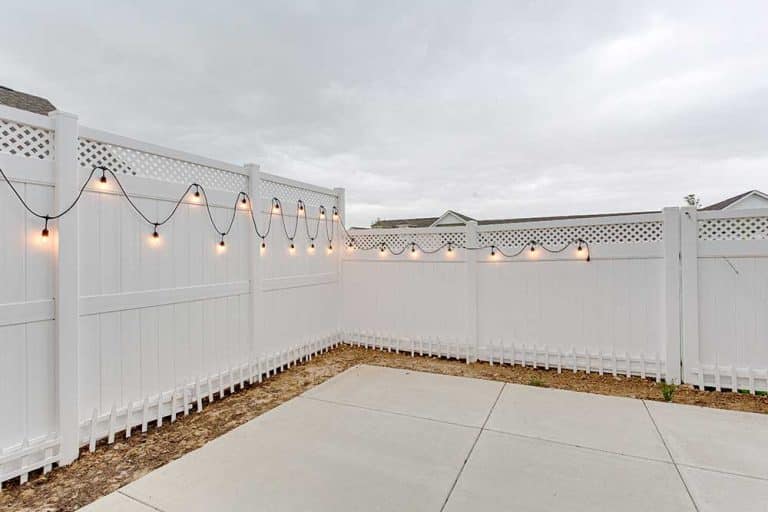
The best way to hang lights on vinyl fence rails and posts is with clips, hooks or zip ties that grip the fence, not screws or nails that go through it. Plan the layout first, use outdoor-rated lights, and plug them into a GFCI-protected outlet.
Good Neighbor Fence builds vinyl fences across Central Virginia, and a vinyl fence makes a great frame for backyard lighting. Here is how to plan the job, which hardware to use, and how to keep it safe through a Virginia summer.

Why Is a Vinyl Fence Good for String Lights?
Vinyl won’t rot, and it doesn’t need paint, so clips and cords won’t trap moisture against wood or scratch a finish. The smooth rails and flat post caps also give clips a clean place to grip. And a white or tan fence reflects light back into the yard, so one strand goes further.
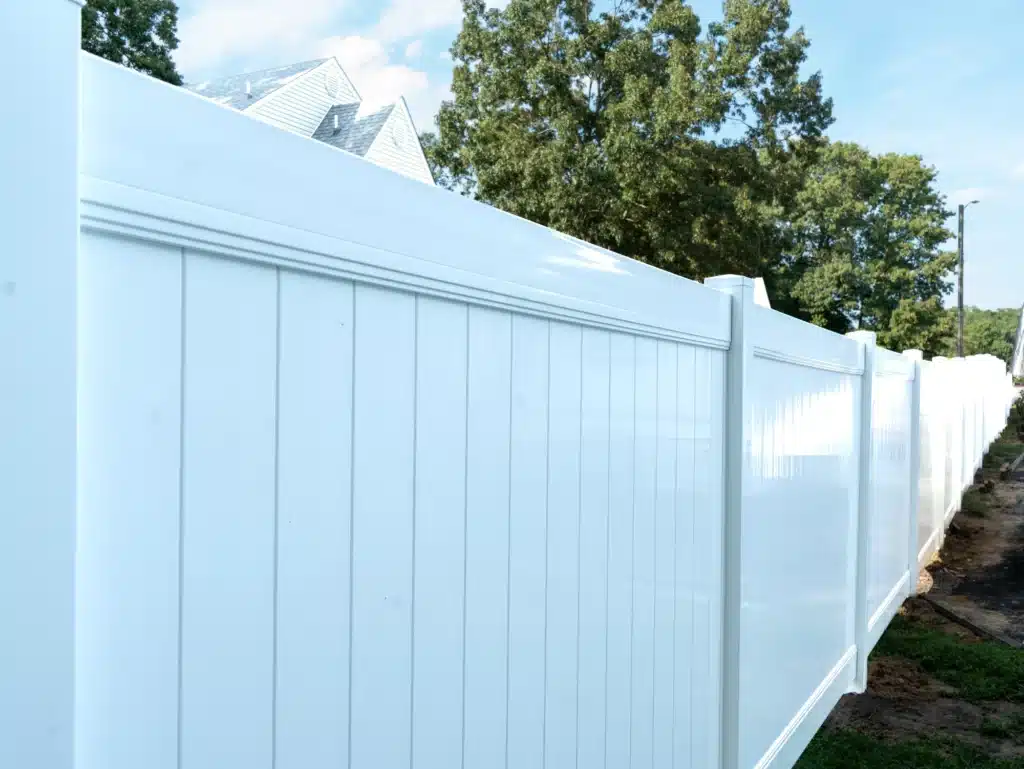
The catch is that vinyl posts and rails are hollow. They can crack if you over-tighten hardware or drill in the wrong spot. So the goal is to hold the lights firmly without putting holes in the fence. If you’re not sure which part is which, our guide to vinyl fence parts explains posts, rails and caps.
What You Need Before You Start
- Outdoor-rated string lights, long enough for your run plus some slack
- Fence or gutter clips, over-the-rail hooks, or UV-resistant zip ties
- An outdoor-rated extension cord, if the outlet is far from the fence
- A GFCI-protected outdoor outlet or a portable GFCI
- A tape measure and a sturdy ladder
- Optional: a timer or smart plug, and a steel guide wire for long runs
Buy the right lights from the start. The U.S. Consumer Product Safety Commission advises using only lights tested for safety by a nationally recognized testing laboratory. For outdoor lights, it also says to check for a label certifying them for outdoor use and to plug them only into a GFCI-protected outlet or a portable GFCI.
How to Hang Lights on Vinyl Fence in 5 Steps
Once you have your supplies, the job usually takes an afternoon. Work in this order so you only hang the strand once.
Step 1: Measure and Plan the Layout
Measure each fence run you want to light, and note where the outlet is. Then pick a pattern: a straight line along the top rail, loose swags between posts, or a zig-zag across a corner. Swags and zig-zags need extra length, so buy more strand than the straight measurement.
Also check the packaging for how many strands you can connect end to end. Stay under that limit, and plan a second outlet or a separate run if you need more.
Step 2: Choose Clips That Grip, Not Screws
You have three good options, and none of them put holes in the fence:
- Fence or gutter clips: Plastic clips snap over the top rail or a picket edge and hold each bulb socket.
- Over-the-rail hooks: S or J hooks hang over the top rail, so you can move the lights anytime.
- Zip ties: UV-resistant ties loop around a rail or picket. Snug them, but don’t crank them tight.
Adhesive hooks are hit or miss outdoors. Vinyl expands and contracts as the temperature swings, and heat and humidity can loosen the glue. If you try them, pick hooks rated for outdoor use and clean the vinyl first.
Skip nails, staples and screws through the vinyl. They leave permanent holes, they can crack a panel, and they let water into hollow posts. If you really want permanent hooks, ask your installer first, because drilling may affect your fence warranty.
Step 3: Add a Guide Wire for Long or Heavy Runs
Heavier strands with large bulbs can sag between posts. For long runs, stretch a thin steel guide wire along the fence line, then clip the lights to the wire. The wire carries the weight, so the strand and the rails don’t have to.
Don’t tie a strand that crosses the yard to a vinyl fence post, though. That pull is sideways, and fence posts are set to hold panels, not a cable under tension. Use a freestanding pole or a structure built for the load instead. Wind adds to that load too, as our post on how much wind a vinyl fence can withstand explains.
Step 4: Hang and Adjust the Lights
Start at the end nearest the outlet, so the plug reaches without stretching. Work down the fence and seat each socket or the wire in a clip. Leave a little slack between clips, because a strand pulled tight strains the sockets.
For tall fences, set the ladder on level ground and have someone steady it. When you hang lights on vinyl fence corners, add a clip on each side of the corner post, so the strand doesn’t rub. Then step back and check the line from the patio before you add the last few clips.
Step 5: Power Up Safely
Plug into a GFCI-protected outdoor outlet, and keep cord connections off the ground and out of puddles. CPSC also advises checking each set for broken sockets, frayed wires or loose connections, and making sure each extension cord is rated for its use. If there’s no outdoor outlet near the fence, have a licensed electrician add one before you start.
Finally, add a timer or smart plug. That way the lights shut off overnight, and you don’t have to remember.
Mistakes to Avoid When You Hang Lights on Vinyl Fence
Most problems come from a few shortcuts. Avoid these when you hang lights on vinyl fence sections, and your setup should hold up season after season.
- Drilling or nailing through panels. Clips and hooks do the same job with no holes.
- Pulling the strand tight. A tight strand pulls on sockets and clips every time the wind blows.
- Using indoor lights or cords outside. Check every label for outdoor use.
- Running cords across paths. People trip on them, and mowers and trimmers cut them.
- Lighting a damaged fence. If a panel is cracked or a post leans, fix it before you add weight.
- Leaving lights on all night. A timer saves power and wear on the bulbs.
Vinyl Fence Lights Ideas for Your Backyard
String lights are only one way to light a vinyl fence. Mix a few of these for a finished look:
- Top rail line: One straight strand along the top rail gives a clean, modern look.
- Swags between posts: Loose drapes between each post feel relaxed and suit a patio.
- Solar post caps: Solar caps that replace standard post caps add light with no cords to run.
- Solar string lights: These work on fence lines far from an outlet, but they are dimmer after cloudy days.
- Lit entries: Frame a gate or the path to a pergola, so guests can see where to walk.
For more ideas, see our aluminum fence lighting ideas (most work on vinyl too) and these backyard vinyl fence ideas.
Can You Leave String Lights on a Vinyl Fence Year Round?
You can, if the lights are rated for outdoor use. Still, check them each season. Sun breaks down plastic clips and zip ties over time, and summer thunderstorms test every connection.
Take the lights down before you wash the fence, and check behind the clips for trapped dirt. Our guide on how to clean a vinyl fence covers safe cleaners, and our vinyl fence maintenance checklist covers the rest.
Get a Quote for a Vinyl Fence in Central Virginia
Want a fence that’s ready for backyard nights? Good Neighbor Fence doesn’t install lighting or outlets. But we’ve built fences across Richmond, Chesterfield, Henrico and the rest of Central Virginia since 2006, and homeowners have given us 400+ five-star Google reviews. Explore our vinyl fence installation options and see a finished example in this maintenance-free vinyl privacy fence. Then request a fast, free quote or call us at (804) 737-4664.