


Hail damage to a wood fence usually shows up as dented or split pickets, chipped stain and loose boards. Most of it is cosmetic. Still, any spot where hail cracks the finish lets water into the wood. So walk the fence within a few days of the storm.
Here’s what hail does to wood, what to do first and how to fix each part of the fence. You’ll also see when replacing the fence beats repairing it.

What Does Hail Damage to a Wood Fence Look Like?
Hail hits the tops of boards and the side of the fence facing the storm hardest, so start there. The NOAA National Severe Storms Laboratory considers hail quarter size or larger severe, which is about 1 inch across. If your area saw hail that big, check the fence even if it looks fine from the house.
Here’s what to look for:
- Dents and chips. Small round dents and chipped stain are the most common marks. They look minor, but they expose bare wood to rain.
- Split or cracked pickets. A hard strike can split a board along the grain, often near the top or next to a knot.
- Loose or missing boards. Hail and the wind that comes with it can pop fasteners or knock pickets off.
- Cracked rails and posts. Look for splits along the top of each rail and at post tops, where water sits.
- Limb damage. Storms that bring hail often bring wind too, so check for branches that hit the fence.
Also, learn the difference between a hail split and normal checking. Small cracks that follow the grain on older boards are usually wood checking from drying, not storm damage.
What to Do Right After a Hailstorm
Before you pick up a drill, take care of three things. They protect your family, your yard and any insurance claim.
- Take photos first. Shoot wide pictures of each fence run and close-ups of dents, splits and fallen boards. Your phone records the date, and that record helps if you file a claim.
- Check your homeowners policy. Don’t assume your insurer will pay for hail damage to your fence. In its summary of the common HO-3 policy, the Virginia State Corporation Commission homeowners insurance guide lists windstorm or hail damage to fences among the exclusions. Policies differ, so read yours or call your agent. Then compare the repair cost with your deductible.
- Close gaps right away. If a dog uses the yard or the fence is part of a pool barrier, block any opening the same day. Our overview of Virginia pool fence rules explains what a pool barrier has to meet.
How to Inspect a Hail Damaged Fence
Walk the whole fence on both sides, because the side facing the storm usually takes the worst of it. Look closely at the posts too, since hail damage to wood fence posts is easy to miss from a distance. If that side faces your neighbor, ask before you step into their yard.
- Run your hand along the tops of pickets and post caps, where hail strikes straight down.
- Push on each post. A post that moves at the base needs more than new boards.
- Press a screwdriver into the wood near dents and at the base of each post. If it sinks in easily, the wood is already soft.
- Check rails for cracks, and look at the fasteners that hold them to the posts.
- Open and close each gate. A gate that drags or won’t latch may sit on a shifted post.
Mark each problem spot with painter’s tape as you go. Then count what you found. A few damaged pickets make a weekend job, while several loose or soft posts point to a bigger repair.
How to Repair Hail Damage to a Wood Fence
Small hail damage to a wood fence is often a DIY fix. Start with the spots that let water in, then the parts that hold the fence up. Here’s how to handle each type of damage.
Dents, Chips and Worn Finish
Shallow dents don’t weaken a board. So you can lightly sand rough edges and chipped spots, then reseal or restain the area once the wood is dry. Our tips on sealing a wood fence cover prep and application.
Don’t skip this step, because moisture is what turns a cosmetic dent into rot. The USDA Forest Products Laboratory Wood Handbook explains that serious decay only happens when wood stays wet. Wood that’s kept air dry won’t decay.
Cracked or Split Pickets
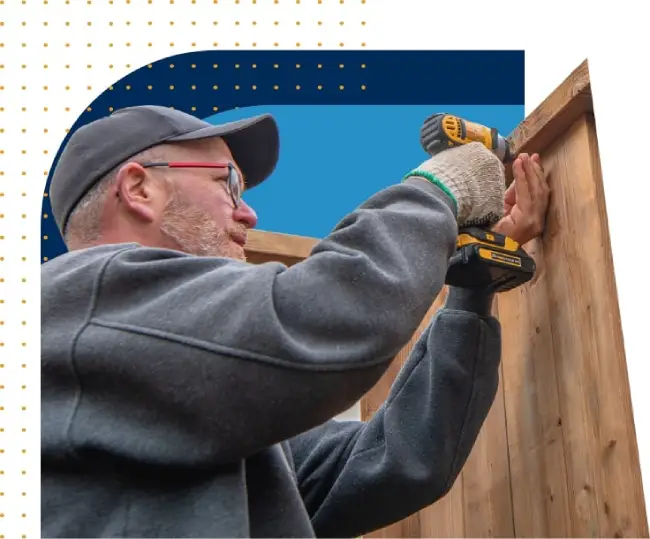
Hairline cracks can wait for your next sealing. But a split that runs through the board, or a picket with a broken top, should come out. Pull the old picket, cut a new one to match and fasten it with exterior-grade screws or nails. Our guide to screws for a wood fence explains which fasteners hold up outdoors.
New boards won’t match weathered ones at first. So plan to stain the repaired section, or the whole fence, so it blends in.
Loose Boards and Cracked Rails
Reattach loose pickets with new exterior screws instead of driving the old nails back in. If a rail has a short crack near the post, a metal rail bracket can hold it. When the crack runs most of the rail’s length, though, replace the rail, since the section will sag as the crack grows.
Leaning or Cracked Posts
A post with a cracked top can often be sealed and capped. But a post that leans or moves at the base needs to be reset or replaced, and that means digging out the old footing.
Before you dig, contact Virginia 811. It asks homeowners to reach out at least three working days ahead, even to remove old fence posts, and the marking service is free. For a sense of what post work costs, our guide to wood fence repair cost explains what drives the price of each repair.
Should You Repair or Replace a Hail Damaged Fence?
Repair makes sense when the hail damage to your wood fence is limited and the rest of the fence is sound. For example, a dozen dented pickets on a solid fence is a repair job.

Replacement is usually the better spend when:
- Several posts lean, move or feel soft at the base.
- Hail split boards along long stretches of the fence.
- The fence was already near the end of its life before the storm.
- You wanted a taller, more private or lower-maintenance fence anyway.
If a new fence makes more sense, see our guide to wood fence pricing and browse our wood fence installation styles. Then, if the upfront cost is the hurdle, fence financing can spread it out over time.
How to Protect Your Fence Before the Next Storm
You can’t stop hail. But a solid, sealed fence gives water fewer ways in after the storm passes.
- Keep the finish up. Reseal or restain when water stops beading on the boards.
- Fix loose boards and fasteners when you find them, before wind works them looser.
- Trim dead or overhanging limbs, since a falling branch can snap boards, rails and posts in one hit.
- Keep sprinklers, mulch and soil off the boards so the wood can dry out.
- Walk the fence each spring and fall, and again after any big storm.
For a full checklist, see our guide to fence maintenance. You can also add a rot board along the bottom or read our tips on fence post rot protection.
Is Your Hail Damaged Fence Past Saving? Get a Replacement Quote
Good Neighbor Fence doesn’t do repairs, but if hail left your fence past saving, we’ll walk the line and quote a replacement. We’re family owned and have built fences across Central Virginia since 2006, with more than 400 five-star Google reviews. Request a fast, free quote for a new fence, or call us at (804) 737-4664.