

Here’s how to cut aluminum fence panels in one line: measure the gap, cut the rails with a fine-tooth blade, notch the ends, and seal the bare metal. Done in that order, a short panel slides into the post and looks like it came from the factory.
Most fence runs don’t divide evenly into full panels, so nearly every aluminum job ends with at least one cut section. Below, you’ll find the tools, the six steps, how to cut posts, and the mistakes that leave gaps, loose rails or chipped paint. Good Neighbor Fence has built aluminum fences across Central Virginia since 2006, so these are the details we watch for when a line needs a custom panel.

Plan the Layout Before You Cut Aluminum Fence Panels
The best cut is the one you never have to make. The Athens aluminum fence installation instructions from Fortress Building Products tell installers to lay out the line so as few panels as possible need cutting. When a panel does need it, Fortress suggests taking an equal amount off each end.
Placement matters too. The Alumi-Guard installation guide recommends putting custom cut sections at the back of the fence line or next to the house, where they’re least visible.
So before you pick up a saw, measure the whole run and divide it by the width of one panel plus one post. Then see where the leftover lands. Shifting your starting post a few inches can move the short panel from the front walk to a side yard.
Tools You Need for Cutting Aluminum Fence
You don’t need a shop full of equipment. Most homeowners already own half of this list:
- Hacksaw, or a circular saw with a fine-tooth carbide blade
- Tape measure and a fine marker
- Two clamps and a pair of sawhorses, or a helper
- Aviation snips or a notching tool for the rail ends
- Metal file or deburring tool
- The touch-up paint made for your fence
- Safety glasses, gloves and hearing protection
The Freedom pre-assembled panel instructions say a hacksaw is enough to cut a panel down to fit. They also tell you to wear safety goggles whenever you cut or drill. If you want a faster, cleaner cut, Fortress recommends a circular saw with a fine-tooth carbide blade.
How to Cut Aluminum Fence Panels in 6 Steps
Follow these steps in order. Most bad cuts start when someone rushes the measuring.
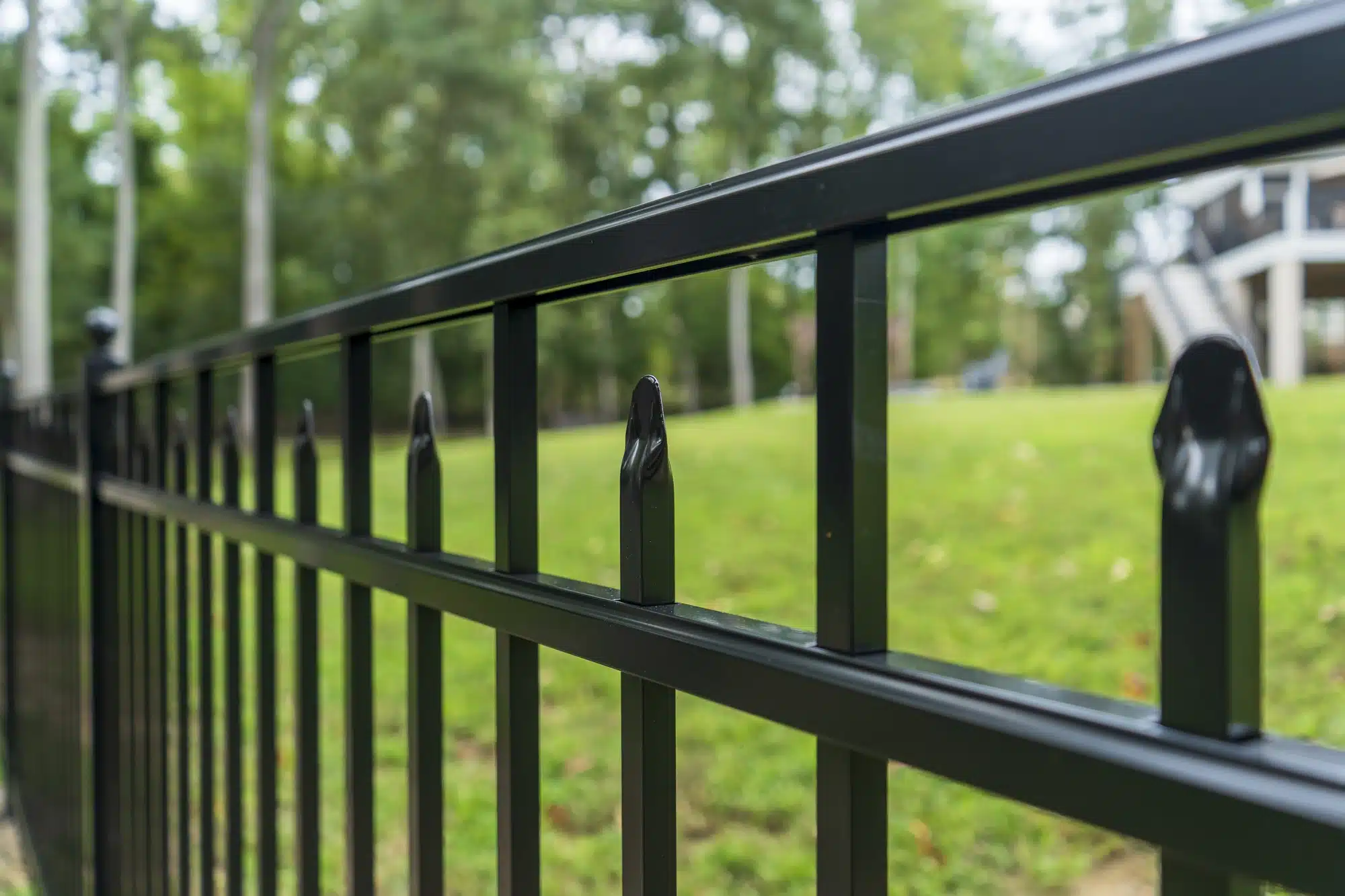
1. Measure the Opening Between Posts
Set the posts first, or at least the post the panel will slide into. Then measure the opening at the top rail and again at the bottom rail, because a post that leans slightly gives you two different numbers. Also check your manufacturer’s instructions for how far the rails seat into the post, since that changes your cut length.
2. Mark and Clamp the Panel
Mark the cut line on every rail, not just the top one, and keep each line square. Leave enough rail past the last picket to reach into the post. If you’re taking off more than a few inches, split the cut between both ends so the picket spacing stays even at each post. Finally, clamp the panel flat on sawhorses so it can’t twist during the cut.
3. Make the Cut
Cut one rail at a time with steady, even strokes. With a hacksaw, let the blade do the work instead of forcing it. With a circular saw, feed the blade slowly and keep your hands clear of the line. On panels with rail clips, Fortress says to finish one end and reinstall the clip before you cut the other end.
4. Notch the Rail Ends
The factory ends of each rail come notched to fit the holes in the post, but a fresh cut end doesn’t. So copy the factory notch onto your cut end. Freedom’s instructions tell you to notch the cut rail ends so they sit inside the post, and aviation snips handle the job quickly.
5. Deburr and Seal the Cut Ends
A saw leaves sharp burrs and bare metal. File the edges smooth so they don’t slice your hands or scratch the finish when the rail slides into the post. Then brush on touch-up paint. Fortress calls for two coats of its zinc-based touch-up paint on any cut area, so use the paint your manufacturer supplies to keep the color matched.
6. Set the Panel and Check It
Slide the rails into the first post, then set the second post or attach the panel to it. Before you fasten anything, check that the top rail is level, each post is plumb, and every rail sits fully inside the post. After that, secure the rails with the screws or brackets your system uses.
How to Cut Aluminum Fence Posts
You’ll cut posts less often than panels, but it comes up on stepped runs, at the end of a line or when a post ends up set too high. The method matches the rail cut. Mark a square line, clamp the post, cut with a hacksaw or a fine-tooth carbide blade, then file the burrs and touch up the bare metal.
The bigger question is which end to cut. Posts are punched for the rails at set heights, and the cap is made to sit on the factory top. So if a post that’s already set stands too tall, trim the top only as far as the cap still clears the top rail, and measure down from that rail instead of up from the ground.
Shortening a post before you set it is different. Taking length off the bottom keeps the rail holes where they belong, but it also shortens the part that goes in the ground. So check that you still meet your manufacturer’s depth spec before you cut.
Cutting Aluminum Fence on a Slope
Sloped yards change the math. Many aluminum panels are rackable, which means the pickets pivot so the rails can follow the grade. For example, Fortress lists its Athens panels as rackable to 12 3/8 degrees and says to install the high side first, then rake the panel down into the lower post.
Freedom’s instructions also point out that sloped ground reduces the distance between posts. So measure each opening on a hill separately instead of reusing one number. If the grade is steeper than your panel can rack, a stepped layout with level panels usually looks better than a cut panel forced to follow the slope.
Can You Cut Aluminum Fence Panels for a Pool Barrier?
Yes, but the cut section has to meet the same safety standard as the rest of the barrier. The CPSC pool barrier guidelines say openings in a pool barrier shouldn’t let a 4-inch sphere pass through. So when you cut a panel near a pool, check the gap between the last picket and the post, and check the space under the bottom rail.
Your county may add its own rules on top of that. Our guide to Virginia pool fence regulations covers what to check before you build.
Common Mistakes When Cutting Aluminum Fence
- Cutting before the posts are set, then finding the opening is a different size
- Cutting too close to a picket, so the rail can’t reach into the post
- Skipping the notch and forcing the rail into the post, which scratches the finish
- Leaving bare ends that stand out against the painted fence
- Putting the short panel at the front of the house instead of a side or back run
Should You Cut Aluminum Fence Yourself or Hire a Pro?
One or two custom panels are a fair DIY job if you’re comfortable with a saw. A full fence line is different, though. Post spacing, footings, slopes and gates all have to line up before the first cut makes sense.
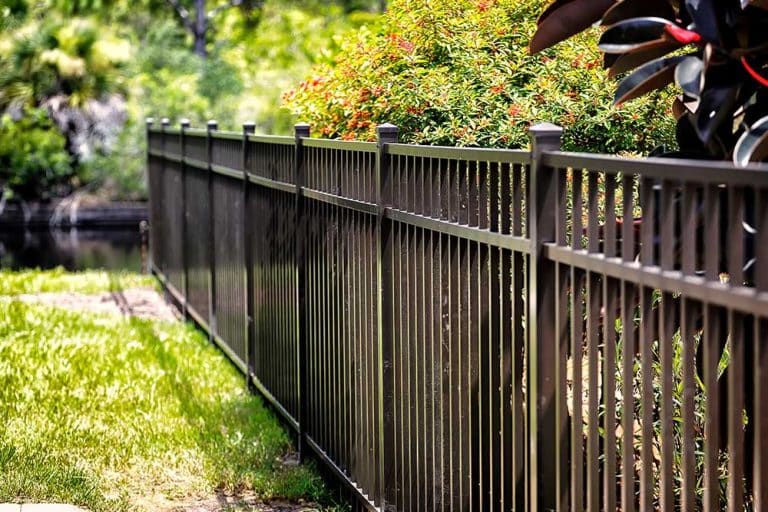
That’s where we come in. Good Neighbor Fence is family owned, has served Central Virginia since 2006 and has earned 400+ five-star Google reviews. We handle fence design and installation in Richmond, Chesterfield, Henrico, Hanover and nearby counties. You can see a finished line in this Richmond aluminum fence project.
If you’re still choosing a material, our breakdown of the pros and cons of each fence type is a good place to start. Then check our guide to aluminum fence costs to set a budget.
Get a Quote for Your Aluminum Fence
Want an aluminum fence that fits your yard without the sawdust? Request a fast, free quote or call (804) 737-4664 to talk with our Central Virginia team.