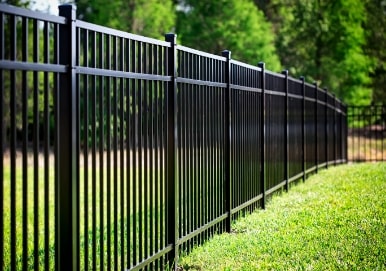




The invisible fence vs traditional fence decision comes down to one question: do you only need to keep your dog in, or do you also need to keep things out? An invisible fence can hold a trained dog inside a boundary. But only a traditional fence puts a real barrier between your dog and the stray dogs, wildlife and people outside it.
Good Neighbor Fence builds wood, vinyl, aluminum and chain link fences across Central Virginia. Below is a plain comparison of how each option works, where each one falls short, and which dogs do best with each.

How an Invisible Dog Fence Works
An invisible dog fence goes by a few names: underground dog fence, electric dog fence or hidden fence. Most systems pair a buried boundary wire with a receiver collar on your dog. Some use a wireless transmitter instead of a wire.
When your dog walks toward the boundary, the collar beeps. If the dog keeps going, the collar delivers an electric stimulus. The veterinarians at VCA Animal Hospitals explain that dogs learn the line during a training period, walking the yard with their owners while small flags mark the boundary.
So an invisible fence is really a training system, not a barrier. It only works while the collar is charged, the wire is intact and your dog respects the warning.
How a Traditional Fence Keeps Your Dog Safe
A traditional fence is a physical barrier: wood, vinyl, aluminum or chain link set on posts around your yard. It works whether or not your dog wears a collar. It also keeps working through power outages, dead batteries and thunderstorms.
That is the core difference between an invisible fence and a traditional fence. A real fence also does jobs a buried wire can’t. It marks your property line, gives you privacy and puts a gate between your yard and the street. If you have young kids, it keeps them in the yard too. Our post on the benefits of a fenced yard covers that side.
The trade-off is cost. A physical fence costs more up front, and you may need a permit or HOA approval before you build. Our breakdown of fence installation cost explains what drives the price.
Invisible Fence vs Traditional Fence at a Glance
Here is how an invisible fence and a traditional fence compare on the points that matter most to dog owners.
- Keeping your dog in: An invisible fence works for many trained dogs. A traditional fence works for any dog it is tall and tight enough to hold.
- Keeping other animals out: An invisible fence doesn’t stop anything from coming in. A traditional fence does.
- Upfront cost: An invisible fence usually costs less. A traditional fence costs more, based on material, height and length.
- Upkeep: Invisible fences need collar batteries, wire repairs and refresher training. Traditional fences need seasonal checks, cleaning and, for wood, sealing.
- Looks: An invisible fence leaves the view open. A traditional fence can be open (aluminum or chain link) or fully private (wood or vinyl).
- Terrain: Buried wire handles hills, woods and streams. A physical fence can follow slopes too, but rough ground adds labor.
- Pools: Pool barrier rules, including the CPSC pool barrier guidelines, call for a physical barrier with self-closing, self-latching gates, so a buried wire doesn’t count. See our guide to Virginia pool fence rules.
What Are the Drawbacks of an Electric Dog Fence?
The biggest drawback is simple: an electric dog fence only works on your dog. VCA notes that it doesn’t stop hazards from entering the yard, so stray dogs and wild animals can still walk right up to your pet.
VCA’s vets also point to a few other problems:
- Motivated dogs cross it. A dog that sees something to chase, or gets scared by thunder, may ignore the stimulus and run through the line.
- Coming home can hurt. Some systems also correct the dog on the way back in, so a dog that slipped out gets corrected again on the way home.
- Power and battery failures. A cut wire or a dead collar battery can switch the boundary off, and then escape is possible.
- Barrier frustration. Friendly dogs can get agitated when they watch neighborhood dogs they can’t join.
A buried wire also does nothing about people. Anyone can walk up to your dog, and there is no gate to lock.
Training method matters too. The American Veterinary Society of Animal Behavior recommends reward-based training for dogs. It also says trainers should avoid tools that involve pain, including electronic shock collars. An invisible fence collar uses a similar electric correction.
When an Underground Dog Fence Can Make Sense
An underground dog fence isn’t wrong for every home. VCA lists real advantages: it can cost less than a wood or iron fence, it works across hills, woods and water, and it doesn’t block your view. It can also help with dogs that dig under or climb over a fence.
You can also run a hidden wire just inside a physical fence to discourage digging along the fence line. So an invisible fence can fit a calm, well-trained dog on a big lot, or a neighborhood where HOA rules limit fences. For most families in Richmond, Chesterfield and Henrico, though, a physical fence is the safer everyday choice.
Which Traditional Fence Is Best for Dogs?
The right material depends on your dog’s size, energy and habits. Here is how the four main materials work for dogs.
Wood Privacy Fence
A solid wood privacy fence blocks your dog’s view of the street, so there are fewer passing dogs and people to bark at. Taller styles also suit big dogs. Plan on regular sealing to protect the boards.
Vinyl Fence
Vinyl fence installation gives you solid privacy panels with no splinters and no painting or staining. The smooth surface also gives climbers less to grip. You can see the look in this vinyl privacy fence for a Chesterfield family home.
Aluminum Fence
An aluminum fence keeps your view open and won’t rust or rot. It suits neighborhoods that want an open look. If you have a small dog, check the gap between pickets before you pick a style.
Chain Link Fence
A chain link fence is one of the most affordable ways to fence a large yard, and it stands up well to active dogs. Since it’s see-through, it works best for dogs that don’t bark at everything that passes.
For more help by breed and behavior, see our guide to the best fence for dogs.
How Do You Choose the Right Dog Fence?
In the invisible fence vs traditional fence choice, start with your dog, then look at your yard. These questions usually settle it:
- Does your dog chase squirrels, deer or cars?
- Do loose dogs or wildlife pass through your neighborhood?
- Are there young kids or a pool at home?
- Do you want privacy or a clear property line?
- Does your HOA limit fence height, style or location?
If you answered yes to any of the first four, a traditional fence is the better fit. If HOA rules are the hurdle, read our tips on installing a fence in an HOA. An open style like aluminum may also be easier to get approved.
Budget matters too. If the price of a physical fence is what’s holding you back, look at our fence financing options.
Get a Quote for a Dog Fence in Central Virginia
Ready to give your dog a yard with real boundaries? Good Neighbor Fence is family owned, has served Central Virginia since 2006 and has earned 400+ five-star Google reviews. We offer fence design and installation across Richmond, Chesterfield, Henrico and the surrounding counties. Request a fast, free quote and we’ll help you pick the right material and height for your dog, or call us at (804) 737-4664.