

The best horse fencing is tall, easy for a horse to see, and free of gaps that can trap a hoof. For many Virginia farms, that means a wood board or vinyl rail perimeter. Electric tape then works well for splitting pastures inside it.
Fences matter more than most owners expect. Virginia Cooperative Extension notes that fences and buildings are the first and second leading causes of injury to horses. So the choice comes down to safety first, then upkeep and cost.
Below, we compare the common options, cover the height and post numbers that matter, and share what to plan before the first post goes in.

What Makes the Best Horse Fencing?
A good horse fence does several jobs at once. It keeps horses in, it keeps them from getting hurt, and it stays standing when a horse leans on it. It also has to hold up to hot, humid summers and freezing winters.
Look for these traits when you compare materials:
- Height. The top should sit near the horse’s withers, so it can’t flip over the fence.
- Visibility. Horses spot wide boards and tape far more easily than thin wire, so they are less likely to run into the line.
- No trap points. Openings should be too small for a hoof to slip through.
- Strength. Horses reach over and through fences for grass, so posts and rails need to handle steady pressure.
- Smooth surfaces. Skip anything with sharp edges, exposed nails or barbs.
Barbed wire fails most of these tests. Penn State Extension notes that many owners who save money on cheap, unsafe fence such as barbed wire end up paying for it in vet bills.
Comparing Horse Fence Types
Each material trades off cost, upkeep and safety in a different way. Here is how the main horse fencing options stack up.
Wood Board Fence
Of all the horse fence types, three and four board wood fences are the classic look on Virginia farms. Horses see the wide boards easily, and pressure-treated posts and rails stand up to a lean. For example, this 4 board paddock in Goochland uses pressure-treated wood that follows the natural slope of the land.
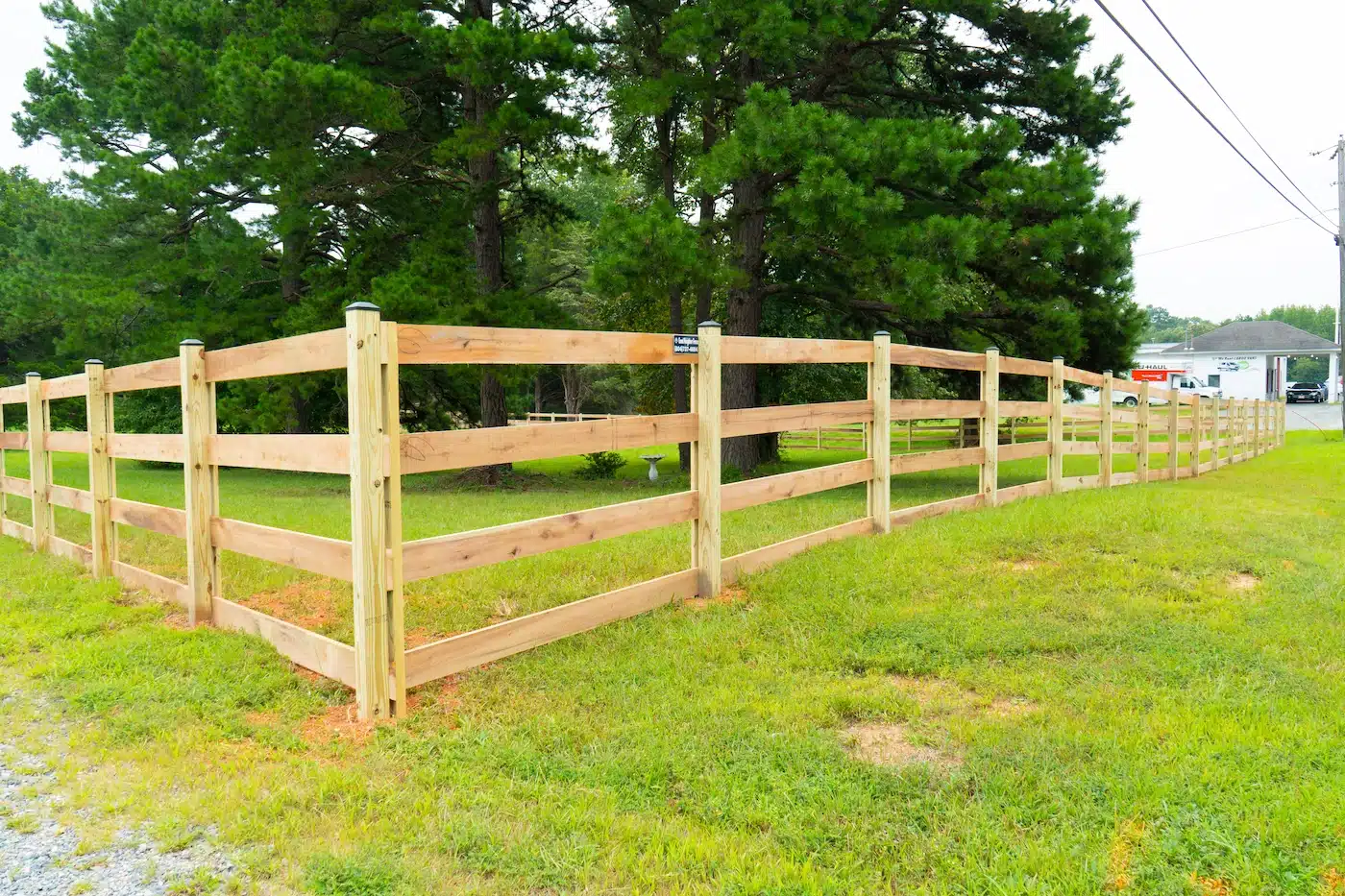
Wood does ask for more care. Boards can crack after a kick, horses may chew the rails, and paint or stain needs a refresh every few years. Still, many owners feel the look is worth the upkeep. Our wood fence installation page shows the styles we build.
Vinyl Rail Fence
Vinyl rail fencing gives you the same board look without the painting. It won’t rot, and it won’t splinter the way a cracked wood board can. Vinyl usually costs more up front, but you trade that for less upkeep over the years.
If you choose vinyl, pick a rail style made for livestock instead of a light decorative rail. You can compare profiles on our vinyl fence installation page.
Woven Wire and V-Mesh
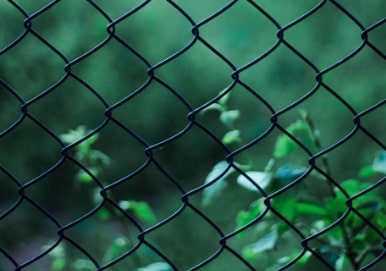
Woven wire is the horse fence type to consider when foals, dogs or other small animals share the pasture. Common versions include no-climb and V-mesh wire. Virginia Cooperative Extension says wire fences generally are not a good fit for small areas unless the wire is V-mesh with a top rail, both for visibility and to keep horses from pushing the fence down.
Opening size matters, too. Penn State Extension puts safe mesh openings at less than 3 inches square, depending on the size of the horse. That way a hoof can’t slip through and get caught.
Electric Tape and High-Tensile Wire
Electric tape is one of the most budget friendly horse fencing options for splitting a big pasture into grazing sections. But it works best as a helper, not the main barrier. Virginia Cooperative Extension says poly tape electric fence is good for dividing pastures but should not be the perimeter fence.
High-tensile wire needs extra care. The same Extension article warns it can cause serious injury if a horse runs into it or gets a leg hung in it. Young horses also need time to learn an electric fence before you rely on it.
How Tall Should a Horse Fence Be?
Height is where the best horse fencing starts. Most horse fences should stand 54 to 60 inches tall, according to Penn State Extension. A simple rule is to set the top of the fence at wither height, so a horse can’t flip over it. Virginia Cooperative Extension adds that stallions may need a fence closer to 6 feet.
Watch the bottom of the fence, too. Penn State suggests about 8 inches of clearance, because that leaves room to avoid trapping a hoof while it still discourages grazing under the fence. With foals, keep the bottom rail no higher than 12 inches so they can’t roll under.
Posts matter just as much as rails. Penn State lists a typical line post depth of 36 inches. Corner and gate posts carry more load, so they are larger and often set to 48 inches.
Post material counts, too. Penn State says a pressure-treated wood post can last 10 to 25 years, depending on the soil and the quality of the treatment. It also warns against metal and fiberglass T-posts because of the risk of impalement.
Planning Your Horse Fencing Options Around the Land
A smart layout makes any material safer. Before you pick rails, walk the property and map how your horses move, graze and gather.
- Round the corners. Curved corners make it harder for a dominant horse to trap another one in a pasture with more than one horse.
- Size the gates. Penn State Extension suggests 12 to 16 feet for vehicles and tractors, and at least 4 feet for a horse and handler (5 feet is better).
- Build stronger where horses crowd. Use your sturdiest fence near gates, water, feed and shelters.
- Follow the ground. Central Virginia pastures often roll, so posts should step with the slope instead of leaving gaps under the rails.
Gates are part of the fence plan, not an add-on. We build them into the full fence design and installation project, so post size and swing direction match the rest of the line.
Many owners also mix materials. For example, a board or vinyl perimeter with electric tape cross fencing gives you a strong outer line and flexible grazing inside it. For more layouts, see our popular farm fence designs and these farm fence installation tips.
Which Horse Fence Types Fit Your Farm?
If you are still torn, start with how you use each area. Then match the fence to the job:
- Main perimeter: wood board or vinyl rail, 54 to 60 inches tall.
- Small paddocks with foals or dogs: V-mesh with a top board for visibility.
- Rotational grazing inside the perimeter: electric tape.
- Stallion pens: a taller, stronger board fence, closer to 6 feet.
Once you know the job for each fence line, the choice gets much simpler.
Budgeting for the Best Horse Fencing
Cost depends on total footage, the material, the number of gates and how hard the ground is to dig. Board and vinyl cost more per foot than electric tape, but they give you a stronger, more visible perimeter.
To see what drives the price, read our guide to horse fence installation cost in Virginia. If you would rather spread out the cost, you can also finance your fence build.
Get a Quote for Your Horse Fence
Planning a new paddock or pasture fence in Goochland, Powhatan or anywhere in Central Virginia? Request a fast, free quote and our team will help you choose the best horse fencing for your land and your horses. You can also call us at (804) 737-4664.