



Farm fence installation starts with one question: what does the fence need to hold in or keep out? Horses, cattle, goats and crops all call for different fence types, heights and post setups. So settle the purpose first, then plan the layout, gates and posts around it.
This guide walks through each step of a farm fence installation from the view of a Central Virginia fence builder. It also covers the state rules and extension research that apply to farms around Richmond.
Start With What Your Farm Fence Needs to Do
Every farm fence has a job. Some hold livestock, some mark a boundary, and some keep animals out of crops. Many farms need more than one type, for example a board fence near the house and wire fencing across the back pastures.
- Horses: They need a visible, smooth fence without sharp edges. Penn State Extension recommends horse fences 54 to 60 inches above the ground.
- Cattle: Strength matters more than looks, since cattle lean and push. Virginia Cooperative Extension says perimeter fences are typically woven wire or multiple-wire high-tensile electric.
- Goats and sheep: Small animals test every gap. The same extension guide warns that wires spaced more than 10 inches apart may let animals put their heads through.
- Crops and gardens: These fences keep animals out instead of in, so the right height and mesh depend on the pest.
Our guide to popular farm fence designs compares board, wire and electric styles in more detail. For horse properties, see our post on choosing horse fencing. If you’re protecting a kitchen garden, read about the right garden fence for pests and wildlife.
What Counts as a Lawful Farm Fence in Virginia?
Virginia law sets a minimum standard for fences that hold livestock. Under Virginia Code § 55.1-2804, a board, plank or rail fence is a lawful fence when it stands at least 42 inches high with at least three boards firmly attached to posts. A barbed wire fence also needs 42 inches of height, with at least four strands.
Other fence types can qualify, too. The code accepts any fence at least 42 inches high that uses materials sold for fencing and is installed to generally accepted standards. In every case, the livestock must not be able to creep through it.
Still, those numbers are minimums, not targets. A 42 inch fence falls well short of the horse fence heights above. Also check county zoning and any HOA rules if your land sits in a subdivision or along a busy road. If the fence runs on a boundary, our guide to Virginia property line fence rules explains what to confirm first.
Plan the Layout and Measure Every Run
A good layout is the cheapest part of any farm fence installation, and it saves daily chores for years. First, walk the fence line and mark corners, gates, low spots and trees. Then measure each straight run, since corners and ends need stronger posts than line posts.
Plan how you’ll move animals and equipment, too. Virginia Cooperative Extension suggests locating gates in corners rather than in the middle of fences. It also describes lanes that link paddocks, from narrow 10 foot stone lanes to wide 40 foot grass lanes.
Once the layout is set, count posts, boards and gates for each run. Our guide to how much fencing you need walks through the math.
Call Virginia 811 Before Any Digging
Every farm fence installation needs a utility check before the first post hole. Virginia 811 says you must contact it at least 3 working days before you dig, even to install a fence or pull old posts. The marking service is free.
But Virginia 811 only marks public utility lines. Its private utilities page explains that lines running to a detached garage or shed, septic systems and propane lines won’t be marked. On a farm, lines out to a barn or outbuilding fall in that group, so map them before the first hole.
How Deep Should Farm Fence Posts Go?
Posts carry the whole fence, so set them with care. Penn State Extension lists a typical line post depth of 36 inches. Corner and gate posts carry more load, so they are about 25 percent larger in diameter and often go 48 inches deep.
Use pressure-treated posts rated for ground contact. According to the same Penn State guide, a pressure-treated post can last 10 to 25 years. Actual life varies with the treatment and the site.
On a board fence, fasten the boards to the animal side of the posts. Penn State notes that this also strengthens the fence. When animals lean on it, they push the boards into the posts instead of off them. It also suggests about 8 inches of clearance under the bottom board of a horse fence, enough to avoid trapping a hoof.
Wire fences work differently, since they rely on tension. Virginia Cooperative Extension notes that high-tensile fences can be built with wooden or fiberglass posts, plus wooden or alternative braces. So the corner and end assemblies matter most on a wire fence.
Choose Gates That Fit Your Equipment
Size each gate for the biggest thing that will pass through it, whether that’s a tractor, a trailer or a mower. Then hang it on your strongest posts. A wide gate puts heavy leverage on its hinge post, so that post needs a deep setting.

Gates also see the most daily use, so plan them early. If you move animals often, put a gate on each side of a paddock. For hardware and latch ideas, see our post on gate hardware and security.
Keep Your Farm Fence in Good Shape
A farm fence covers a lot of ground, so small problems hide easily. These habits catch them early.
- Walk the fence line after big storms and look for fallen limbs.
- Check posts at the ground line for rot or lean.
- Tighten loose boards before animals find them.
- Cut back brush and vines, so the fence dries out and stays visible.
- Seal or stain wood boards to slow weathering. Our tips on sealing a wood fence show how.
For a full checklist, see our guide to fence maintenance.
Farm Fence Installation in Goochland: A Local Example
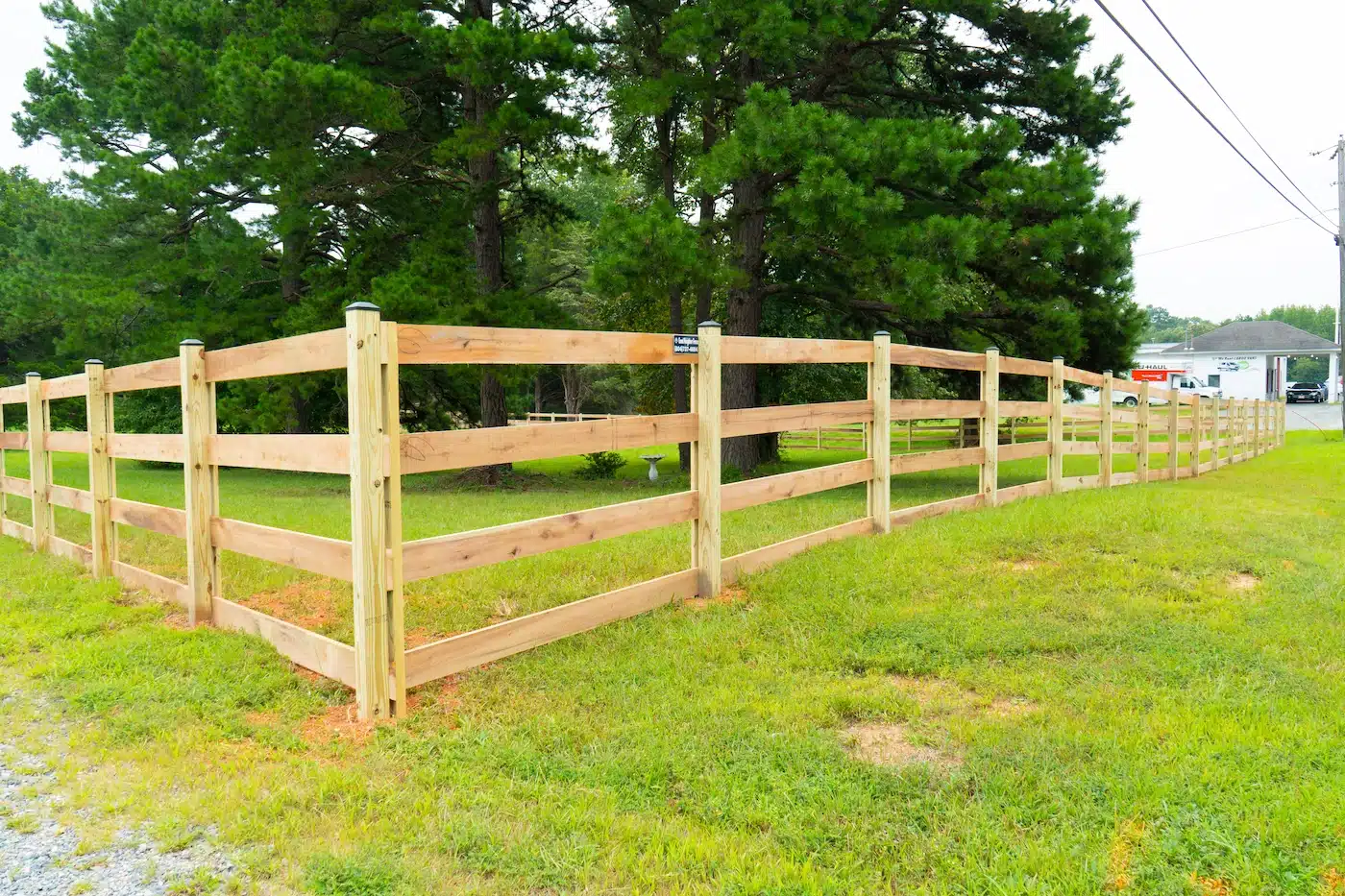
We recently built a 4 board paddock fence for a Goochland equestrian property. We laid out each run to follow the natural contours of the land and kept post spacing consistent the whole way. The boards and posts are pressure-treated lumber, and the job took two days.
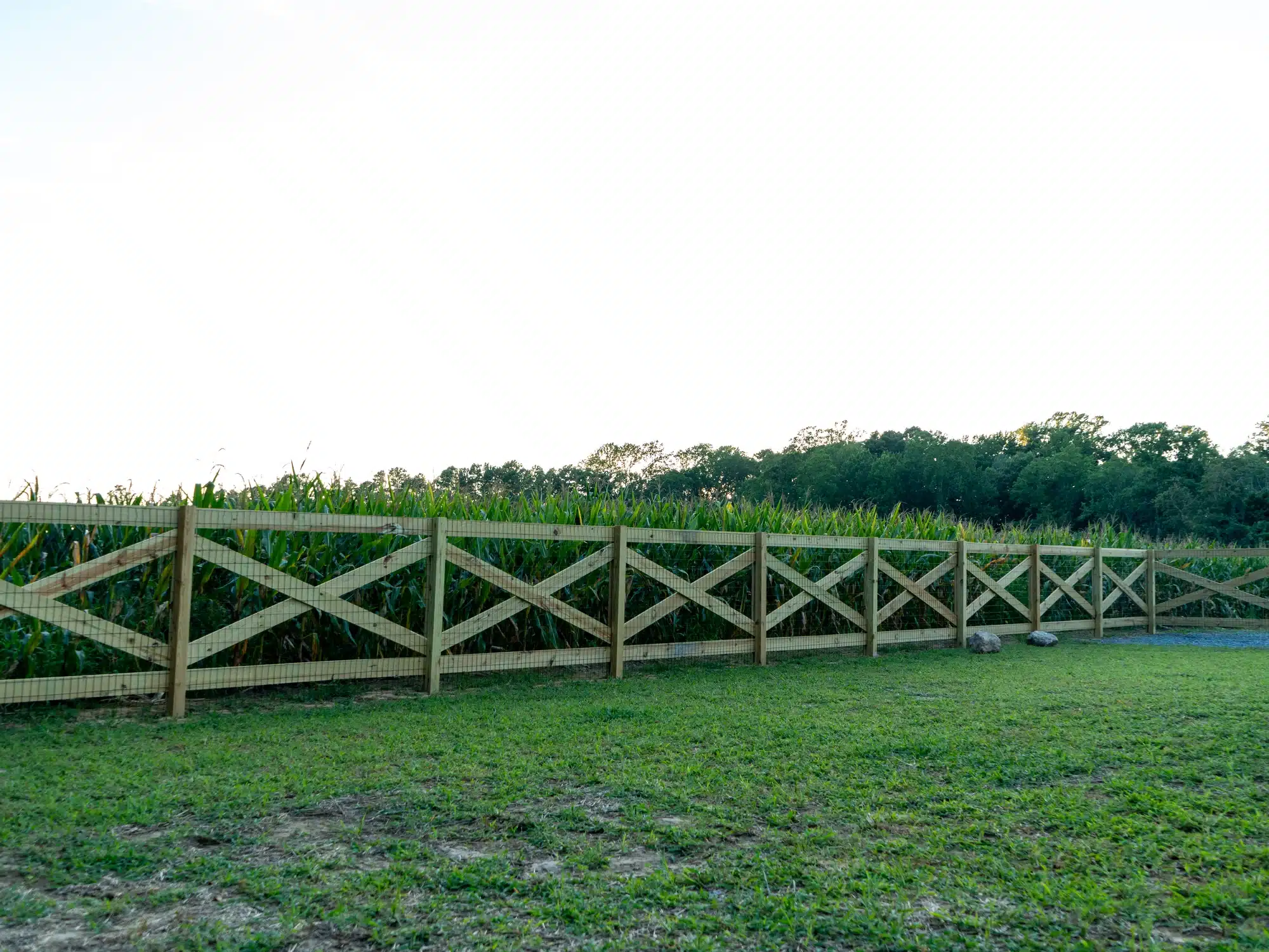
Crossbuck and split rail styles are other options for farms and rural homes. Our guide on installing a split rail fence covers that style, and our horse fence cost guide explains pricing. We also work across Goochland, Hanover, Powhatan and New Kent.
Get a Farm Fence Quote in Central Virginia
Good Neighbor Fence is a family-owned fence company that has served the Greater Richmond area since 2006. If a wood board or paddock fence fits your land, we can help you plan the farm fence installation, from the layout to the posts and gates. Browse our wood fence installation page to see the styles we build.
Request a free quote, and we’ll visit your property to talk through the plan. Fence financing can help spread out the cost of a long fence line. Prefer to talk it through? Call us at (804) 737-4664.