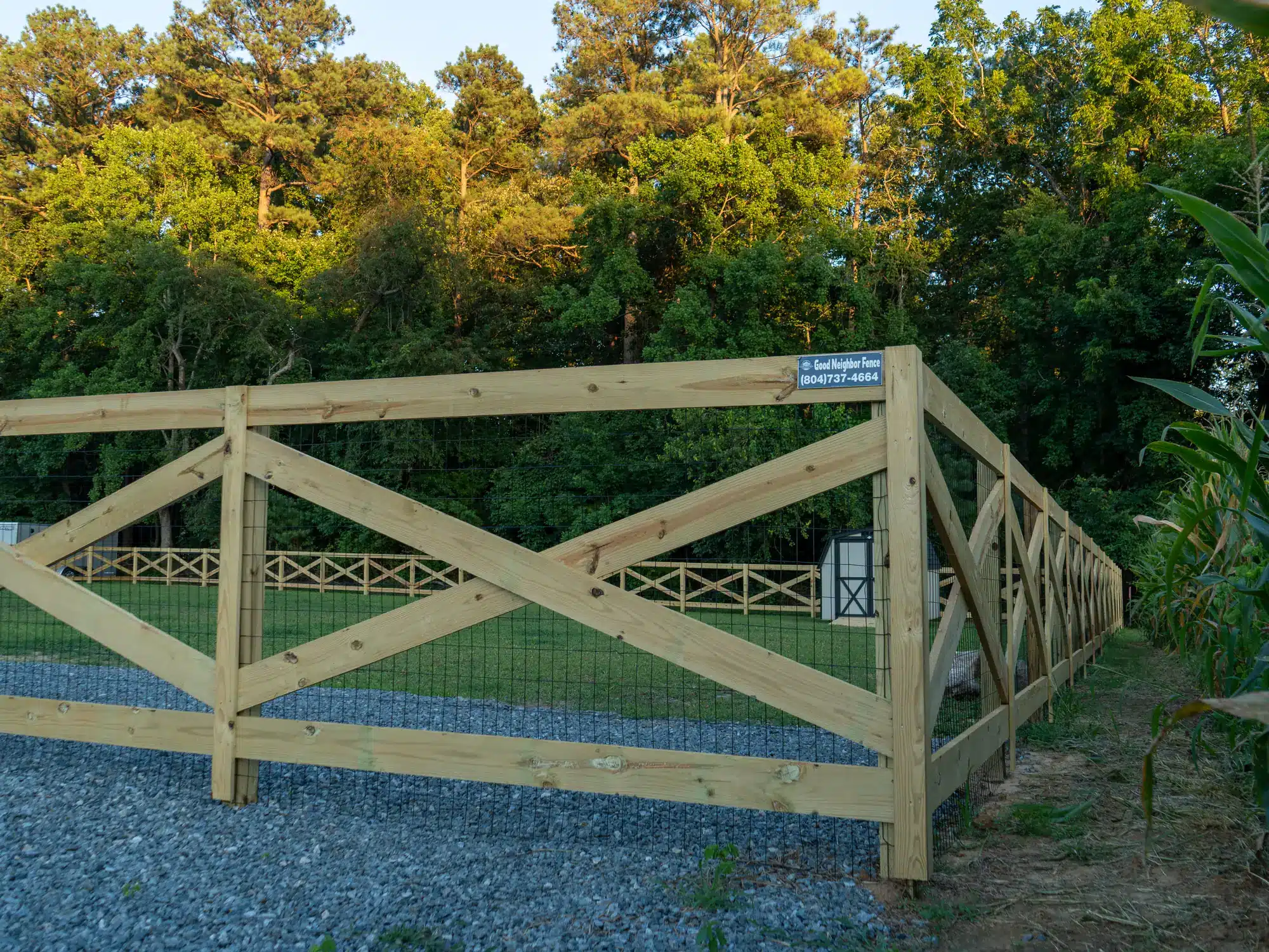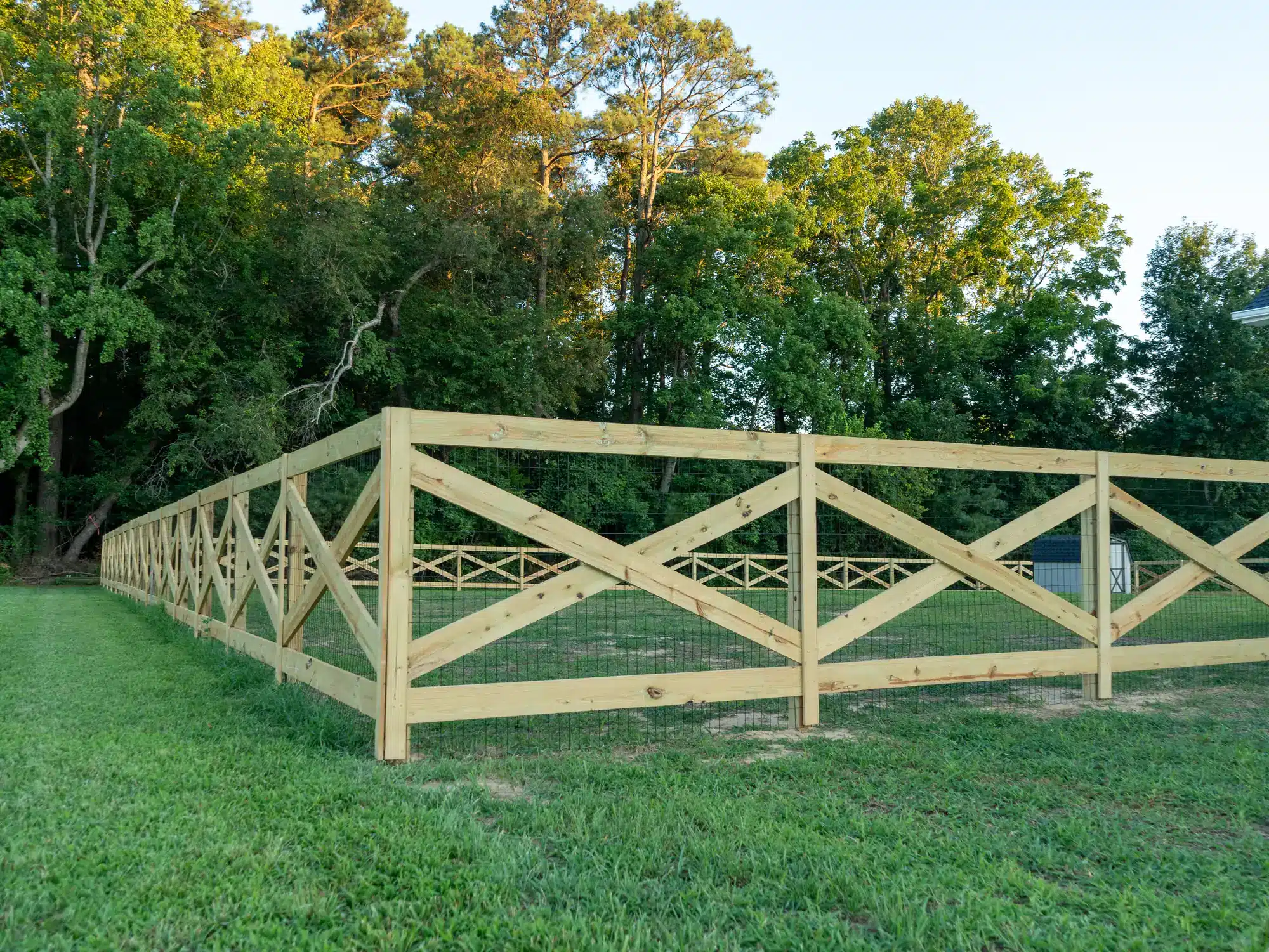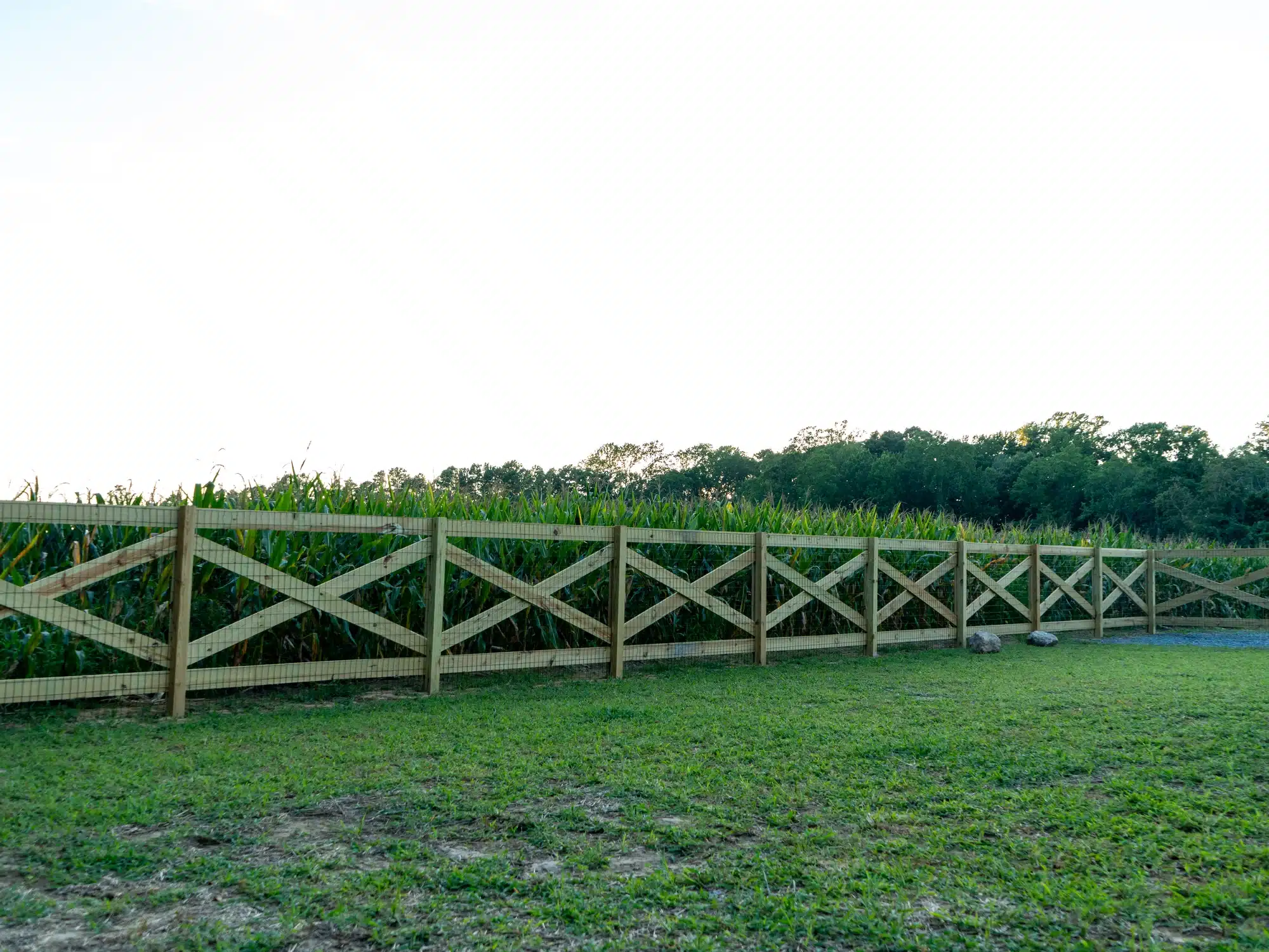




This crossbuck paddock fence took us to Center Cross, in Essex County. There, a home with a covered porch sits back behind a wide, open lawn, with a gravel drive on one side and a cornfield on the other. The property did not need closing in so much as it needed a frame.
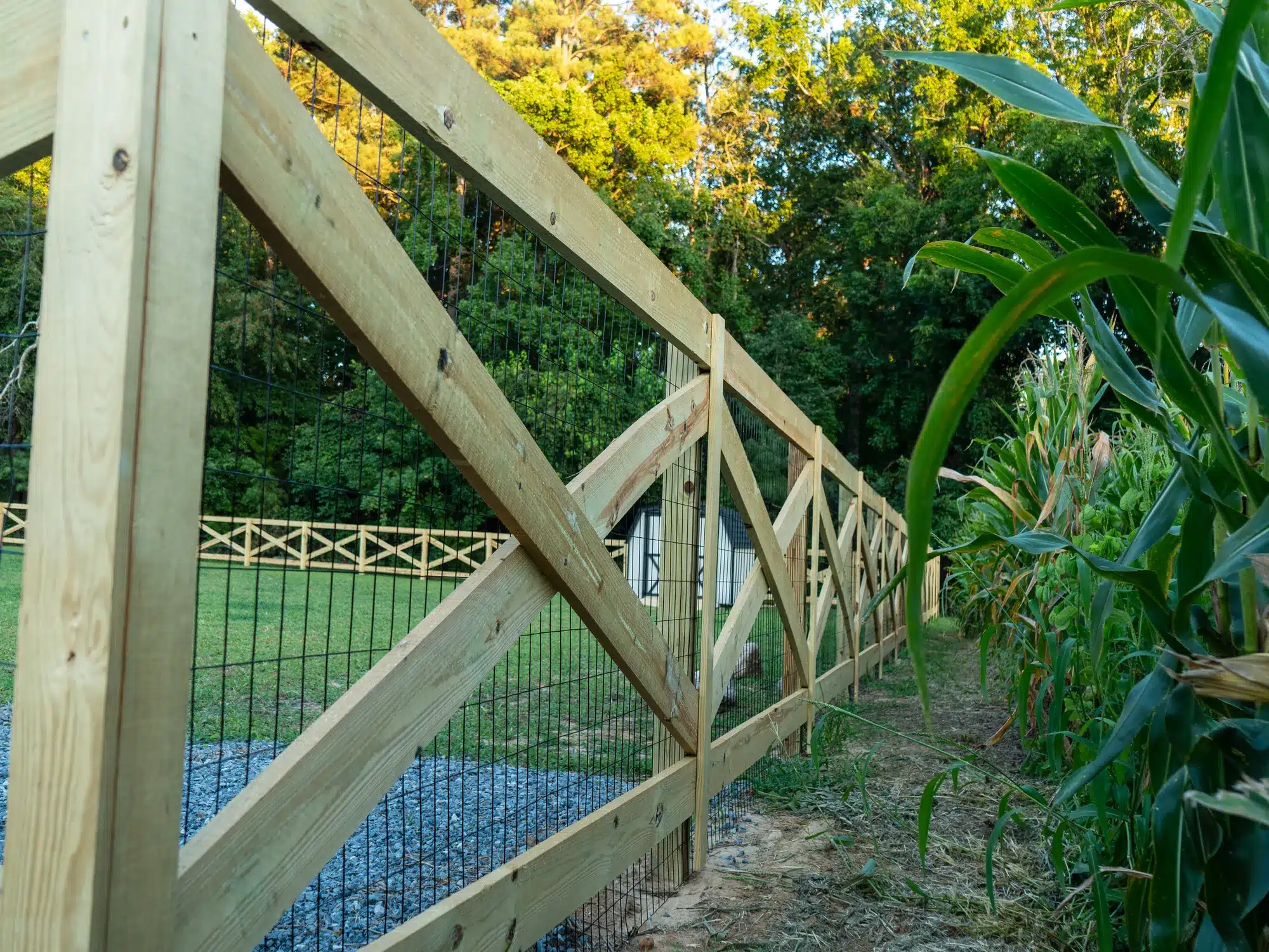
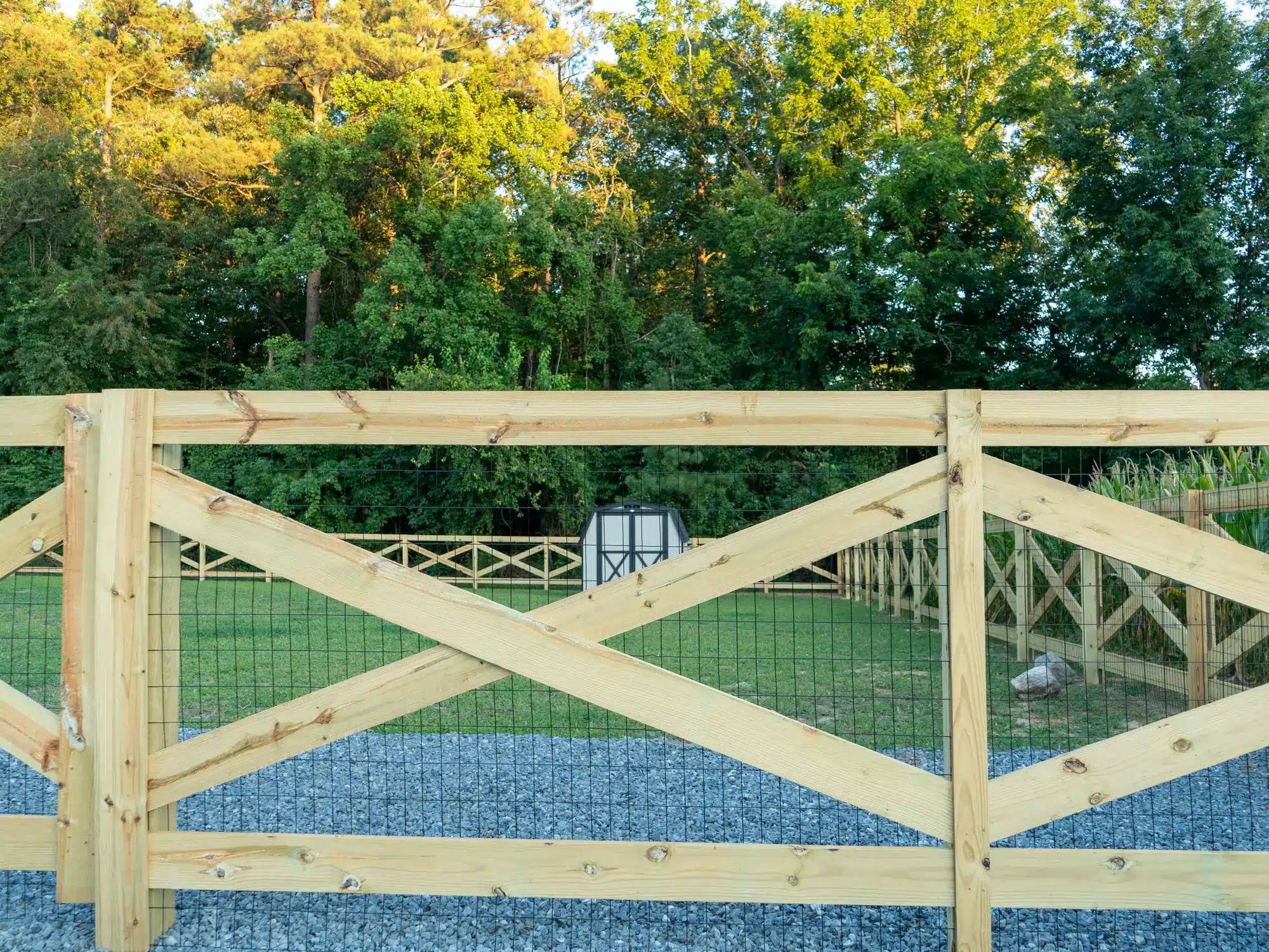
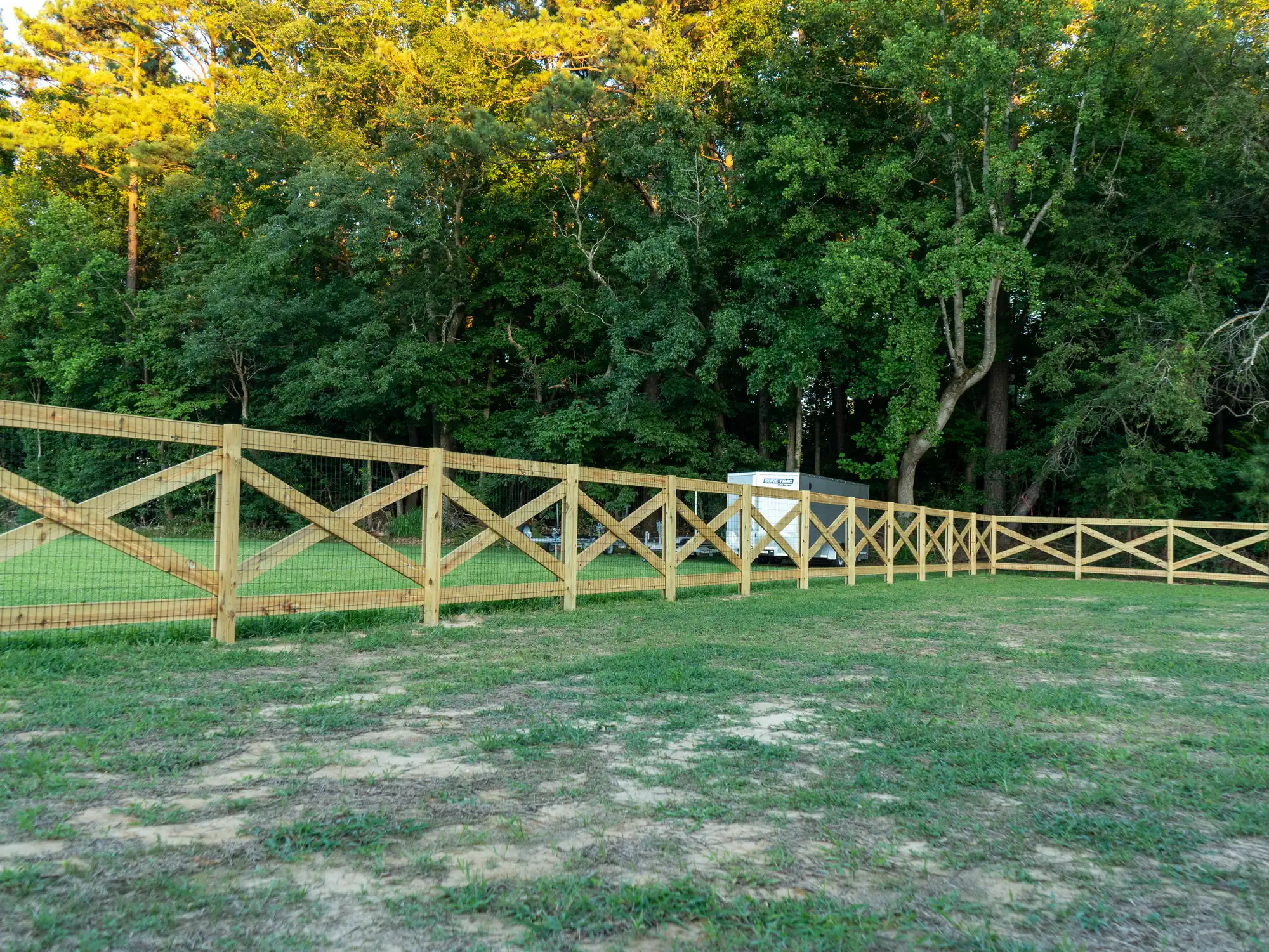
So we built a long, continuous run of 5′ natural pressure-treated crossbuck. Each X-braced bay sits between a top and bottom rail, with welded wire backing on the inside. The line follows the lot’s boundary beneath mature shade trees in full leaf.
Crossbuck is a traditional wood fence profile in rural Virginia. It reads clearly from the road and the porch, yet it never hides the lawn or the trees behind it.
Crossbuck Paddock Fence Project Highlights
A Crossbuck Fence Built to Frame
Not every fence exists only to keep something in or out. This brief was mostly about definition, giving a large open lawn a clear boundary that suits a rural Essex County property. Crossbuck handles that well.
The X-brace in each bay carries the eye along the run, so the fence has a rhythm a plain two-rail or three-rail design lacks. Meanwhile, the top rail ties the whole line together at a consistent 5′.
At that height, the crossbuck fence reads as architecture from the drive and the porch. Still, it never becomes a wall, because you look straight through it to the lawn and shade trees. The welded wire backing closes the openings between the rails and braces, so the yard is contained without losing the open look. For more rural styles, see our post on popular farm fence designs.
Natural Pine for Virginia Ground
We built this crossbuck paddock fence from natural pressure-treated pine, a long-standing choice on Virginia farms and rural lots. The treatment protects the wood from rot and insects. For posts set in the ground, the American Wood Protection Association calls for Use Category 4A (UC4A) or higher. That matters on a long boundary run sitting in wet spring grass.
Left as is, the fresh green-tan tone will mellow over the next few seasons to a soft silver-gray. If the family later wants something warmer or darker, the wood takes stain down the road. Pine is not a maintenance-free material, and a stain or sealer will help it hold up. Even so, it is strong and well suited to a run this long.
Holding a Long Line From the House to the Cornfield
The real challenge on a run this long is consistency. After all, a crossbuck fence puts every joint on display. An inch of drift in the post line, or a rail a hair high, shows down the entire boundary. Here, the rails hold one height, and each X crosses at the same point in every bay, from the gates by the house to the far run beside the cornfield.
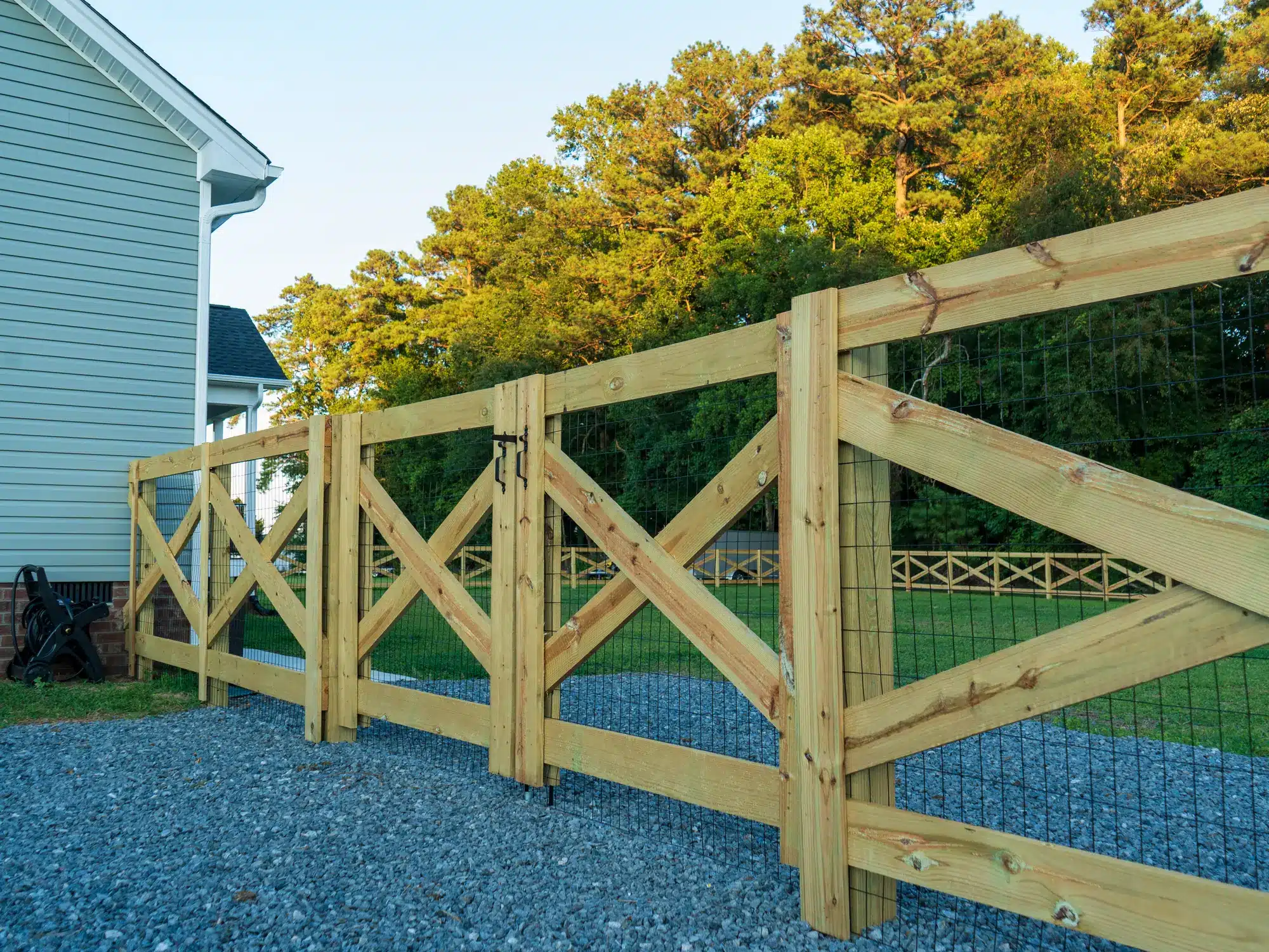
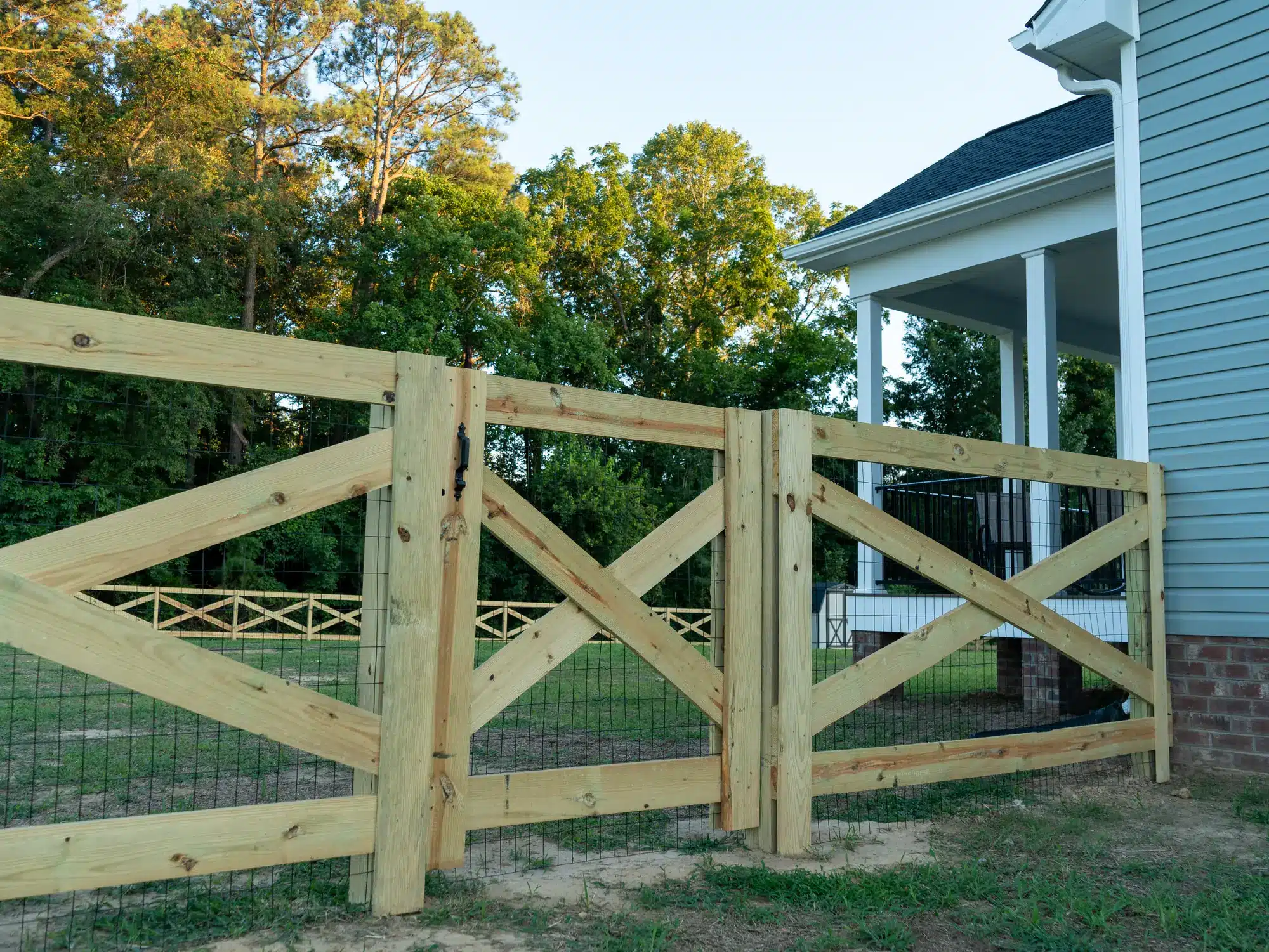
Near the house, a wire-backed crossbuck double gate opens onto the gravel drive. It carries the same X pattern as the fence, so the entry reads as part of the line. Out along the lawn, the run passes a shed and heads toward the treeline.
A Classic Profile for a Rural Essex County Lot
This 5′ crossbuck paddock fence gives the Center Cross property what a rural Virginia home asks of a boundary. It puts a clear, handsome edge on a large lawn, and its traditional detailing suits both the house and the setting.
Crossbuck is a classic for good reason, and it ages well instead of looking dated. It is also one of the profiles we offer through our wood fence design and build service.
Get a Fast, Free Quote for Your Crossbuck Fence
Have a lawn, a drive or a field edge that needs a frame? Request a fast, free quote or call (804) 737-4664. Good Neighbor Fence has been family owned since 2006 and has more than 400 five-star Google reviews. We build across Central Virginia and east toward Essex County.