

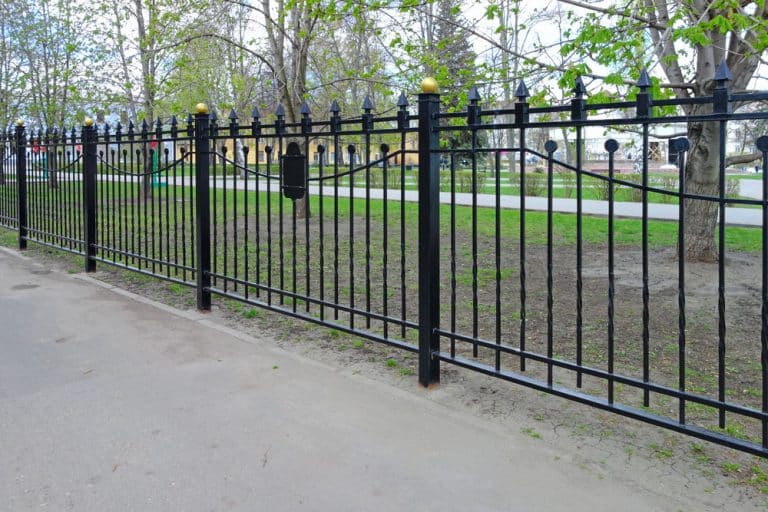
The main aluminum fence pros and cons come down to one trade. You get a fence that won’t rust, needs almost no upkeep and looks sharp for years. In return, you give up privacy and pay more up front than chain link.
We build ornamental aluminum fences across Central Virginia, and here is our honest take. It’s a great fence for the right job and the wrong fence for a few others. Below, we walk through the real benefits, the real drawbacks and the yards where aluminum makes the most sense.

Aluminum Fence Pros and Cons at a Glance
Here are the aluminum fence pros and cons side by side. The pros:
- Rust isn’t an issue, so the finish isn’t fighting corrosion from underneath.
- Upkeep is minimal, with no paint, stain or sealer.
- It can serve as a pool barrier when built to code.
- The open look adds curb appeal without blocking the view.
- Light panels can rack to follow a slope.
- The metal is recyclable.
The cons:
- It gives you no privacy.
- It usually costs more up front than chain link.
- A hard hit can bend or dent it.
- Standard picket spacing may let small dogs through.
- Climbing dogs can use the rails as footholds.
The Benefits of Aluminum Fencing
These are the reasons homeowners keep choosing aluminum, starting with the one that matters most over time.
It Won’t Rust
Rust is iron oxide, so it forms on iron and steel, not aluminum. The Aluminum Association lists corrosion resistance among aluminum’s core traits. Then a powder coat seals the metal and holds the color. On our classic aluminum fence in Richmond, the homeowner chose powder-coated aluminum for exactly that resistance to corrosion.
Almost No Maintenance
An aluminum fence never needs paint, stain or sealer. A rinse with a hose, plus mild soap and a soft brush for stubborn spots, keeps it clean. Compare that with wood, which needs regular sealing or staining to hold up (see how to seal a wood fence). For busy homeowners, that difference adds up every year.
Aluminum Fence Benefits for Pools
Aluminum is a common pool barrier because it can meet code without hiding the water from view. Chesterfield County’s pool barrier requirements call for a barrier at least 48 inches high. They also allow no more than 2 inches between grade and the bottom of the barrier. Gates must self-close, self-latch and open away from the pool.
Picket spacing rules change with the rail layout, so confirm the panel style before you order. Our guide to Virginia pool fence rules covers the local details.

Curb Appeal Without Blocking the View
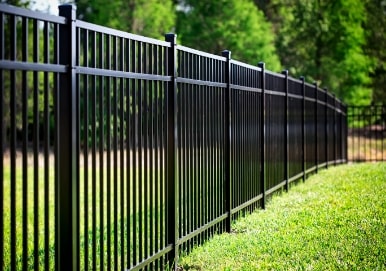
An ornamental aluminum fence gives you the look of wrought iron with a clean, open line. It marks the property without walling it off, so front yards and corner lots still feel open. Finials, arched gates and decorative post caps dress it up further. For example, on one Richmond aluminum fence, we added lantern post caps and a monogram medallion to an arched drive gate. See our guide to aluminum fence styles for more ideas.
Security Without a Fortress Look
Aluminum won’t stop a determined intruder, but it sets a clear line and makes casual entry harder. Taller styles and spear tops add to that. At a business in Colonial Heights, we installed a 6 foot commercial aluminum fence that secures the site without the heavy look of chain link or solid panels.
Light, Strong and Easy to Fit to a Slope
Aluminum panels are much lighter than steel or iron, so they’re easier to handle and set. Many panels are also rackable, which means the rails can follow a sloped yard instead of stepping down. That keeps the bottom gap even, and it matters for both dogs and pool codes. Our Chester aluminum fence follows a lawn that falls away toward the woods.

A Recyclable Metal
The Aluminum Association also notes that nearly 75% of all aluminum ever produced is still in use today. So when an aluminum fence is eventually replaced, the metal can be recycled instead of heading to a landfill.
The Drawbacks of an Ornamental Aluminum Fence
No fence is perfect, and aluminum has a few clear limits. Weigh these before you commit.
No Privacy
This is the big one. You can see straight through picket-style aluminum, so it won’t screen a patio, a hot tub or a view you’d rather not look at. For privacy, look at vinyl privacy fences or wood privacy fences. Some homeowners use both, with privacy along the back and aluminum across the front. Our post on privacy fences in Virginia explains the options.
Higher Cost Than Chain Link
Aluminum usually costs more up front than chain link, which is one of the most budget-friendly fence types. Height, style, decorative accents, gates and slope all move the price. For a breakdown of what drives the number, see our guide to aluminum fencing cost. You can also compare it with our chain link pros and cons. If the upfront cost is the hurdle, fence financing can spread it out.
It Can Bend or Dent
Aluminum is strong for its weight, but it isn’t steel. A falling limb, a car backing into a corner post or a large dog hitting the fence at speed can bend a picket or rail. The good news is that you can usually replace a damaged panel without rebuilding the whole run. Our guide on how to fix a bent aluminum fence walks through the repair.
Gaps for Small Dogs and Climbers
Standard picket spacing is fine for most medium and large dogs, but small breeds can squeeze through. Puppy picket panels fix that, and Jerith’s pet fence guide describes its version as reduced spacing on the lower half. Also, a dog that climbs can use the horizontal rails. Our comparison of vinyl and aluminum fences for dogs covers both issues.
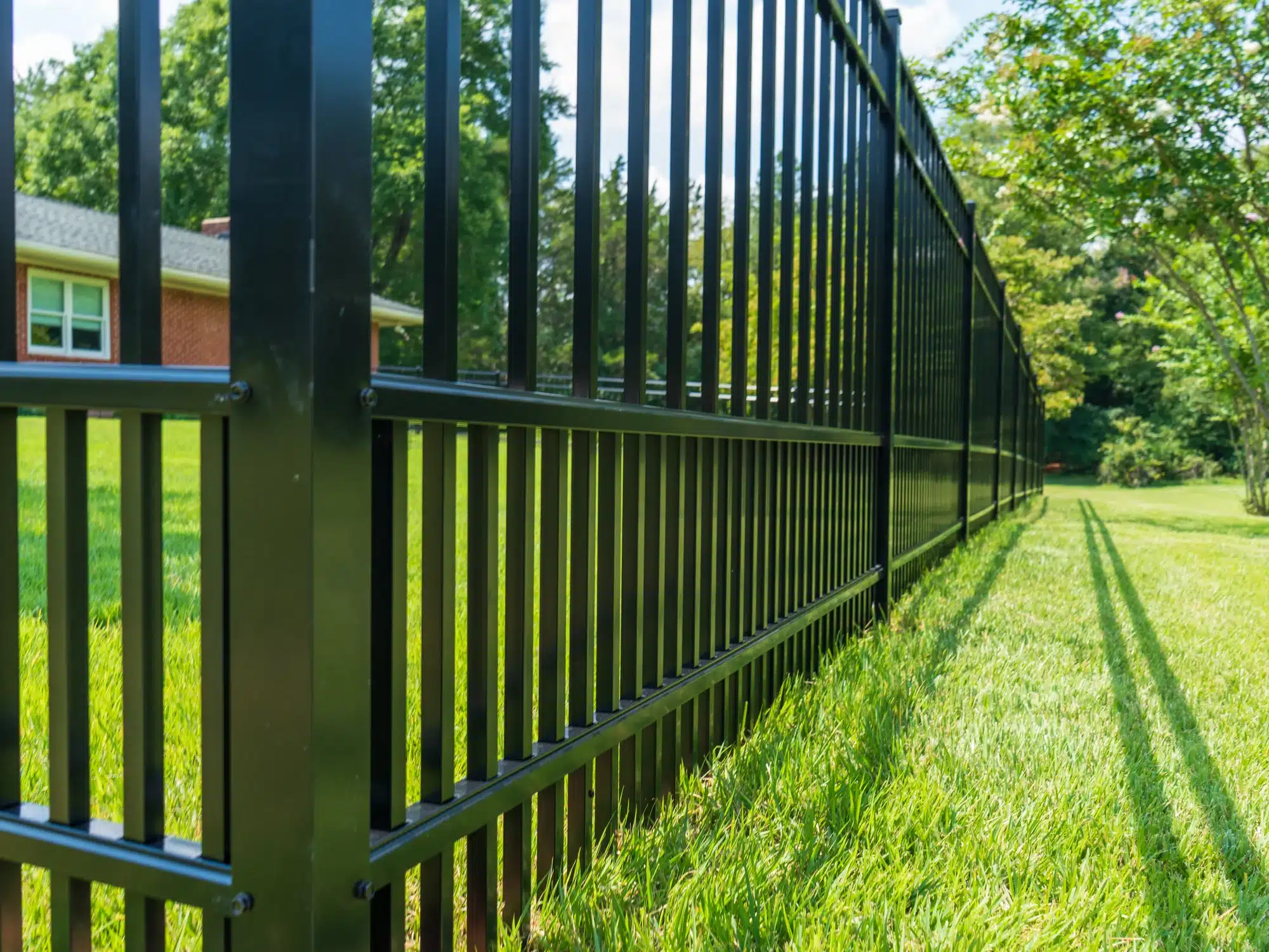
Aluminum Fence Benefits Compared With Other Materials
Aluminum rarely wins on every point, so it helps to see how it stacks up against the other common choices. For a full side-by-side, read the pros and cons of each fence type.
- Wood gives you full privacy and a natural look, but it needs regular sealing and can rot over time. Aluminum trades that privacy for almost no upkeep.
- Vinyl also skips paint and stain, and it comes in solid privacy panels. Aluminum is a better fit when you want an open view.
- Chain link costs less and covers long runs well. Still, some HOAs restrict it in front yards, where aluminum usually looks more at home.
- Steel and wrought iron offer a similar look and more strength. But they can rust where the coating chips, and they weigh far more.
How Long Does an Aluminum Fence Last?
There’s no single number, because the finish, the posts and the install all play a part. The metal itself won’t rust, so the powder coat and the footings usually decide how a fence ages. A quality finish resists fading and chipping. Meanwhile, posts set at the right depth keep the line straight through freeze and thaw cycles.
So ask any installer two questions. Which brand and finish are they using, and what does the manufacturer’s finish warranty cover? Those answers tell you more than a general lifespan claim.
Is an Ornamental Aluminum Fence Worth It?
It’s worth it when you want a fence that marks the property, keeps kids or pets in and looks good for years with little work. But it’s a poor fit when privacy or the lowest price is the goal. Use the aluminum fence pros and cons above to sort your own yard. Aluminum is a strong pick for:
- Front yards and corner lots where an HOA wants an open, decorative look.
- Pool enclosures built to your county’s barrier code.
- Sloped yards, since many panels can rack to follow the grade.
- Homeowners who want to skip painting and staining for good.
Look at another material if:
- You need to block views or noise.
- Budget is the main driver and chain link would do the job.
- The fence line takes regular hits, like the edge of a busy driveway.
Questions to Ask Before You Buy
- How tall does the fence need to be for pool code, pets or security?
- What picket spacing and rail layout will the panels use?
- Will the panels rack to follow your slope, or step down?
- Which brand and powder coat finish will you get?
- Do the gates have self-closing hinges and self-latching hardware?
- Does your HOA need to approve the style and color first?
Our guide to building a fence in an HOA helps with that last question.
Talk to a Richmond Aluminum Fence Installer
Good Neighbor Fence is a family-owned company that has built fences in the Richmond area since 2006. We design and build aluminum fences in Richmond, Chesterfield, Henrico, Hanover and nearby counties, and we typically finish an aluminum install in 1 to 2 days. When we visit, we’ll help you weigh the aluminum fence pros and cons against your yard and budget.
Request a free quote online or call (804) 737-4664.