

DIY fence installation is usually cheaper in cash than hiring a pro, because you skip the labor bill. But the savings shrink once you add tools, concrete, delivery and haul-away. Mistakes cost money too, so the real answer depends on your yard, your skills and your time.
Good Neighbor Fence builds fences across Central Virginia. We also sell materials to homeowners who want to build their own, so we see both sides. This guide covers the true costs of DIY fence installation, the jobs a handy homeowner can take on, and the point where a pro crew saves you money.

Is It Cheaper to Install Your Own Fence?
Often, yes. With DIY, labor is the line you cut. You still pay for posts, rails, pickets or panels, and hardware. You also pick up a few costs that a contractor normally covers, such as tool rental, delivery and disposal.
So the fair comparison is not your materials receipt against a full quote. Instead, compare the full quote against materials plus every extra on the list below, plus your time. Our guide to fence installation cost explains how a professional quote is built, so you can line the two up.
The Hidden Costs of DIY Fence Installation
Here is what a DIY budget needs to cover beyond the fence itself.
Tools and Equipment
A basic build takes a post hole digger or power auger, a level, a string line and a tape measure. You also need a circular saw, a drill, and a wheelbarrow or tub for mixing concrete. If you don’t own these, you’ll rent or buy them, and rental fees climb when a project runs long.
Concrete, Fasteners and Extra Boards
Every post hole takes concrete, and every board needs exterior-grade screws or nails. First-timers also tend to miscut or split a few boards, so plan to buy extra. Our guide to screws for a wood fence covers which fasteners hold up outdoors.
Delivery and Haul-Away
Fence lumber and panels are long and heavy. Unless you have a truck or trailer, you’ll likely pay for delivery. And if an old fence comes down first, you need a way to get rid of the boards, posts and footings.
Permits, Zoning and HOA Approval
Many backyard fences don’t need a building permit, but the rules change from county to county. Henrico County, for example, puts fences 7 feet tall or less that are not pool barriers on its list of projects that don’t need a building permit. Chesterfield County’s residential permit requirements say a fence needs a building permit if it serves as a pool barrier.
Zoning rules and HOA covenants can still limit height, style and placement, even when no permit is needed. So check them before you buy materials. Our guide to installing a fence in an HOA walks through the approval process.
Virginia 811 Before You Dig
Before you dig a single post hole, contact Virginia 811. Its homeowner guidance says to reach out at least 3 working days in advance. It also lists new fences and pulling old fence posts as reasons to call. The service that marks public utility lines is free.
But it won’t mark everything. Virginia 811 explains that private utilities are not marked. That includes lines to a detached garage or shed, invisible pet fences, and septic or propane lines. If you have any of those, find them before you dig or hire a private locator.
Your Time
Time is the cost most people leave out of a DIY fence installation budget. Our FAQ notes that most of our fence installations in Richmond take one to two days. A first-time builder working weekends can take much longer, because digging, setting posts and curing concrete all go slower without practice.
How Long Does a DIY Fence Take?
It depends on the length of the fence, the ground and the style. Still, every DIY fence installation follows the same basic steps, and each one takes longer than it looks on paper.
- Confirm your property line with your survey or plat, so the fence stays on your side.
- Check permits, zoning and HOA rules, then order materials.
- Contact Virginia 811 and wait until the lines are marked.
- Lay out the fence line with stakes and string, then mark each post location.
- Dig the post holes and set the posts in concrete, checking each one for plumb.
- Let the concrete cure as the bag directs before you hang rails or panels.
- Attach rails and pickets or panels, then hang and adjust the gates.
- Clean up, haul away debris, and seal or stain wood once it is ready.
Post holes are where most DIY schedules slip. Rock, roots and hard clay can turn a quick hole into a long, slow dig. Then a slope adds another layer, since each section has to step down or rack to follow the ground. Our guide to Virginia property line fence rules explains why step one matters so much.
When DIY Fence Installation Makes Sense
DIY works best on small, simple jobs where a mistake is cheap to fix. You’re a good candidate if most of these fit your project:
- The run is short, like a garden enclosure or a small dog run off the patio.
- Your ground is flat and open, with easy digging.
- The style is simple, such as split rail or a basic picket fence.
- You already own most of the tools and have built a deck or shed before.
- The fence is not a pool barrier, and it doesn’t sit on a disputed line.
For example, a short split rail fence along a front bed is a reasonable weekend project. Our guide to installing a split rail fence shows the steps. A small garden fence is another good first build.
When Professional Fence Installation Is Worth It
Some jobs cost more to redo than to hire out, and that is where DIY fence installation stops saving money. A professional crew is usually the better value when:
- The fence line is long, or it crosses a slope or uneven ground.
- The soil is rocky, full of roots or hard to dig.
- You want a tall privacy fence, since solid panels catch more wind and load every post.
- The fence will serve as a pool barrier.
- You need wide or double gates, which call for heavier posts and bracing.
- The line runs close to a neighbor, an easement or a drainage area.
- You would rather spend your weekends on something else.
Pool barriers deserve extra care. The U.S. Consumer Product Safety Commission Safety Barrier Guidelines for Residential Pools call for gates that open outward, away from the pool. Those gates should also be self-closing and self-latching. Our guide to Virginia pool fence regulations covers the local rules.
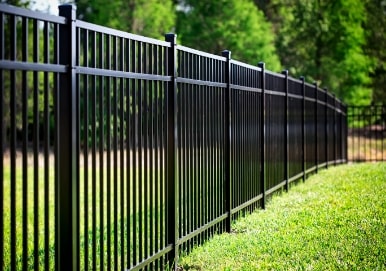
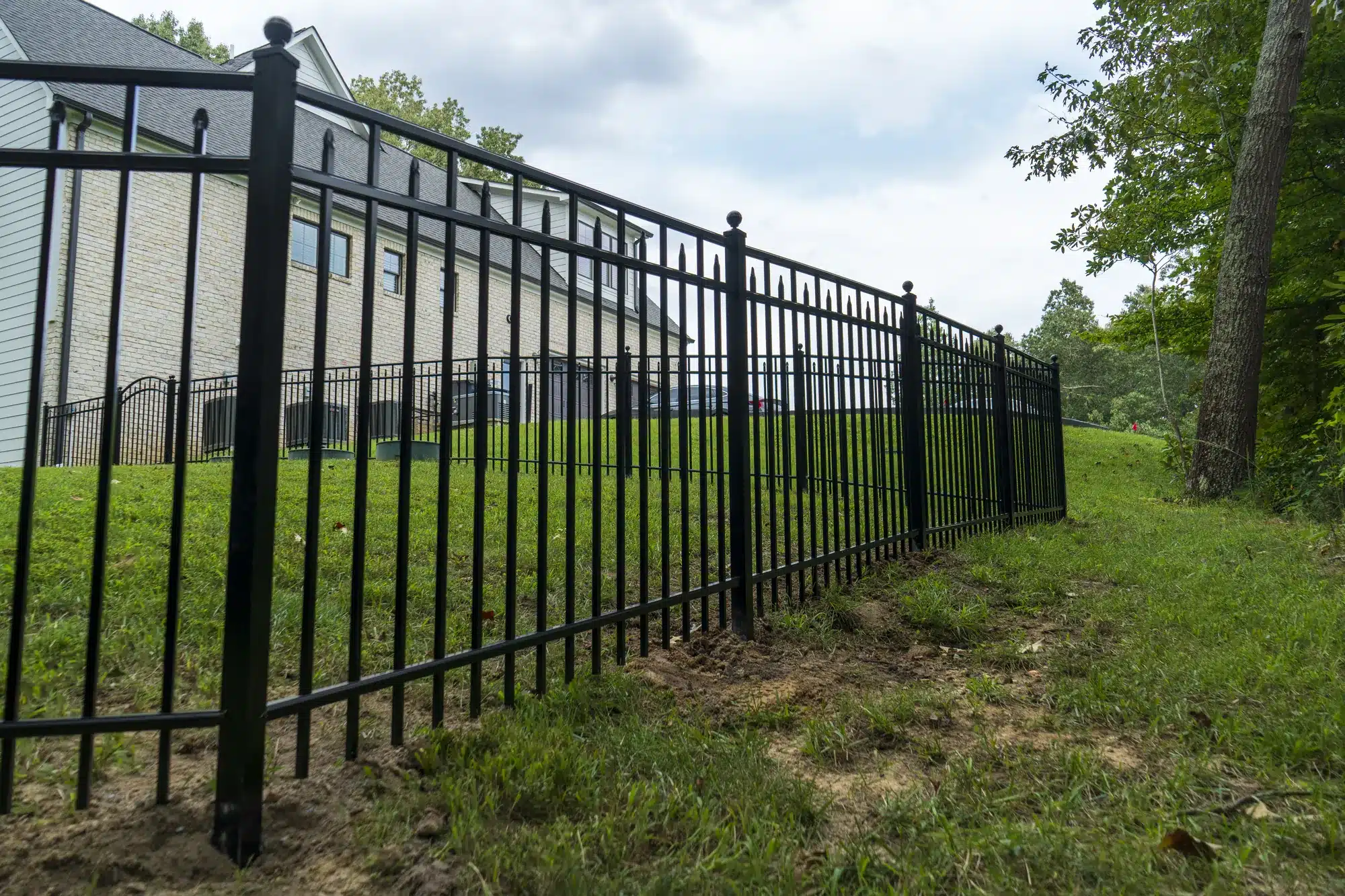
Slopes are another good example. This Siskin style aluminum fence in Chester follows the grade of the yard, which takes careful post layout. When you’re ready to compare options, our fence design and installation team builds wood, vinyl, aluminum and chain link fences.
Common DIY Fence Mistakes That Cost Money
Most problems with a DIY fence installation trace back to a few early mistakes. Watch for these:
- Skipping the 811 call, or forgetting the private lines it does not mark.
- Building on the wrong side of the property line.
- Setting posts too shallow, out of plumb or at uneven spacing.
- Ignoring the slope, which leaves gaps under the fence or a wavy top line.
- Using indoor screws or nails that rust and streak the boards.
- Hanging a heavy gate on a light post, so it sags over time.
- Building before your HOA approves the plan, then having to change it.
These mistakes add up after the build, too. A crooked post pulls a whole section out of line, and a sagging gate stops latching. Some material makers may also limit their warranty if you don’t follow their installation instructions. So read the warranty before you start.
Does a New Fence Add Value to Your Home?
It can, but there is no set return. Value depends on the quality of the fence, the material and how well it suits the home and the neighborhood. A fenced yard can also be a draw for buyers with dogs or young children. So if resale is your main reason, talk with a local real estate agent before you pick a style.
Keep in mind that a DIY fence installation only helps at resale if it looks and works like a pro job. Leaning posts, uneven gaps and a sagging gate can work against you when buyers walk the yard.
Can You Buy Fence Materials for a DIY Project?
Yes. Good Neighbor Fence sells professional-grade fencing materials to the local DIY community. Just tell us you plan to build it yourself when you ask for an estimate, and we can quote the materials for your DIY fence installation.
Not sure which material fits your yard? Our comparison of wood, vinyl, aluminum and chain link fences covers the tradeoffs. Then our guide to wood fence pricing breaks down the most common DIY material. If you want full privacy, see what a privacy fence costs before you price out materials.

Get a Quote for Your Central Virginia Fence
The easiest way to weigh DIY against professional fence installation is with real numbers for your yard. Good Neighbor Fence has built fences for more than 20 years, and we serve homeowners across Central Virginia. Request a fast, free quote for materials only or a full install, and we’ll give you a clear price. You can also call us at (804) 737-4664, or ask about fence financing to spread out the cost.