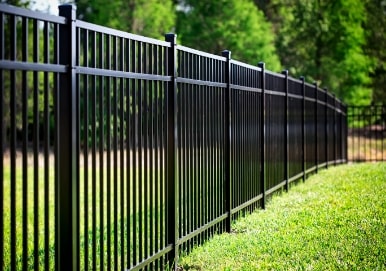




The most useful commercial fence installation tips come down to planning. Pick a fence that fits the job, clear zoning and utility marking early, and lay out gates around how your site runs day to day.
Moseley sits in western Chesterfield County along the Route 360 corridor, with a mix of shops, offices, farms and growing neighborhoods. So a fence for a Moseley business often has to secure a lot, screen neighbors and still look good from the road. Here are five tips to plan it well.

Tip 1: Define the Job Your Commercial Fence Has to Do
Before you pick a material, write down what the fence needs to do. Most commercial fences have one main job and one or two side jobs:
- Security: Keep people out after hours and protect equipment, vehicles or inventory.
- Screening: Hide dumpsters, HVAC units and storage from customers and neighbors.
- Safety: Keep people away from hazards like drop-offs, pools, machinery or traffic.
- Curb appeal: Frame the entrance and match the look of the building.
- Boundaries: Mark property lines and guide foot traffic to the right door.
Rank these before you get quotes. Then you won’t pay for height, privacy or hardware your site doesn’t need.
Tip 2: What Is the Best Commercial Fence for Your Property?
The best material is the one that does your main job for the least upkeep. Here is how the common options compare.
Chain Link
Chain link fencing is the workhorse for security and long perimeters. It’s affordable per foot, strong and see-through. You can add privacy slats for some screening, and black vinyl coating helps it blend in. For example, see this low-visibility chain link at the Brandermill Country Club.

Aluminum
Aluminum suits storefronts, offices, apartment communities and pool areas. It gives you the look of wrought iron, but it won’t rust. Our aluminum fence installation page shows the styles, and this aluminum fence for a Colonial Heights commercial property shows one in use.
Vinyl and Wood
Solid panels work where screening matters most, such as dumpster enclosures, equipment yards or a lot that backs up to homes. Vinyl fencing needs little upkeep. Wood fencing costs less up front, but it needs sealing to last.
If security is the main job, think about visibility too. Henrico County Police describe natural surveillance, a core idea in crime prevention through environmental design (CPTED), as placing physical features and activities to maximize visibility. An open fence like chain link or aluminum lets patrols and passing drivers see onto your lot, while a solid fence can hide someone. For more options, see our guide to the best commercial fences for your business.
Tip 3: Do You Need a Permit for a Commercial Fence in Chesterfield?
Often you don’t need a building permit. Chesterfield County’s commercial permits page lists fences of any height among projects that don’t require one, unless the fence is required for pedestrian safety or serves as a pool barrier.
But the same page notes that setbacks and other zoning requirements may still apply. So check zoning before you order materials, especially for height and placement near roads. The county’s Planning Department handles those questions.
Also read your deed, business park covenants and lease. They can limit fence style, height and color even when the county doesn’t. If the fence line crosses a utility strip, our guide to building a fence on an easement explains what to watch for.
Tip 4: Mark Utilities and Prep the Site
Commercial sites often have more buried lines than homes: power, water, sewer, gas and telecom. So before any posts go in, those lines need marking through Virginia 811. The service is free, and it marks the approximate location of buried public utility lines.
Private lines are a different story. Parking lot lighting, irrigation, security cameras and lines added after the building went up aren’t public, so 811 won’t mark them. Pull your site plans or hire a private locator before digging.
Then clear the fence line of brush, stumps and debris, and flag any grade changes. On sloped lots, decide early whether the fence should step down in sections or follow the grade. Our post on installing an aluminum fence on a slope explains the difference.
Tip 5: Plan Gates and Traffic Flow Before Posts Go In
Gates take the most wear on any commercial fence, so place them around how vehicles and people actually move. First, measure the widest truck that needs access, including its turning path. Then add a separate walk gate, so staff and visitors don’t share the drive with trucks.
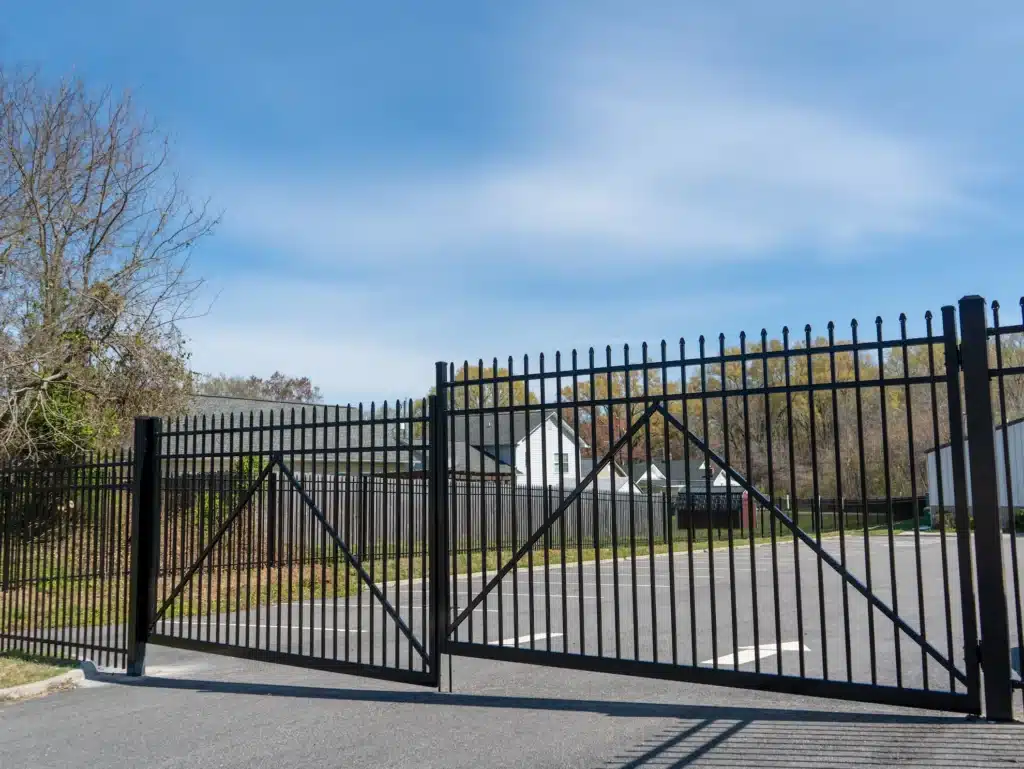
Heavier traffic also calls for heavier parts: thicker posts, stronger gate frames and hinges sized for the gate’s weight. Our guide to fence gate security covers latches, hinges and posts. If you might automate a drive gate later, read our tips on planning an automatic gate opener before you set the layout.
If a gate will cross a fire lane or close off the only entrance, talk to the local fire marshal about emergency access before you build. Finally, schedule the work around your hours. Ask your installer to phase the job, so customers can still park and get in while crews work.
How to Keep a Commercial Fence in Service
A commercial fence takes more hits than a backyard fence, from delivery trucks, mowers and weather. A quick walk along the line every few months catches small problems early.
- Check that gates swing freely, close fully and latch every time.
- Tighten loose fabric, ties and hardware on chain link.
- Look for posts that lean after a vehicle bump, and fix them before the section pulls out of line.
- Keep vines, brush and stored materials off the fence.
- Wash vinyl and aluminum, and reseal wood on schedule.
Our guide to fence maintenance has a longer checklist.
Common Mistakes to Avoid on a Commercial Fence
Skipping any of these commercial fence installation tips tends to cause the same problems later. Watch for these:
- Choosing by price alone. The cheapest fence per foot can cost more if it needs constant repair or fails its main job.
- Gates that are too narrow. A drive gate that fits a pickup but not a box truck turns every delivery into a problem.
- No walk gate. People on foot end up using the drive gate or climbing around the fence.
- Forgetting private lines. A post hole through a parking lot light cable means a repair bill and a dark lot.
- No room to mow or maintain. A fence set tight against a hedge or a ditch is hard to inspect and keep clean.
For more pitfalls, residential and commercial, see our list of fence installation mistakes.
Commercial Fence Installation Tips at a Glance
- Define the fence’s main job before you compare materials.
- Match the material to that job and to your upkeep budget.
- Confirm permits, zoning and covenants with Chesterfield County and your landlord or business park.
- Mark public and private utilities, then prep the fence line.
- Lay out gates, walk gates and work phases around your traffic.
Get a Quote for Commercial Fencing in Moseley, VA
Good Neighbor Fence has built fences in the Greater Richmond area for more than 20 years, including commercial work like the Brandermill Country Club, and has earned 400+ five-star Google reviews. Visit our Moseley fence company page or see our full fence design and installation service. When you are ready to put these commercial fence installation tips to work, request a fast, free quote for a site visit and a layout that fits your property. You can also call us at (804) 737-4664.