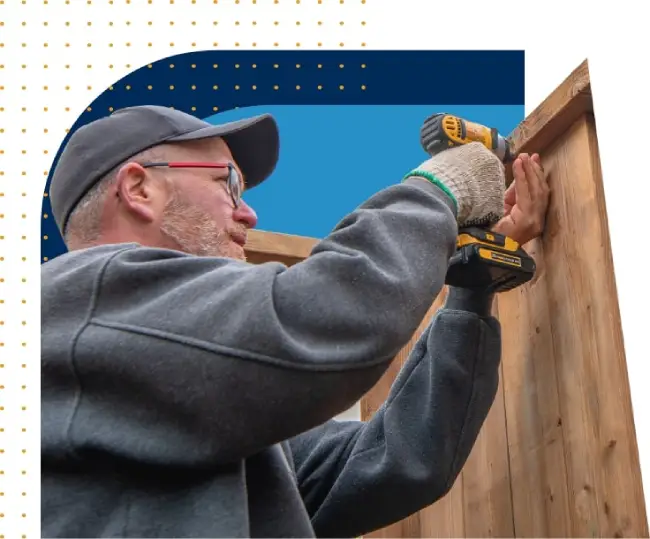




The costliest fence installation mistakes happen before a single post goes in: skipping the permit or HOA approval, guessing at the property line and digging without calling 811. After that, shallow posts, poor slope planning and the wrong fasteners cause the leaning, sagging and rust that shorten a fence’s life.
Below are nine mistakes to watch for, with the fix for each. If you hire a contractor, use this list to ask better questions before you sign.
Fence Mistakes That Happen Before Anyone Digs
Mistake 1: Skipping the Permit or HOA Approval
Every county sets its own fence rules. In Chesterfield County, for example, fences can be up to 7 feet tall in side and rear yards but only 4 feet in front and corner side yards, according to the county’s fence and wall rules. The county also requires a barrier permit for a fence around a swimming pool.
HOAs add another layer, with rules on height, style, color and which side faces out. So get written approval before you order materials. Our guide to installing a fence in an HOA walks through the process.
Mistake 2: Guessing Where Your Property Line Is
An old fence, a tree line or a neighbor’s memory is not a boundary. Pull your plat or order a survey, then set the fence a little inside the line so you can reach both sides for upkeep. Also check for easements, since a utility or the county may have the right to use that strip.
For the details, read our posts on Virginia fence rules for property lines and building a fence on an easement.
Mistake 3: Digging Before You Call 811
Post holes go deep enough to hit buried gas, electric and cable lines. VA811 asks you to contact it at least 3 working days before you dig, and the service is free. Mark your planned fence line first so the request covers the whole route.
Public utilities only mark lines up to the point of use, though. According to VA811, private lines such as a line to a detached garage or shed, an invisible pet fence, or septic and propane lines will not be marked. So find those yourself before the auger comes out.
Fence Installation Mistakes in the Ground
Mistake 4: Setting Fence Posts Too Shallow
Posts carry every panel, gate and gust of wind. For concrete-set posts, Quikrete recommends a hole depth of one third to one half of the post’s above-ground height, plus 6 inches. It also calls for a hole about three times the post’s width, with 6 inches of gravel or crushed stone in the bottom.
By that rule, a 6 foot privacy fence needs holes about 30 to 42 inches deep. Shallow posts are one of the fence installation mistakes that show up later. They tend to lean over time, and gate posts feel it first because they carry a swinging load.
Mistake 5: Ignoring Slope Along the Fence Line
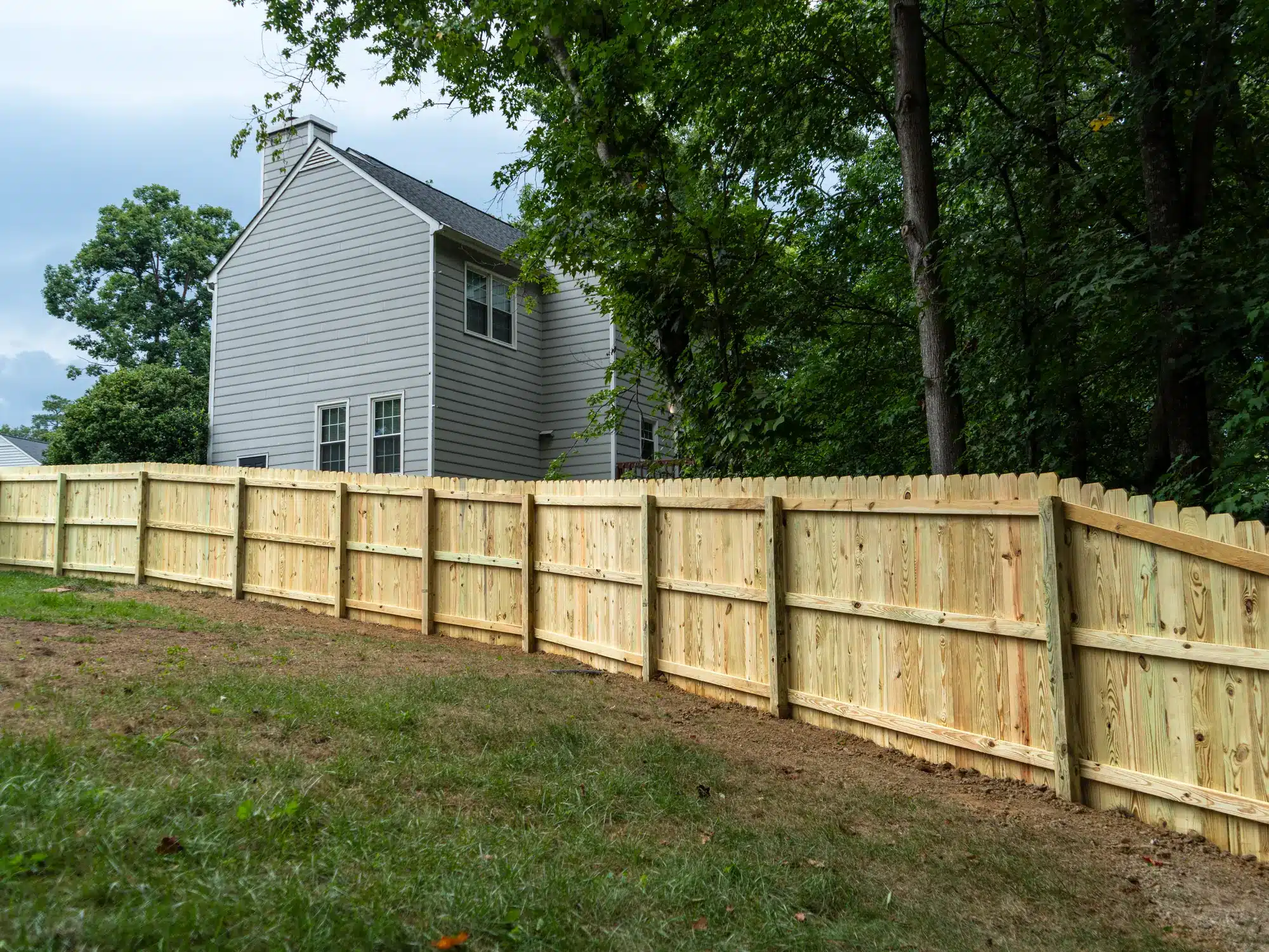
Plenty of Central Virginia yards slope. On a grade, you can step the panels down like stairs or rack them to follow the ground, and each method leaves different gaps at the bottom. Pick one before you set posts, because it changes post heights and spacing.
Drainage matters too. A fence that crosses a drainage swale can trap water and debris, so leave a gap there or plan the line around it.
Mistake 6: Using the Wrong Fence Fasteners
The preservatives in treated lumber are hard on plain steel. Preservedwood.org, an industry resource on treated wood, lists hot-dipped galvanized steel as the most common fastener choice and stainless steel as the premium option. Cheap screws and nails rust, streak the boards and let pickets work loose.
Design and Material Fence Mistakes
Mistake 7: Picking a Fence Material on Price Alone
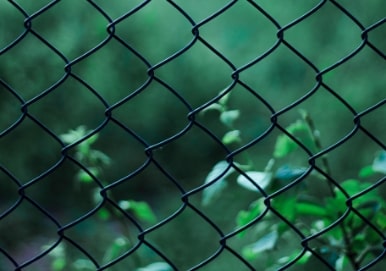
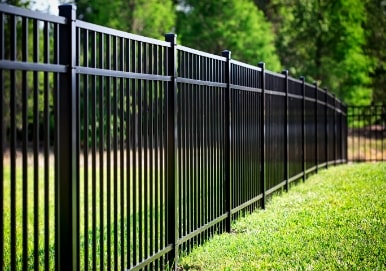
The lowest upfront price can cost more over the life of the fence once you add staining, repairs and replacement boards. Wood usually costs less to install, vinyl skips the staining, and aluminum keeps the view open with little upkeep.
Before you choose, compare the pros and cons of wood, vinyl, aluminum and chain link, then check our breakdown of fence installation cost.
Mistake 8: Treating the Fence Gate as an Afterthought
The gate is the part of a fence you touch every day, so plan it with the fence instead of after. Decide where you need walk and drive access, how wide your mower or trailer is, and which way the gate should swing. Heavier gates need stout posts and solid hinges, or they start to drag.
For layout ideas, browse these wood fence gate designs.
Mistake 9: Forgetting the Neighbors’ View
Your neighbors look at the other side of your fence every day. Talk with them before you build, share the plan and decide which side faces out. Many HOAs expect the finished side to face the neighbors. Our tips on how to build a good neighbor fence cover the details.
Which Fence Installation Mistakes Cost the Most?
Of all the fence installation mistakes on this list, skipping the paperwork is the one we would flag first, because it is the hardest to undo. A fence that breaks a height rule or crosses a property line may have to come down. A loose picket, by contrast, takes minutes to fix.
So spend time on permits, surveys and approvals before you spend a dollar on materials. Then the rest of the project can move fast.
How Do You Avoid Fence Mistakes After the Build?
A good install still needs care. Walk the line once a year, tighten loose hardware, clear vines and keep sprinklers off wood boards. Wood needs sealing on a schedule, while vinyl and aluminum mostly need a rinse. Our guide to fence maintenance has a simple checklist.
Get a Quote for Your Fence in Central Virginia
Good Neighbor Fence has been family owned since 2006 and has earned 400+ five-star Google reviews from homeowners across Central Virginia. We handle fence design and installation from the first layout stake to the final gate adjustment.
Request a fast, free quote or call (804) 737-4664 to talk through your project.